Phonics Skills Beginning Sounds Worksheets for Ages 4-9
4 filtered results
-
From - To
Discover our engaging Phonics Skills Beginning Sounds Worksheets tailored for kids aged 4-9! These carefully designed worksheets focus on the crucial early reading skills essential for young learners. Each activity stimulates curiosity and enhances phonemic awareness, aiding children in recognizing and interpreting beginning sounds. Perfect for both classroom and home use, our comprehensive collection supports diverse learning stages. Through a variety of fun and interactive exercises, kids will build a strong foundation in reading fluency and pronunciation. Equip your child with the tools for successful literacy development. Explore our resources to make learning enjoyable and effective!
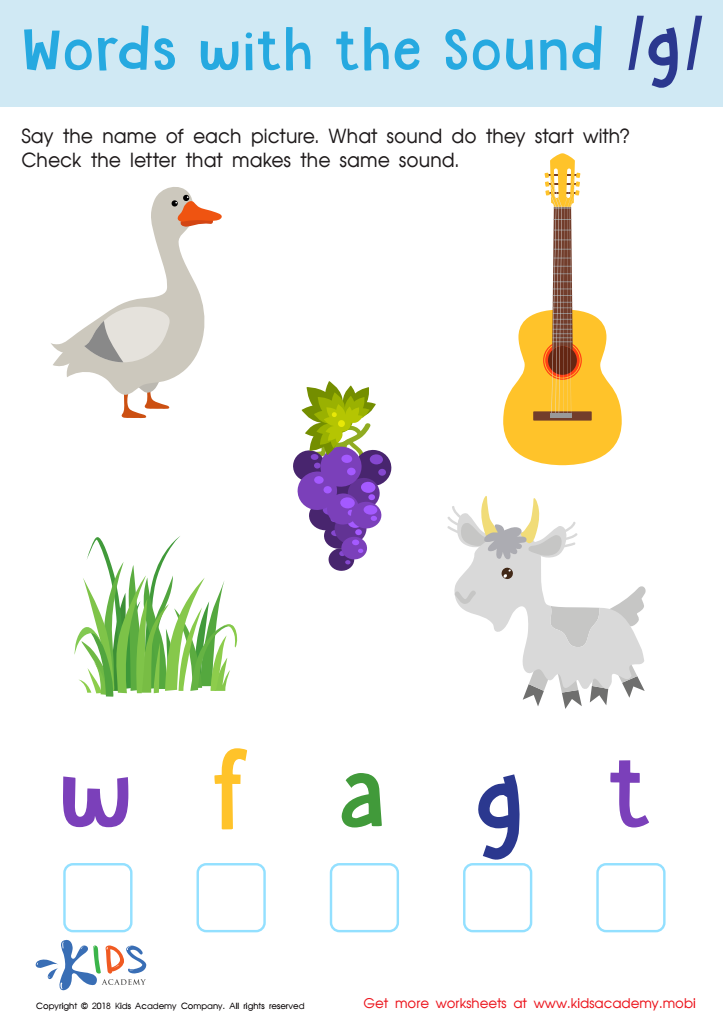
Words with sound g Reading Worksheet
 Assign to My Students
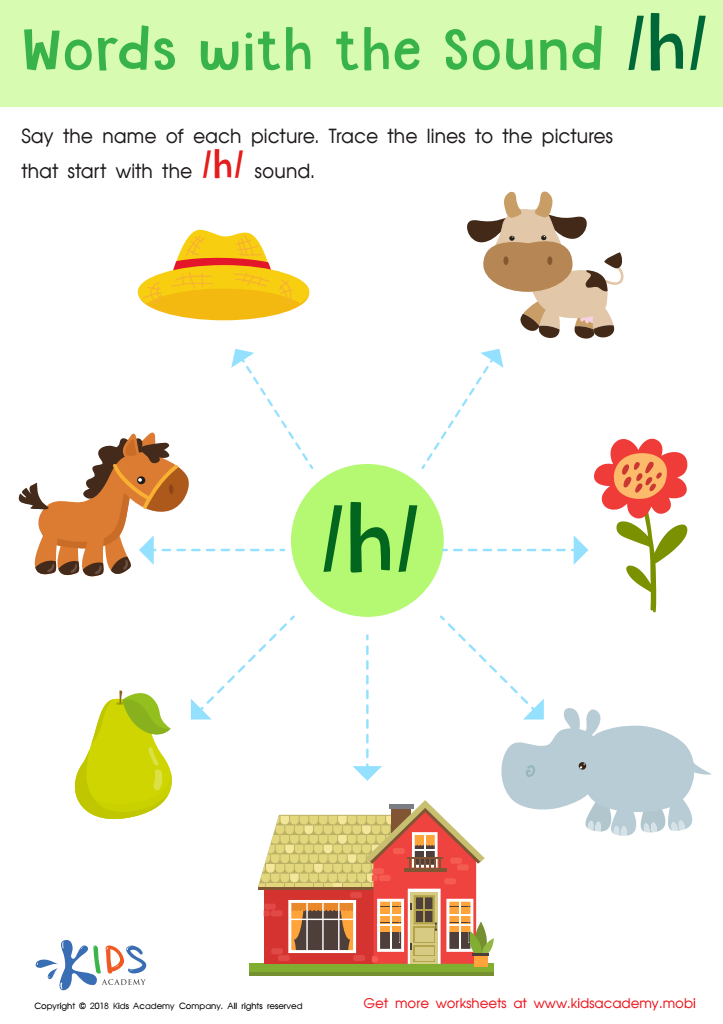
Words with sound h Reading Worksheet
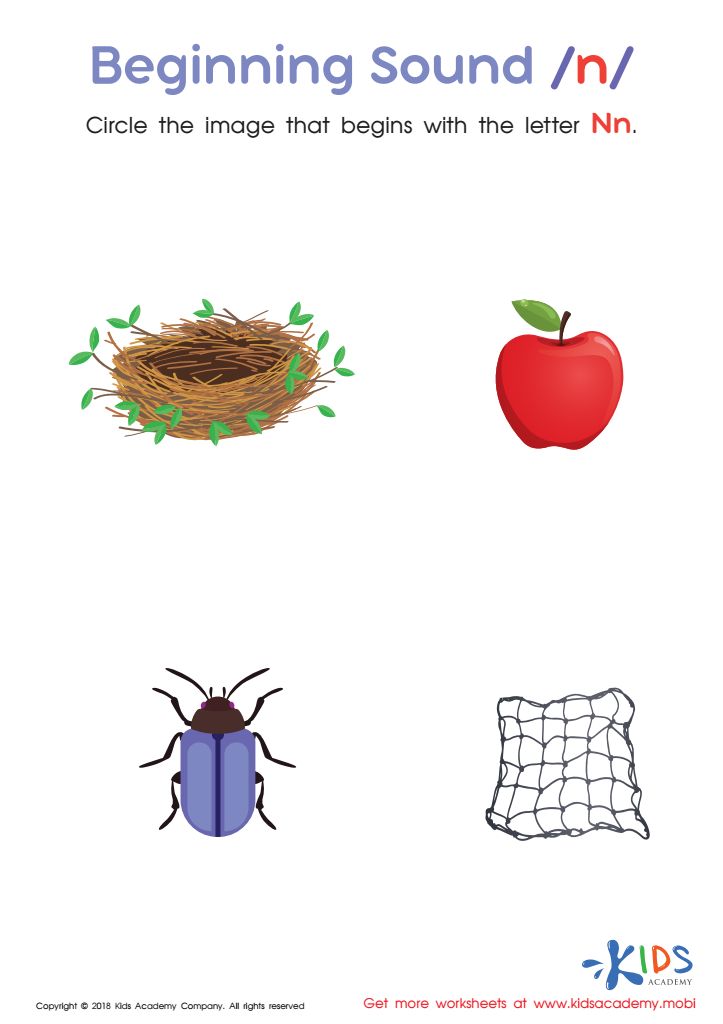
Beginning Sound «n» Worksheet
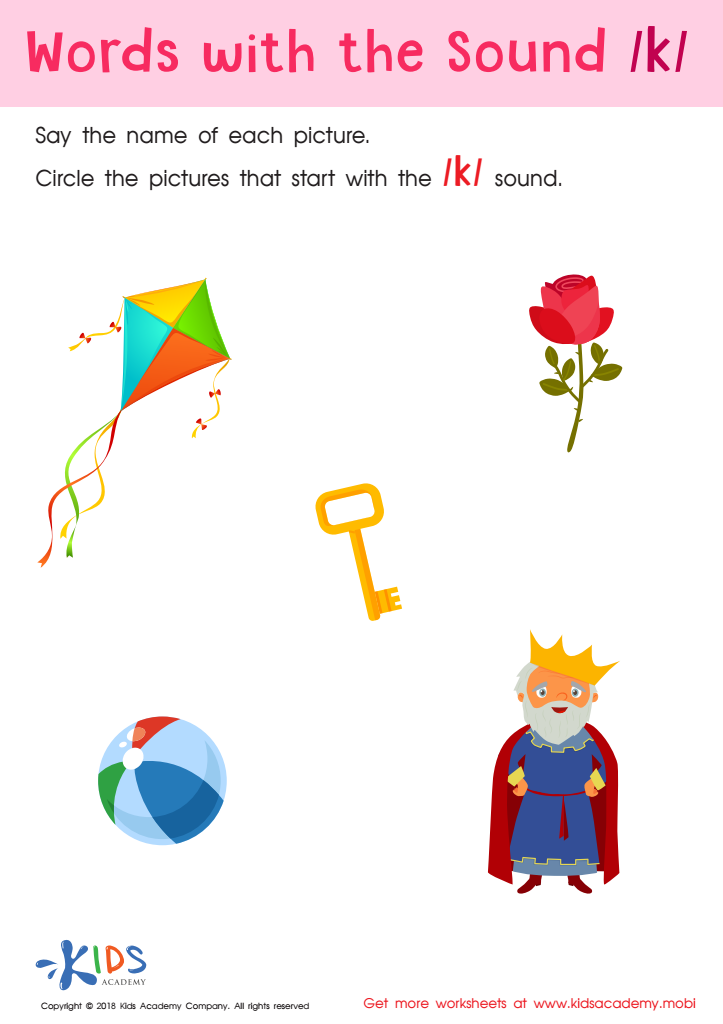
Words with sound k Reading Worksheet








Phonics skills, particularly understanding beginning sounds, are essential for children aged 4-9 as they form the foundation for effective reading and writing. At this stage, children are like sponges, absorbing knowledge rapidly. Phonics instruction helps them make connections between letters and the sounds they represent. For instance, recognizing that the letter "b" corresponds to the /b/ sound is a critical first step in decoding words.
This set of skills significantly improves a child's ability to read independently and confidently. When a child can identify beginning sounds, they can begin to decode words faster, enhance their reading fluency, and comprehend texts more effectively. This early literacy skill also underpins spelling and pronunciation, making it easier for children to develop their writing abilities.
Early proficiency in phonics sets a trajectory for academic success. It boosts a child's confidence, enjoyment of reading, and enthusiasm for learning. Additionally, strong phonics skills have a lasting impact, contributing to vocabulary expansion and better communication skills, which are essential in all areas of education and daily life.
Parents and teachers play a crucial role in encouraging and guiding these young learners. By focusing on beginning sounds, they can provide a solid foundation for more complex literacy skills, ensuring children have the tools they need for lifelong learning success.







