Letter recognition Letter S Worksheets for Ages 4-9
5 filtered results
-
From - To
Enhance your child's early reading skills with our "Letter Recognition Letter S Worksheets for Ages 4-9." Designed to capture young learners' interest, these engaging and educational worksheets focus on recognizing and practicing the Letter S. Perfect for preschool through early elementary, they provide a variety of fun activities including tracing, matching, and finding the letter S, ensuring a comprehensive learning experience. Kids will delight in colorful illustrations while developing essential literacy skills. Ideal for both classroom and at-home learning, these worksheets are an excellent resource for fostering a strong foundation in letter recognition. Explore and watch your child succeed!
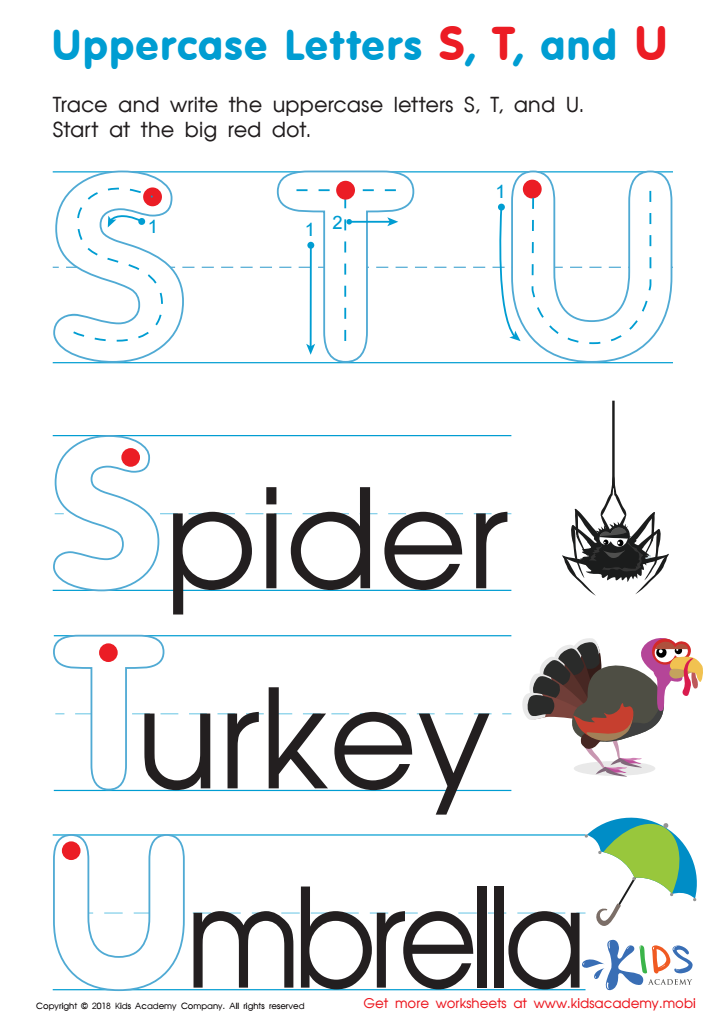
Uppercase Letters S, T, and U Worksheet
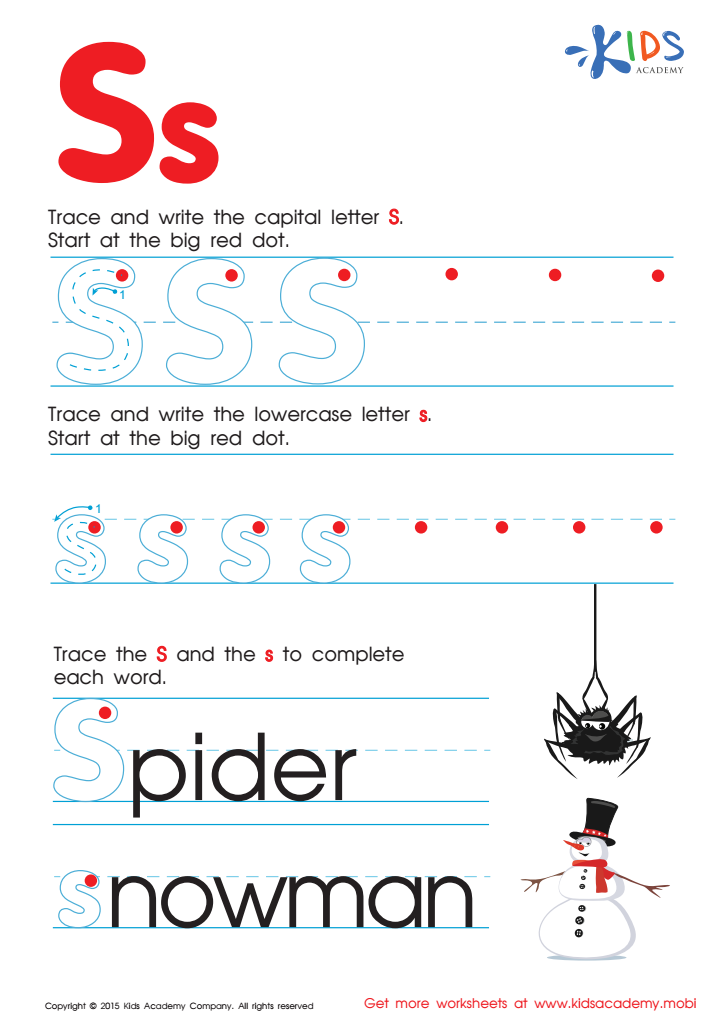
Letter S Tracing Page
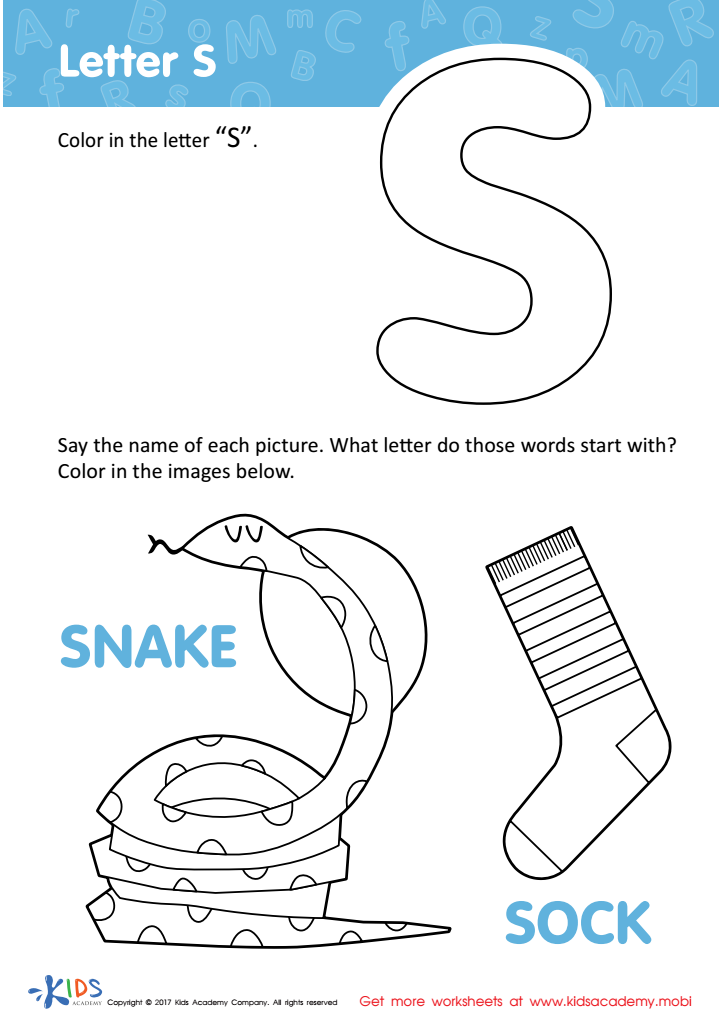
Letter S Coloring Sheet
 Assign to My Students
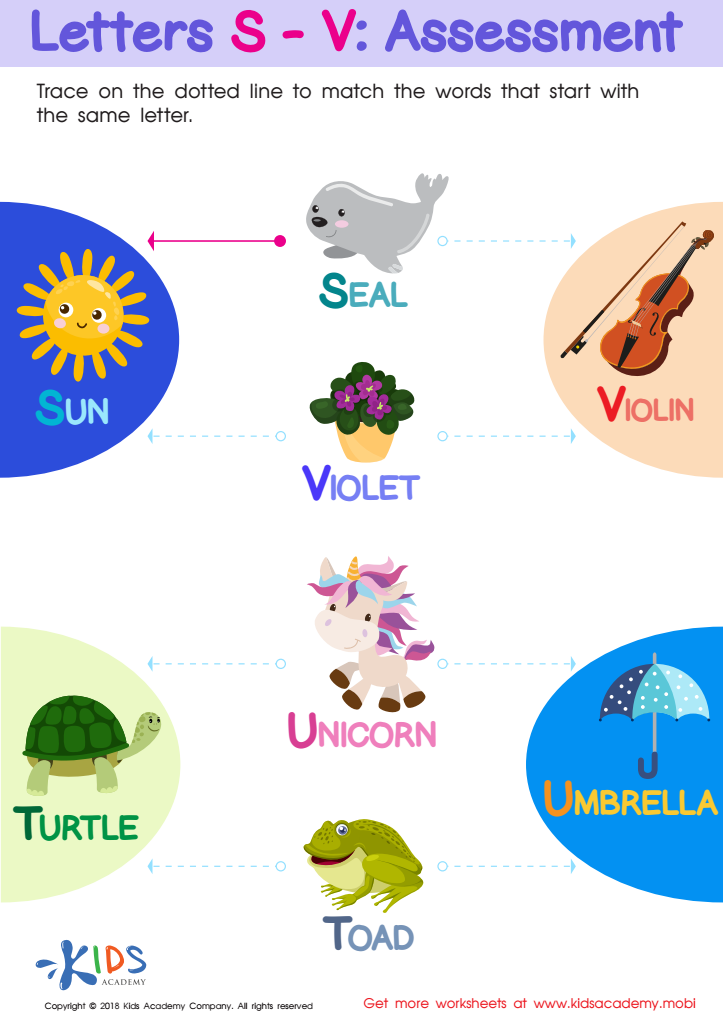
Letters S - V Tracing Worksheet
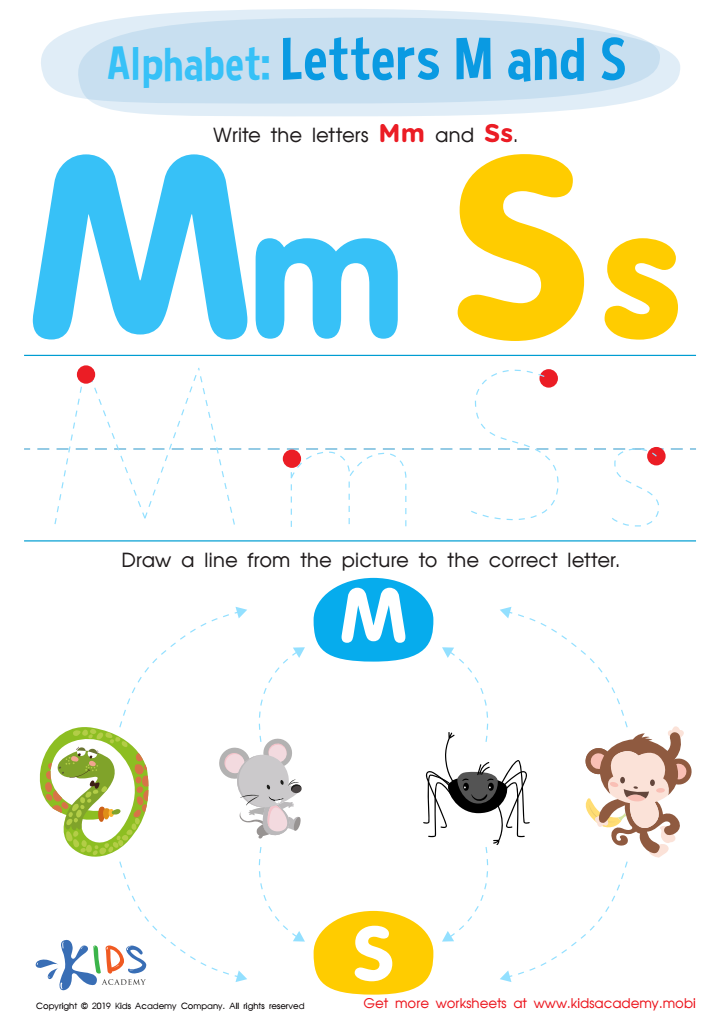
Letters M and S Tracing Worksheet








Parents and teachers should prioritize the recognition of the letter "S" for children ages 4-9 because it's a fundamental building block of literacy and early reading skills. The letter "S" is prevalent in the English language and appears in numerous high-frequency words such as "is," "was," "see," and "snake." Mastery of the letter "S" can therefore significantly impact a child's ability to read and understand simple words and sentences.
Letter recognition is critical at this developmental stage because it sets the foundation for phonemic awareness. Understanding the shape, sound, and function of the letter "S" helps children decode words, facilitating smoother transitions into reading. This skill is intertwined with their ability to spell and improve their vocabulary. Activities focused on the letter "S" can also offer opportunities to engage in fun and interactive learning, thus fostering a positive attitude towards reading.
Furthermore, early literacy skills have long-term benefits, influencing academic success and nurturing a lifelong love for learning. Early recognition of letters, including "S," can enhance a child's confidence and willingness to participate in more complex reading tasks in later grades. Prioritizing the recognition of the letter "S" ensures that children develop a robust foundation in literacy, positioning them for future academic achievements.