Reading skills improvement Letter Sounds Worksheets for Ages 4-9
3 filtered results
-
From - To
Enhance your child's reading skills with our engaging Letter Sounds Worksheets, designed specifically for ages 4-9. These interactive resources provide a fun and effective way to help young learners master phonetic sounds and improve their reading abilities. Each worksheet includes a variety of activities, such as matching letters to sounds, identifying beginning sounds in words, and practicing letter recognition. By working through these worksheets, children will build a solid foundation in reading, boosting their confidence and encouraging a love for books. Perfect for home or classroom use, our Letter Sounds Worksheets make learning an enjoyable and rewarding experience!
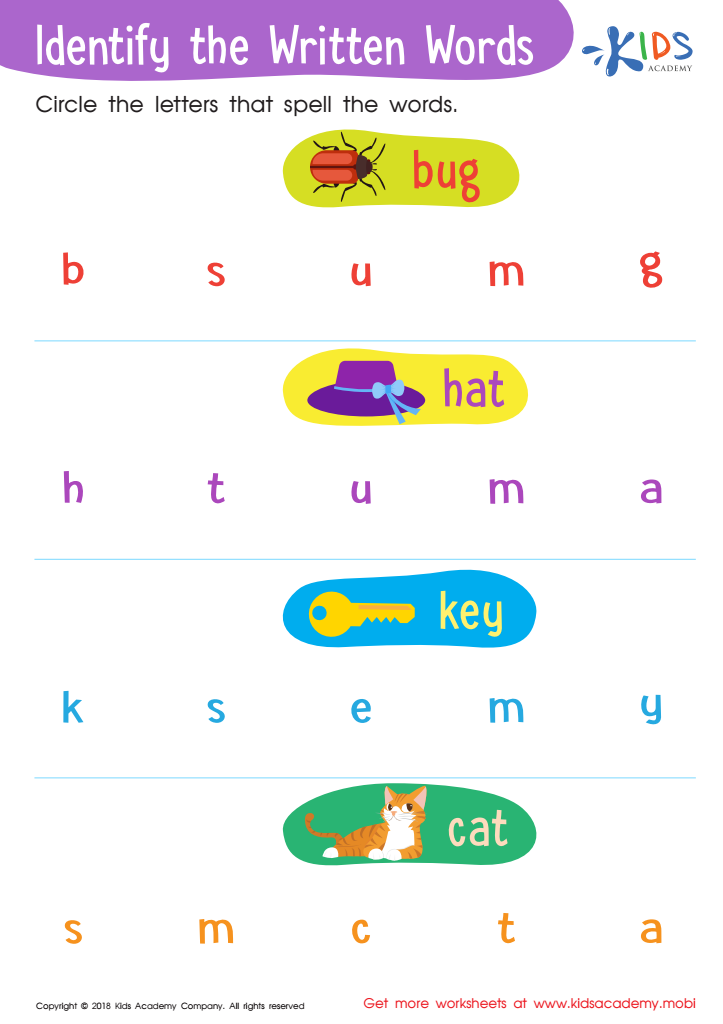
Identify the Written Words Worksheet
 Assign to My Students
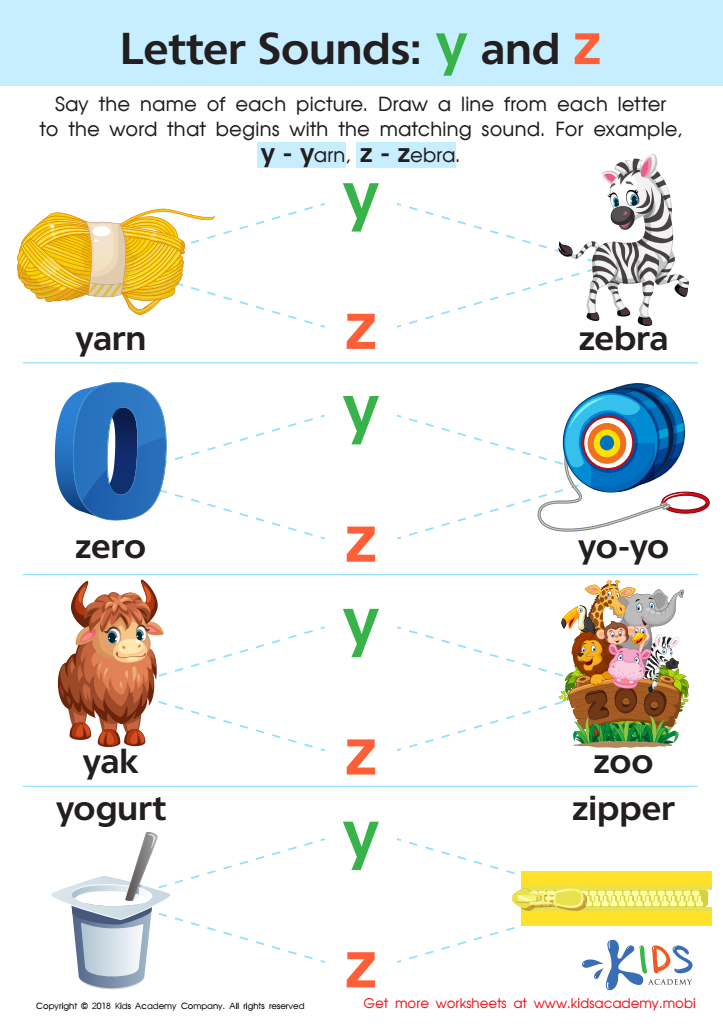
Letter Y and Z Sounds Worksheet
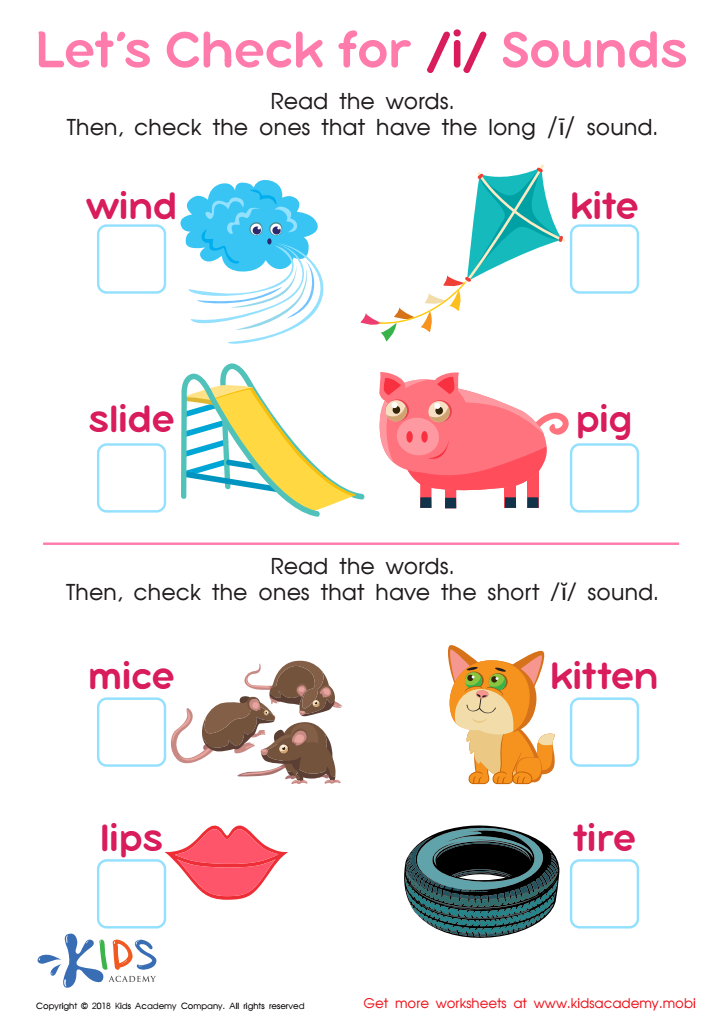
Let's Check for «i» Sounds Worksheet








Improving reading skills, particularly letter sounds, is crucial for children aged 4-9, as these skills lay the foundation for their future literacy development. When parents and teachers prioritize letter sound recognition, they facilitate early phonemic awareness, enabling children to decode words and build reading fluency. This foundational skill contributes to overall language development and comprehension, allowing children to engage with and understand texts at various levels.
Strong reading skills directly correlate with academic success across subjects, as reading is integral to learning. By fostering letter sound knowledge, educators and parents can help children develop confidence in their reading abilities, which is essential for motivation and a positive attitude towards learning.
Additionally, sharp reading skills promote effective communication, empowering children to express themselves clearly and understand others. Enhancing letter sound familiarity can also reduce frustration and anxiety often associated with learning to read. Ultimately, by investing time and effort into improving letter sounds, parents and teachers not only support children's current literacy skills but also equip them with the tools needed for lifelong learning and success. The early years are a critical window for building these essential skills, making it imperative for caregivers to prioritize literacy development.







