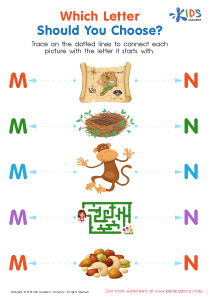
Alphabet sequencing Lowercase/Small Letters Worksheets for Ages 4-9
3 filtered results
-
From - To
Enhance your child's literacy skills with our Alphabet Sequencing Lowercase/Small Letters Worksheets designed for ages 4-9. These engaging and educational printables help young learners master the sequence of the alphabet through fun activities. Perfect for preschool to early elementary grades, each worksheet encourages alphabet recognition, sequencing, and fine motor skills as children trace, write, and arrange lowercase letters. Ideal for classroom use or at-home practice, these worksheets provide a solid foundation for reading and writing success. Foster a love for learning with Kids Academy's high-quality, expertly designed tools, tailored to support your child's educational journey.
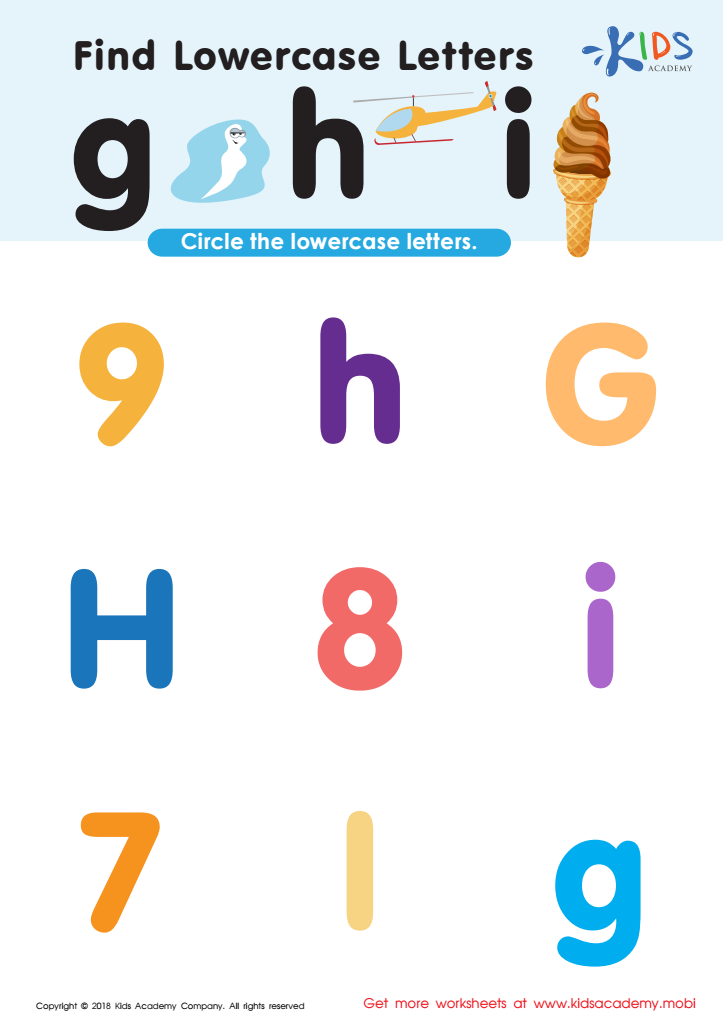
Find Lowercase Letters g h i Worksheet
 Assign to My Students
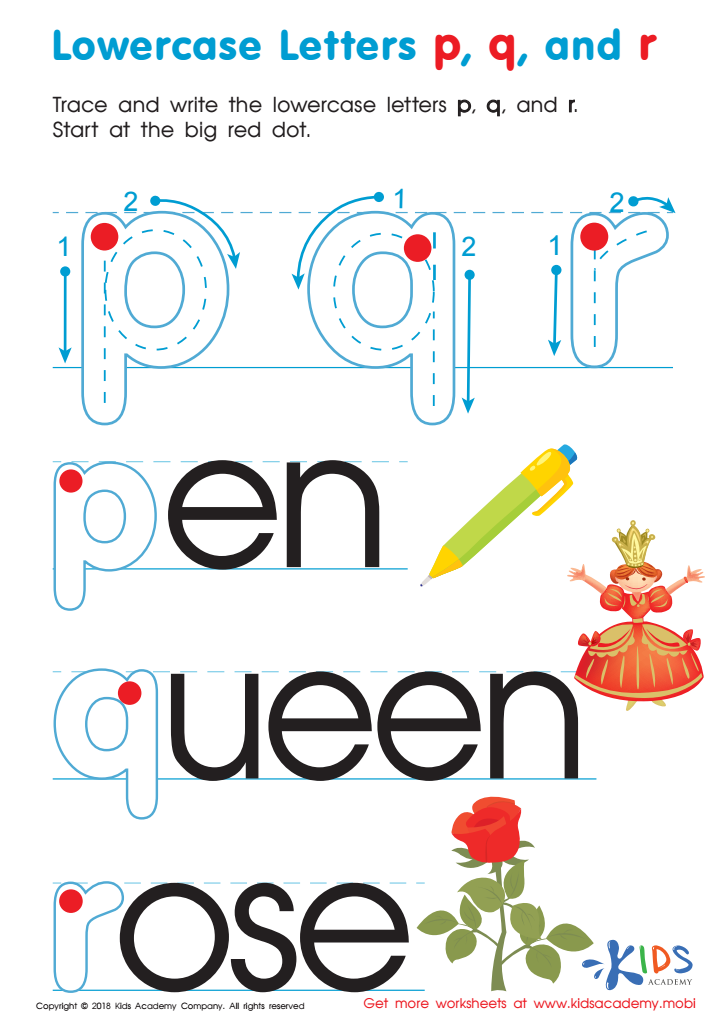
Lowercase Letters p q r Worksheet
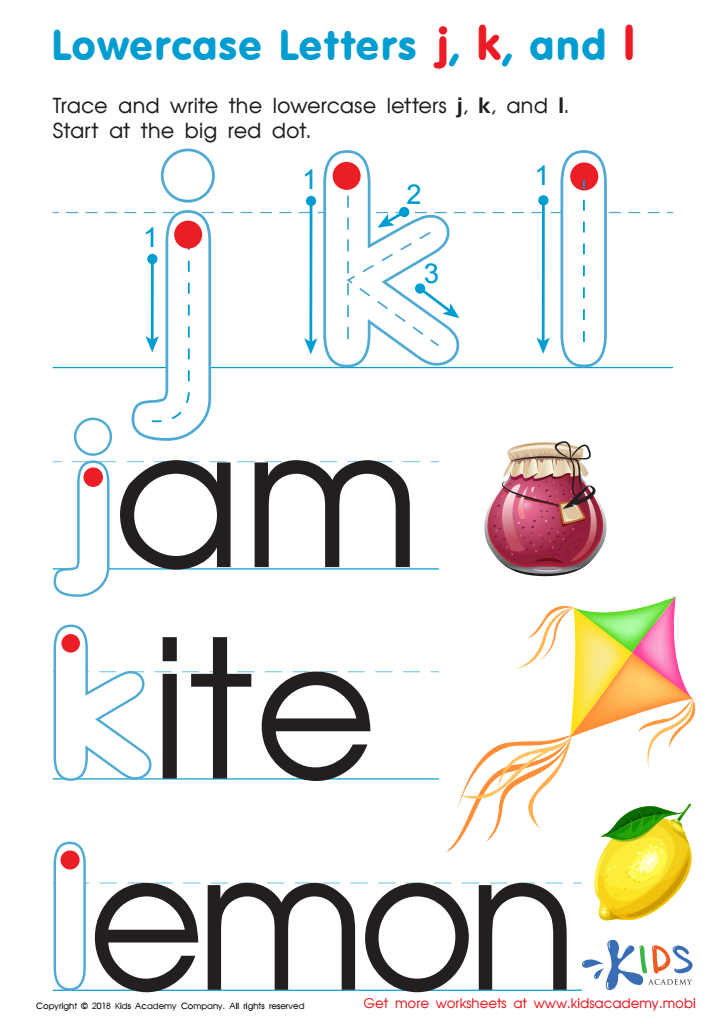
Lowercase Letters j k l Worksheet


Proper alphabet sequencing with lowercase/small letters is essential for the foundational literacy development of children, especially for ages 4-9. At this formative stage, children are acquiring critical skills that will underpin their communication and learning throughout their educational journey. Understanding and practicing alphabet sequencing helps them recognize the orderly pattern of letters, which is fundamental for reading and writing fluency.
First, being comfortable with alphabet order can significantly boost a child's ability to decode words, a key process in early reading. It allows them to quickly recognize letters and sounds, making it easier to understand new words. This familiarity also instills confidence, as children meet these letters repeatedly in their studies and everyday activities.
Second, proper sequencing aids in spelling and vocabulary development. When children know their letters in order, they can more easily learn to spell new words correctly, contributing to clearer and more effective communication. This vital skill ensures they can articulate their thoughts accurately, both verbally and in written form.
Finally, mastering lowercase letters specifically is crucial because most written texts use lowercase as the predominant form. This regular practice prepares children for the type of print they will most often read and write, promoting better comprehension and fluency. Therefore, alphabet sequencing with lowercase letters creates a strong literacy foundation, enabling lifelong success in communication and learning.