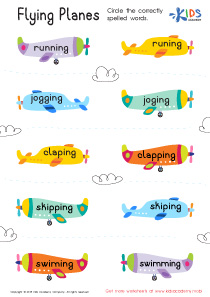
Rhyming skills Rhyming Worksheets for Ages 4-9
3 filtered results
-
From - To
Boost your child’s linguistic abilities with our enchanting Rhyming Skills Worksheets for ages 4-9! Designed by experts, these captivating activities make learning fun and effective by engaging young minds in the rhythmic world of rhymes. By recognizing and creating rhyming words, kids enhance their phonemic awareness, early reading skills, and vocabulary. Our worksheets cater to varying skill levels, from beginners to more advanced learners, ensuring that every child can grow and succeed. Unlock the magic of rhymes and watch your child spellbound by the joy of learning. Dive in today and set your child on a pathway to reading triumph!
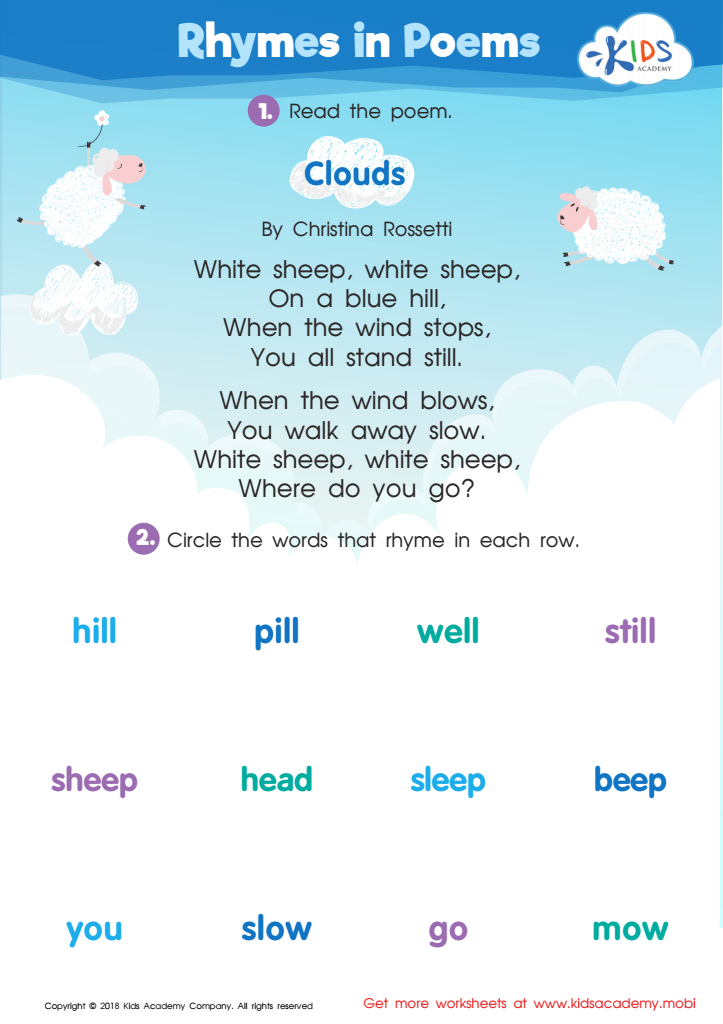
Rhymes in Poems Worksheet
 Assign to My Students
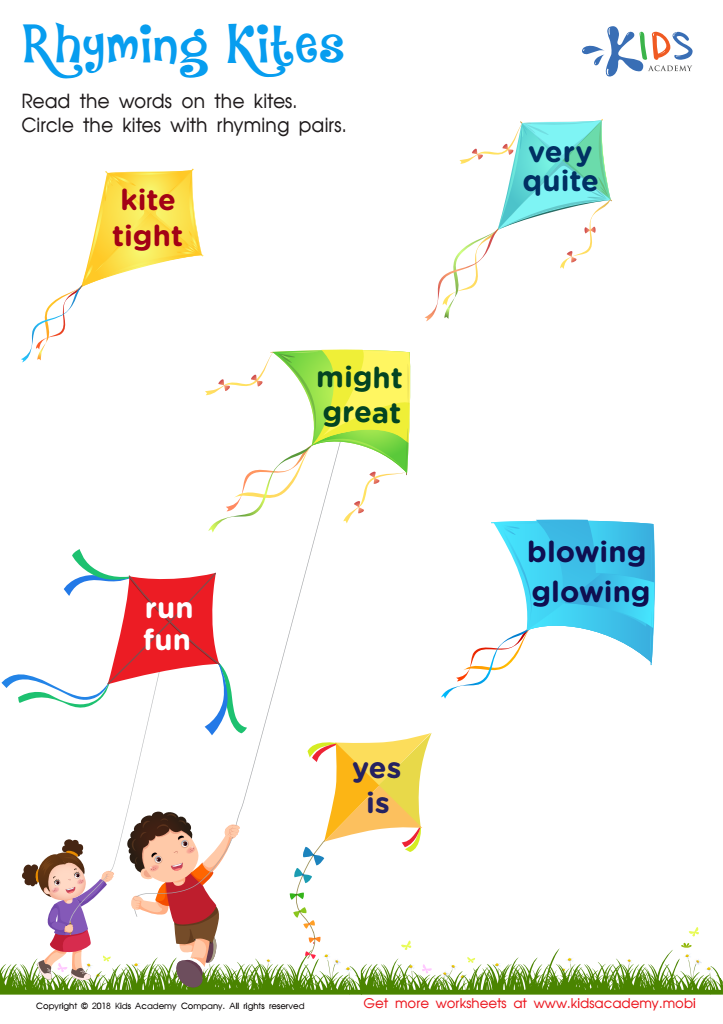
Rhyming Kites Worksheet
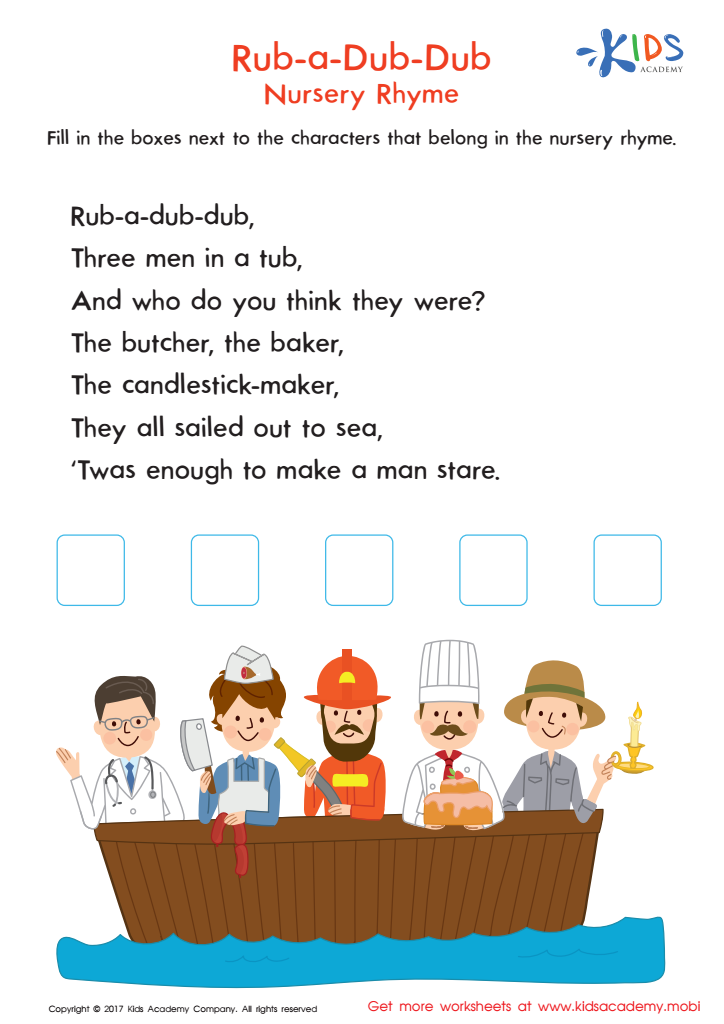
Rub a Dub Dub Printable







Rhyming skills are crucial for children aged 4-9 as they significantly contribute to early literacy and language development. Rhyming teaches children about the sounds within words, enhancing their phonological awareness, which is foundational for reading skills. When children recognize and generate rhymes, they practice distinguishing between different phonetic components, fostering better decoding skills when encountering new words.
Moreover, rhyming can improve a child's vocabulary and comprehension abilities. Through exposure to rhyming stories, poems, and songs, children learn new words and how they can be contextually related. This playful linguistic activity encourages memory retention since rhyming patterns are easier to remember and recall, aiding in fluent reading and writing later on.
Rhyming also nurtures expressive skills and an appreciation for the rhythms and sounds of language, making learning enjoyable and engaging. Engaging with rhyming texts can boost children's confidence and motivation to read, creating a positive literacy experience.
Lastly, rhyming activities foster social and emotional development as children often enjoy them in collaborative settings. This can improve listening skills, following directions, and sharing joy with peers or caregivers, which are essential for overall learning and growth. Therefore, parents and teachers should prioritize rhyming in early education as it lays a strong groundwork for future academic success and lifelong learning.