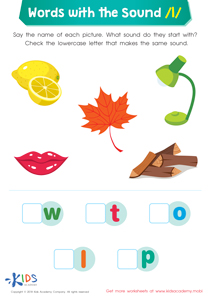
Uppercase identification Uppercase Letters Worksheets for Ages 4-9
5 filtered results
-
From - To
Enhance your child's reading skills with our Uppercase Letters Worksheets for kids aged 4-9. These engaging, printable worksheets are designed to help young learners easily identify and recognize uppercase letters through fun and interactive activities. Perfect for preschoolers, kindergartners, and early elementary students, the worksheets feature colorful illustrations, tracing exercises, and matching games. Our expertly crafted resources foster alphabet mastery, supporting foundational literacy development. Whether used in the classroom or at home, these worksheets make learning enjoyable and effective, ensuring your child builds strong, lasting uppercase letter identification skills while having fun.
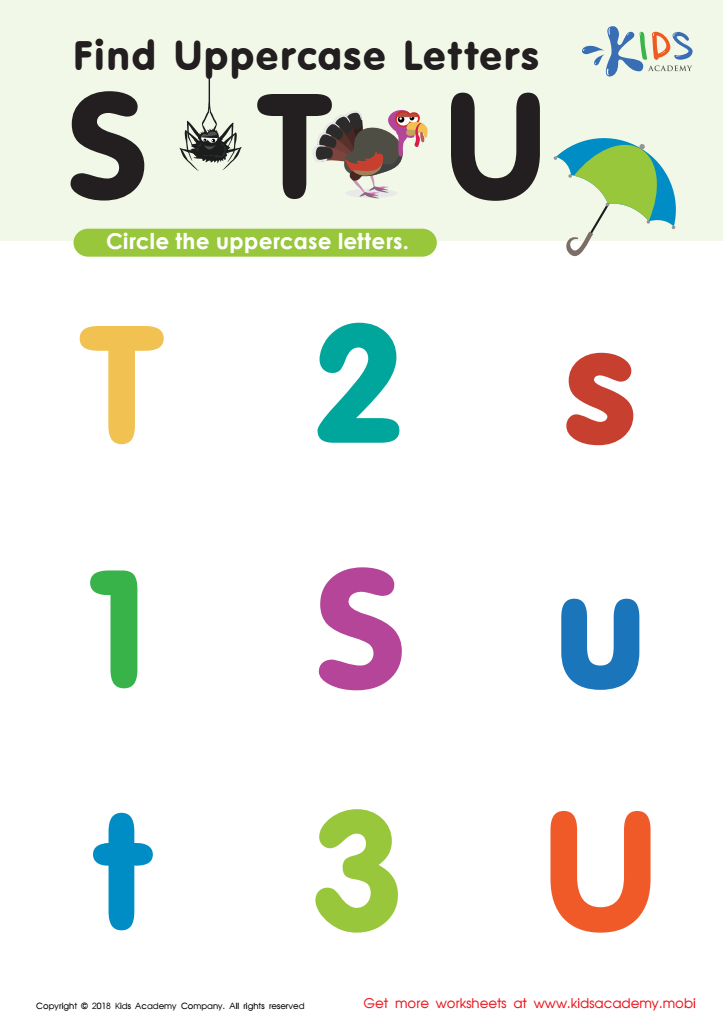
Find Uppercase Letters Worksheet
 Assign to My Students
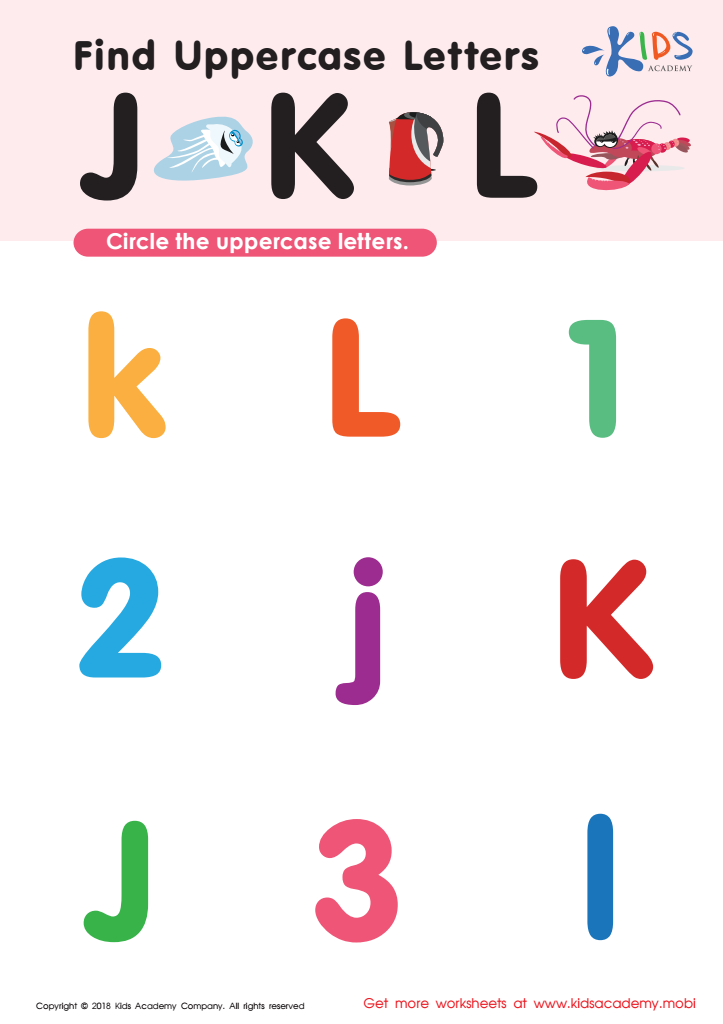
Find Uppercase Letters J, K, and L Worksheet

Find Uppercase Letters A, B, and C Worksheet
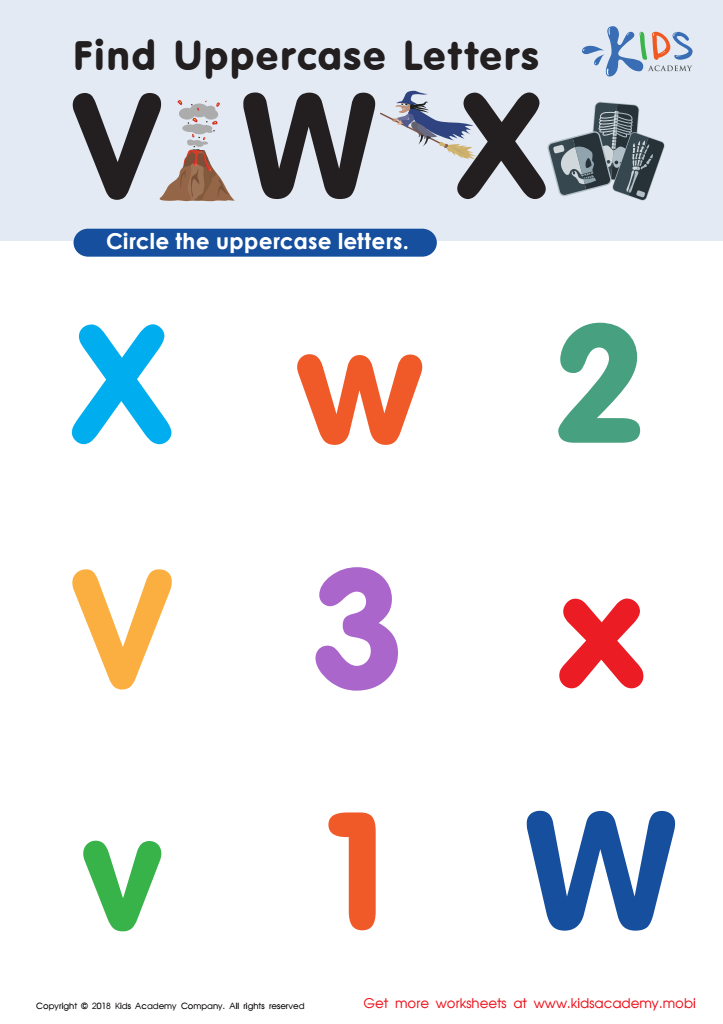
Find Uppercase Letters V, W, X Worksheet
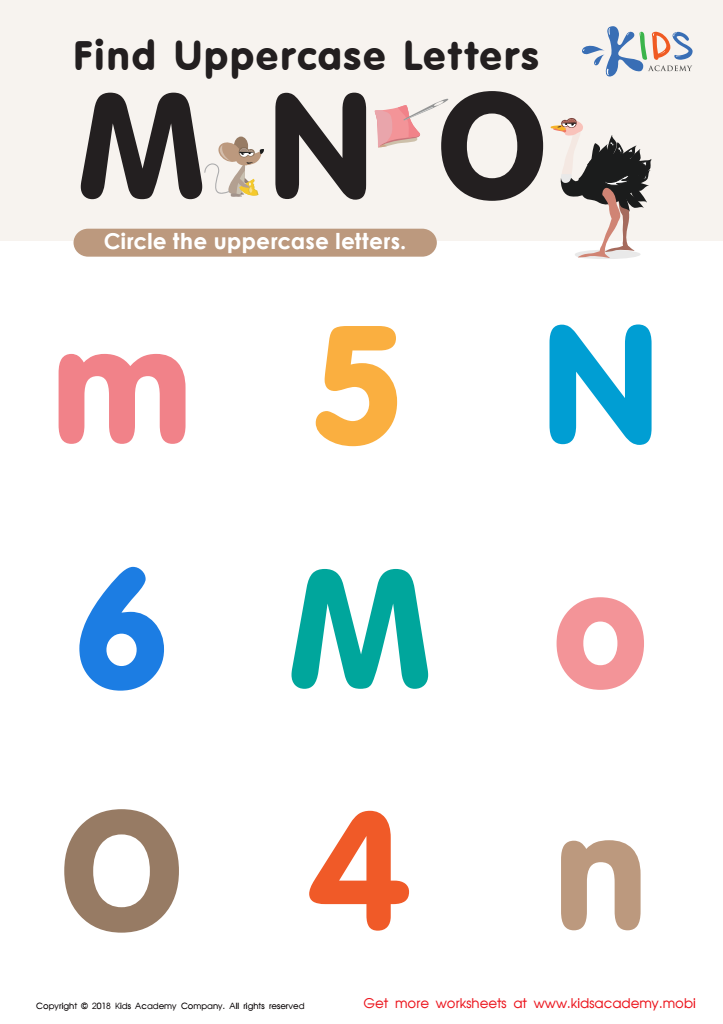
Find Uppercase Letters M, N, and O Worksheet








Uppercase letter identification is a fundamental step in early literacy development for children ages 4-9. Parents and teachers should prioritize this because it lays the groundwork for essential reading and writing skills. Recognizing uppercase letters helps children make sense of written language, fostering the ability to decode words, which is crucial for reading fluency.
Moreover, uppercase letters are often the first letters taught to young children because they are less variable in shape compared to lowercase letters, making them easier to identify and write. This initial familiarity builds a child's confidence in their literacy journey. Furthermore, uppercase letters are commonly used in prominent places such as names, titles, and signs, making their recognition practical and immediately relevant to a child’s environment.
By ensuring that children master uppercase letter identification, parents and teachers help smooth the transition to recognizing the more diverse lowercase letters. This proficiency supports the development of literacy skills across other subjects, contributing to overall educational success. Engaging activities that reinforce these skills also promote a love for learning and set a strong foundation for lifelong literacy. Therefore, focusing on uppercase letter identification is not just about learning the alphabet—it is about empowering children with the vital skills they need to thrive.