Community awareness Worksheets for Ages 4-9
5 filtered results
-
From - To
Discover our engaging Community Awareness Worksheets designed specifically for children aged 4-9! These vibrant and interactive resources help young learners understand their roles within their community. Through fun activities, kids will explore important concepts such as helping others, recognizing community helpers, and appreciating diversity. Our worksheets encourage critical thinking and teamwork while fostering empathy and social awareness. Perfect for both classroom and home use, these worksheets promote hands-on learning and igniting a child's interest in their surroundings. Enhance your child's community knowledge and build a foundation for responsible citizenship with our expertly crafted worksheets today!
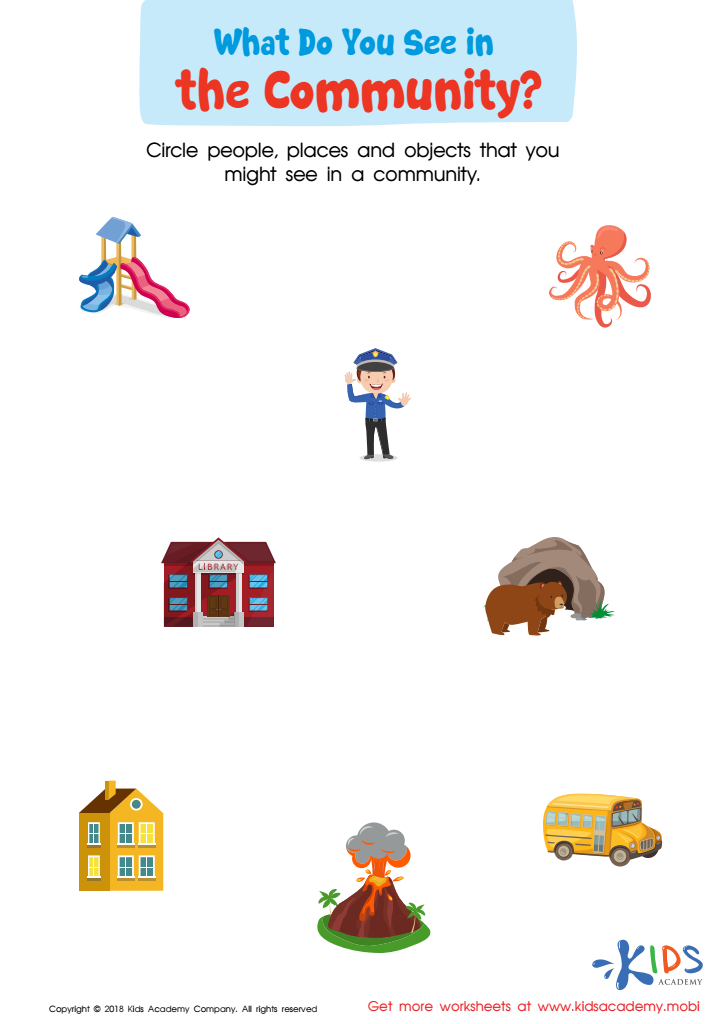
What Do You See in the Community Worksheet
 Assign to My Students
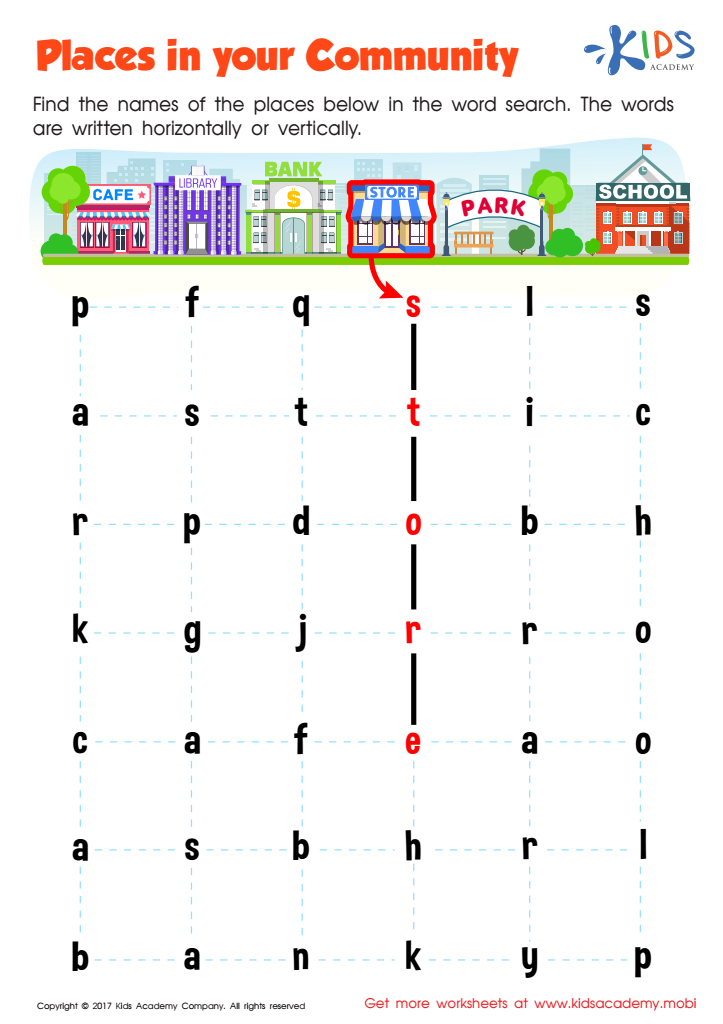
Places in Your Community Worksheet
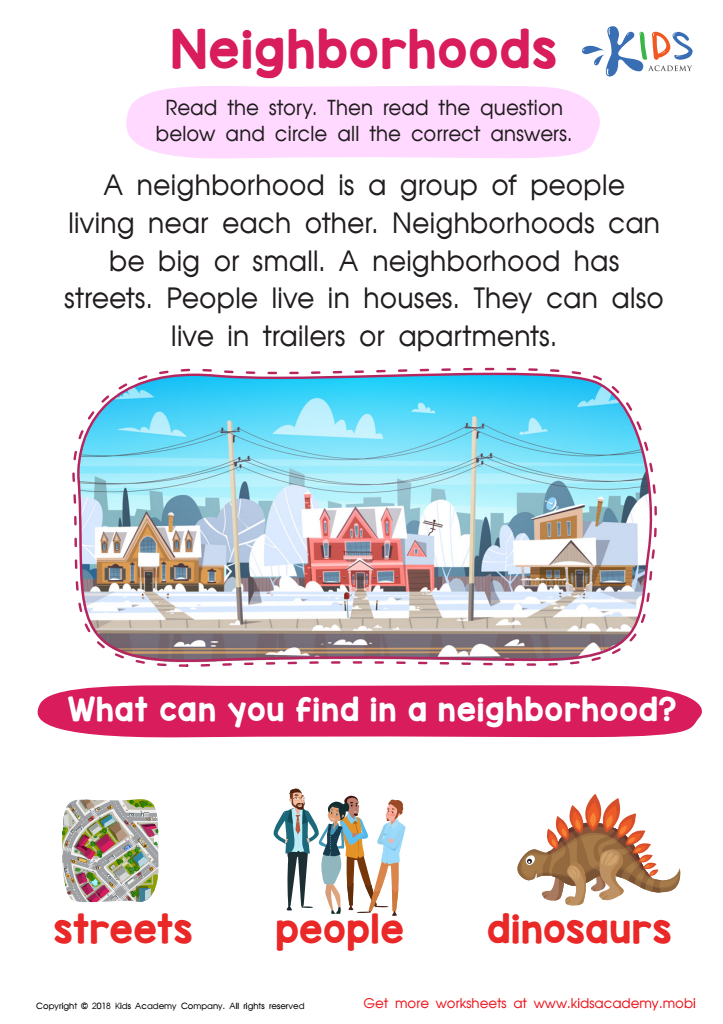
Neighborhoods Worksheet
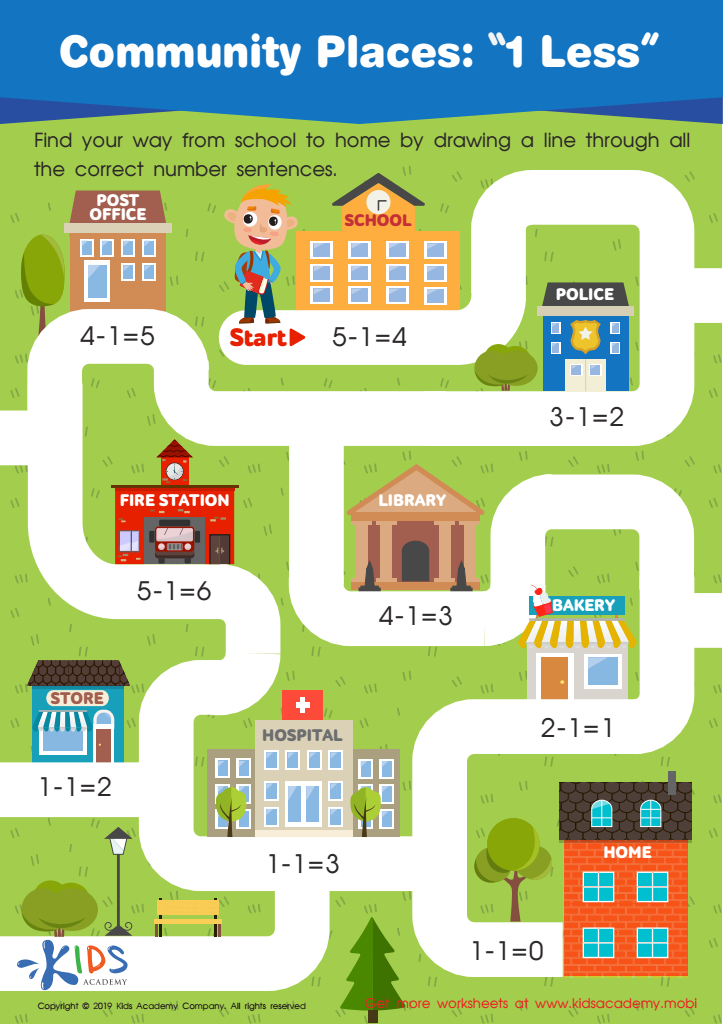
Community Places: 1 Less Worksheet
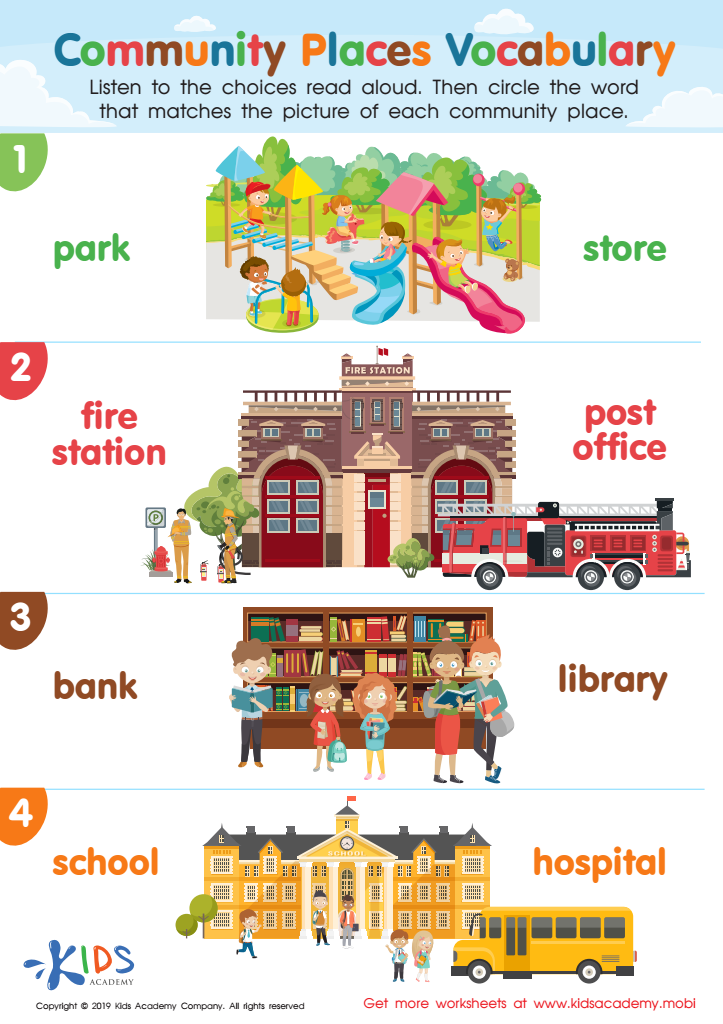
Community Places Vocabulary Worksheet





Community awareness is essential for children ages 4-9 as it forms the foundation of their social, emotional, and cognitive development. At this tender age, children are naturally curious; fostering awareness about their surroundings helps them understand their role within their community. Engaging in community activities teaches young children about diversity, empathy, and cooperation. These lessons lay the groundwork for respectful and responsible citizens.
Parents and teachers play a crucial role in cultivating this awareness. By participating in community events, visiting local organizations, or discussing relevant issues, they can introduce children to the concepts of belonging and teamwork. These experiences can spark imaginative play, where children can act out their understanding of community roles, strengthening their connection to others.
Moreover, when children develop a sense of community, they often exhibit improved confidence and problem-solving skills. Their understanding of social dynamics reinforces their emotional intelligence, preparing them for future challenges in and out of school.
In essence, nurturing community awareness empowers children with insights into collaboration, civic responsibility, and empathy. This investment pays dividends in their personal growth and shaping them into compassionate individuals who value and contribute positively to society.








