
Improve spelling skills Worksheets for Ages 4-9
3 filtered results
Difficulty Level
Grade
Age
-
From - To
Subject
Activity
Standards
Discover our "Improve Spelling Skills Worksheets" designed specifically for children aged 4-9! These engaging, printable worksheets help young learners enhance their spelling abilities with fun activities tailored to their developmental levels. Featuring colorful illustrations and interactive exercises, our worksheets keep children motivated while reinforcing essential spelling concepts. Each worksheet targets age-appropriate vocabulary and encourages practice through various formats, including tracing, filling in blanks, and matching words with images. The perfect resource for parents and teachers, these worksheets support early literacy skills and foster a love for learning. Get started today and watch your child's spelling confidence soar!
Favorites
With answer key
Interactive
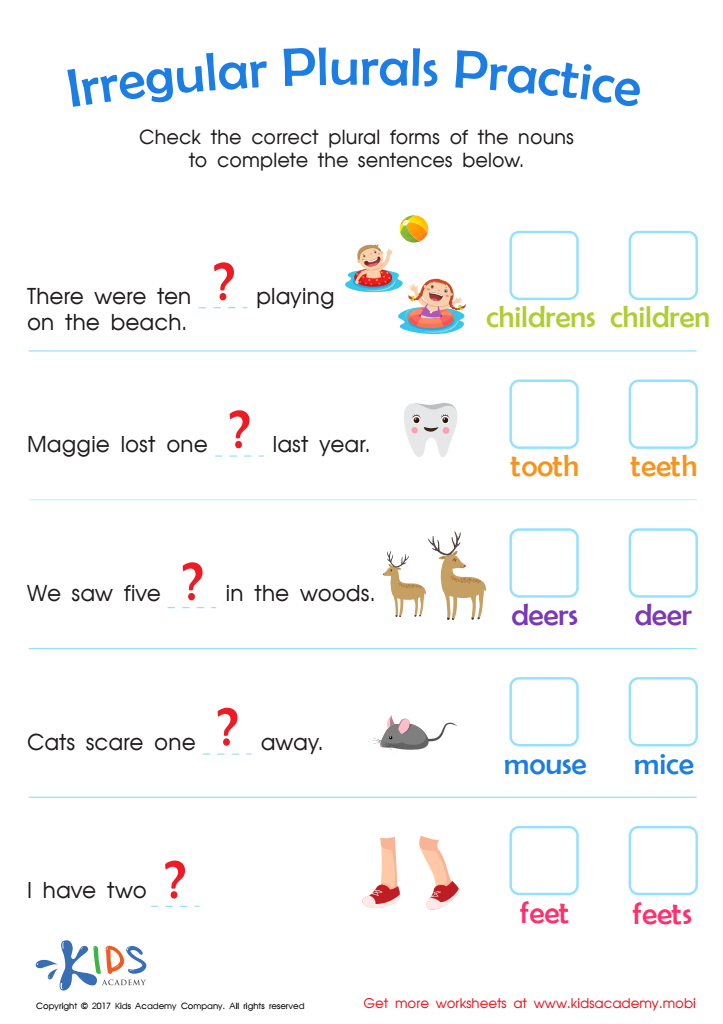
Irregular Plural Nouns Worksheet
This worksheet for 2nd graders offers an engaging activity for practicing irregular nouns by choosing the right option. It covers the most common irregular plurals, making it a quick, easy, and effective way to learn.
Irregular Plural Nouns Worksheet
Worksheet
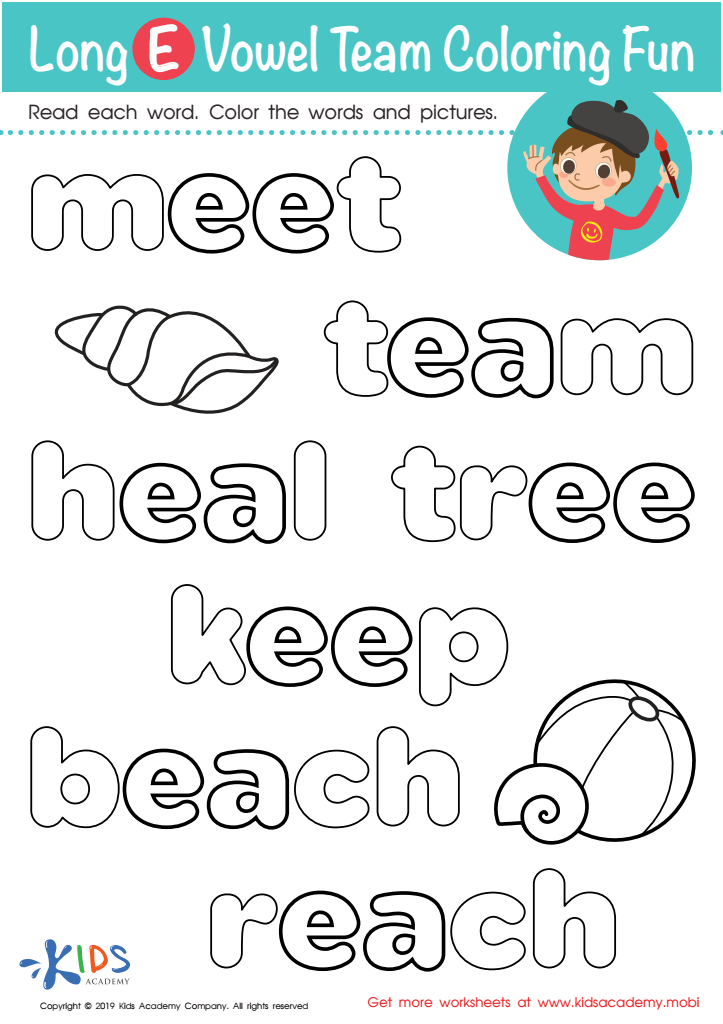
Long E Vowel Team Coloring Worksheet
Divide your students into teams and have them read words with long E sounds, such as "meet" and "team." Let them recognize that the sound can be created with either "ee" or "ea" letter pairings. Then, have the teams color words and pictures with the appropriate letters. This will make your phonics lesson fun and effective.
Download (PDF)
 Assign to My Students
Assign to My Students
Long E Vowel Team Coloring Worksheet
Worksheet
Join Kids Academy for Free
Who is primarily going to use this learning content?







Improving spelling skills in children aged 4 to 9 is vital for several reasons. First, spelling contributes to overall literacy development, which is foundational for effective communication. As children learn to spell, they enhance their reading comprehension and writing abilities. Spelling words correctly helps them express their thoughts clearly and confidently.
Secondly, strong spelling skills boost self-esteem. Children who can spell well often feel more competent in their academic pursuits, leading to a greater love of learning. This positive reinforcement encourages them to engage more in reading and writing activities, further enhancing their skills.
Moreover, spelling is closely linked to phonics and vocabulary development. As children decode words phonetically, they gain a richer understanding of language structure, which expands their vocabularies and enables them to express more complex ideas.
Finally, in today’s digital age, effective spelling remains important in written communication, whether in school assignments or casual texting. Teachers and parents act as important role models in this endeavor. By prioritizing spelling skills, we equip children with the tools they need to succeed in education and beyond, fostering lifelong learners who can articulate their ideas with clarity.








