Understanding light sources Worksheets for Ages 4-9
6 filtered results
-
From - To
Explore our "Understanding Light Sources Worksheets" designed for children ages 4-9! These engaging and interactive worksheets help young learners grasp the concept of light sources in their everyday lives. By using colorful illustrations and age-appropriate activities, children will identify natural and artificial light sources, such as the sun, lamps, and flashlights. Each worksheet fosters critical thinking, creativity, and environmental awareness while making learning fun and accessible. Perfect for home or classroom use, our resources encourage interplay between hands-on learning and visual understanding. Ignite curiosity about the world of light with our delightful worksheets today!
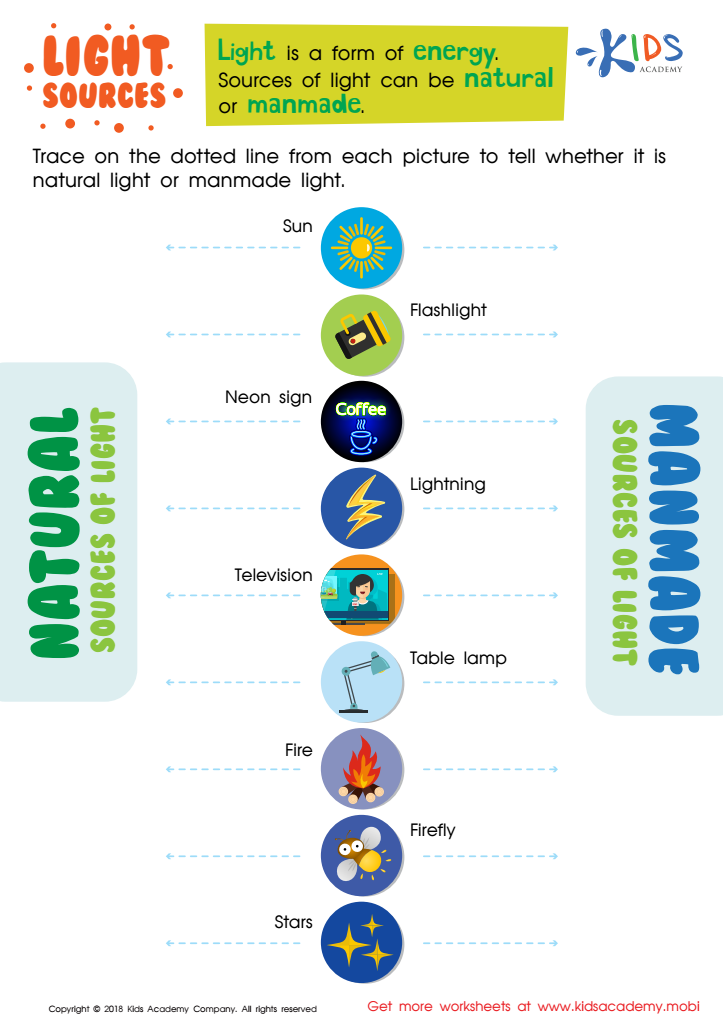
Natural and Manmade Light Sources Worksheet
 Assign to My Students
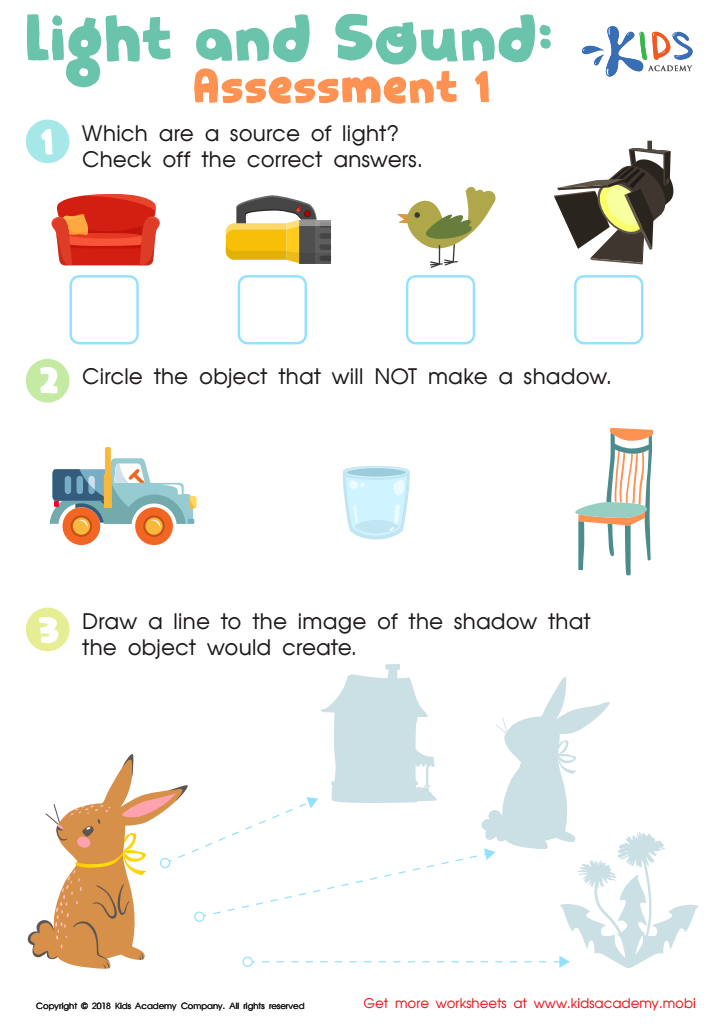
Light and Sound: Assessment 1 Worksheet
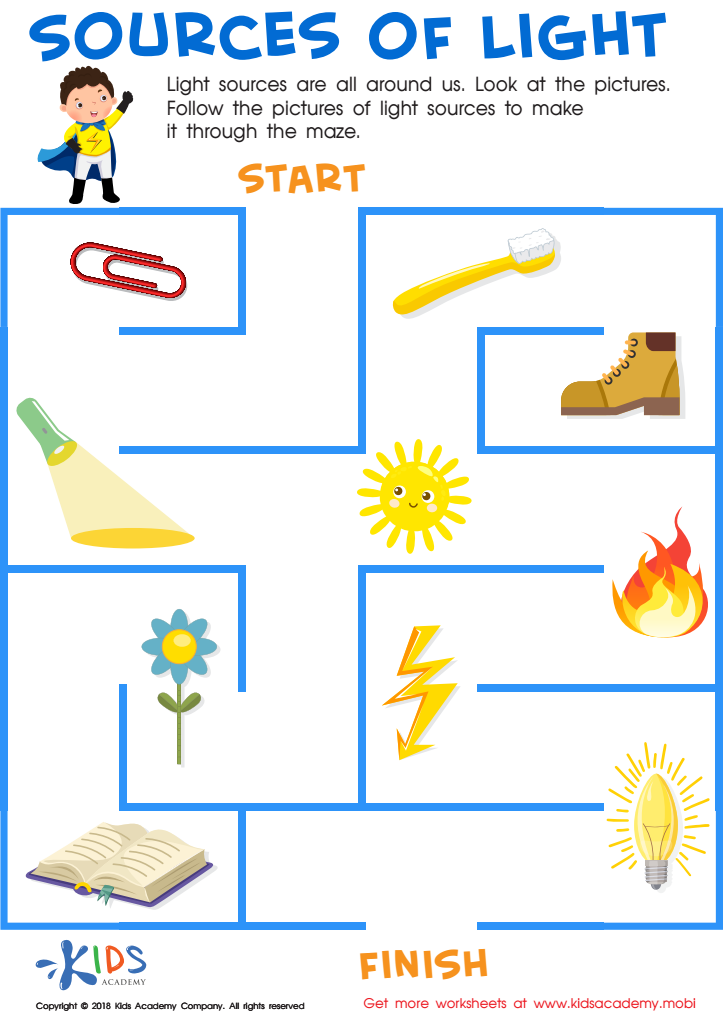
Sources of Light Worksheet
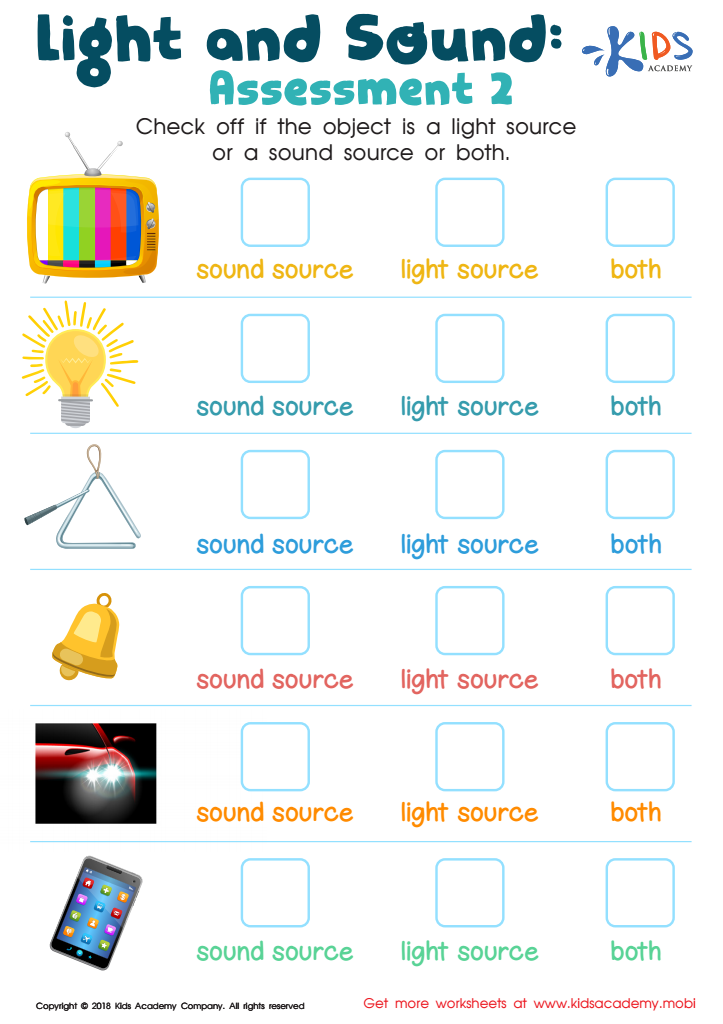
Light and Sound: Assessment 2 Worksheet
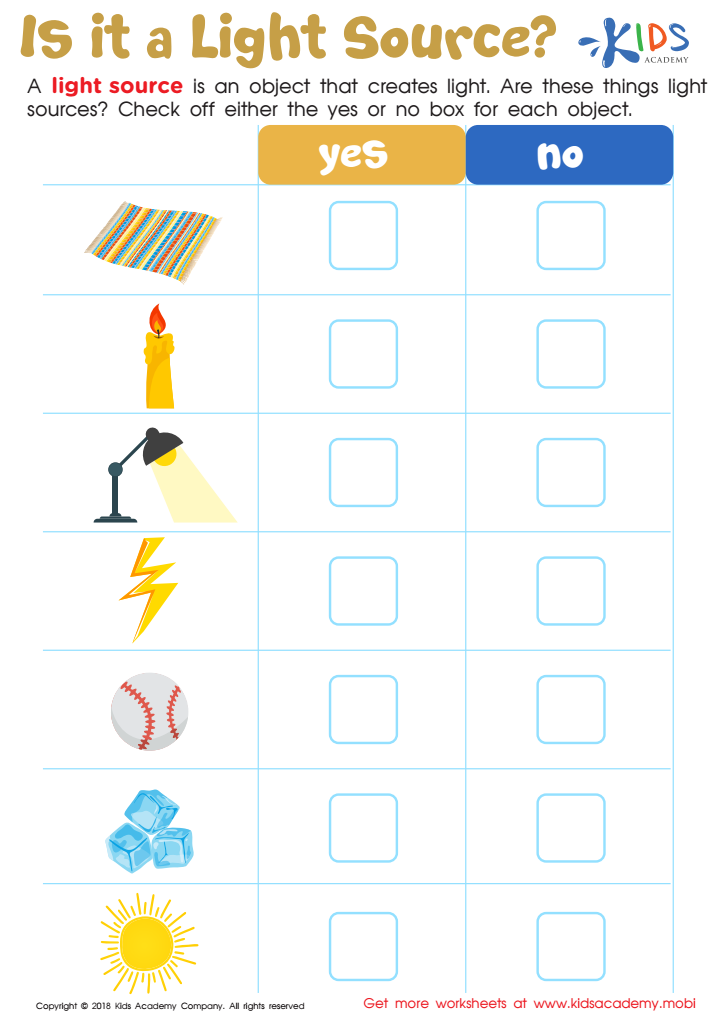
Is It a Light Source? Worksheet
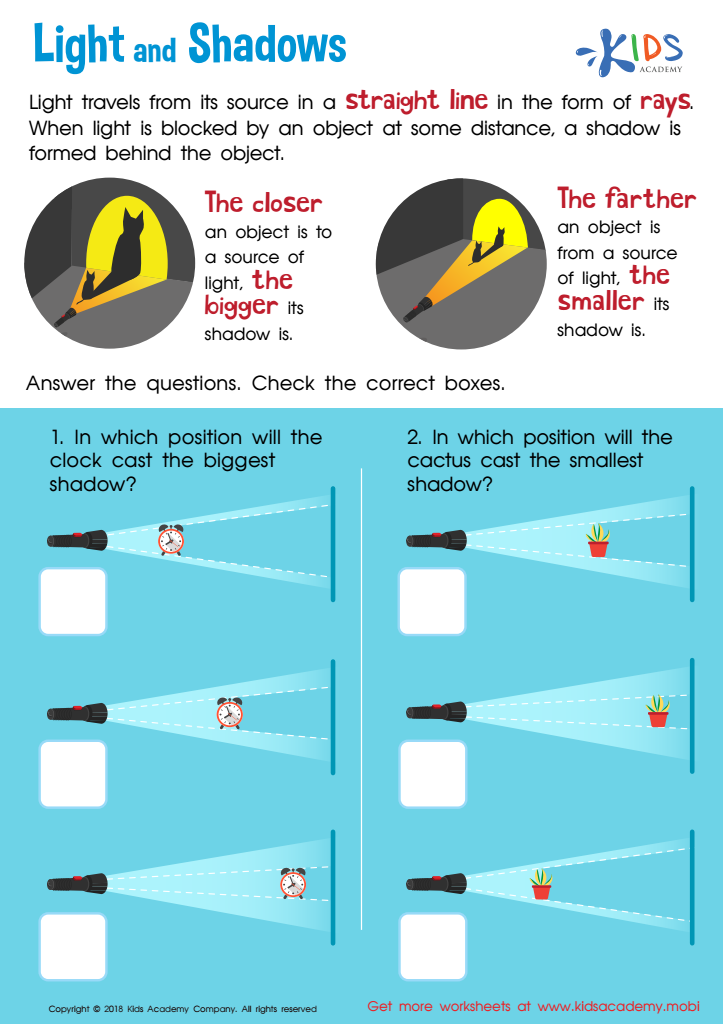
Light and Shadow Worksheet for Grade 3


.jpg)



Understanding light sources is crucial for children aged 4-9, as it lays the foundation for scientific thinking and curiosity. At this developmental stage, children are naturally inquisitive and eager to explore the world around them. By introducing them to light sources, such as the sun, lamps, or flashlights, parents and teachers can help children grasp essential concepts related to science, safety, and the environment.
Learning about light promotes critical thinking skills as children investigate how light travels, how shadows are formed, and how different light sources affect our perception of color and space. Engaging in activities that explore light encourages hands-on learning and stimulates creativity. For instance, experiments with prisms or crafts that involve lights can make the learning process enjoyable and memorable.
Moreover, discussions about light sources can also cultivate an understanding of safety, particularly regarding the sun and other strong light sources, teaching children to make informed choices about their well-being.
Ultimately, comprehension of light sources builds scientific literacy and experiential learning, bridging gaps between everyday life and abstract concepts. This multifaceted understanding empowers children with the knowledge and skills crucial for their ongoing education and personal development.








