Understanding mass Worksheets for Ages 4-9
3 filtered results
-
From - To
Unlock the world of measurement with our "Understanding Mass Worksheets" designed for children ages 4-9! These engaging and colorful worksheets introduce young learners to the concept of mass, helping them grasp the difference between light and heavy objects. Through interactive activities and fun illustrations, kids will develop essential skills in comparing weights and understanding measurement units. Perfect for homeschooling or supplemental learning, our worksheets cater to diverse learning styles, ensuring each child gains confidence in their math abilities. Explore our comprehensive resources to make learning about mass exciting and relatable, setting the foundation for future mathematical success!
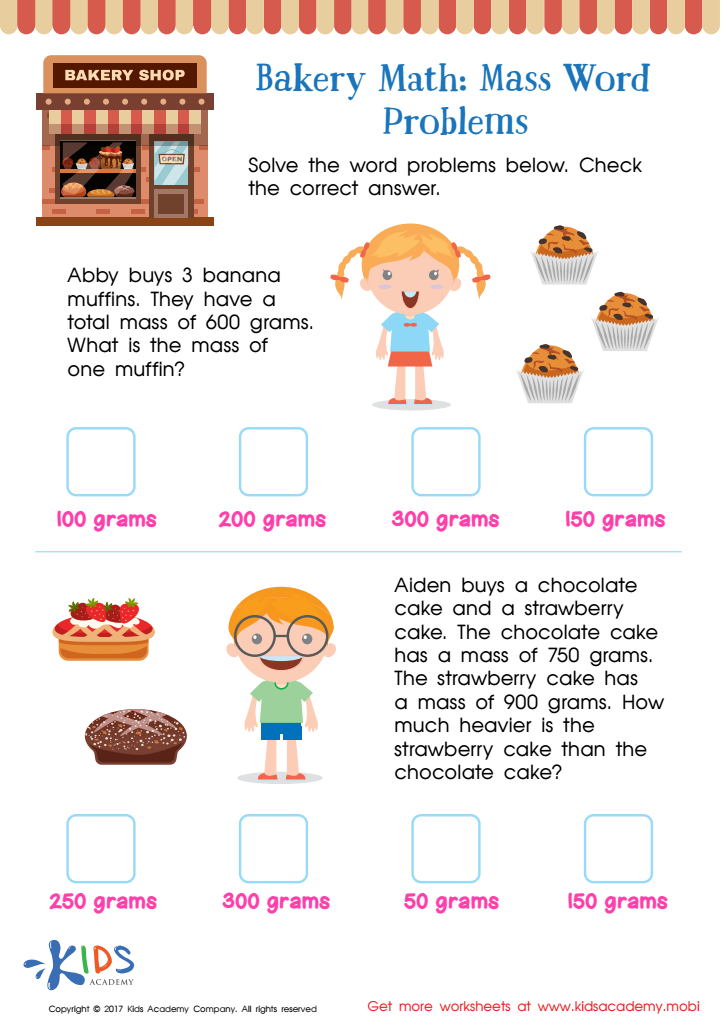
Mass Word Problems Worksheet
 Assign to My Students
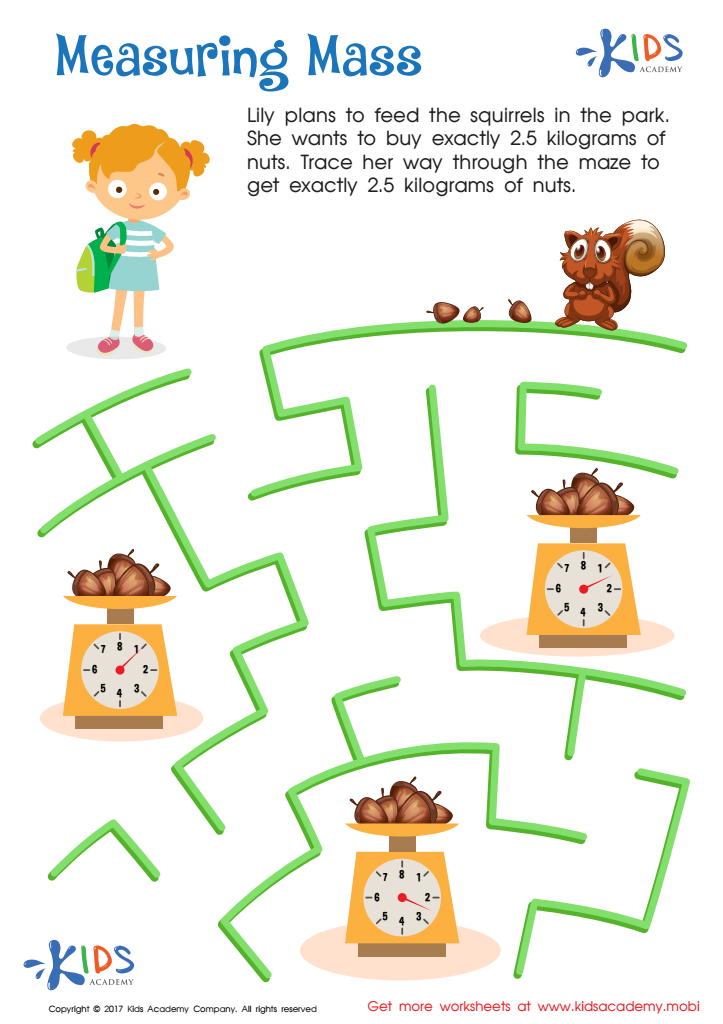
Measuring Mass Worksheet







Understanding mass is essential for children aged 4-9 as it lays the foundation for critical thinking and problem-solving skills. At this stage, children are naturally curious and eager to explore their environment. By introducing concepts of mass—such as weight, heaviness, and lightness—parents and teachers can foster a hands-on learning experience that stimulates this curiosity. Engaging in activities like comparing the weight of different objects or using balance scales helps children develop observational skills and encourages them to ask questions.
Moreover, grasping mass concepts enhances various cognitive abilities, including measurement, estimation, and collaboration. Learning through playful experimentation not only ignites interest in scientific principles but also promotes teamwork when children work in groups. Furthermore, understanding mass reinforces mathematical foundations, preparing children for more complex concepts as they progress in their education.
The implications of lacking this understanding are significant; it can hinder future learning in science, mathematics, and everyday life scenarios, such as cooking and shopping. Therefore, by prioritizing mass education in early childhood, stakeholders lay a vital groundwork for lifelong learning and perspective-building, ensuring that children develop essential skills that extend beyond the classroom.








