Weather identification Worksheets for Ages 4-9
7 filtered results
-
From - To
Explore our engaging Weather Identification Worksheets designed for young learners aged 4-9! These interactive resources are perfect for helping children recognize and understand different weather types, from sunny and rainy days to snowy and windy conditions. Our worksheets feature vibrant illustrations and age-appropriate activities that encourage critical thinking, visual recognition, and vocabulary development. Each worksheet inspires fun while promoting essential skills and a love for learning about the world around them. Whether in the classroom or at home, our weather worksheets make learning about meteorology an exciting adventure for little ones. Download now and let the exploration begin!
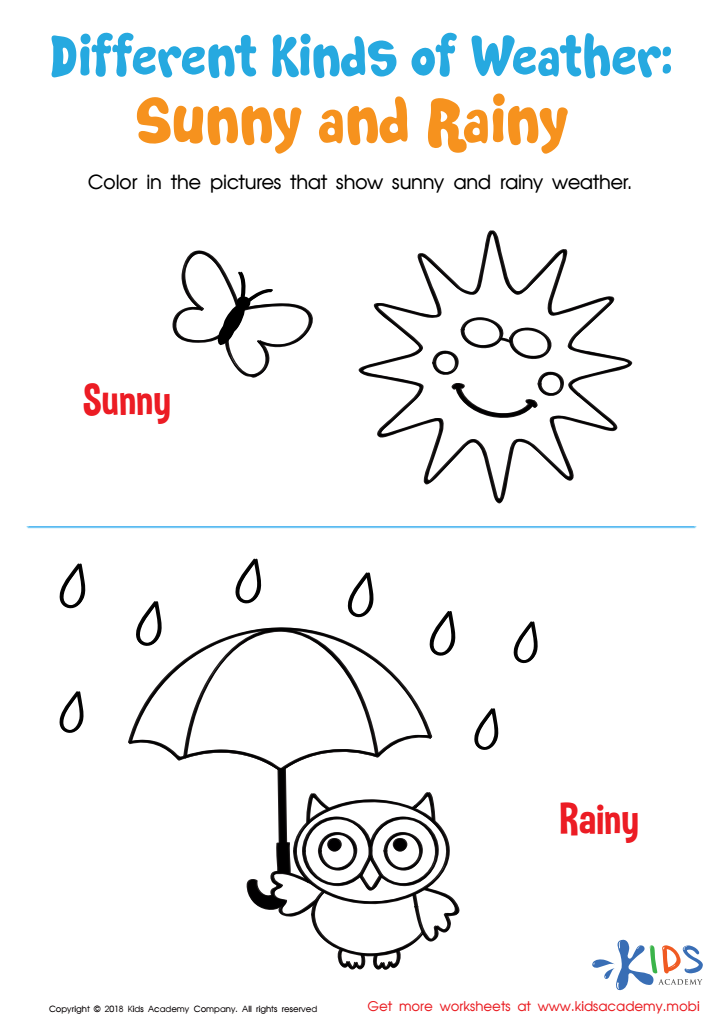
Different Kinds of Weather: Sunny and Rainy Worksheet
 Assign to My Students
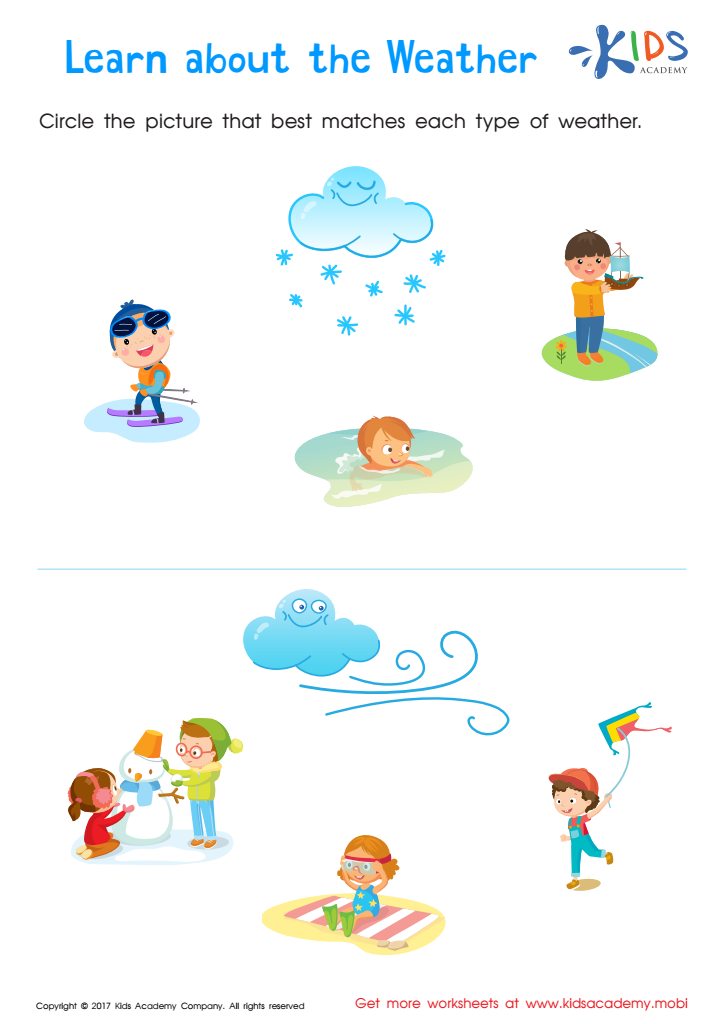
About the Weather Printable
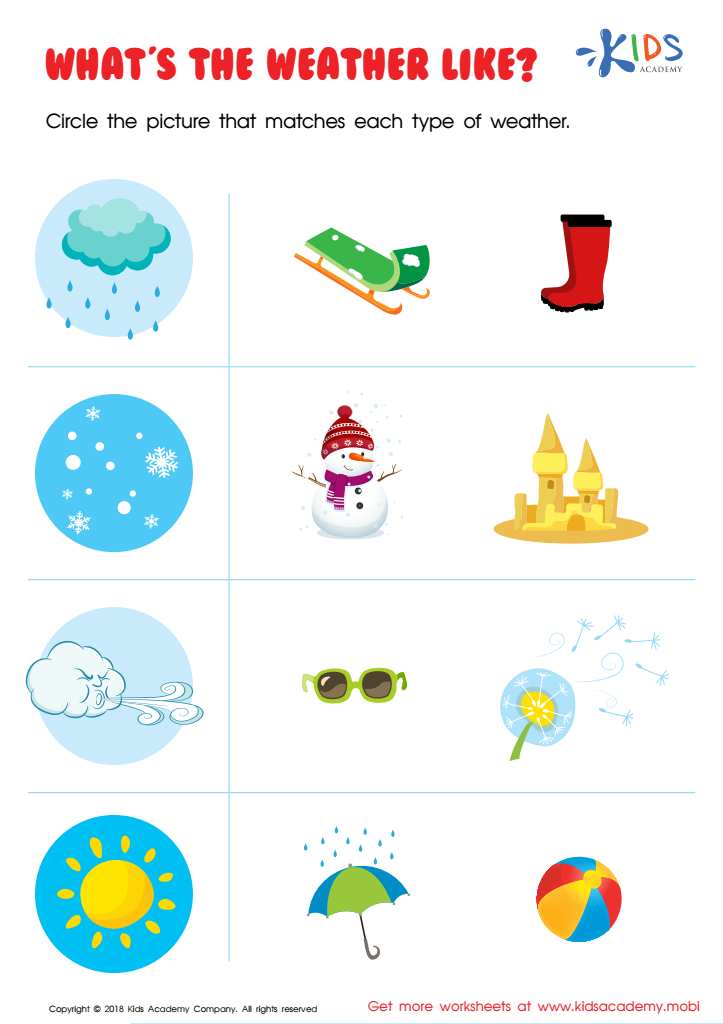
What's the Weather Like? Worksheet
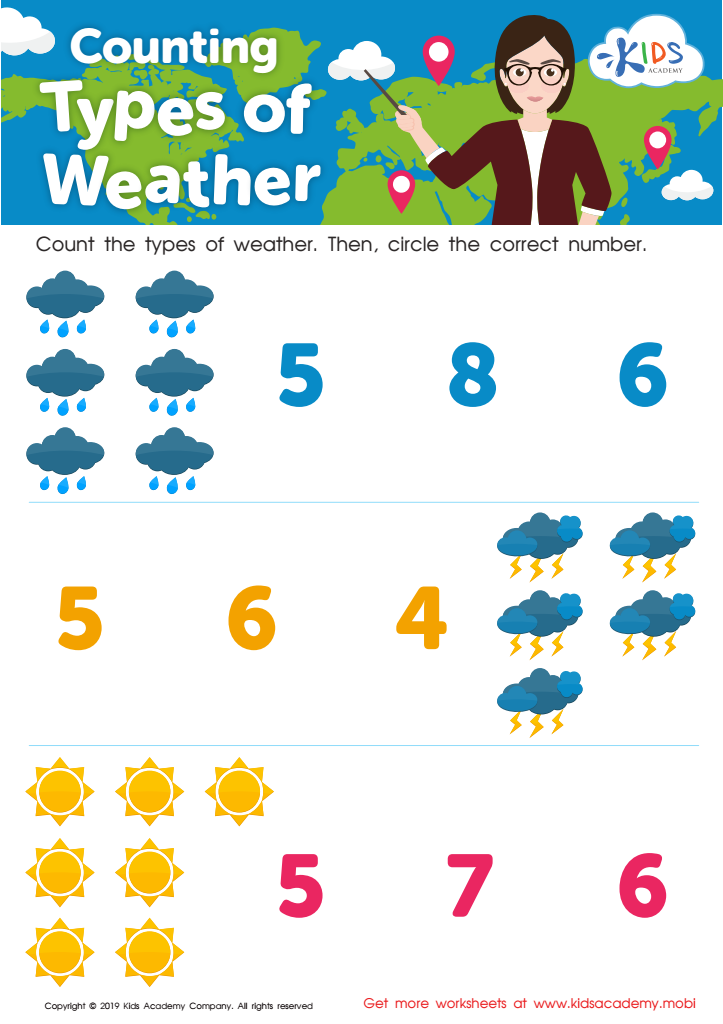
Counting Types of Weather Worksheet
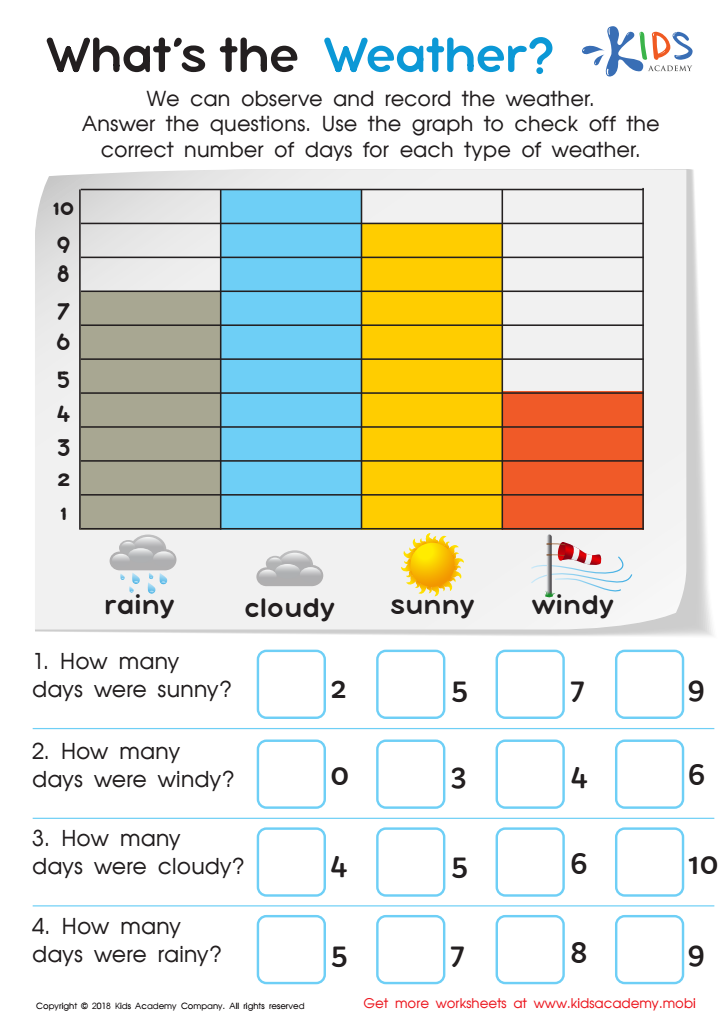
What's the Weather? Worksheet
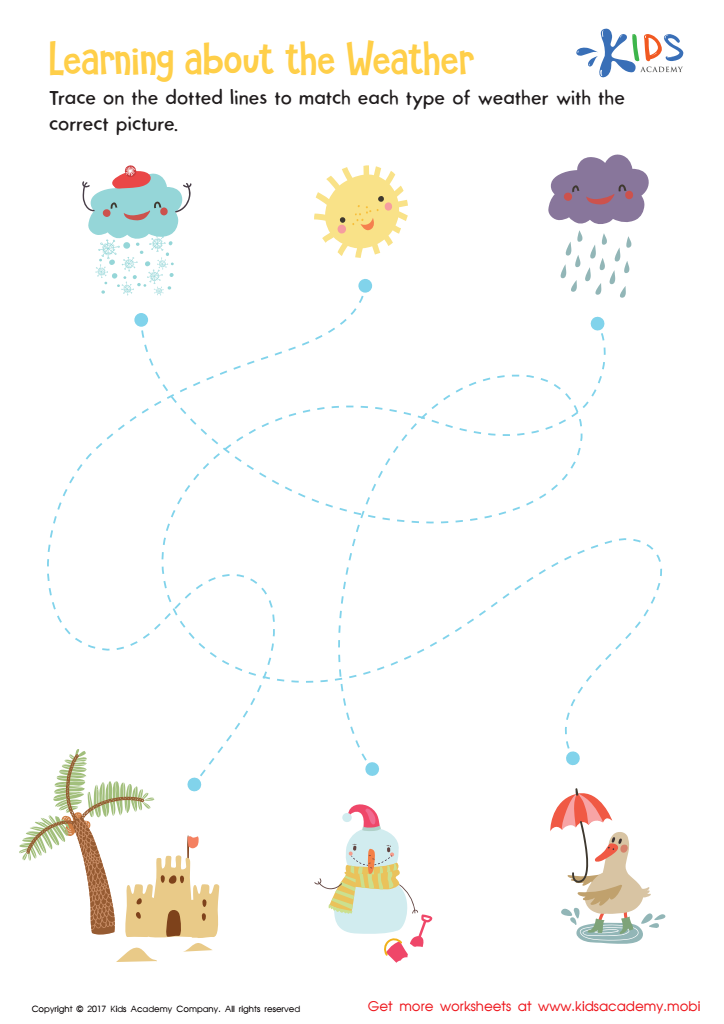








Weather identification is a vital skill for children aged 4-9, and it deserves attention from both parents and teachers. Understanding various weather conditions not only fosters a child's curiosity about the world around them but also enhances their cognitive and observational skills. By recognizing different types of weather, children learn about temperature, seasons, and the environment, which lays the groundwork for their future scientific understanding.
Moreover, weather awareness promotes safety and preparedness. By teaching children to identify extreme weather conditions like rain, snow, storms, or sunshine, they begin to comprehend the importance of dressing appropriately and making safe choices—like carrying an umbrella or wearing sunscreen. These lessons can help them develop responsible habits that contribute to their overall well-being.
Furthermore, group activities related to weather identification can bolster social skills as children collaborate and discuss observations, strengthening their communication and teamwork abilities. Parents and teachers have the unique opportunity to engage children with activities like nature walks, weather charts, or picture books, enhancing their learning experience. Ultimately, instilling an understanding of weather in young minds nurtures not just practical skills, but also a lifelong appreciation for the natural world, fostering inquisitive learners who are well-prepared for future challenges.








