Word formation understanding Worksheets for Ages 4-9
3 filtered results
-
From - To
Discover our "Word Formation Understanding Worksheets for Ages 4-9" at Kids Academy! Designed to boost young learners' vocabulary and language skills, these worksheets use fun illustrations and age-appropriate activities to teach the basics of word construction, prefixes, suffixes, and root words. Suitable for children from preschool to third grade, they help improve reading and writing fluency through engaging exercises that foster comprehension and retention. Perfect for classroom or home use, our worksheets provide a solid foundation for early literacy success, empowering kids to build strong linguistic abilities with confidence. Start your child on a journey of language mastery today!
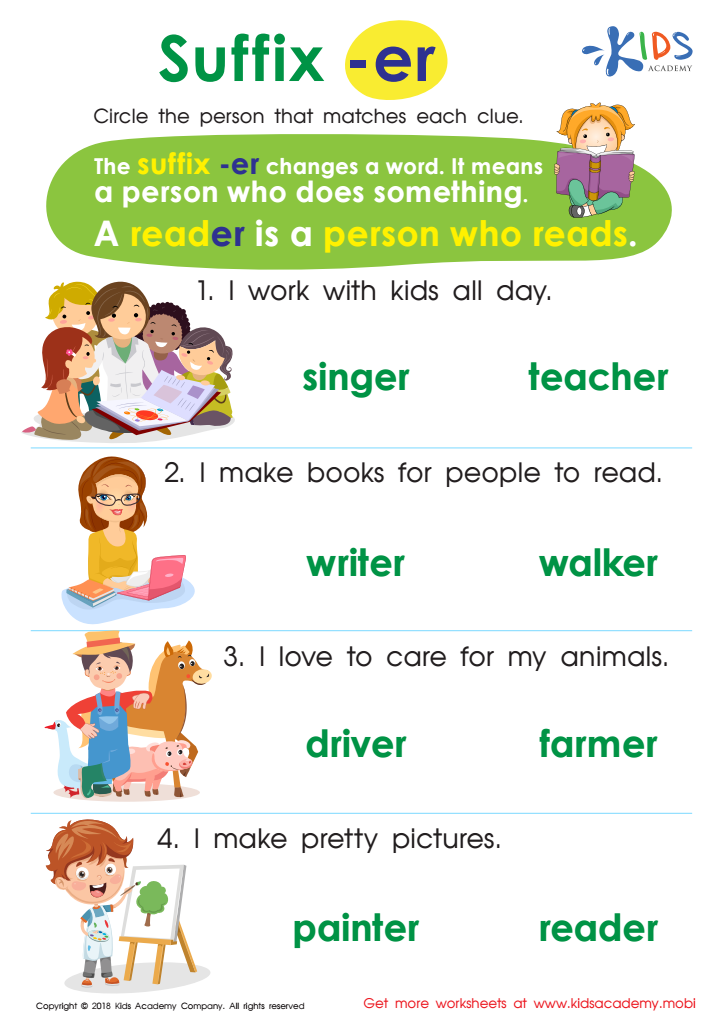
Suffix –er Printable Worksheet
 Assign to My Students
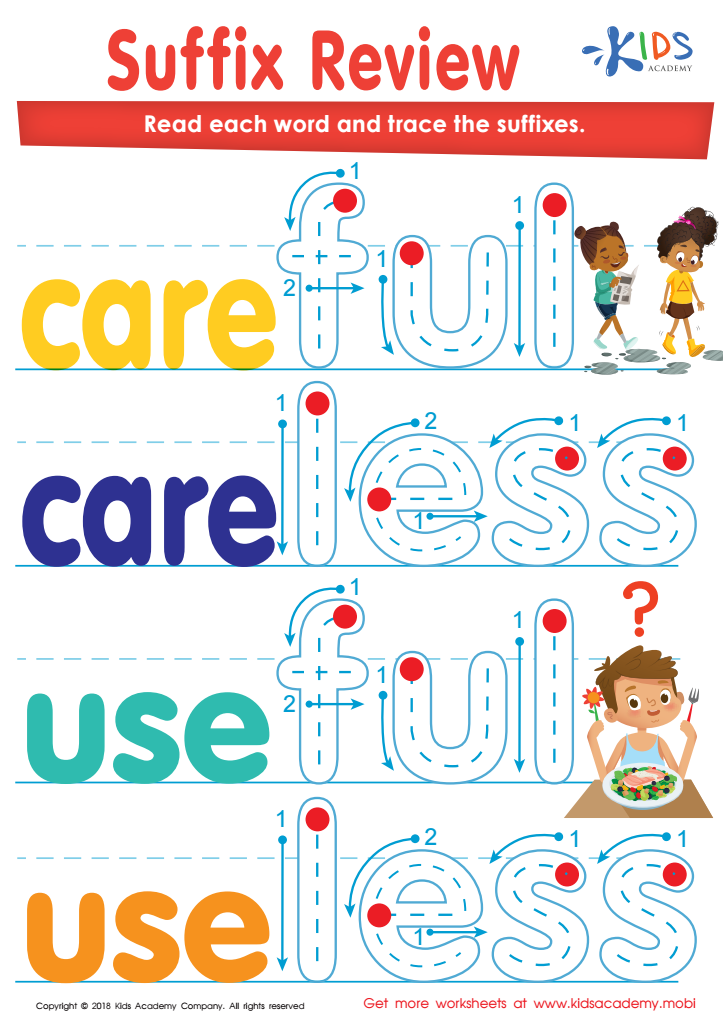
Suffix Review Worksheet
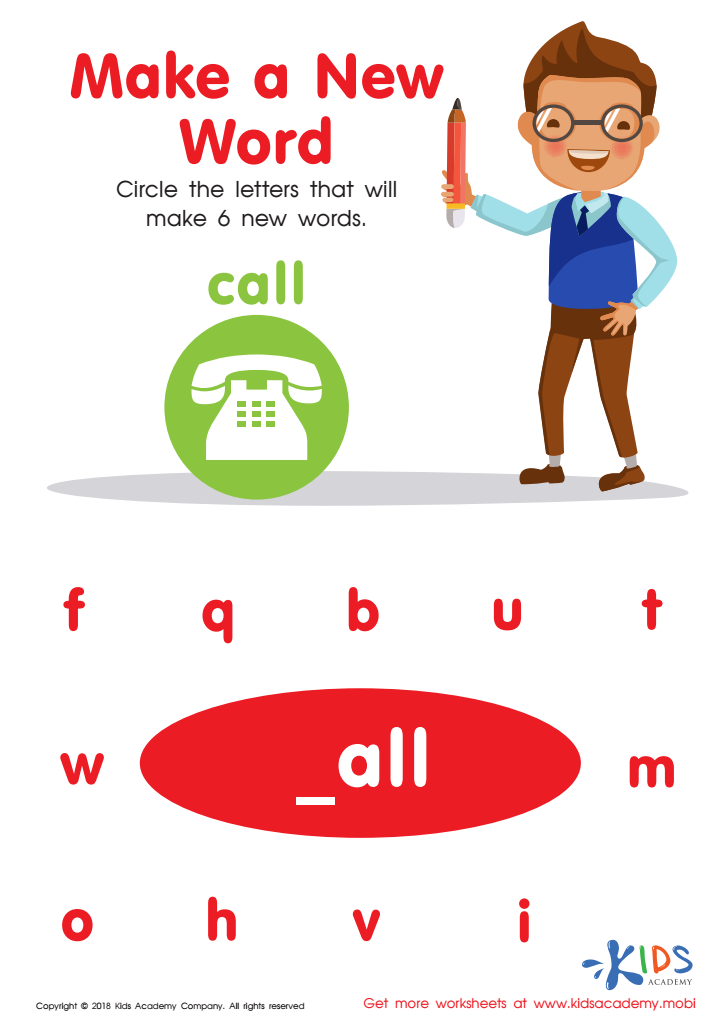
Make a New Word Worksheet





Understanding word formation is crucial for young children aged 4-9 because it lays the foundation for effective communication and literacy skills. First, it enhances vocabulary development. When children learn how words are formed, they can deduce the meaning of new words by recognizing roots, prefixes, and suffixes. This not only enriches their vocabulary but also improves their ability to comprehend reading materials, facilitating overall academic success.
Second, understanding word formation boosts spelling proficiency. Recognizing patterns in word constructions helps children spell new and complex words correctly. This skill is especially beneficial as they progress to more advanced levels of reading and writing.
Moreover, understanding how words are composed fosters critical thinking and problem-solving skills. Children learn to analyze and break down words, which can improve cognitive functions such as memory and reasoning. This method of learning encourages intellectual curiosity and supports lifelong learning habits.
Lastly, a solid grasp of word formation boosts confidence. As children become more adept in language, they are more likely to participate in discussions, read aloud, and write creatively, which builds their self-assurance. Overall, parents and teachers should prioritize word formation education to equip children with essential language skills vital for their academic and personal growth.








