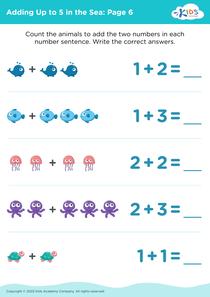
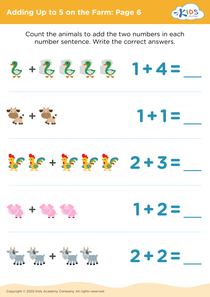
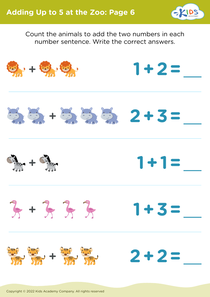
Addition skills Adding in the Forest Worksheets for Ages 4-9
14 filtered results
-
From - To
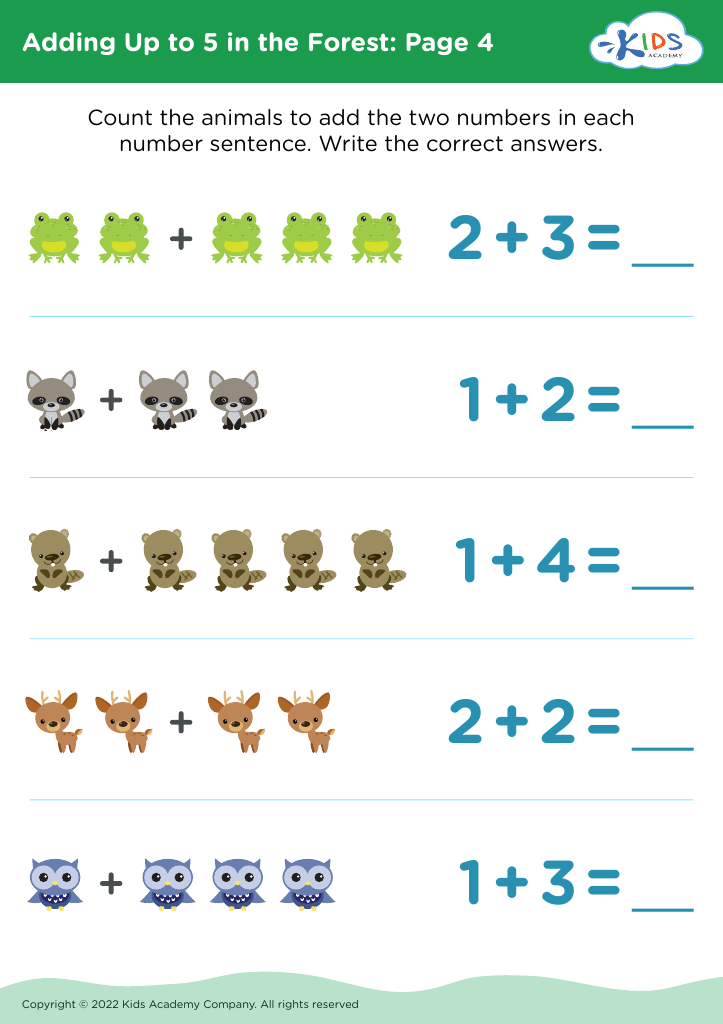
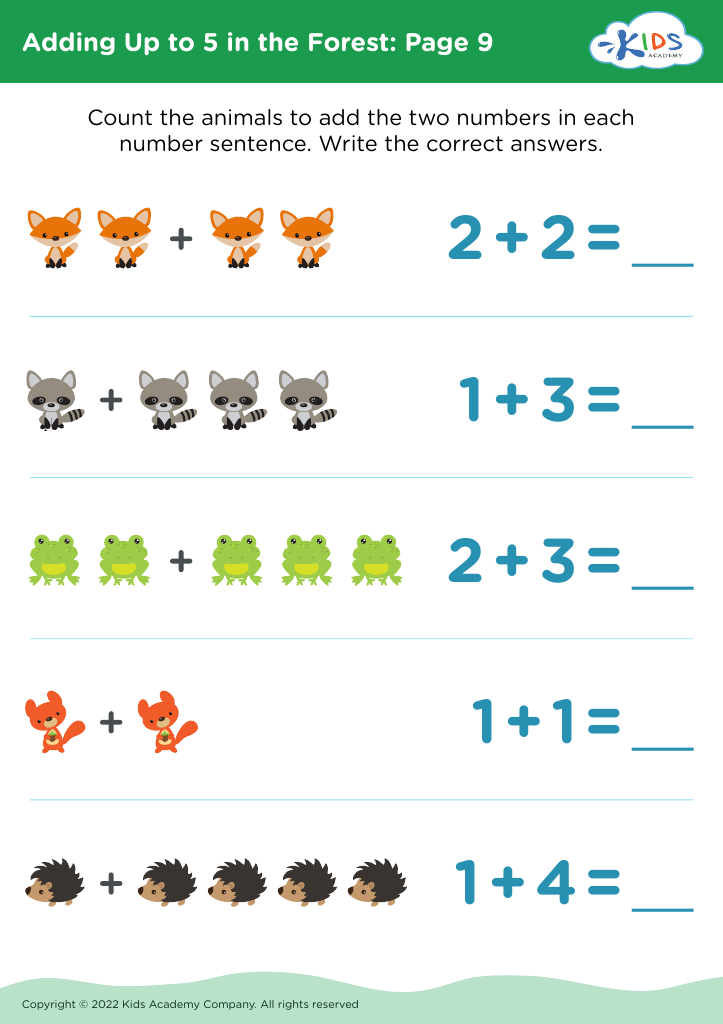
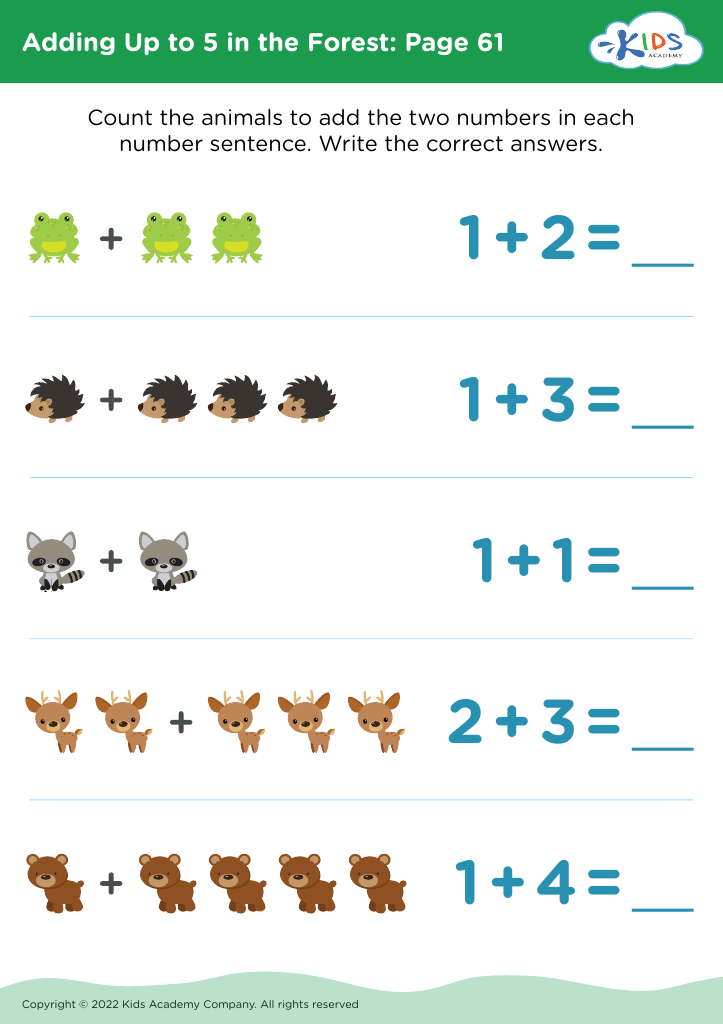
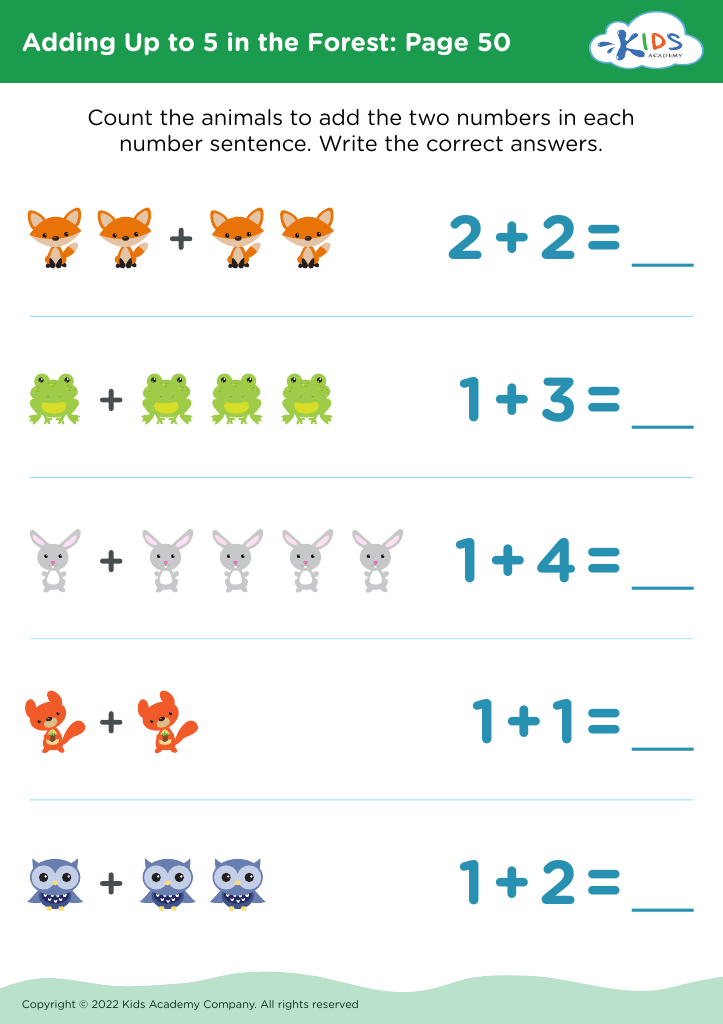
Enhance your child's math abilities with our "Addition Skills: Adding in the Forest" worksheets, designed for ages 4-9. These expertly crafted resources transform learning addition into an exciting adventure. Each activity features captivating forest-themed illustrations, engaging kids while they practice adding numbers. Aligned with educational standards, our worksheets foster a strong foundation in basic math, encouraging problem-solving and critical thinking skills. Suitable for both classroom and at-home use, they provide a fun and interactive way for children to gain confidence and improve their addition skills. Unlock the door to a magical learning journey, and watch your young mathematician flourish!
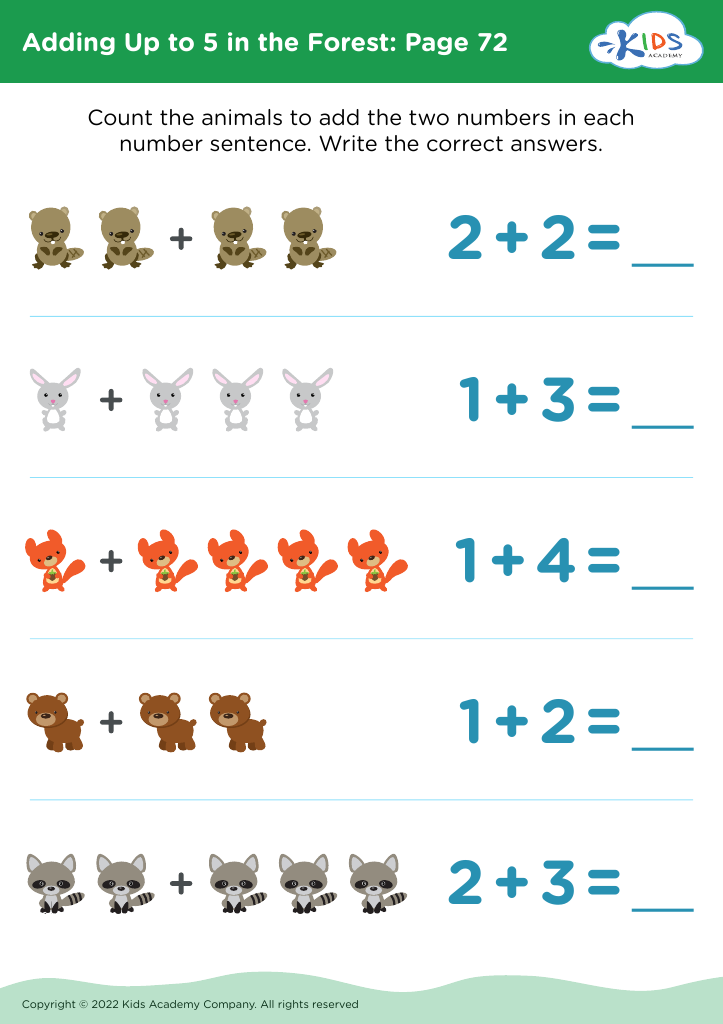
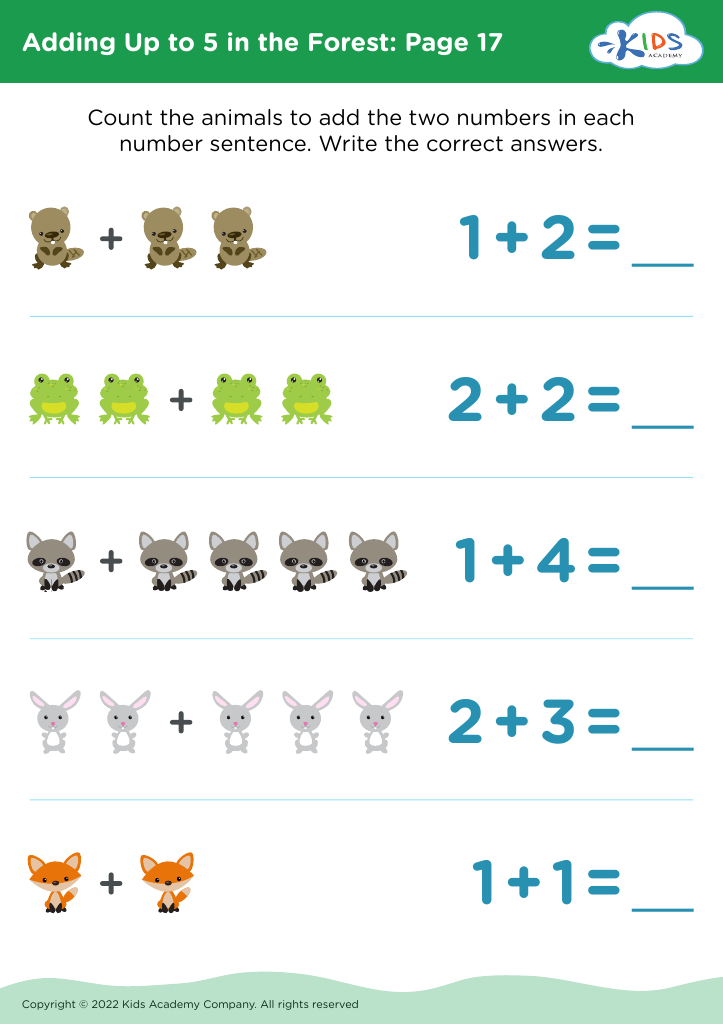
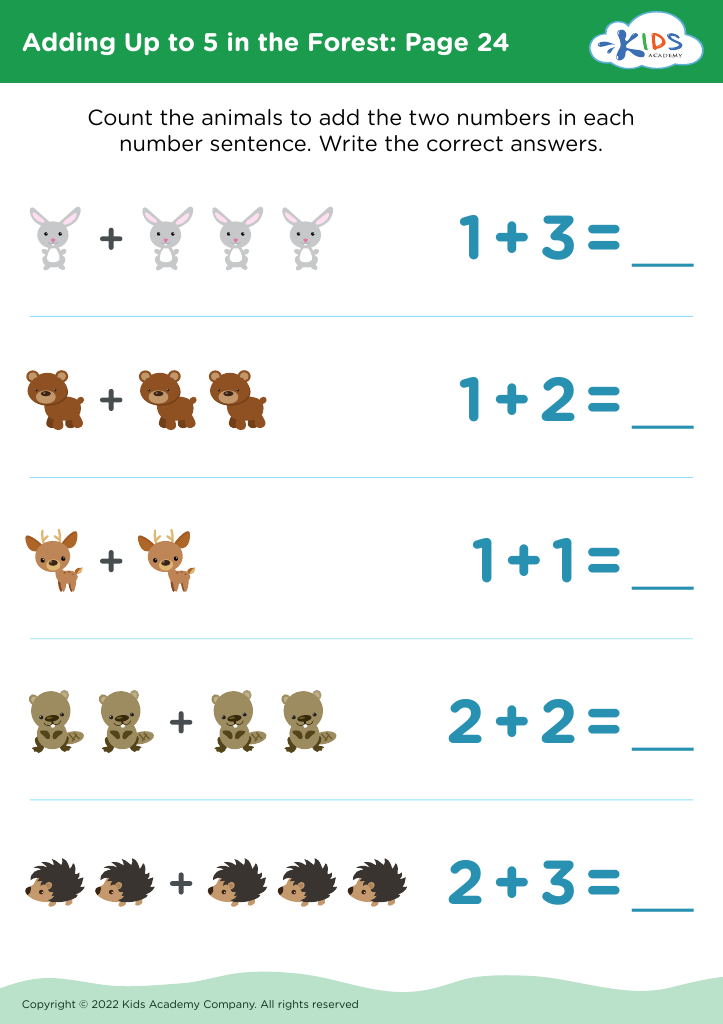
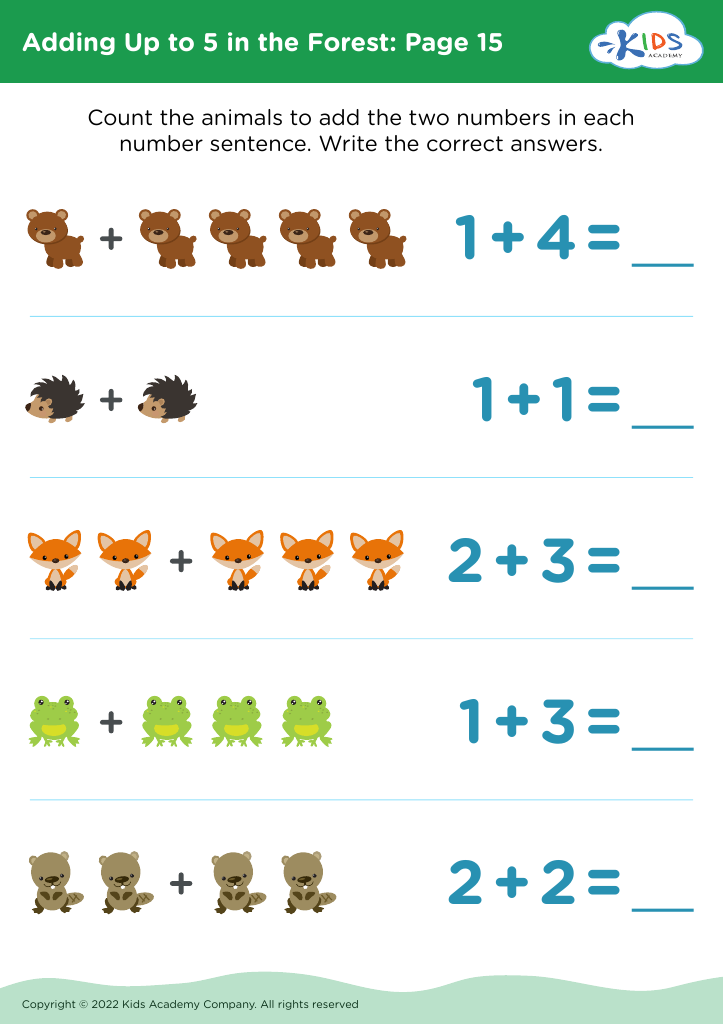
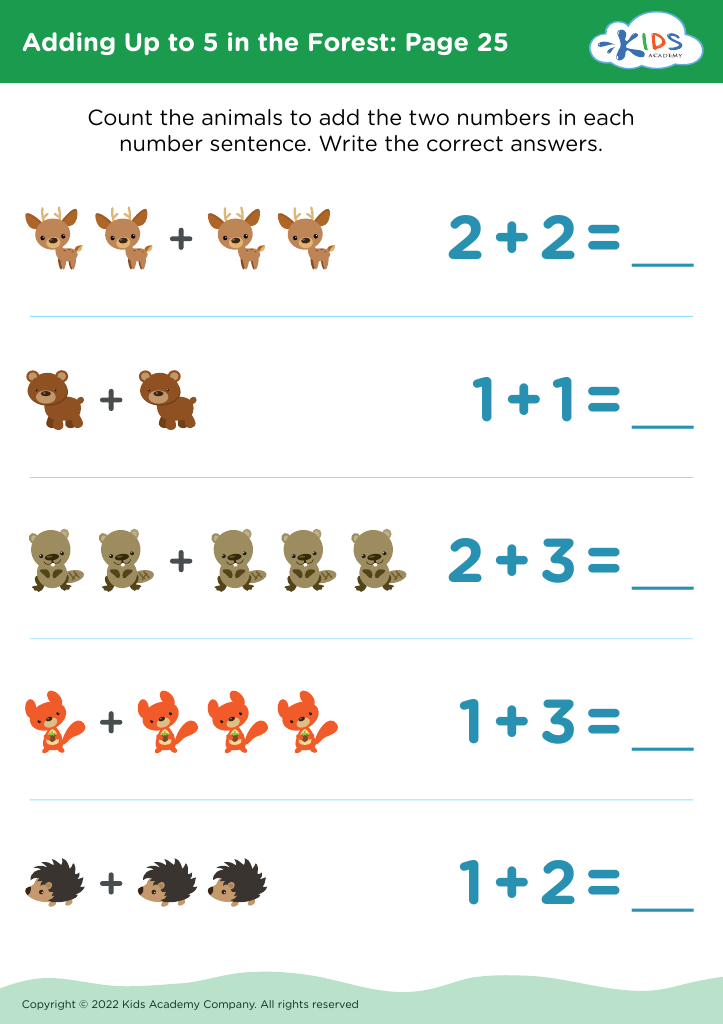
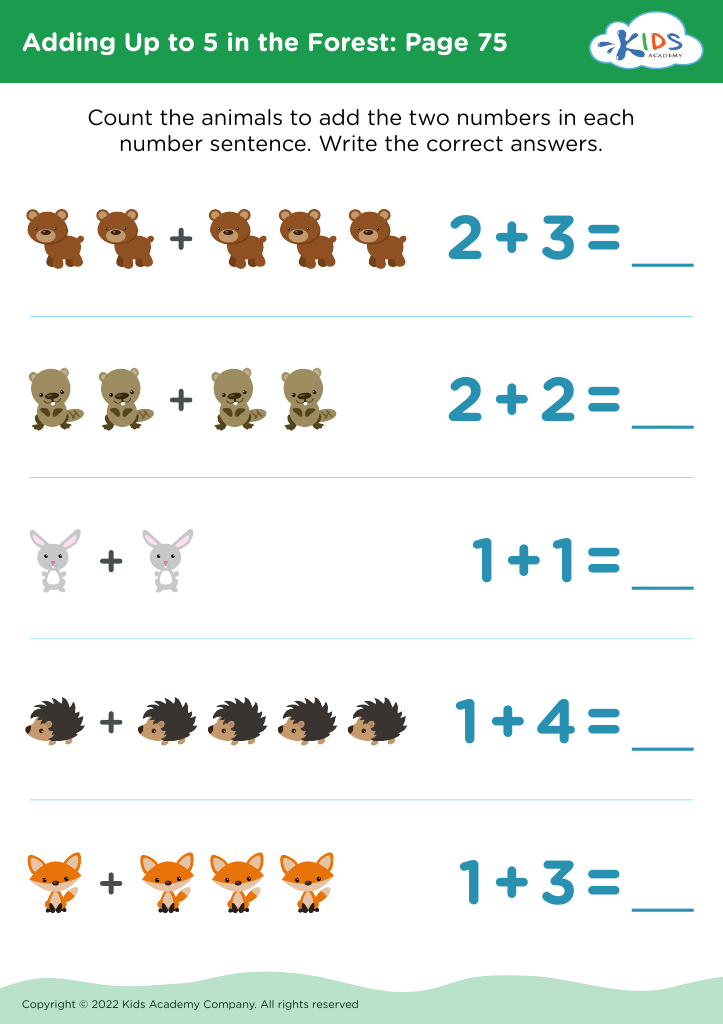
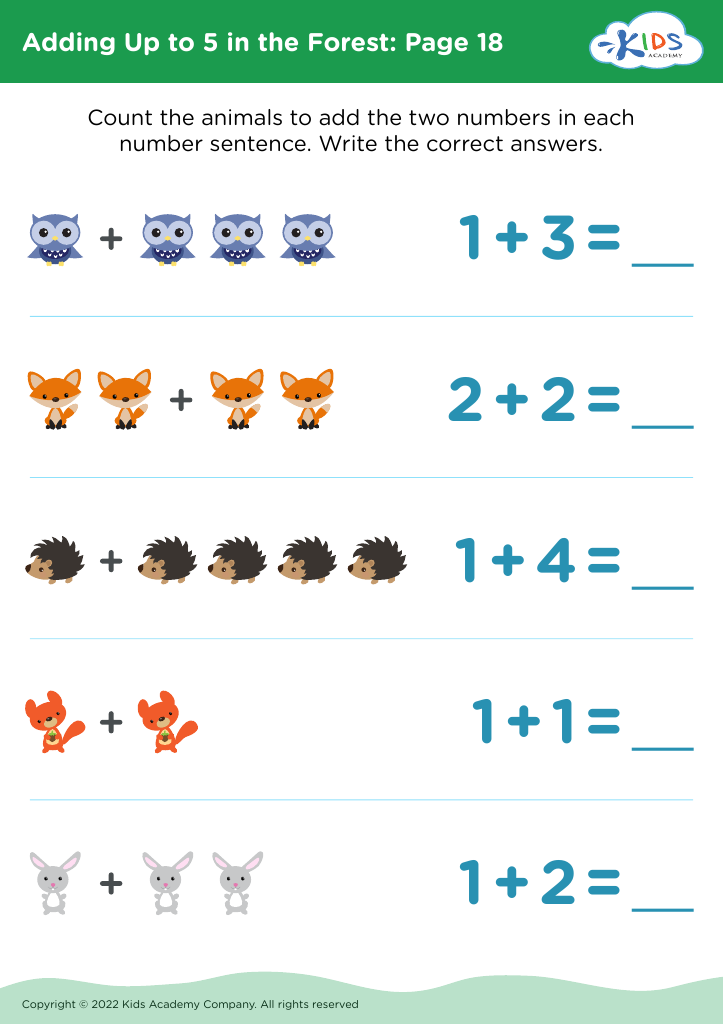
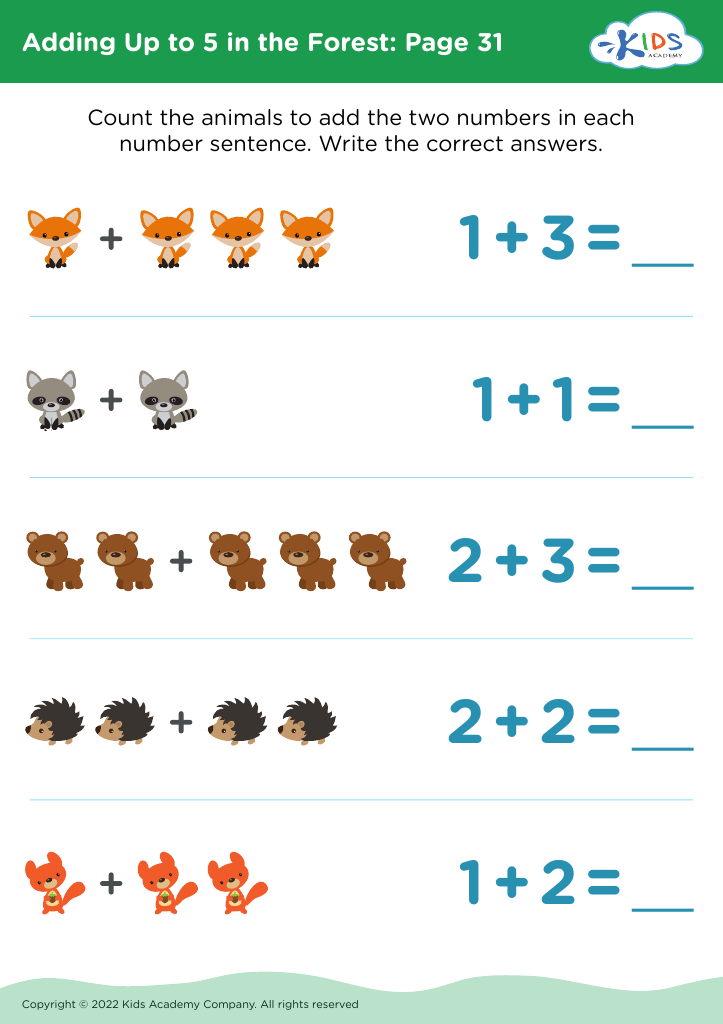
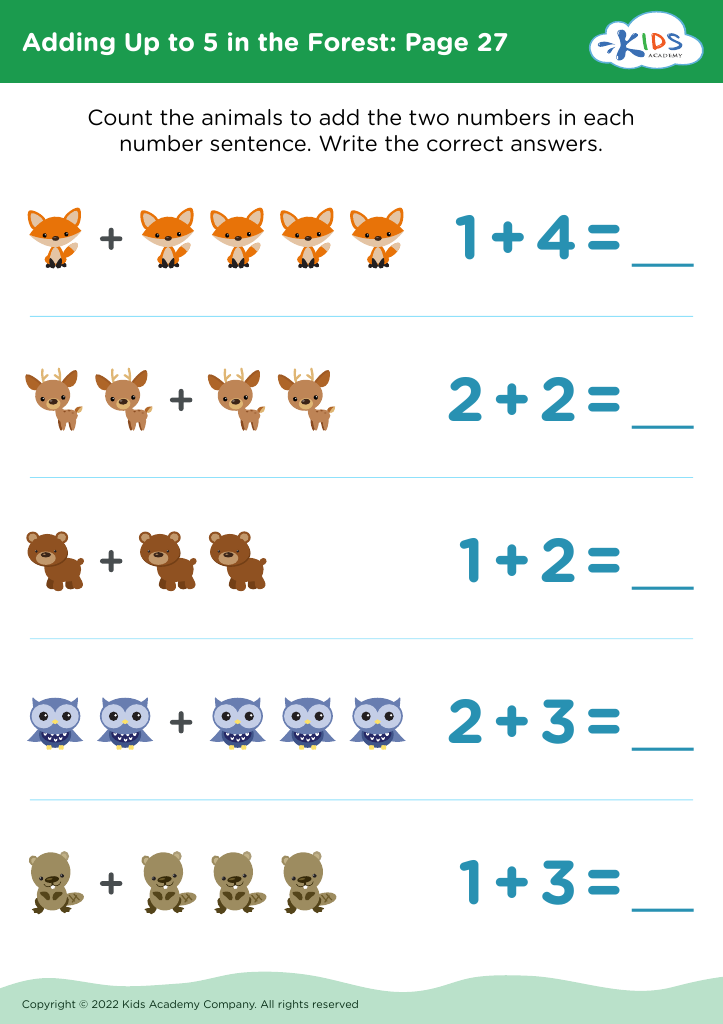
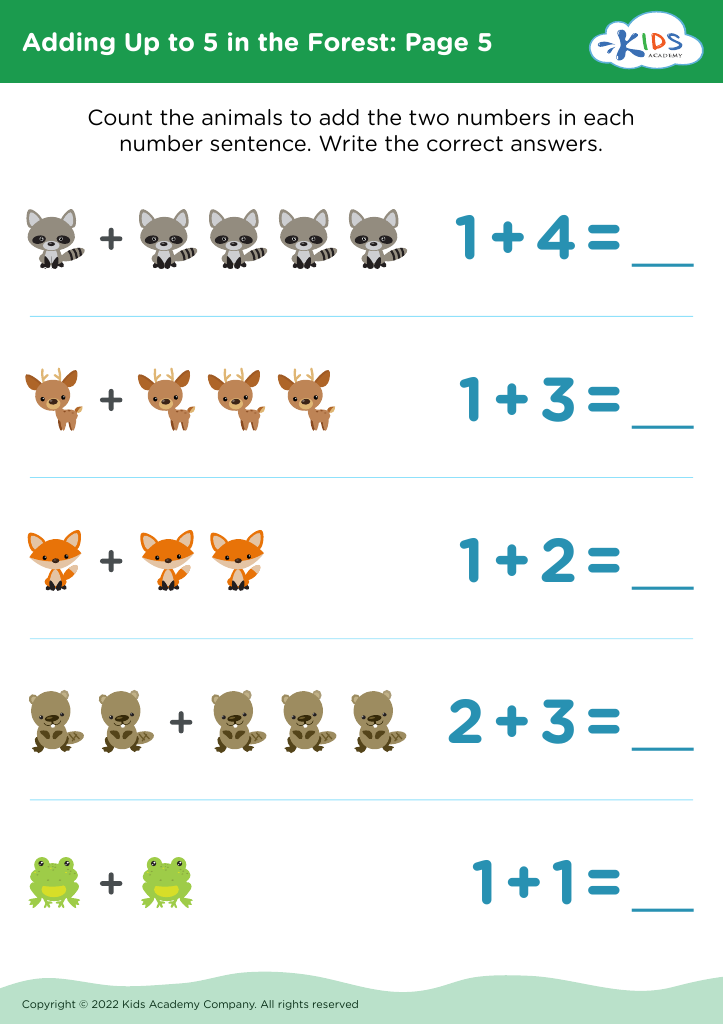



Addition skills are foundational to a child's mathematical development and overall cognitive growth. For ages 4-9, having a fun and engaging approach, like the "Adding in the Forest" concept, provides numerous educational and developmental benefits.
First, basic math skills are crucial for everyday life. By mastering addition early on, children can handle daily tasks like counting items, understanding monetary values, and telling time with ease. Secondly, this skill supports future academic success, as arithmetic is a building block for more complex mathematics taught later in school.
"Adding in the Forest" makes learning addition enjoyable and meaningful by incorporating nature-related themes, which engage a child’s imagination and make abstract numbers more tangible. Using stories about forest animals, plants, or adventures also retains young learners' interest and enhances their memory retention.
Moreover, integrating fun, hands-on learning experiences with math helps develop critical thinking, problem-solving abilities, and concentration. Enjoyable and contextually-rich learning can also reduce math anxiety, fostering a positive attitude toward math that can persist throughout a child’s educational journey.
In essence, focusing on addition skills through creative methods like "Adding in the Forest" equips children with essential skills, promoting not only mathematical competency but also overall intellectual and emotional development.