Animal recognition Adding in the Forest Worksheets for Ages 4-9
15 filtered results
-
From - To
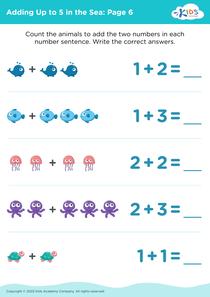
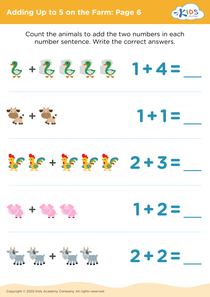
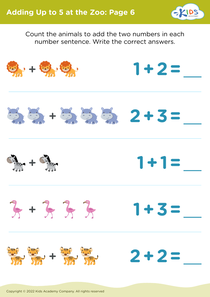
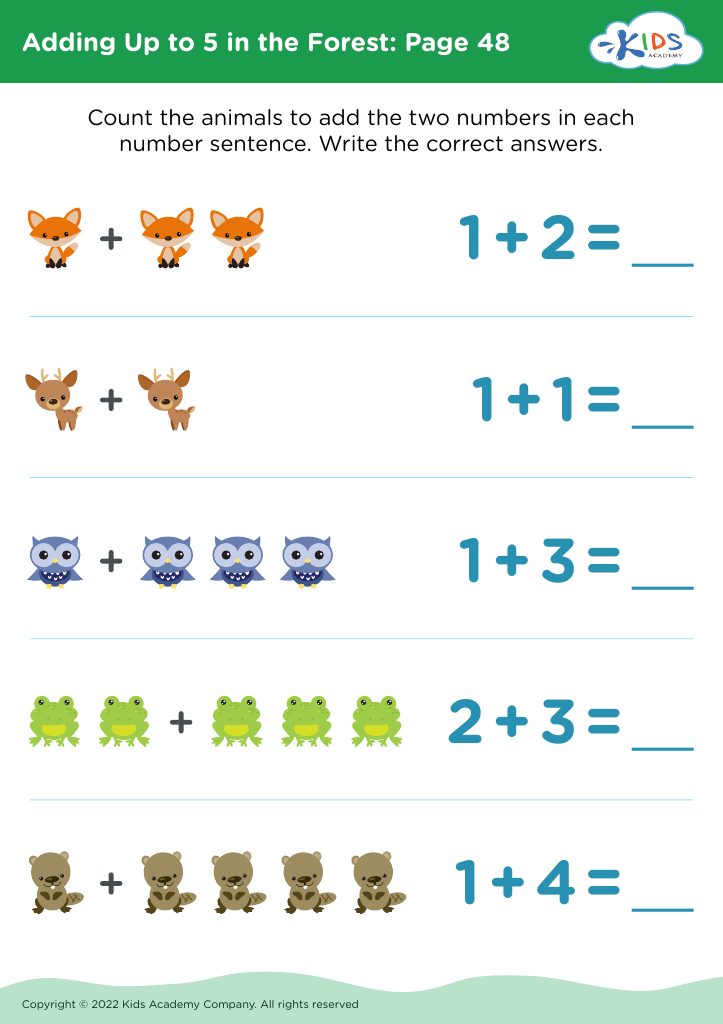
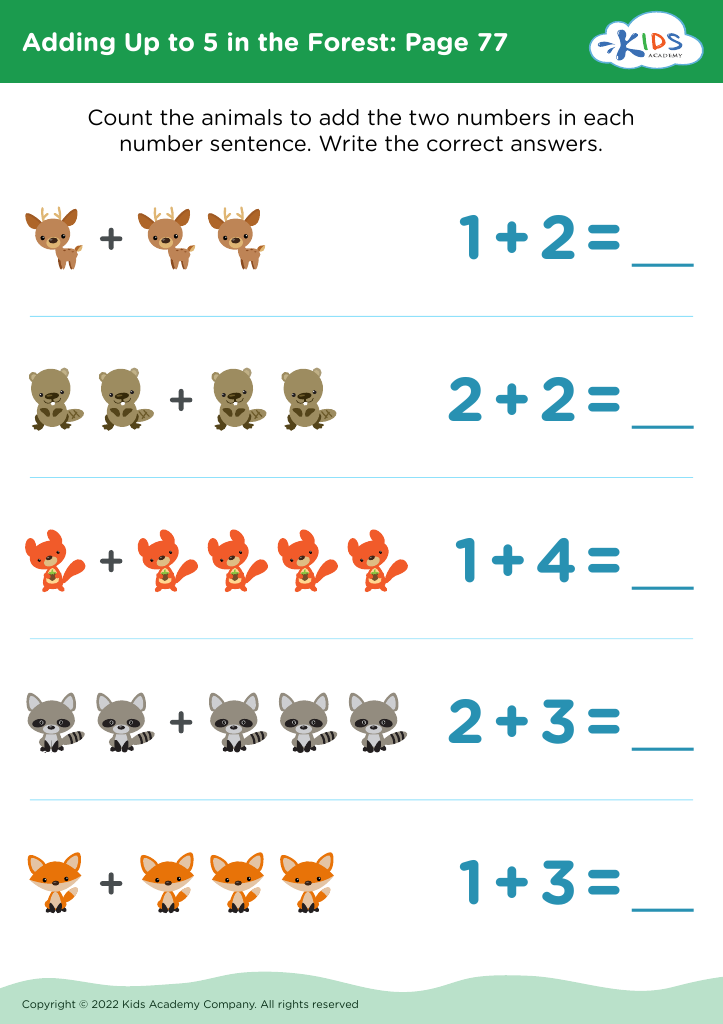
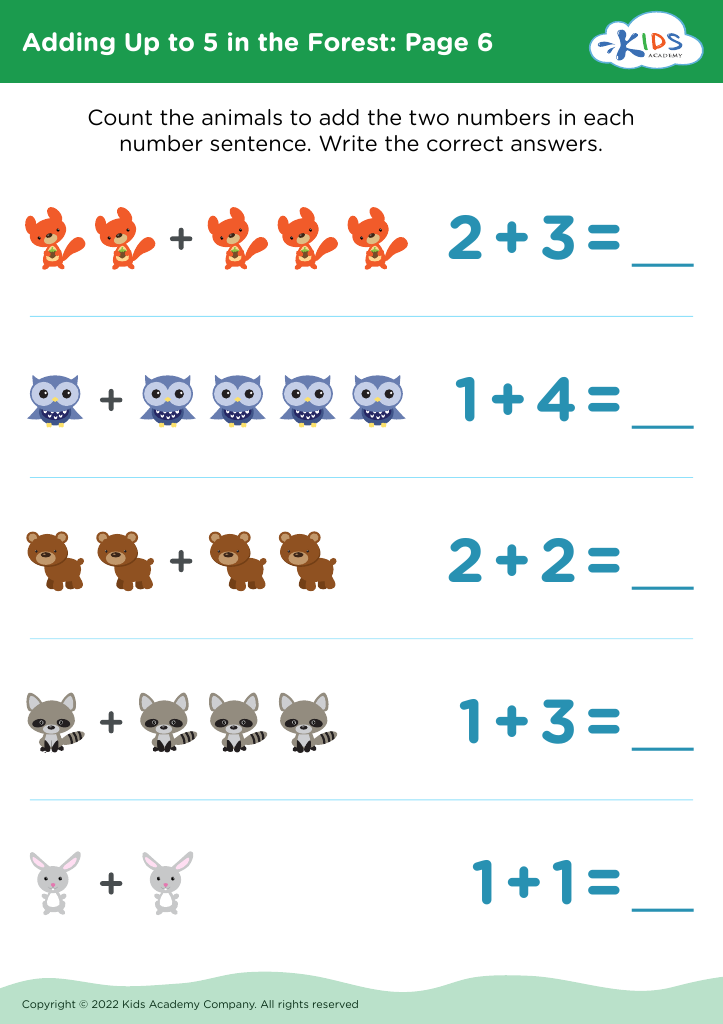
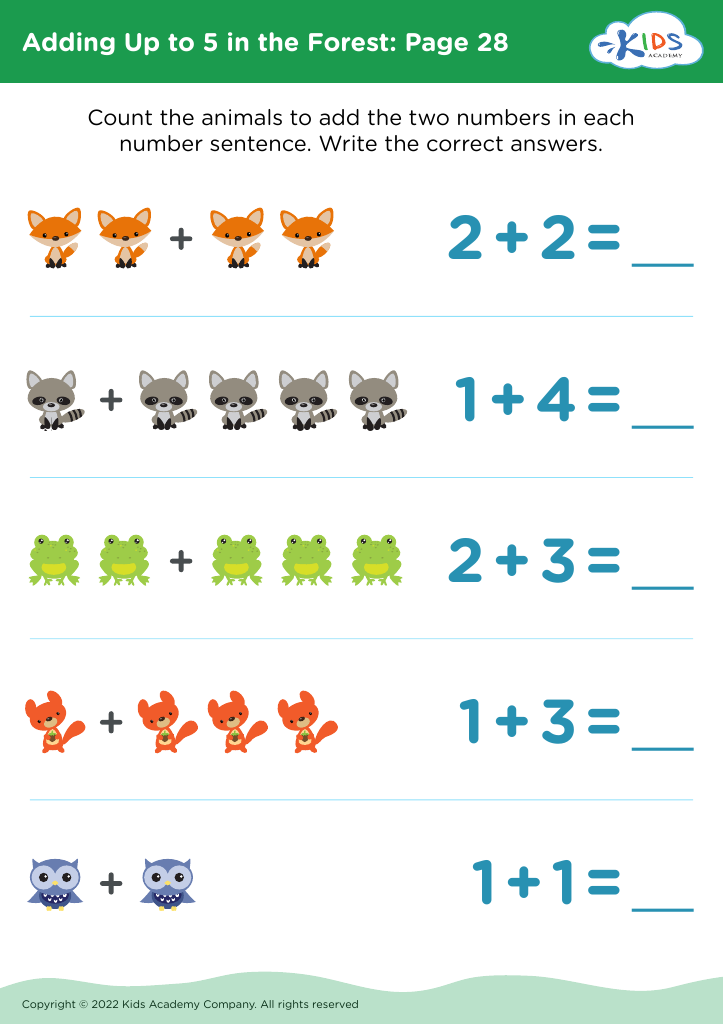
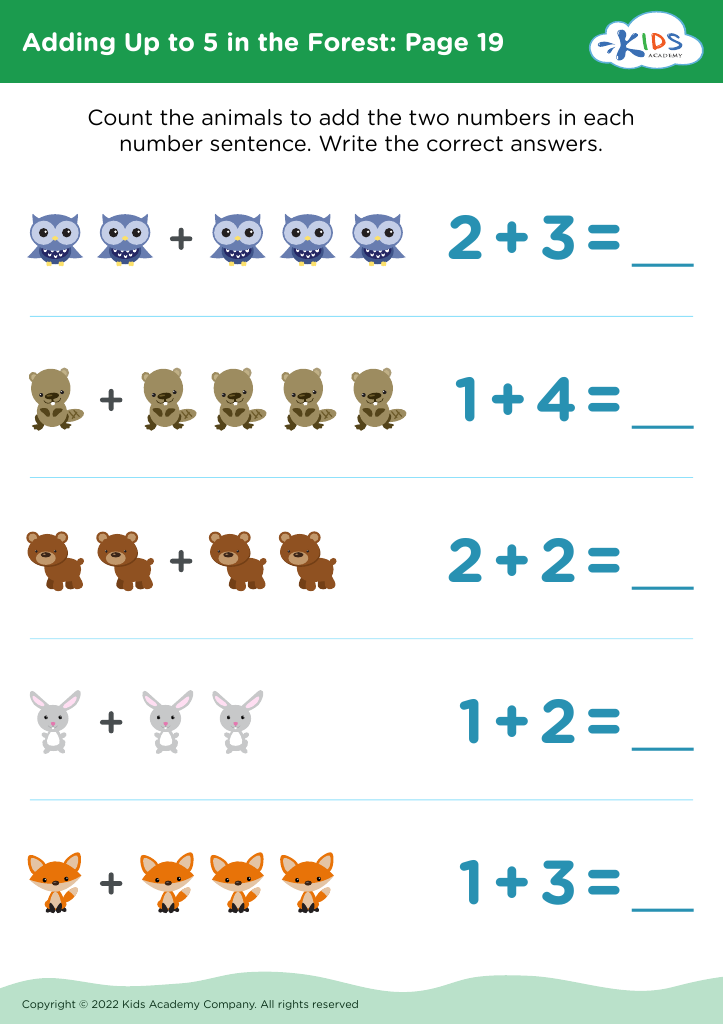
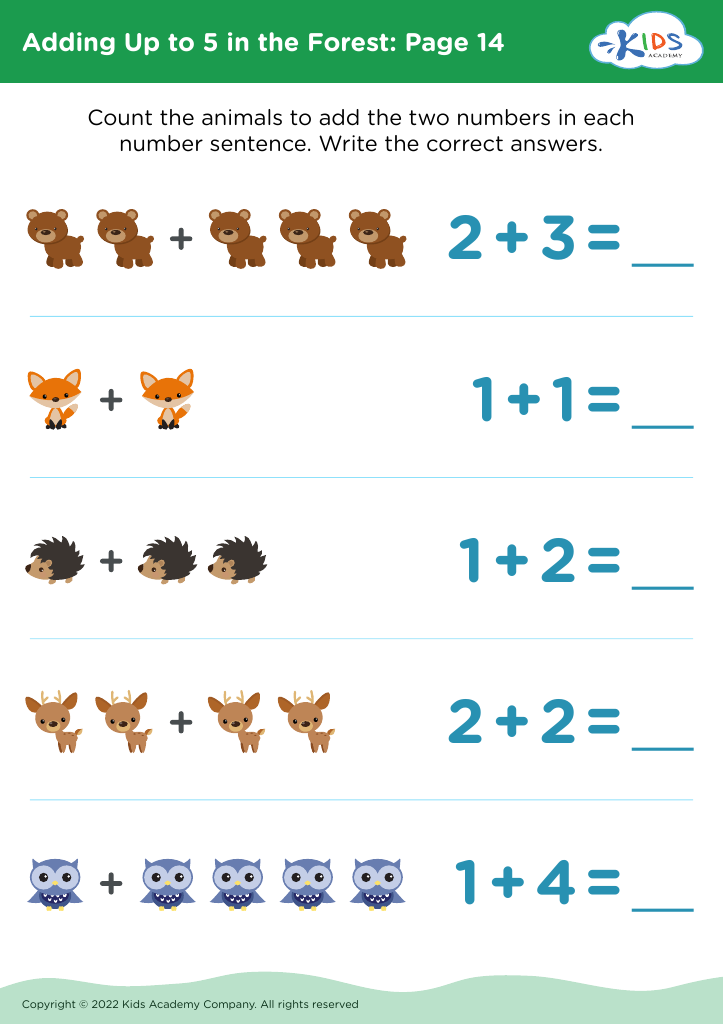
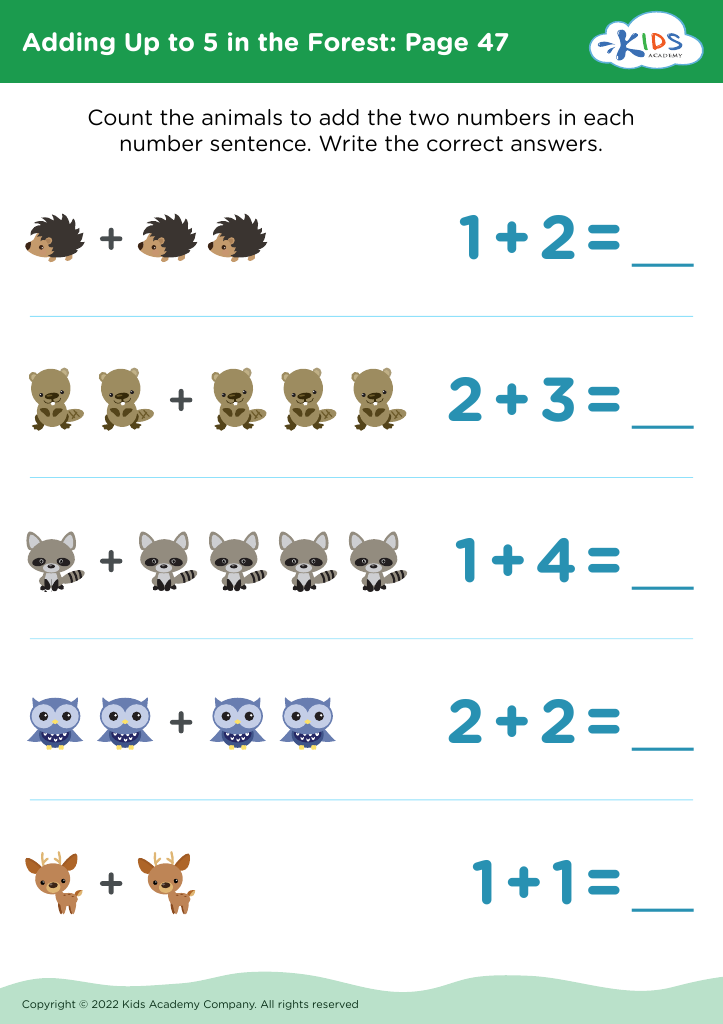
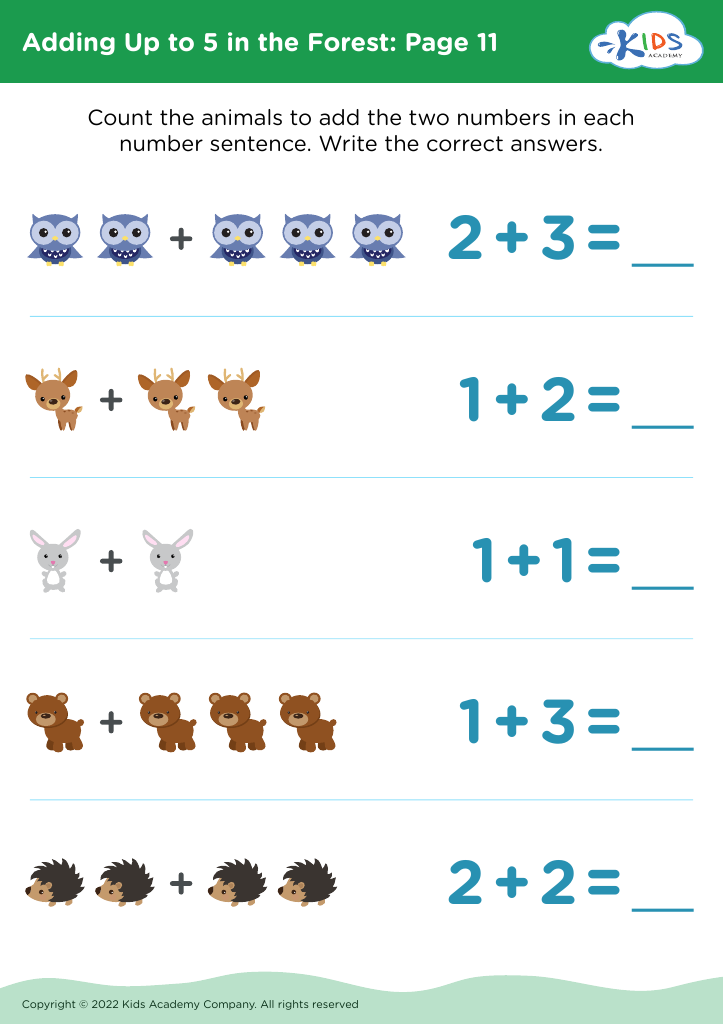
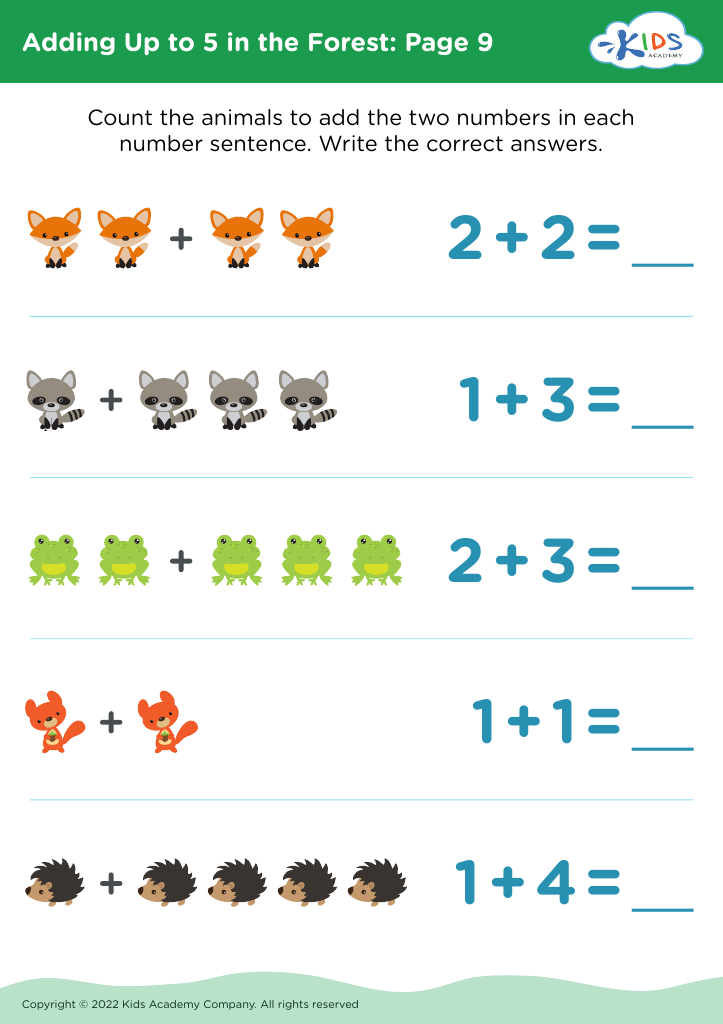
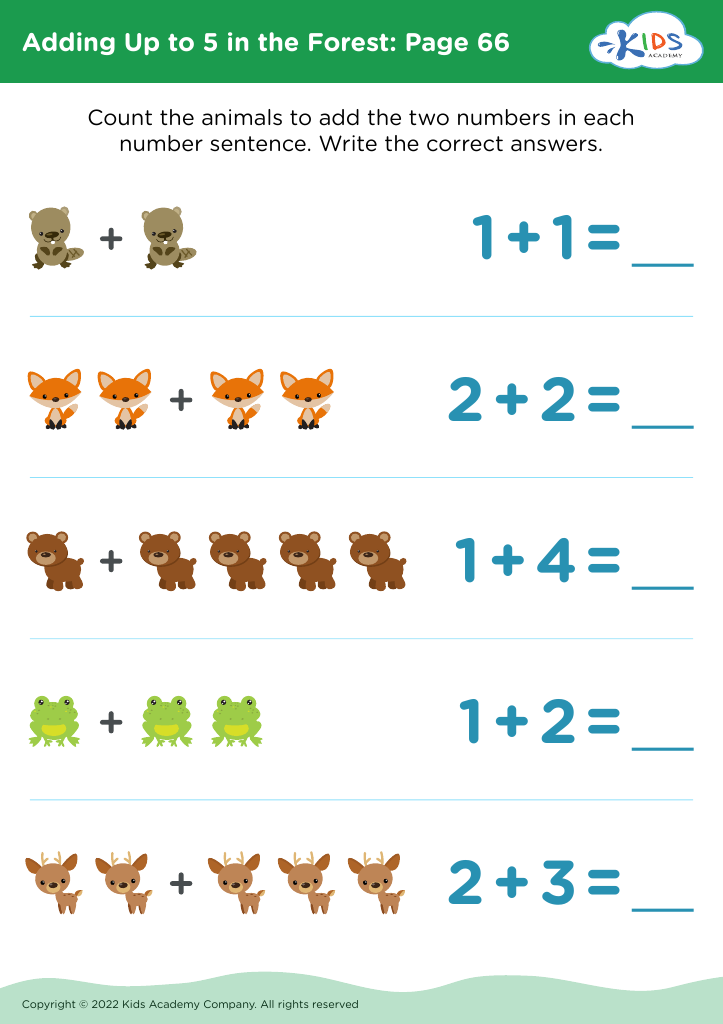
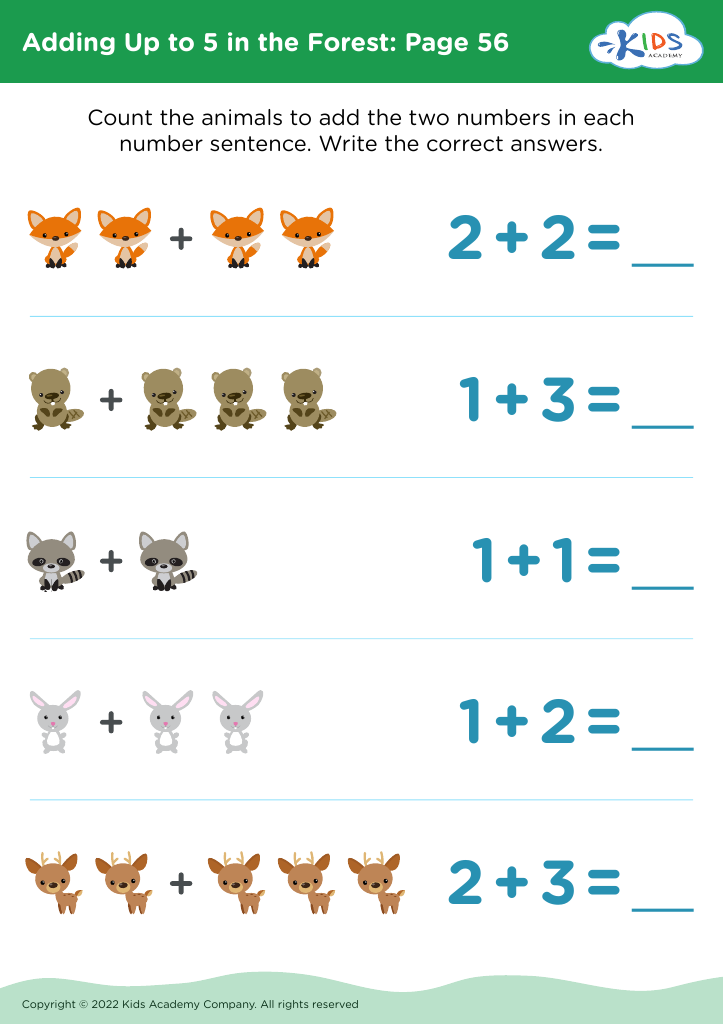
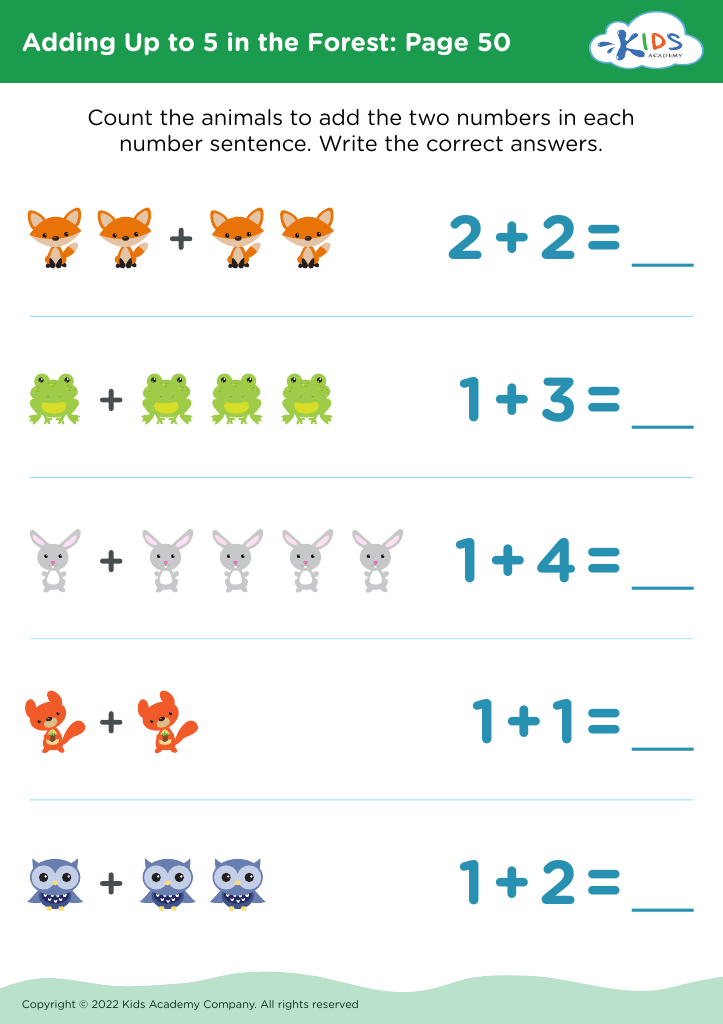
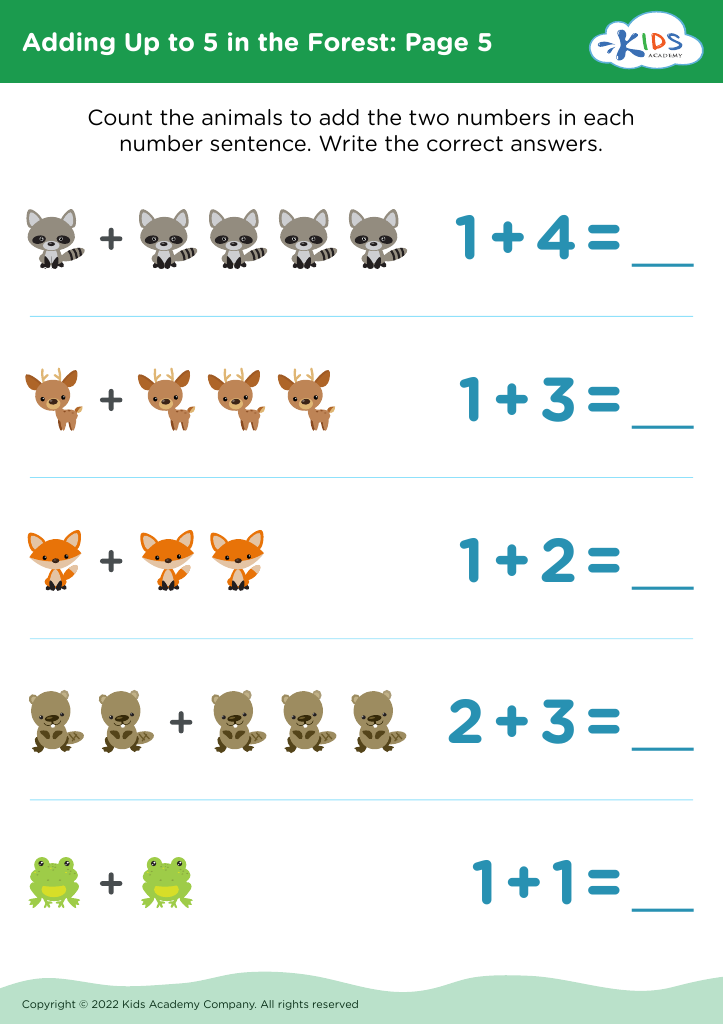
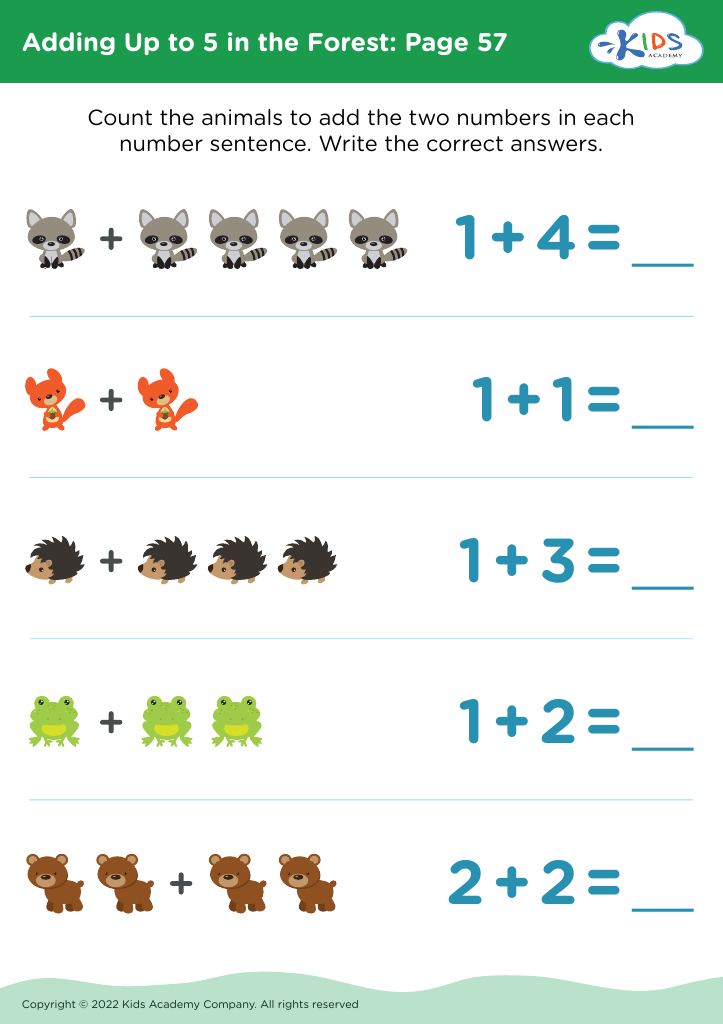
Welcome to our "Animal Recognition Adding in the Forest Worksheets," designed for children ages 4-9! These engaging worksheets combine math skills with fun animal-themed activities, helping young learners practice addition while discovering various forest animals. Each activity encourages children to identify and recognize different animals, enhancing their observational skills and reinforcing their understanding of nature. With vibrant illustrations and interactive exercises, children will love the blend of learning and play. Perfect for parents and educators, these worksheets are an excellent resource for fostering creativity and a love for math. Let the adventure in learning begin!
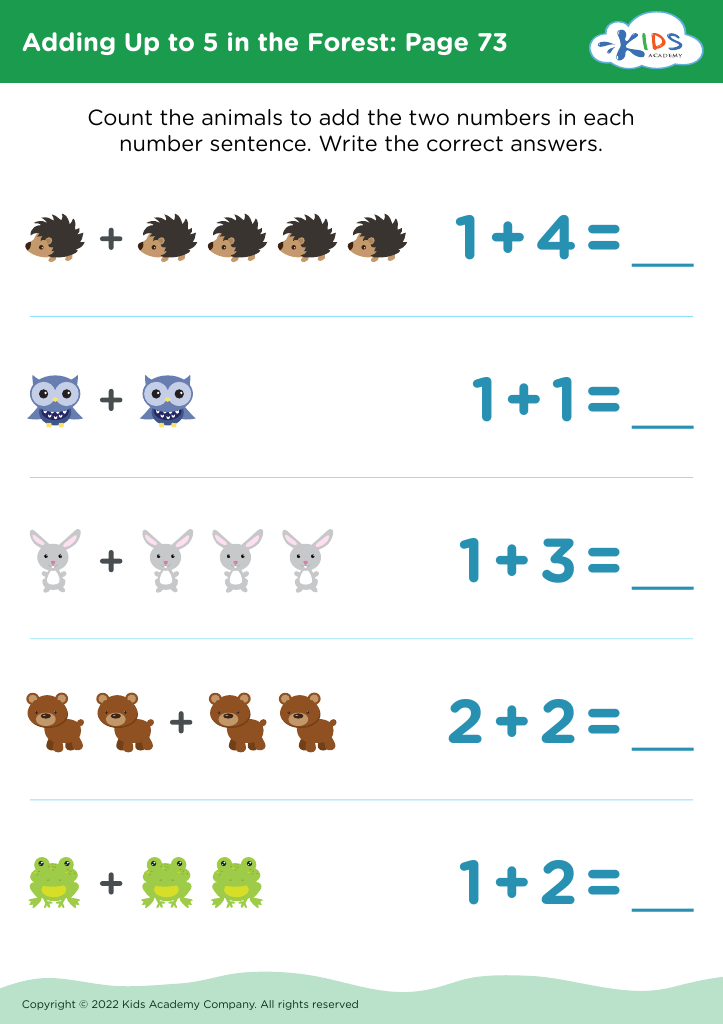



Animal recognition is a vital skill for children aged 4-9, especially in the context of exploring natural environments like forests. First and foremost, recognizing animals fosters a connection between children and the natural world. Understanding local fauna enhances their appreciation for nature, encouraging environmentally-friendly behaviors and promoting a sense of stewardship.
Educationally, learning about animals develops critical thinking and observational skills. As children identify different species, they engage in problem-solving and inquiry-based learning, which boosts cognitive abilities. It also aids in language development as they learn the names and characteristics of various animals.
Furthermore, recognizing animals can enhance safety. Knowledge about which animals are harmless versus those that could pose a risk is crucial for outdoor exploration. This awareness builds confidence in children and helps them navigate forested areas safely.
Additionally, incorporating animal recognition into adventure-based learning can make education dynamic and engaging. Activities such as nature walks, scavenger hunts, or storytelling can excite students about wildlife, science, and conservation.
In summary, for teachers and parents, emphasizing animal recognition in forests not only nurtures curiosity and cognitive growth but also equips children with necessary skills for environmental awareness and safety.