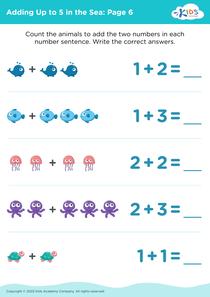
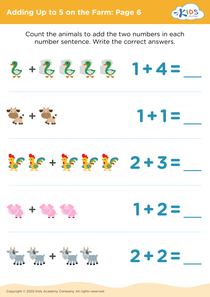
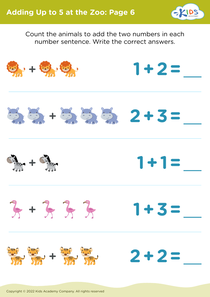
Fine Motor Skills Adding in the Forest Worksheets for Ages 4-9
5 filtered results
-
From - To
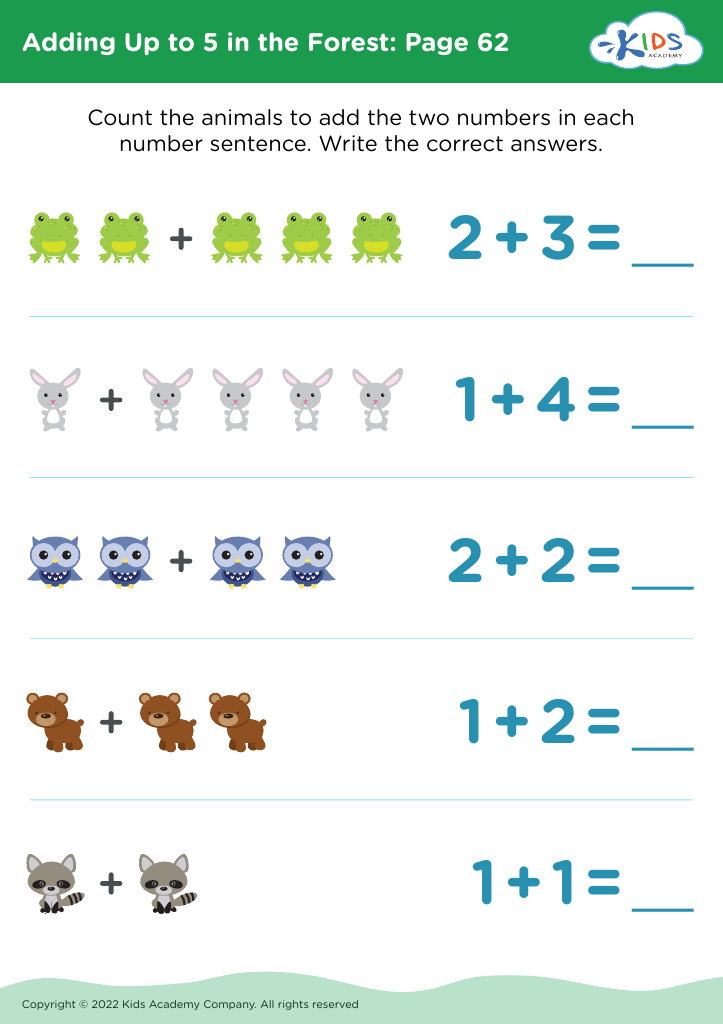
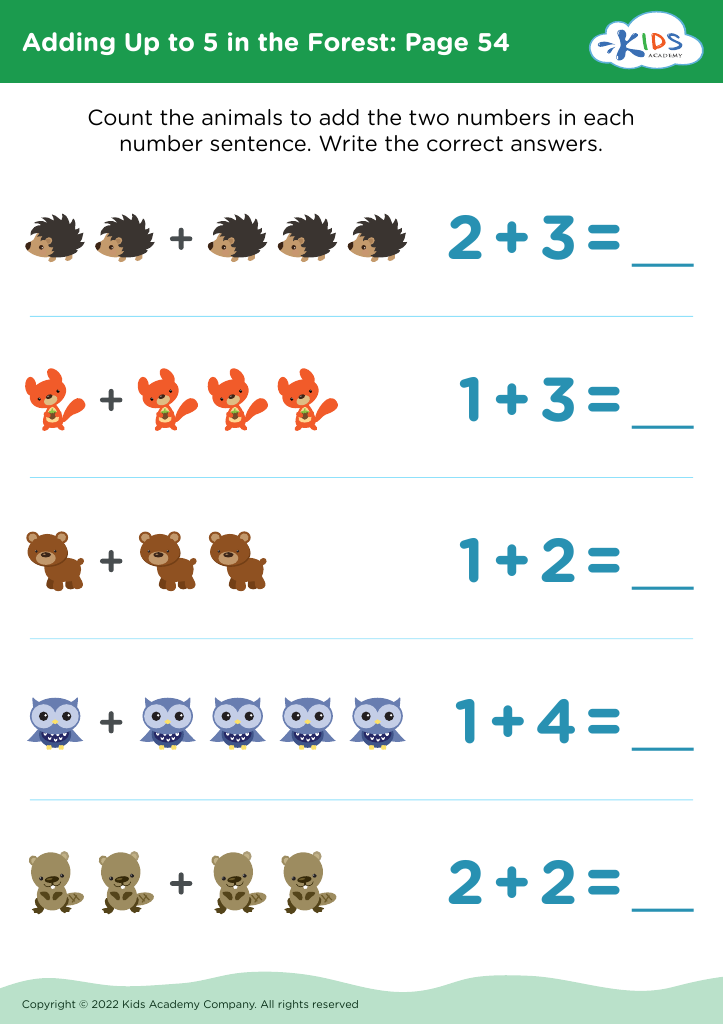
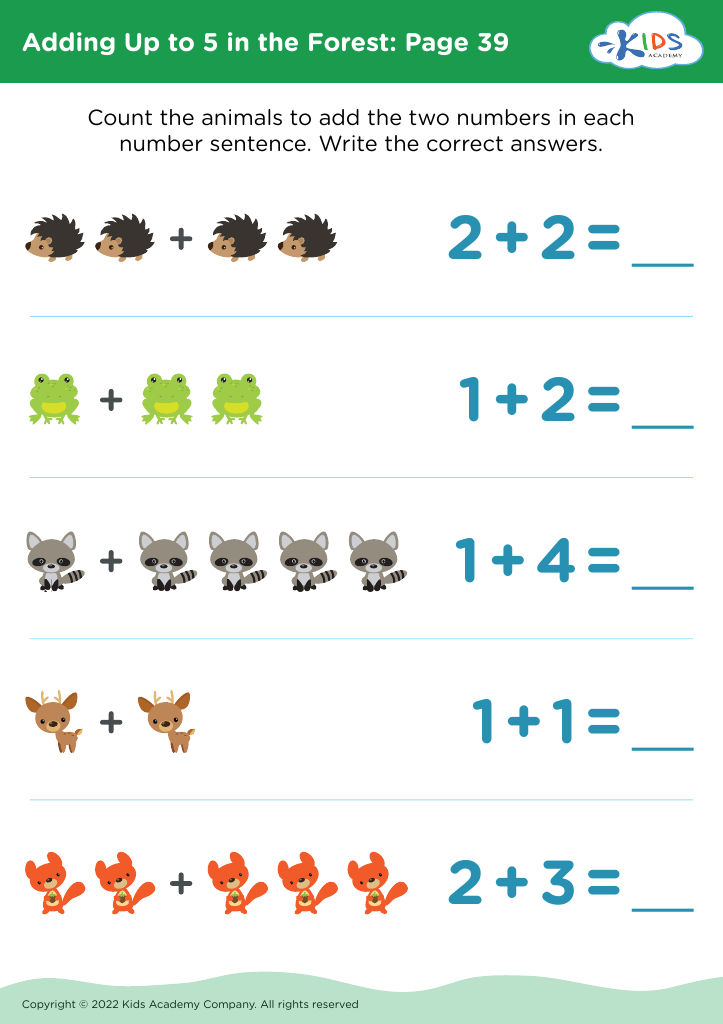
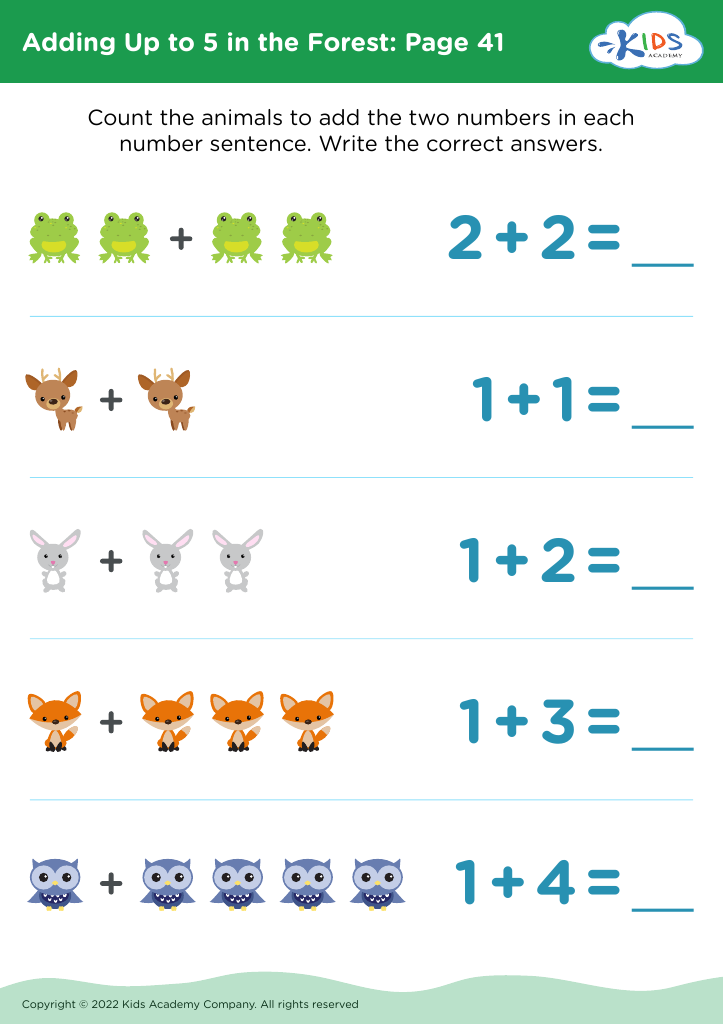
Enhance your child's fine motor skills with our "Adding in the Forest" worksheets designed specifically for ages 4-9! These engaging resources combine playful forest themes with essential math concepts, allowing children to practice addition while refining their hand-eye coordination and dexterity. Each worksheet is filled with fun illustrations and multi-sensory activities, making learning enjoyable and interactive. As children trace, color, and manipulate fun forest elements, they'll also develop confidence in their math abilities. Perfect for classrooms or at-home learning, these worksheets provide a convenient way to integrate skill-building and numerical understanding, promoting a holistic approach to early education.
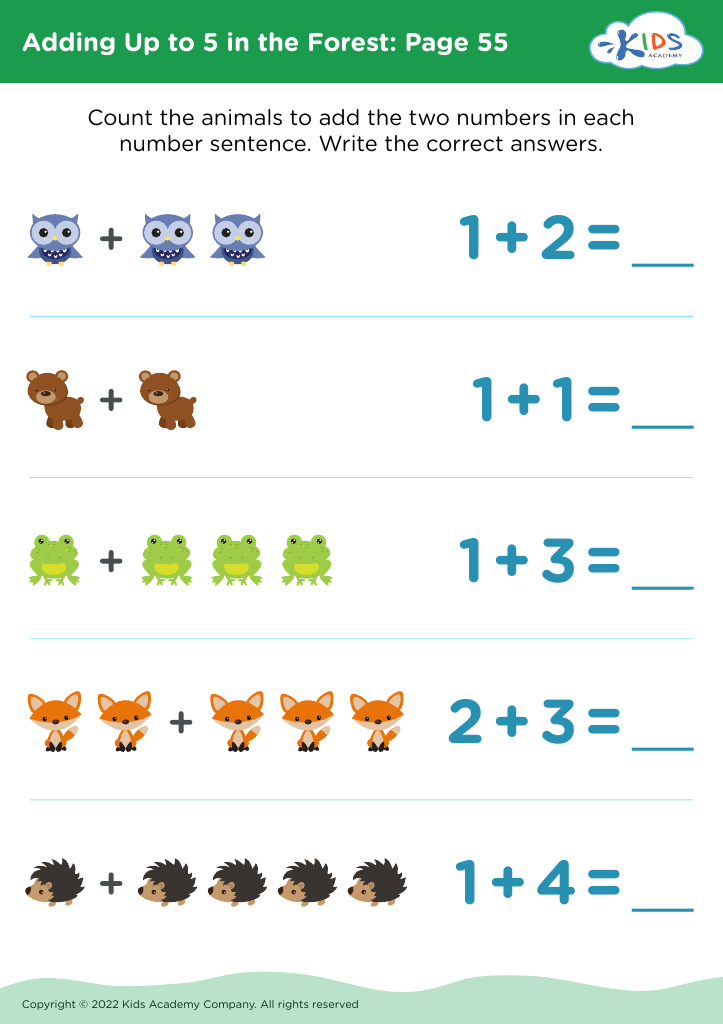



Fine motor skills are essential for children's overall development, especially for ages 4-9, as they directly impact their ability to engage in various daily activities and academic tasks. These skills involve the coordination of small movements in the hands and fingers, which are crucial for tasks like writing, using scissors, and buttoning clothes. When parents and teachers focus on fine motor skill development, they set the stage for improved handwriting, greater independence, and enhanced academic performance.
Incorporating activities like "Fine Motor Skills Adding in the Forest" not only makes learning engaging but also connects children to nature, promoting outdoor play and exploration. This approach encourages children to manipulate objects like leaves, stones, or pinecones, transforming math learning into a tactile experience. Such activities provide opportunities for problem-solving and creativity, allowing children to develop cognitive skills alongside their motor skills.
Moreover, fostering fine motor skills through playful, nature-based activities helps build self-esteem, perseverance, and social skills as children interact and collaborate in a group setting. Overall, prioritizing fine motor skill development equips children with the necessary tools for lifelong learning and self-sufficiency, making it a crucial focus for parents and educators alike.