Fine motor skills (writing) Adding in the Forest Worksheets for Ages 4-9
3 filtered results
-
From - To
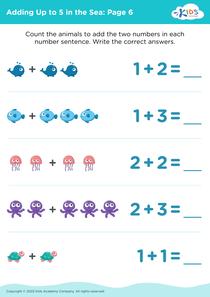
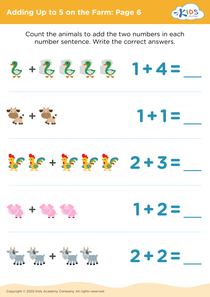
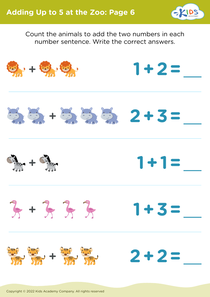
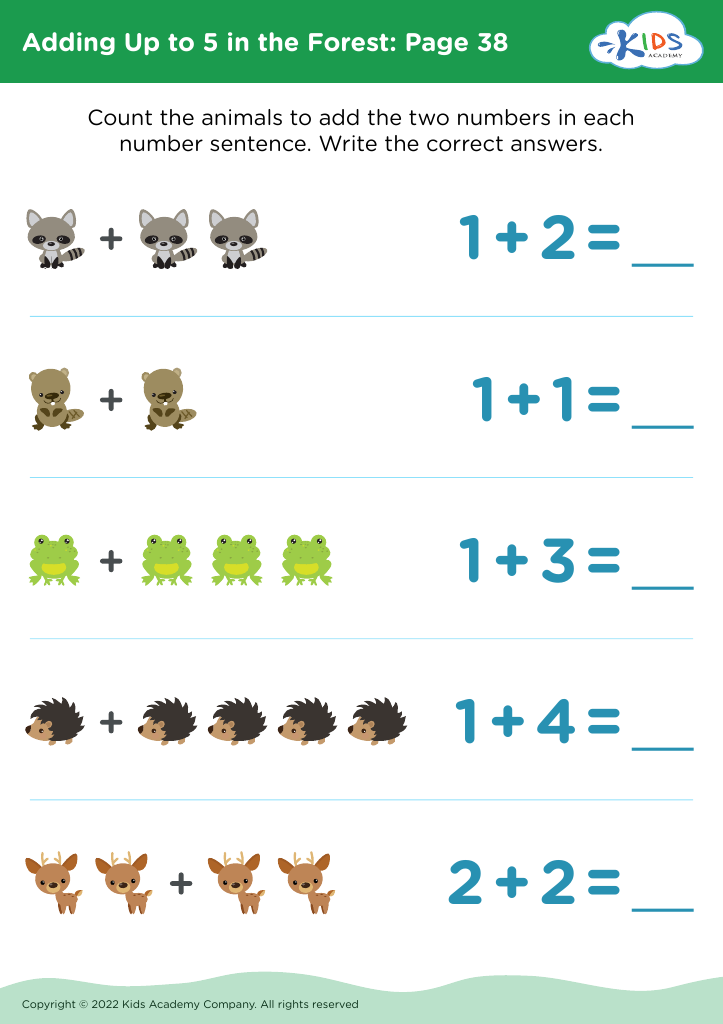
Enhance your child's fine motor skills and writing abilities with our engaging "Adding in the Forest" worksheets designed for ages 4-9. These interactive resources not only promote essential math concepts through fun forest-themed activities but also encourage the development of dexterity and hand-eye coordination critical for writing. Each worksheet features intuitive exercises that combine counting and writing, ensuring a holistic learning experience. Perfect for home or classroom use, these worksheets inspire creativity while reinforcing basic math skills, setting a strong foundation for future learning. Empower your child's educational journey with our thoughtfully crafted fine motor skills worksheets today!
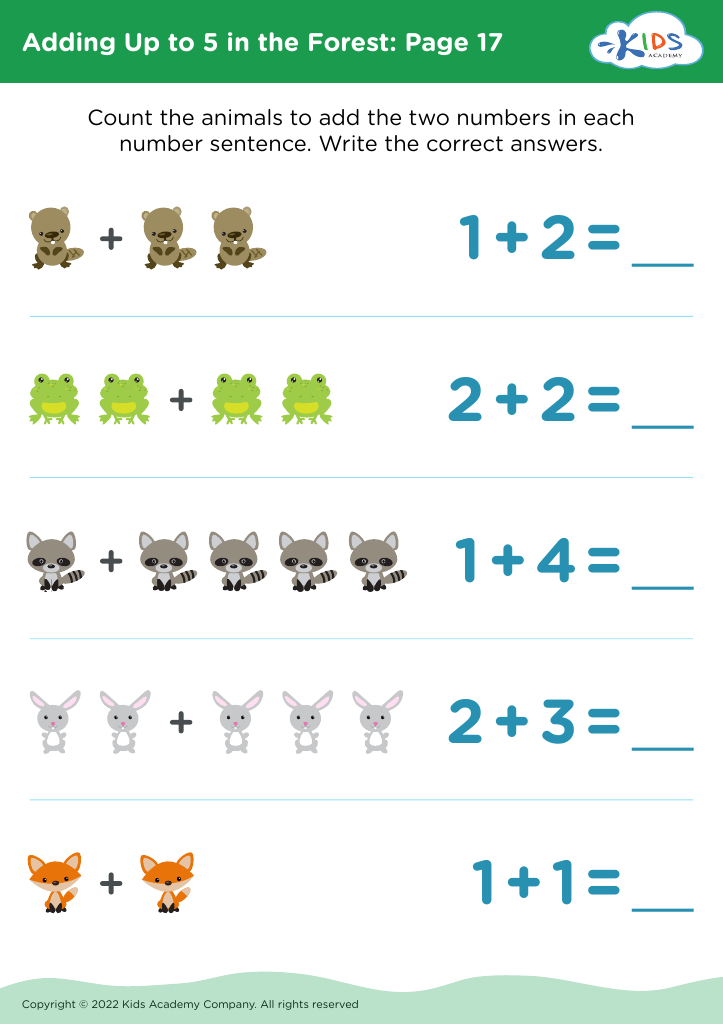
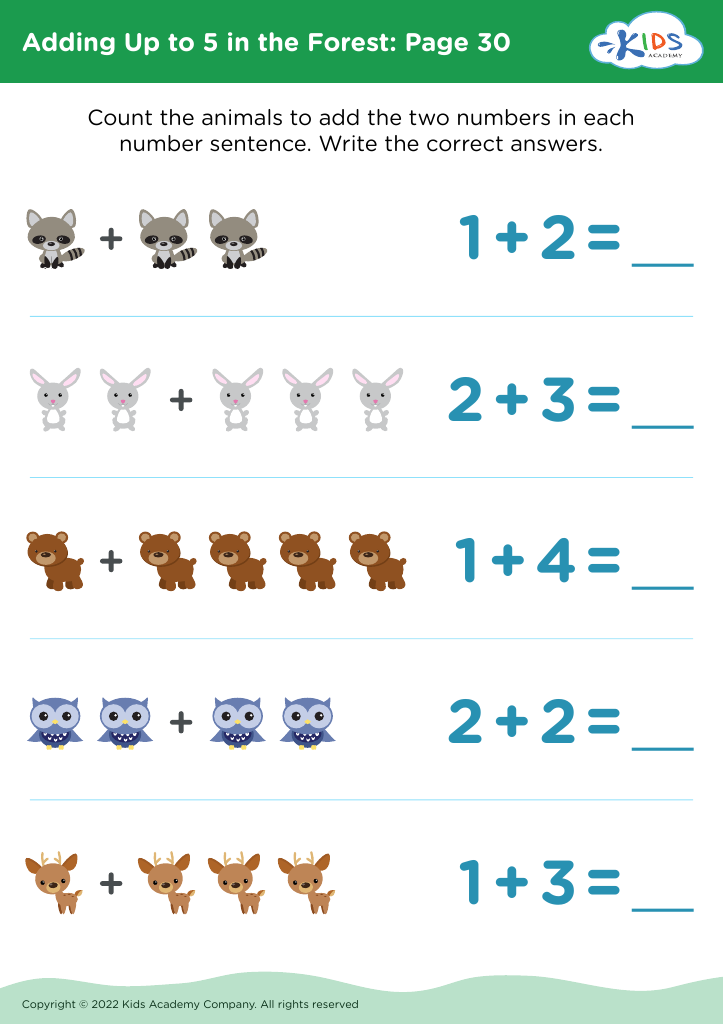



Fine motor skills, particularly writing, are crucial for young children aged 4-9 as they form the foundation for academic success and overall development. Parents and teachers should prioritize these skills because they are essential for various daily activities, from holding a pencil to performing self-care tasks like buttoning clothing. Developing fine motor skills enhances hand-eye coordination, dexterity, and control, leading to improvements in writing, drawing, and crafting.
In the context of adding nature and forest-related activities into fine motor skill practice, learning in outdoor environments offers unique benefits. Activities like crafting with sticks, leaf rubbing, or collecting small objects for sorting can ignite a child's creativity while strengthening their hand muscles. For instance, activities like tying knots or weaving natural materials promote intricate hand movements that refine motor skills.
Moreover, engaging with nature fosters a love for learning and nurtures curiosity, encouraging lifelong skills. As children play in the forest, their bodies work together with their minds, improving concentration and perseverance. Therefore, integrating fine motor skill development with outdoor exploration not only benefits a child’s writing ability but also enhances their cognitive growth, social skills, and overall well-being. Parents and teachers should recognize the value of this holistic approach in nurturing healthy development.