Understanding Quantities Adding in the Forest Worksheets for Ages 4-9
6 filtered results
-
From - To
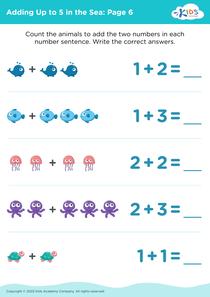
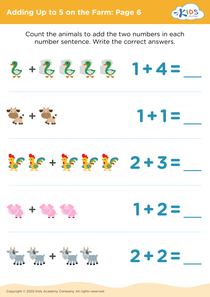
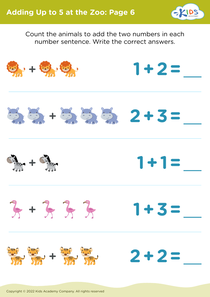
Discover the joy of learning with our "Understanding Quantities: Adding in the Forest Worksheets" for ages 4-9. These engaging, forest-themed worksheets are designed to help young learners grasp the basics of addition through fun, interactive activities. Featuring adorable animal characters and vibrant forest scenes, each worksheet guides children in recognizing and combining quantities, enhancing their mathematical skills while nurturing a love for nature. Perfect for both classroom and home use, these printable resources make learning addition an exciting adventure. Foster your child's early math development and understanding of quantities with our expertly crafted worksheets today!
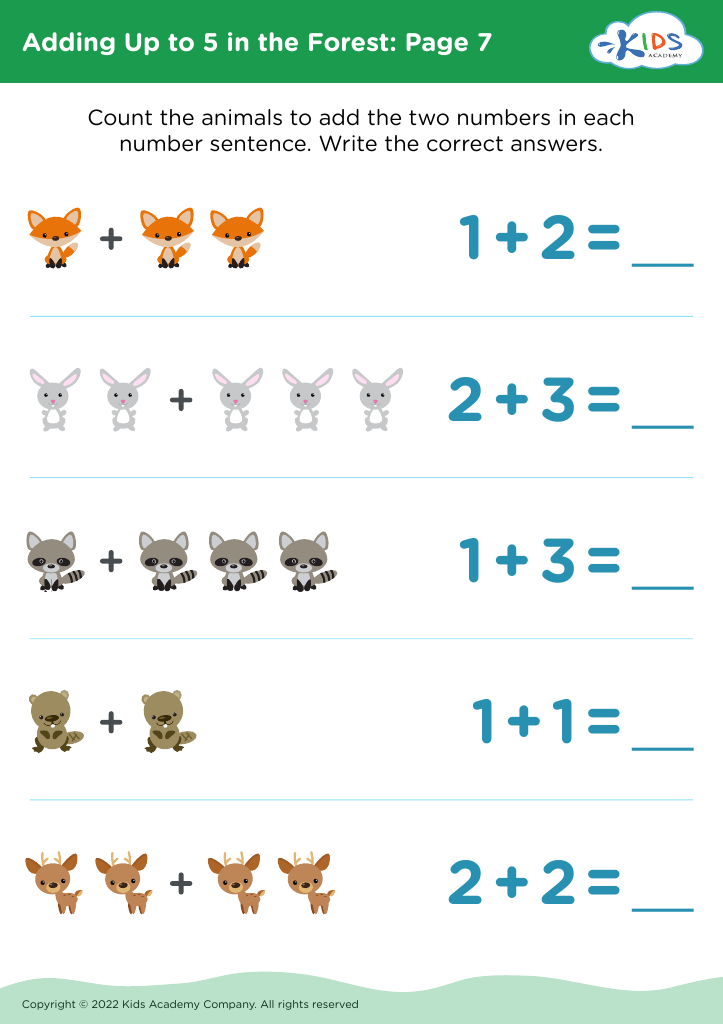
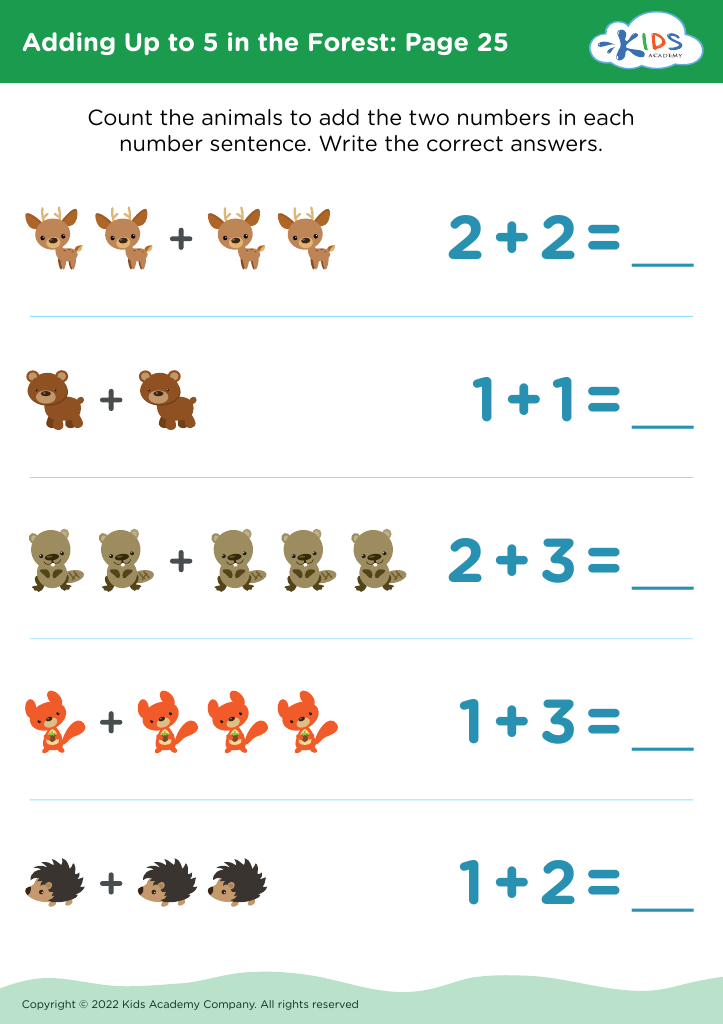
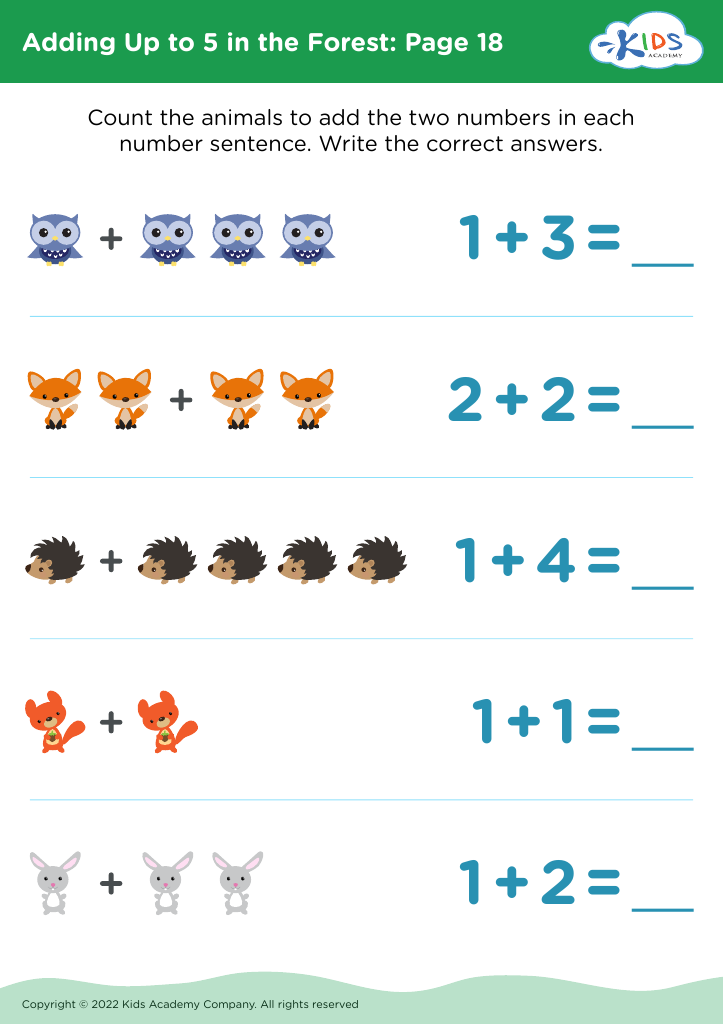
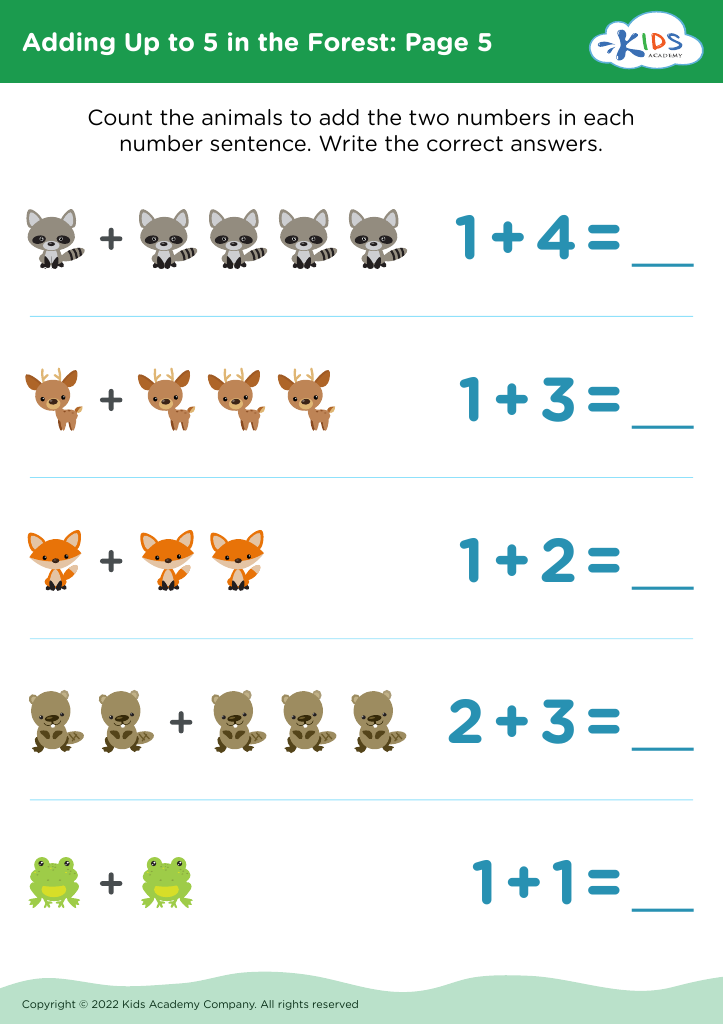
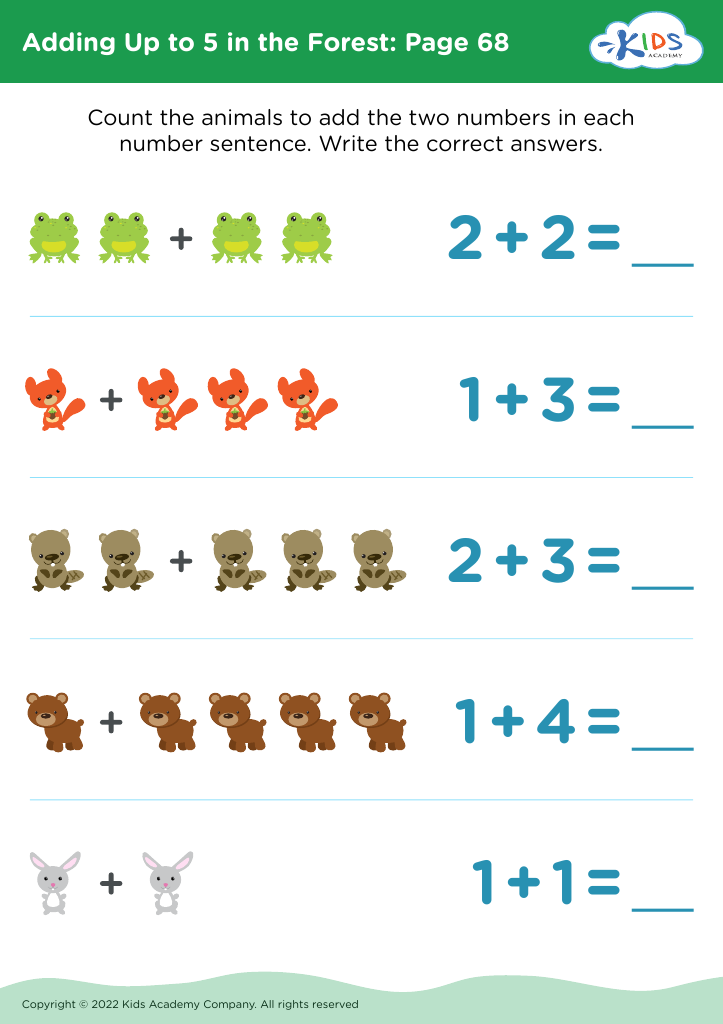
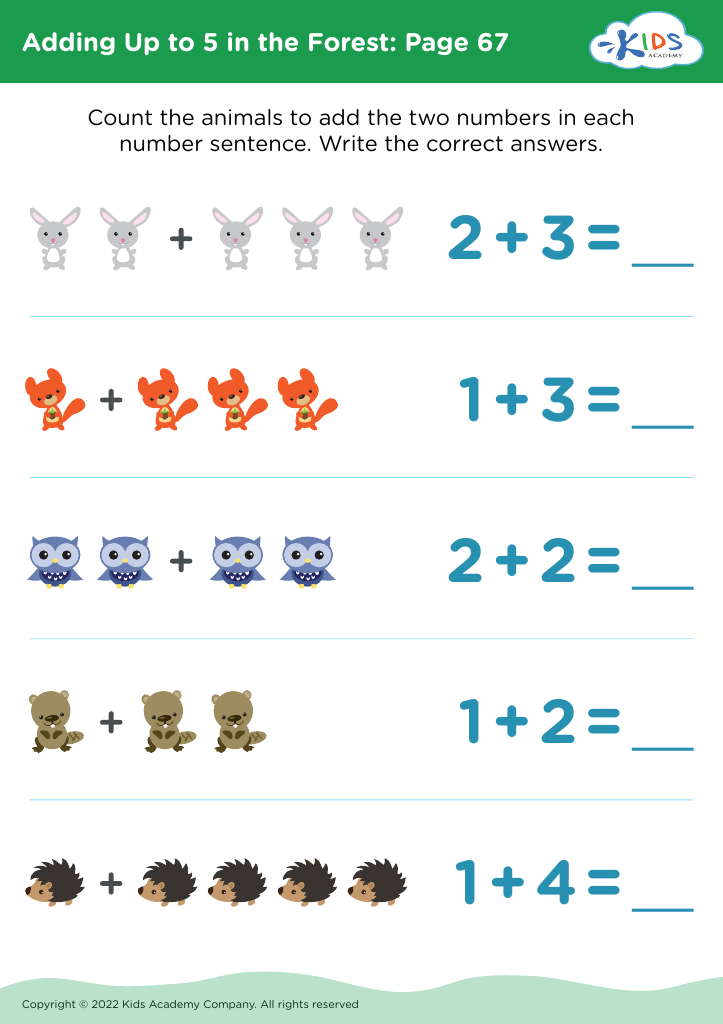



"Understanding Quantities Adding in the Forest" is a vital educational approach for children aged 4-9 because it solidifies foundational math concepts in an engaging, hands-on manner. This method naturally attracts children’s curiosity through an environment they find fascinating—the forest. By integrating math into a storytelling or a physical exploration context, such as counting tree leaves, adding groups of birds, or collecting pinecones, children can connect abstract numeric ideas to their tangible experiences.
Parents and teachers should prioritize this approach because it cultivates a positive attitude toward math early on. At the age of 4-9, children's brains are rapidly developing, and hands-on activities significantly enhance cognitive abilities. Activities like these also foster critical thinking, problem-solving skills, and teamwork when done in group settings.
Living examples from nature help demonstrate mathematical principles dynamically, promoting long-term retention and understanding. When children interact with quantities in a purposeful way, they grasp the practical application of math in the real world, which bridges classroom lessons with everyday life. Moreover, this outdoorsy approach encourages physical activity, attentiveness to details, and environmental awareness, supporting holistic child development. Overall, "Understanding Quantities Adding in the Forest" lays a strong numerical foundation while igniting a lifelong love for learning and nature.