Fine Motor Skills Adding up to 1000 Misc Worksheets for Ages 4-9
5 filtered results
-
From - To
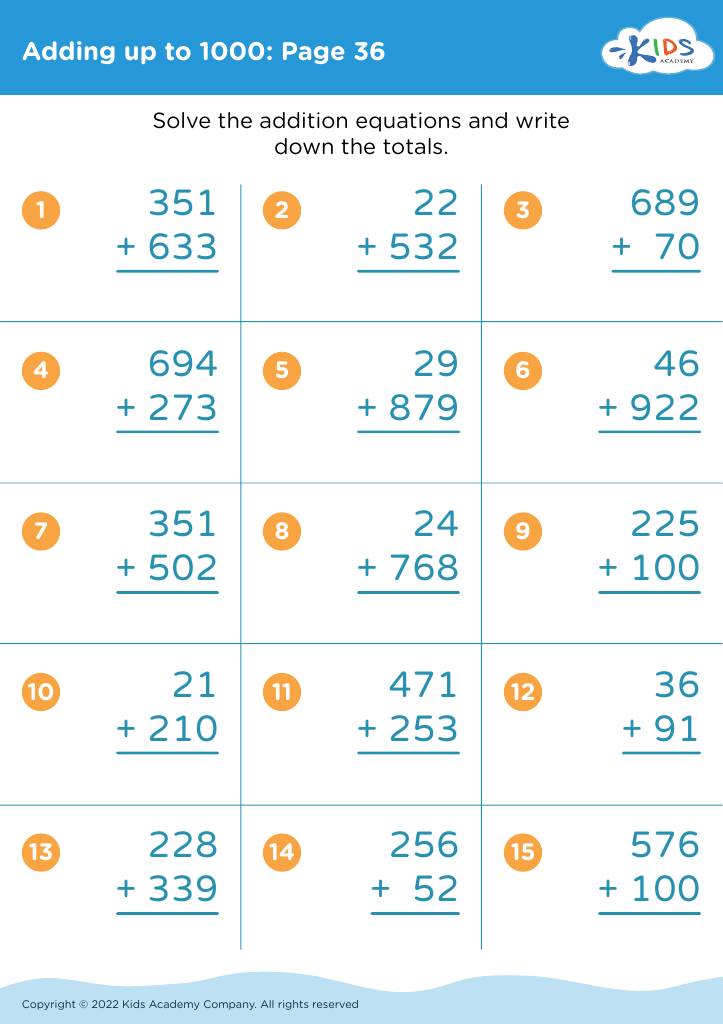
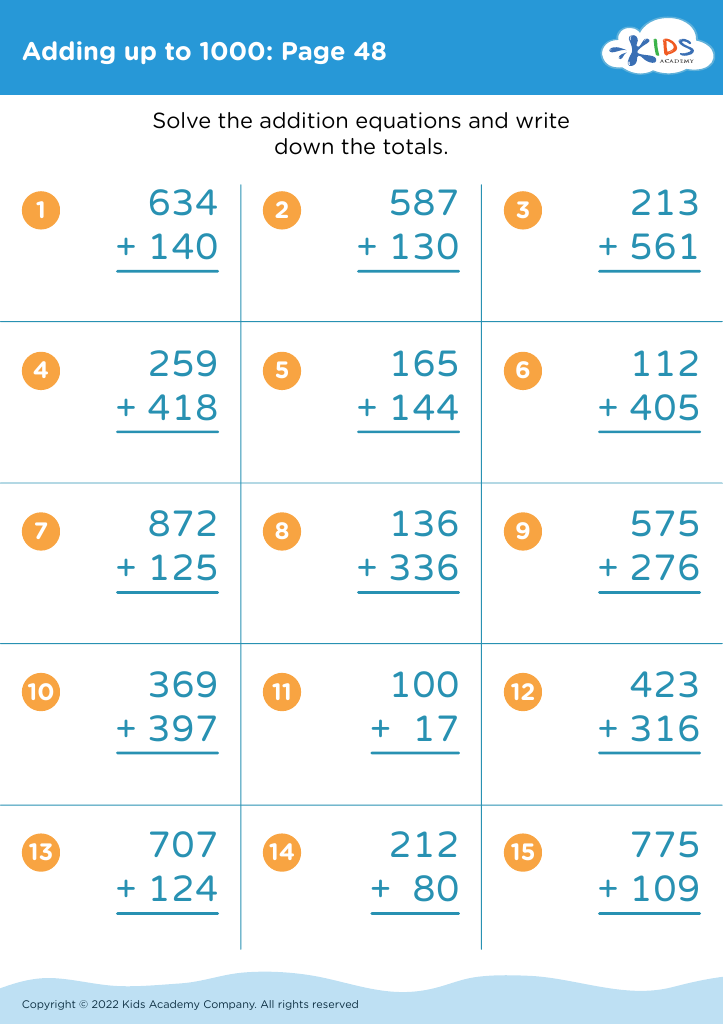
Enhance your child’s learning experience with our "Fine Motor Skills Adding up to 1000 Misc Worksheets" designed for ages 4-9! These worksheets seamlessly blend mathematical practice with fine motor skill development, ensuring kids refine their hand coordination while mastering addition up to 1000. Each engaging activity promotes focus, precision, and confidence, making math fun and interactive. Our rich variety of exercises – from coloring to tracing – caters to different learning styles and keeps young learners motivated. Perfect for home schooling or supplementing classroom learning, these worksheets help young minds grow while honing vital skills needed for academic success. Unlock your child’s potential today!


Fine motor skills are crucial for the development of children aged 4-9 as they are integral to everyday tasks and academic success. These skills involve the coordination of small muscle movements, specifically in the hands and fingers, which enable children to perform tasks such as writing, cutting with scissors, and buttoning shirts. Parents and teachers should care about nurturing these skills for several reasons.
Firstly, fine motor development is linked to a child's ability to grasp writing tools, which directly impacts their academic performance. Children who struggle with fine motor skills may experience frustration in classroom activities that necessitate these skills, thereby affecting their confidence and willingness to participate.
Secondly, engaging in activities that promote fine motor skills—like drawing, crafting, or playing with blocks—encourages creativity and problem-solving abilities. This aspect of development is not only beneficial in the classroom but also aids in social interactions and personal independence.
Finally, early intervention is critical. Developing fine motor skills at a young age leads to better coordination, improved cognitive function, and an overall head-start in learning. Therefore, teachers and parents play a vital role in creating environments that foster the growth of these essential skills.