Fraction simplification Adding up to 1000 Misc Worksheets for Ages 4-9
5 filtered results
-
From - To
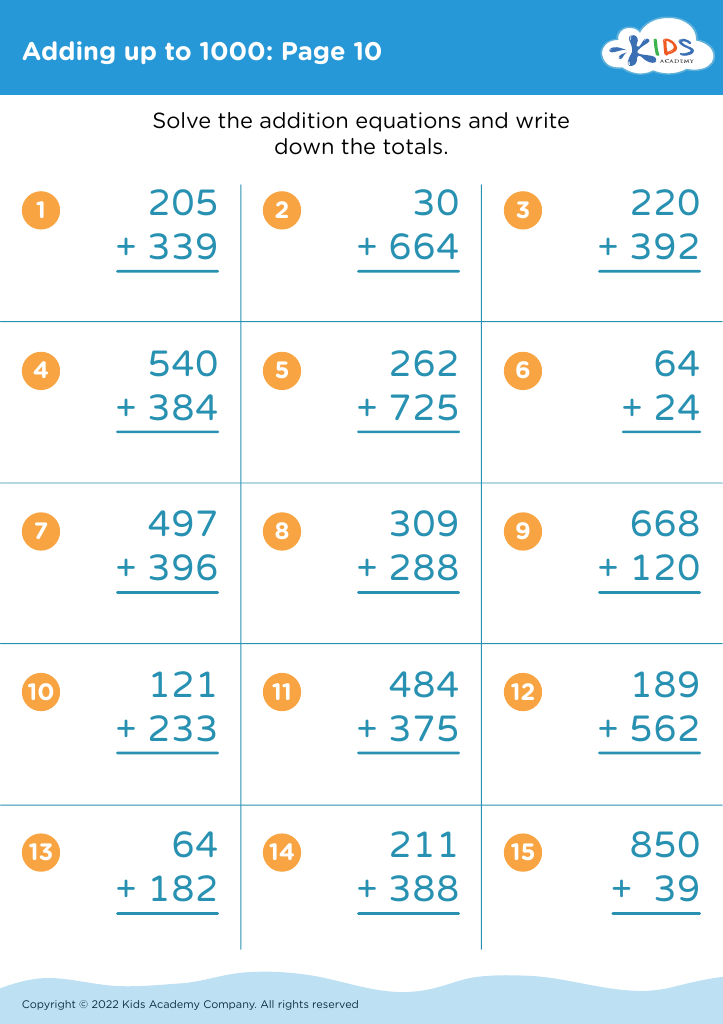
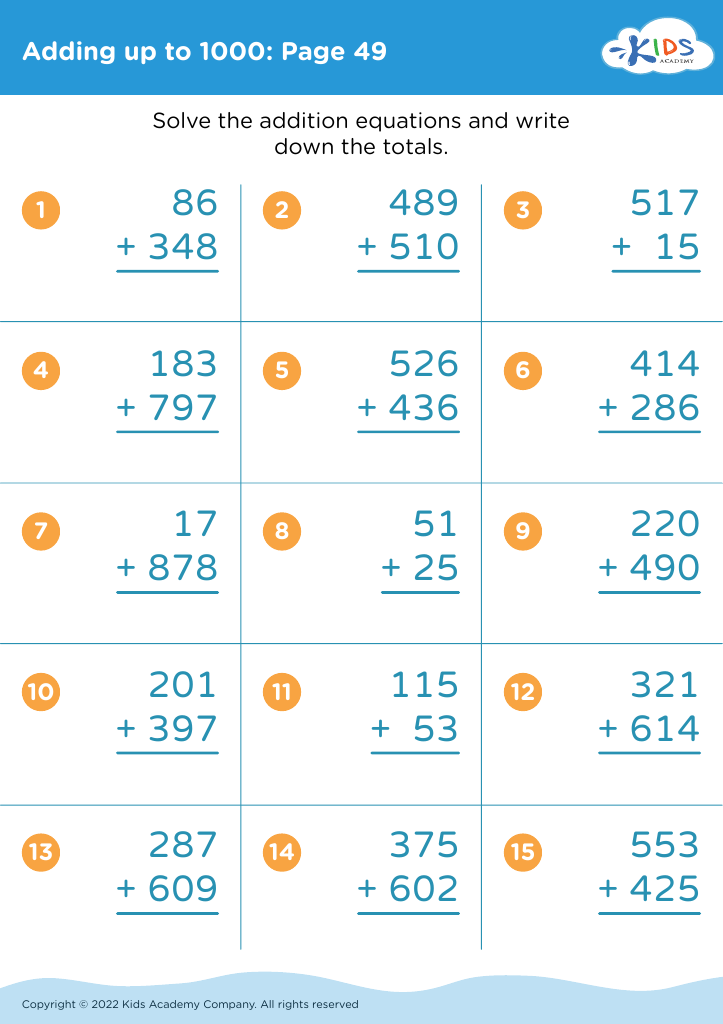
Enhance your child's math skills with our "Fraction Simplification Adding up to 1000 Misc Worksheets". Designed for ages 4-9, these engaging worksheets make learning fun and interactive. Children will practice simplifying fractions and mastering addition up to 1000 with diverse, age-appropriate problems. Each worksheet builds foundational math skills, ensuring young learners grasp concepts step-by-step. Perfect for both classroom and home use, these printable resources help children boost their confidence in math. Unlock your child's potential with Kids Academy’s expertly crafted worksheets. Download now and watch your child's math skills soar!
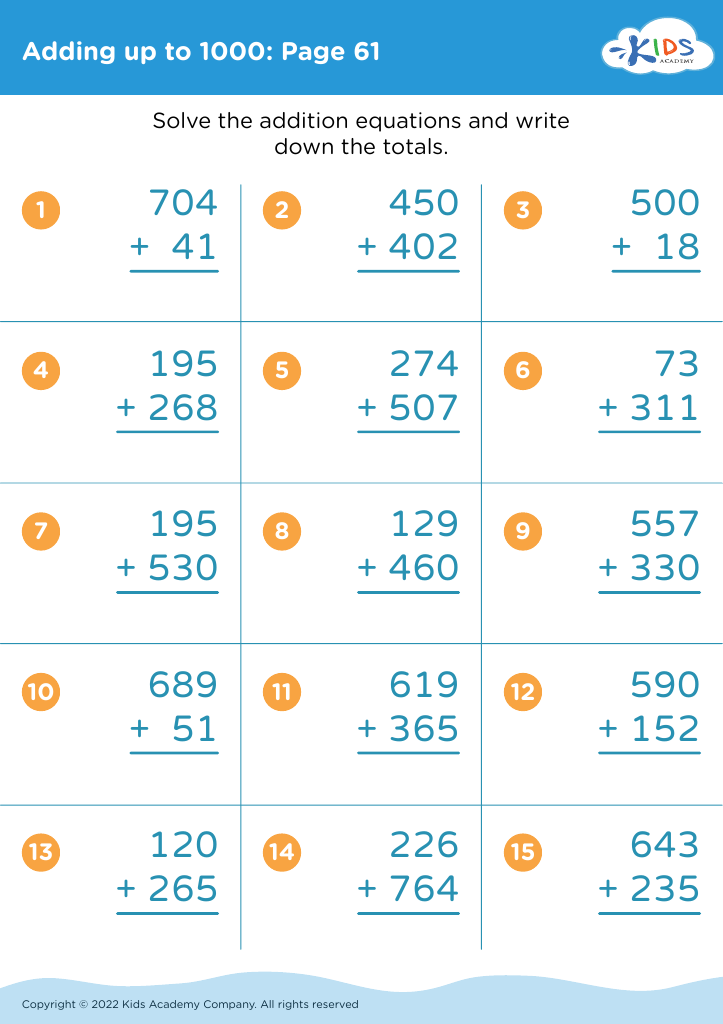
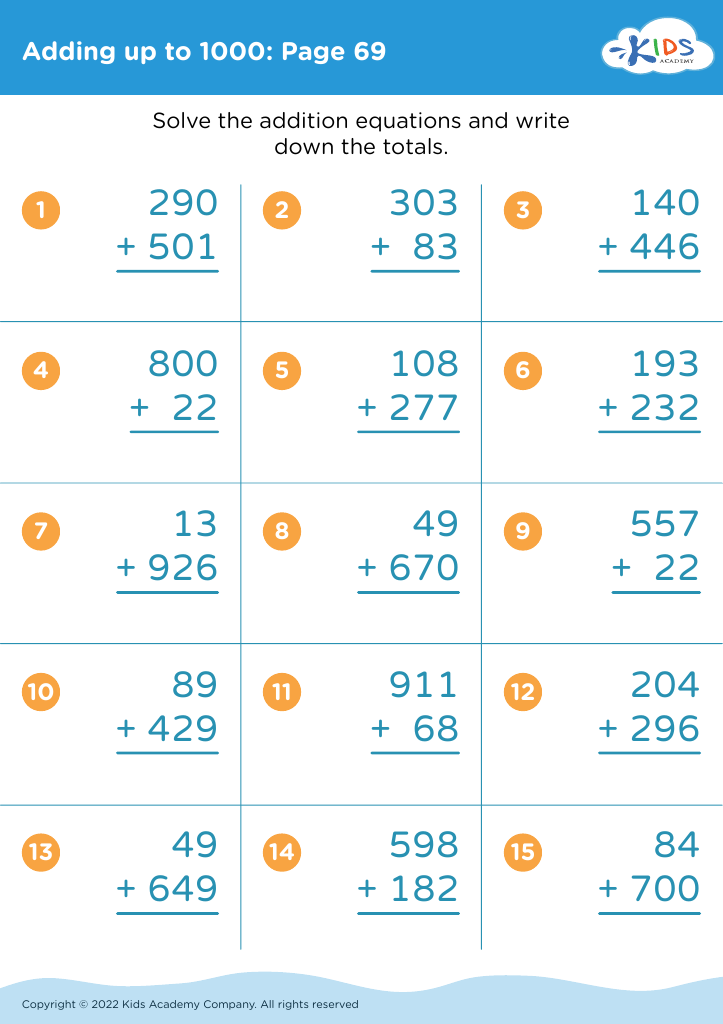
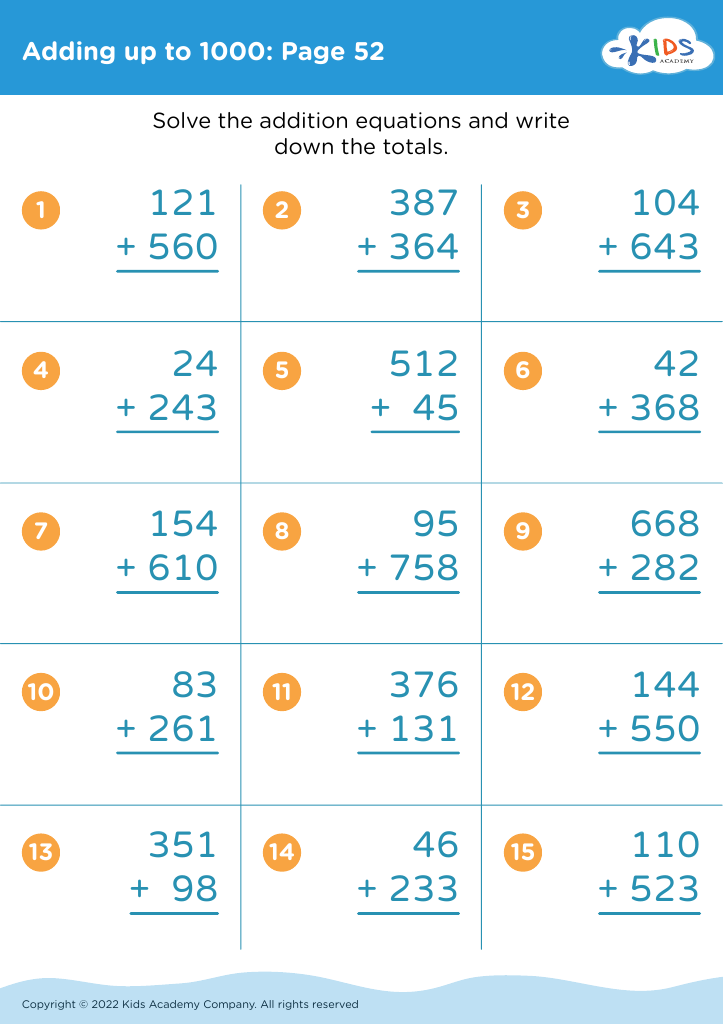


Understanding basic math concepts such as fraction simplification and adding up to 1000 at an early age equips children with essential skills needed for more complex mathematics. For ages 4-9, building a solid foundation in these fundamental areas is crucial.
First, fraction simplification helps children recognize and work with proportional relationships, laying the groundwork for algebra and more advanced math. It promotes logical thinking and problem-solving skills, which are invaluable across all subjects and everyday situations.
Second, mastering addition up to 1000 aids in number sense and establishes confidence in handling larger numbers. This skill is particularly important as it supports arithmetic competence and prepares students for real-world scenarios requiring quick and accurate mental calculations.
Parents and teachers should invest in these areas because early confidence in math builds a positive attitude toward learning and encourages persistence in challenging tasks. For young children, these lessons also foster fine motor skills through activities like writing and using manipulatives, further enhancing cognitive development.
In summary, prioritizing fraction simplification and adding up to 1000 during these formative years can spark a lifelong appreciation for mathematics, bolster overall academic performance, and develop critical thinking skills fundamental to success in school and beyond.