Improve math skills Adding up to 1000 Misc Worksheets for Ages 4-9
3 filtered results
-
From - To
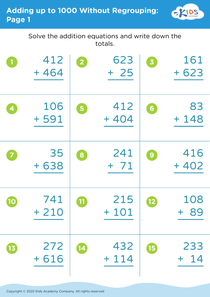
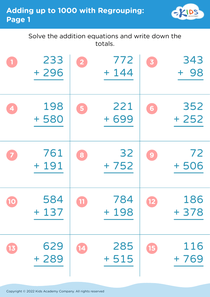
Boost your child's math skills with our "Adding Up to 1000 Misc Worksheets" designed for ages 4-9! These engaging worksheets offer a fun and effective way to practice addition and develop essential problem-solving abilities. Our comprehensive collection features various activities tailored to reinforce mathematical concepts, keeping young learners motivated and excited about math. Each worksheet is crafted to suit varying skill levels, ensuring that all children can improve their proficiency at their own pace. Help your child build a strong mathematical foundation while fostering a love for learning with these beautifully designed resources. Start their math journey today!
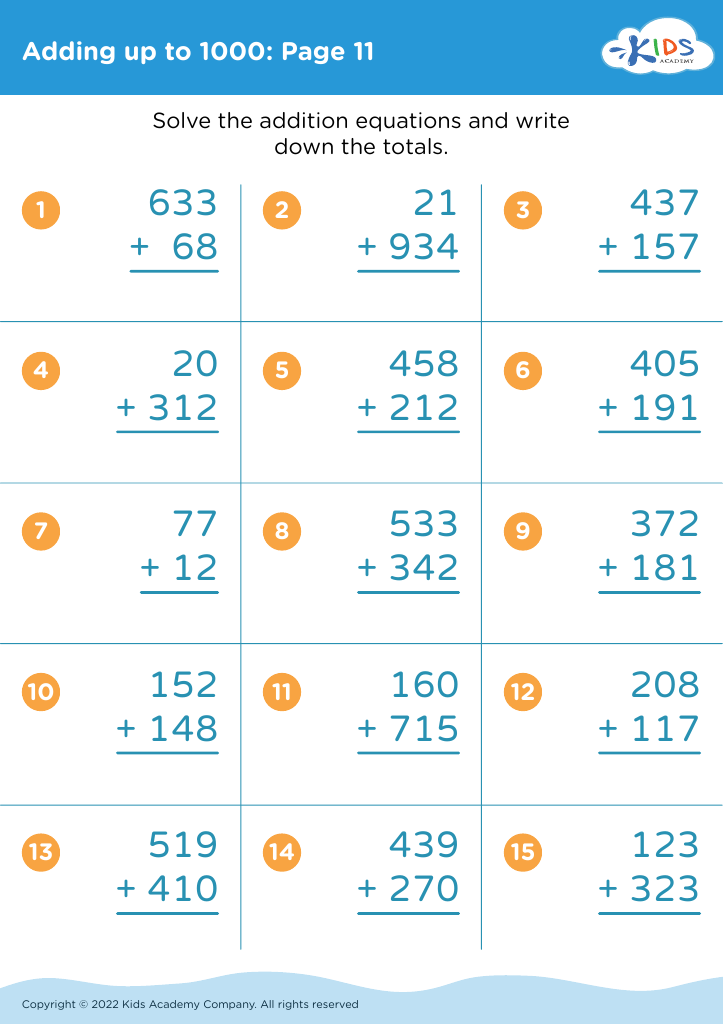
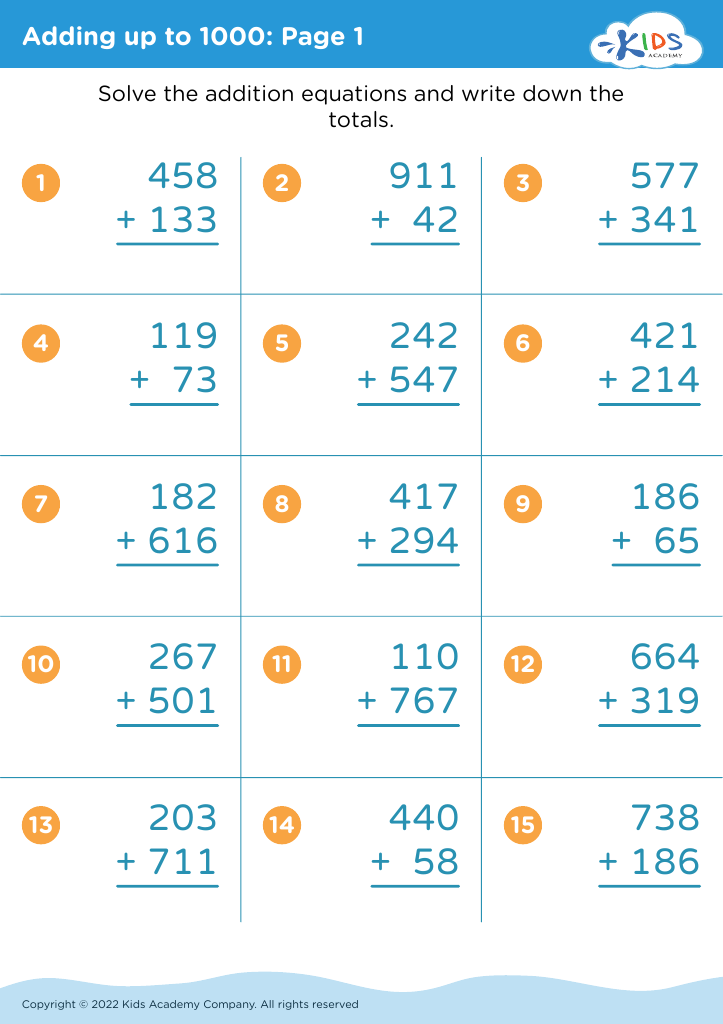
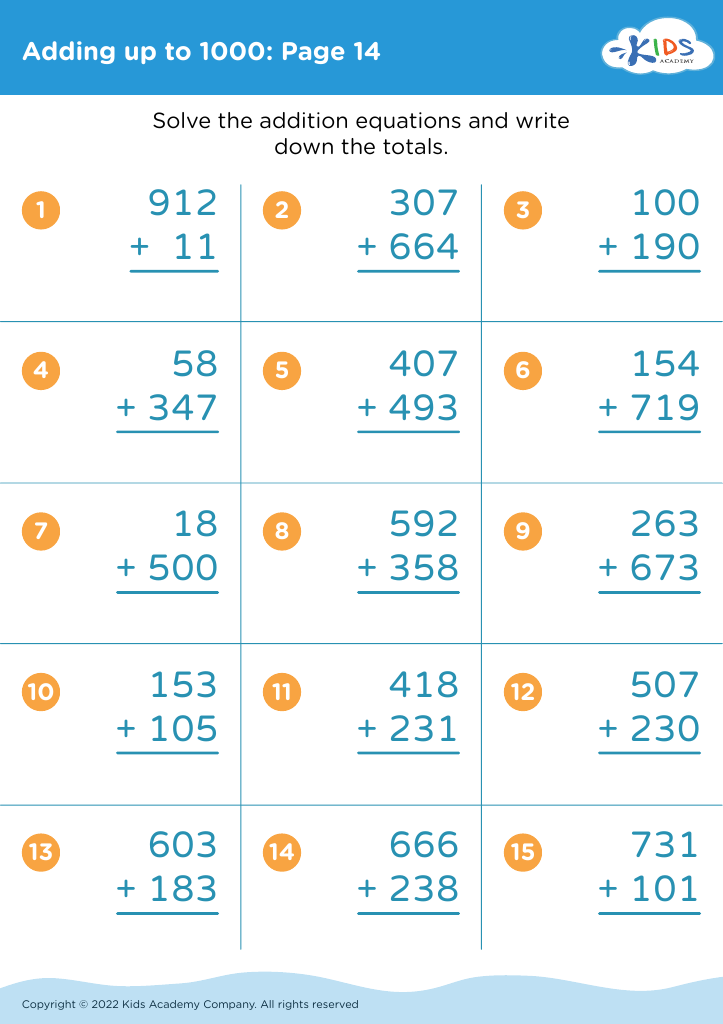


Parents and teachers should prioritize improving math skills, especially the ability to add numbers up to 1000, for children aged 4 to 9 for several reasons. Firstly, foundational math skills foster critical thinking and problem-solving abilities essential for everyday life. Understanding addition concepts prepares young learners for more complex math operations as they advance. Engaging with numbers and mastering addition not only builds confidence but also enhances a child’s cognitive development.
Additionally, early math skills are associated with later academic success. Research shows that children who have a strong grasp of foundational math skills tend to perform better in mathematics throughout their schooling. Moreover, these skills are not taught in isolation; they often support learning in other areas, including science and economics, ensuring a well-rounded education.
Socially, proficiency in math can lead to increased participation in classroom activities and less anxiety around subjects perceived as challenging. Finally, incorporating fun, interactive methods to learn addition nurtures a child’s natural curiosity and love for learning. By emphasizing math skills during these early years, parents and teachers can lay a solid foundation that will benefit children throughout their academic journey and beyond.