Comparing Fractions Adding up to 1000 with Regrouping Worksheets for Ages 4-9
8 filtered results
-
From - To
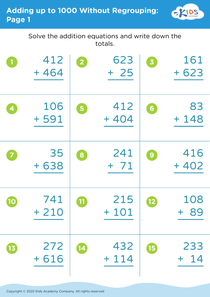
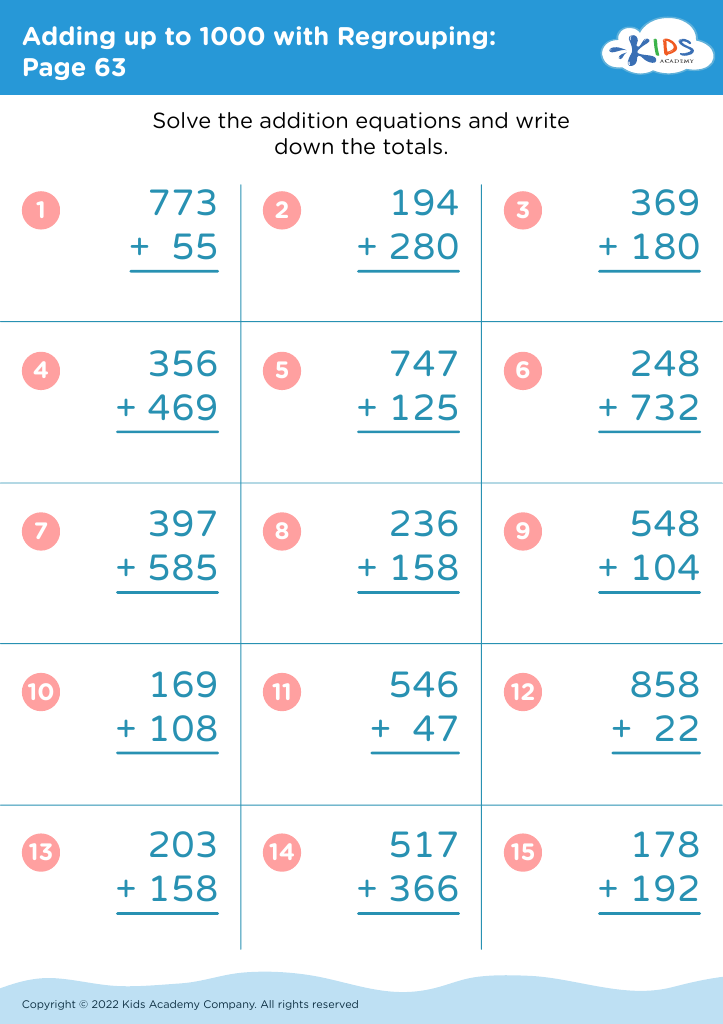
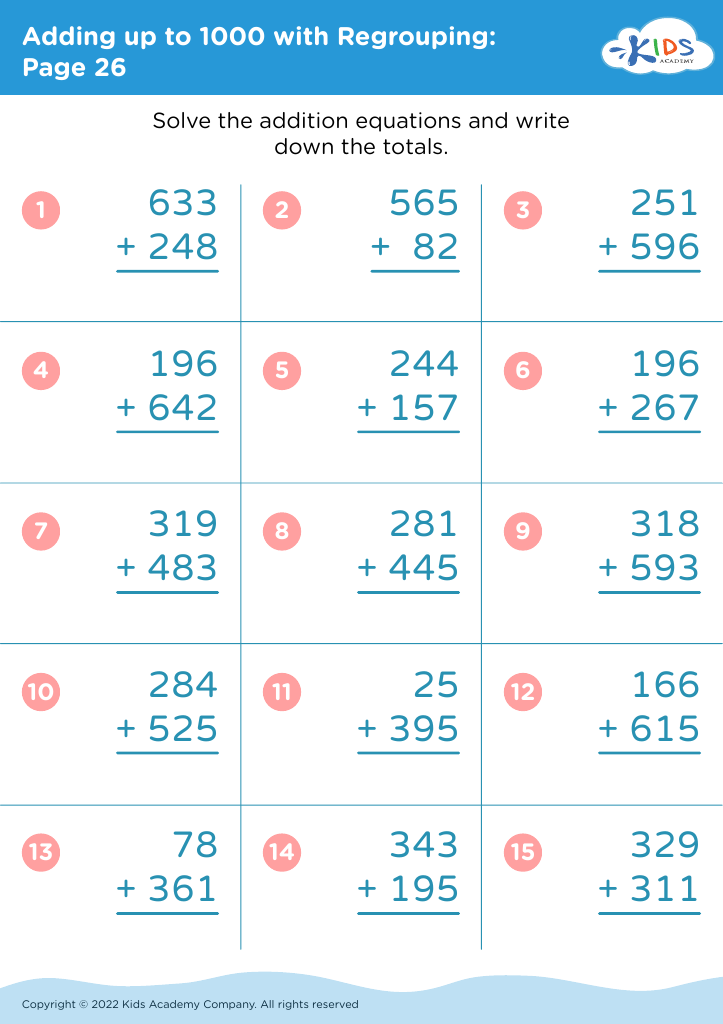
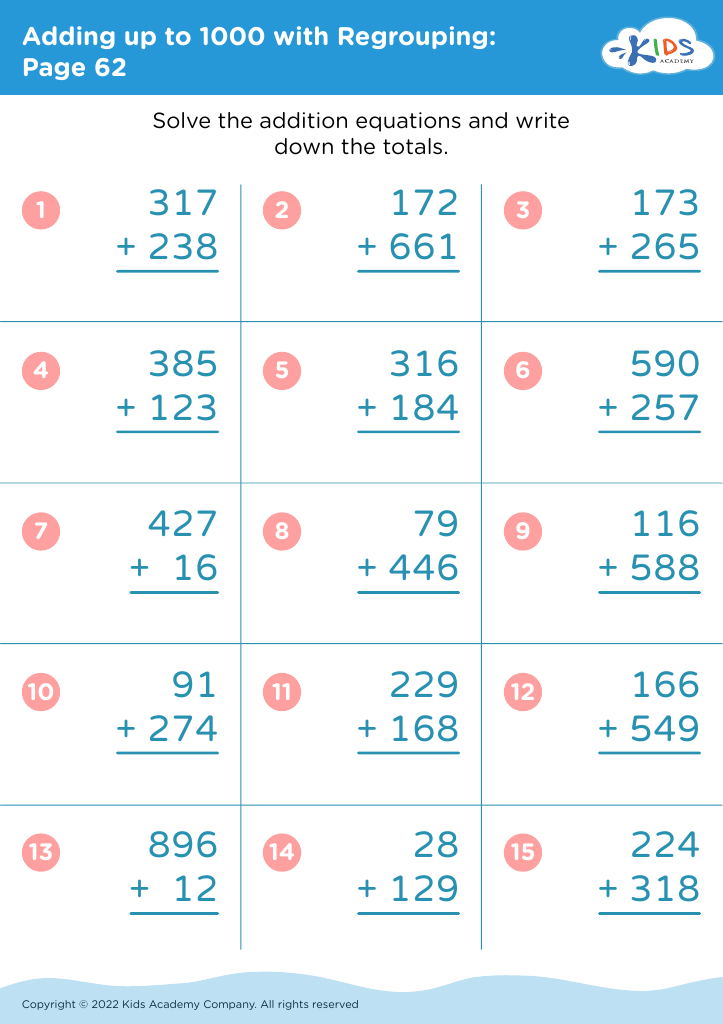
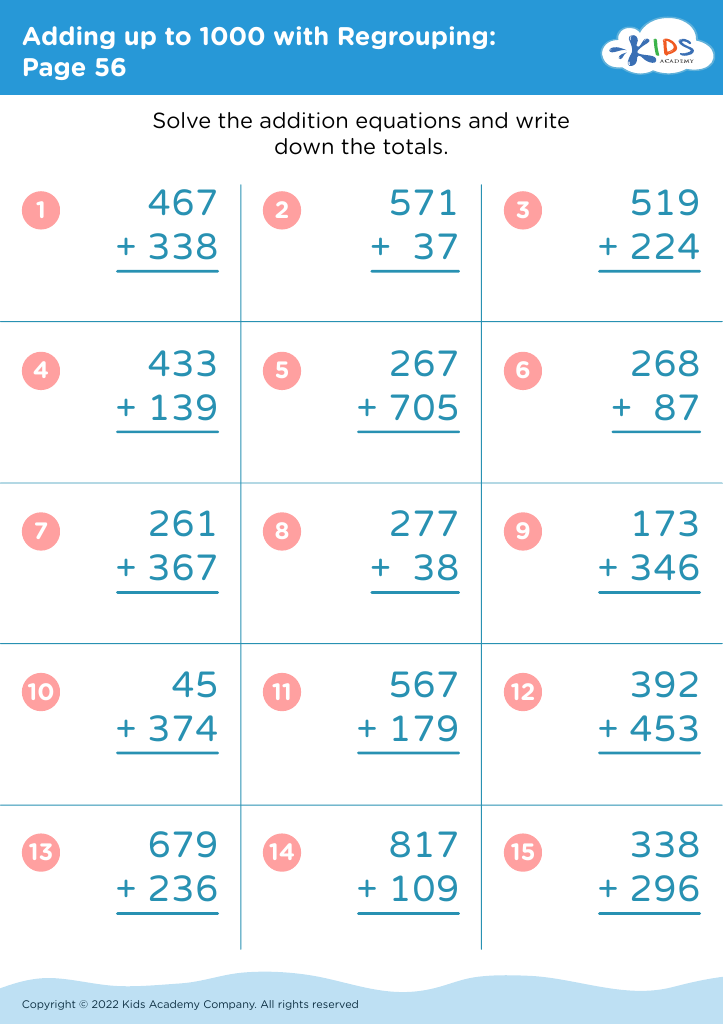
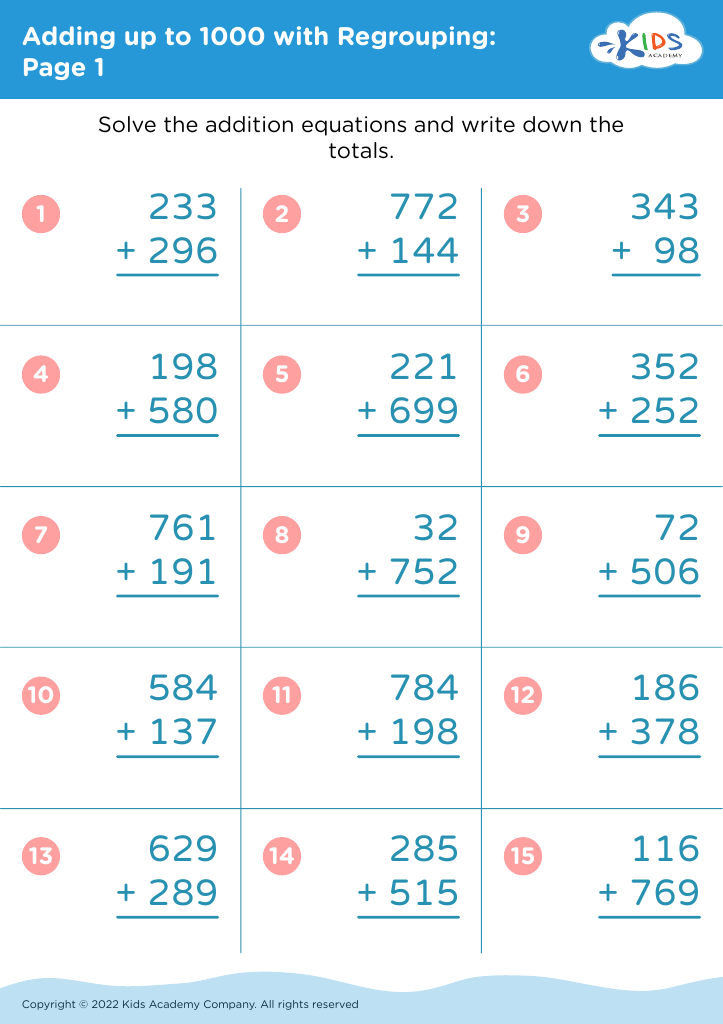
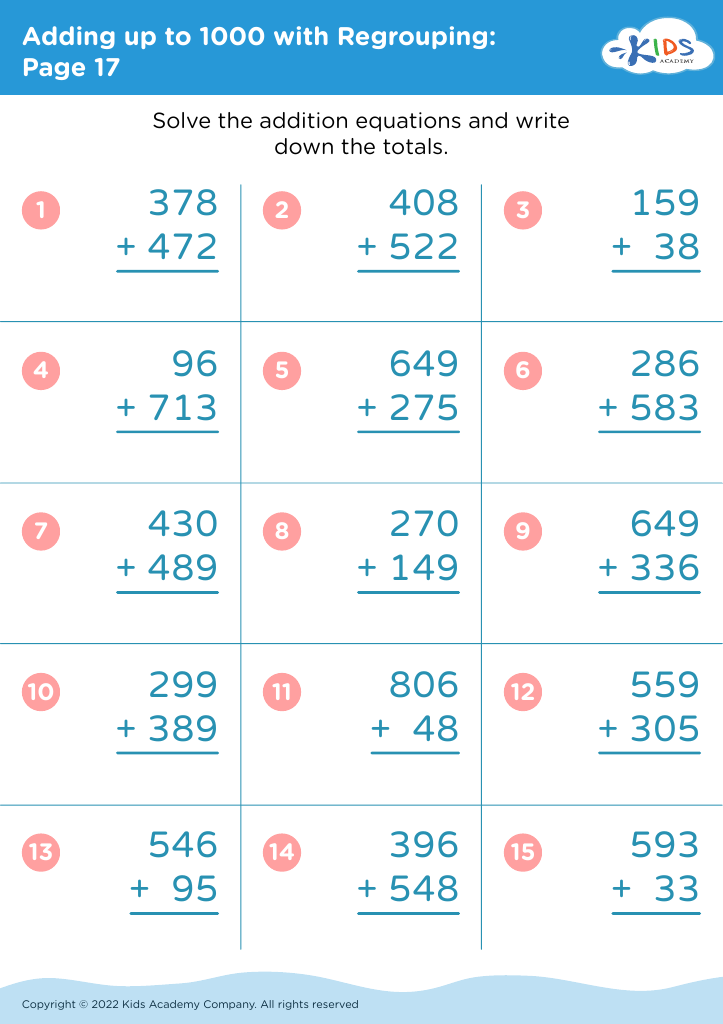
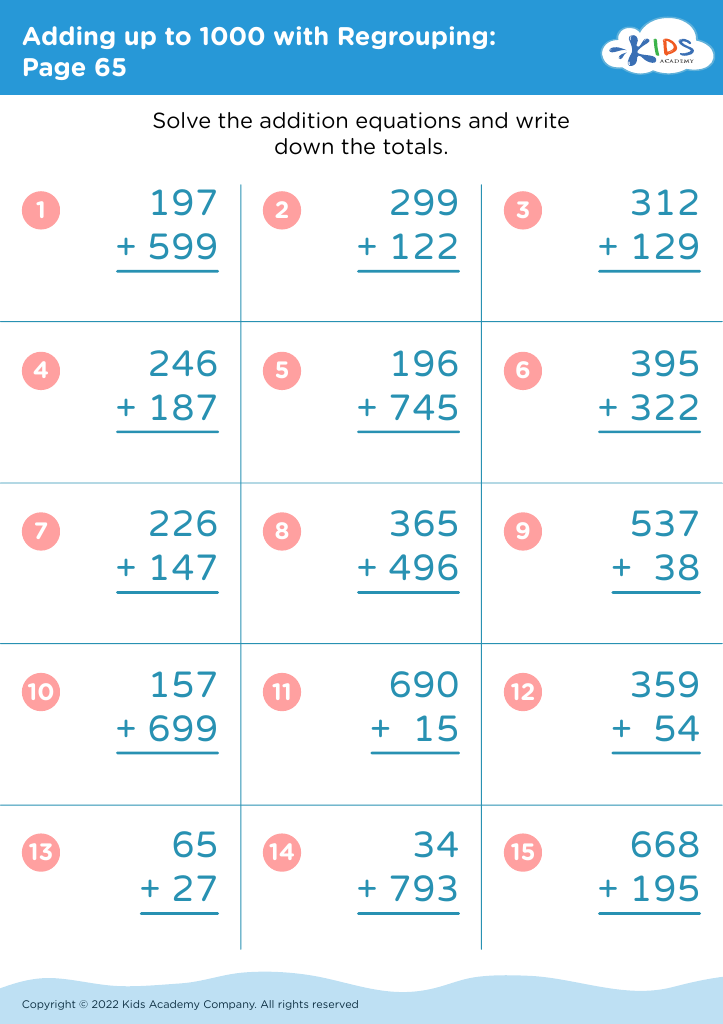
Explore our engaging "Comparing Fractions Adding up to 1000 with Regrouping" worksheets, designed for children ages 4-9. These interactive resources help young learners grasp fundamental math concepts by comparing fractions while mastering addition with regrouping. Each worksheet aims to build confidence and proficiency through fun exercises that challenge kids to analyze and understand fractions in a practical context. With vibrant illustrations and age-appropriate content, our worksheets not only make learning enjoyable but also foster critical thinking skills. Perfect for both classroom use and at-home practice, these materials are essential for developing a strong mathematical foundation. Start the learning adventure today!
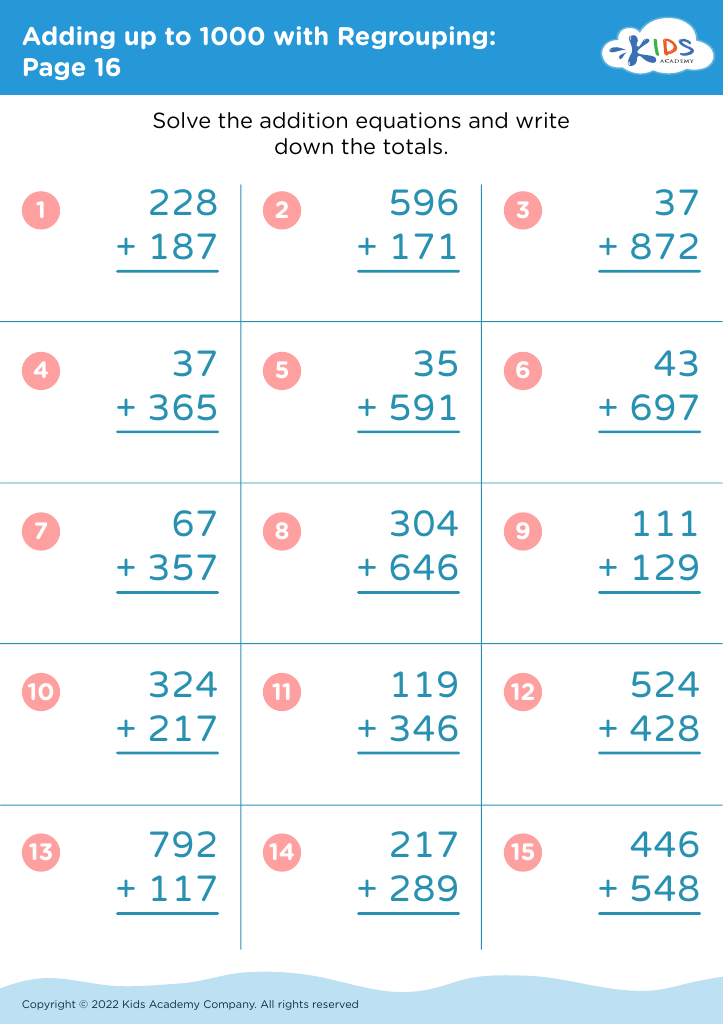


Comparing fractions and understanding the concept of regrouping in addition is essential for children ages 4-9 as it lays a strong foundation for their math skills. Fractions represent parts of a whole and are fundamental in developing a child's number sense, which impacts their ability to solve real-life problems. Teaching children to compare fractions is important because it fosters critical thinking and aids in understanding proportions, which are often encountered in everyday situations, such as sharing food or dividing materials.
When combined with regrouping, students learn to manipulate numbers, enhancing their computational fluency. Regrouping helps them develop flexibility with numbers, enabling them to see different forms of the same value—essential for mastering addition and subtraction. Furthermore, grasping these concepts nurtures confidence and promotes a positive mindset towards math, which can impact their overall academic performance.
Engaging both parents and teachers in this process fosters a collaborative learning environment, reinforcing the importance of math in everyday life. By recognizing the relevance of comparing fractions and regrouping, stakeholders can help nurture a generation of mathematically proficient and confident learners capable of tackling more complex mathematical challenges in the future. Emphasizing these skills now ensures academic success down the road.