Fine Motor Skills Adding up to 1000 with Regrouping Worksheets for Ages 4-9
4 filtered results
-
From - To
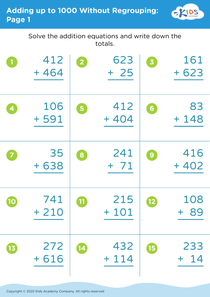
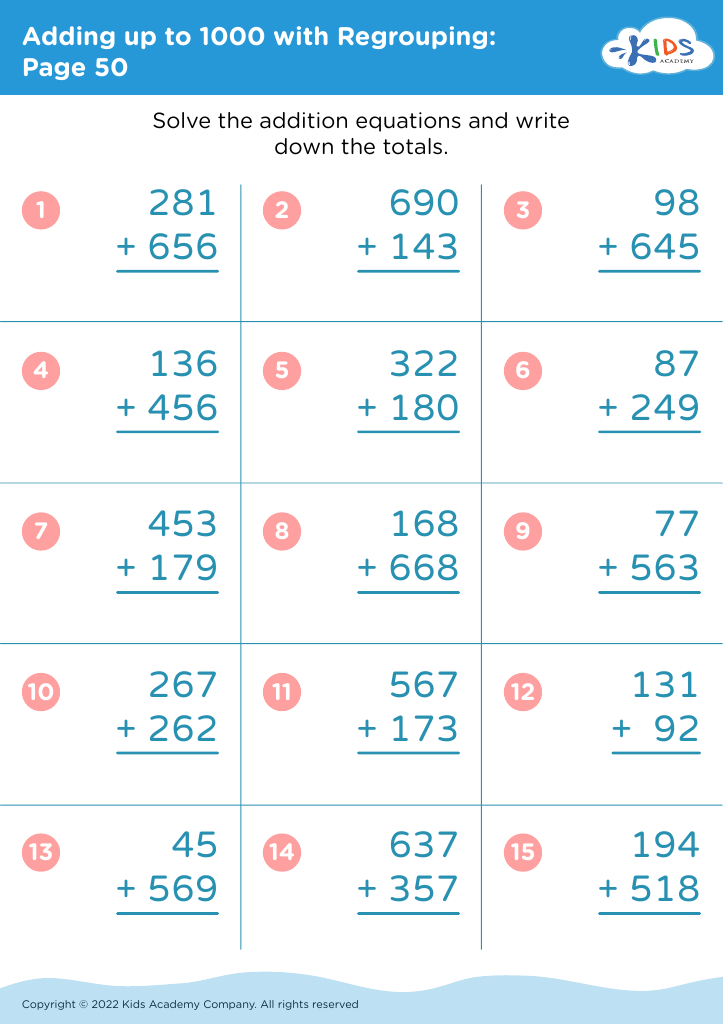
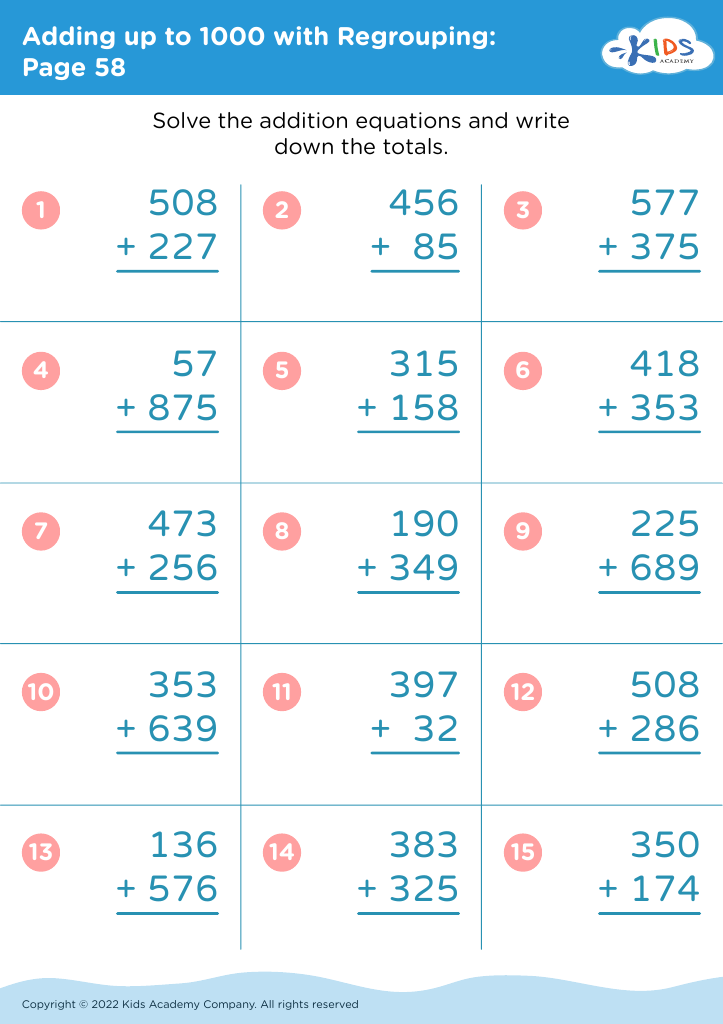
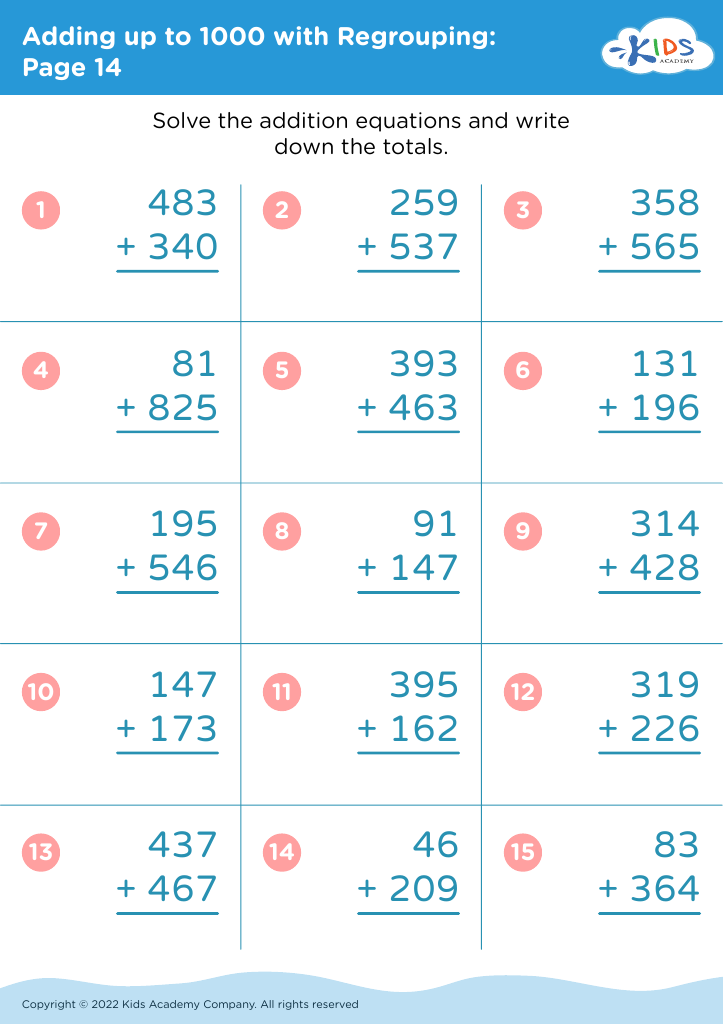
Enhance your child's fine motor skills while mastering addition with our "Adding up to 1000 with Regrouping Worksheets" for ages 4-9! These engaging worksheets are designed to combine mathematical learning with fun, hands-on activities. As your child practices regrouping techniques, they'll improve their handwriting, dexterity, and hand-eye coordination through tracing, connecting, and coloring exercises. Each worksheet encourages diligent focus and promotes cognitive development, making math more enjoyable and interactive. Help your young learners build a strong foundation in addition and fine motor skills. Download our worksheets today and watch your child excel in both math and coordination!
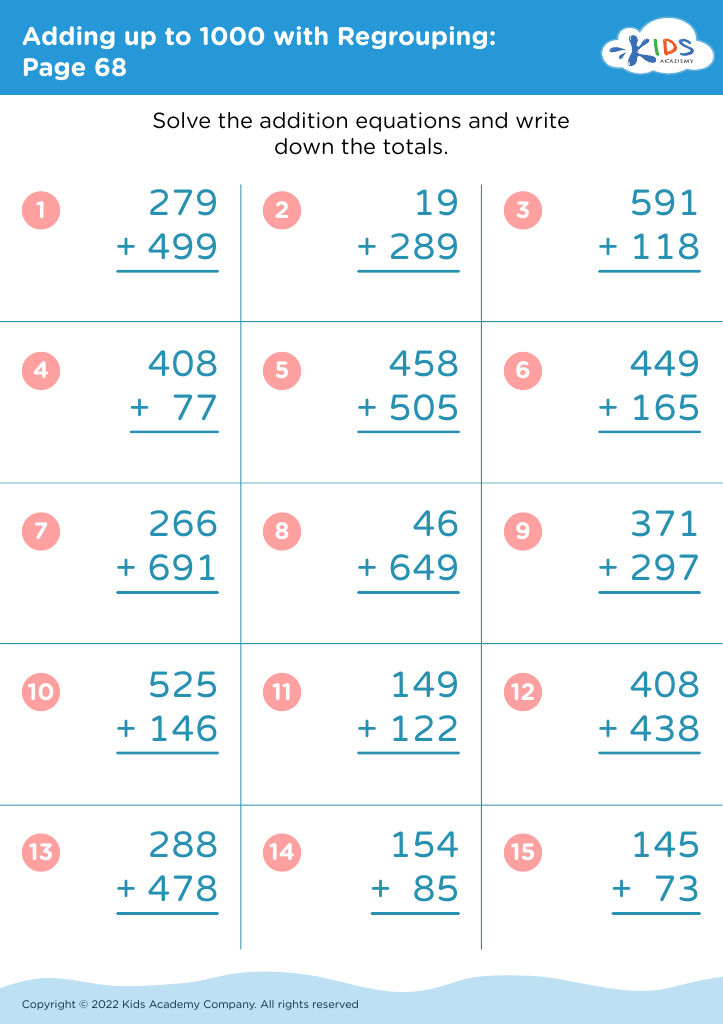


Fine motor skills are crucial for children aged 4-9 as they form the foundation for various academic and daily life tasks, including writing, drawing, and manipulating objects. When teaching adding up to 1000 with regrouping, fine motor skills play a significant role. Mastery of these skills enhances a child's ability to effectively manage counting manipulatives, utilize worksheets, and write numbers clearly without frustration.
As children engage in fine motor activities, such as cutting, pasting, or using manipulatives like blocks or beads, they develop hand-eye coordination and dexterity. This physical capability positively impacts their confidence when tackling larger arithmetic problems, including regrouping, which often requires careful organization of numbers and careful placement in columns.
Moreover, honing fine motor skills can reduce the cognitive load when learning complex concepts like regrouping, enabling students to focus on understanding the mathematical process without being hindered by mechanical difficulties. For parents and teachers, fostering these skills is imperative, as it ensures children are not only prepared academically but also equipped with lifelong tools for effective learning and self-expression. Thus, investing time in developing fine motor skills significantly enhances a child’s math journey and overall confidence in their abilities.