Math problem-solving Adding up to 1000 with Regrouping Worksheets for Ages 4-9
3 filtered results
-
From - To
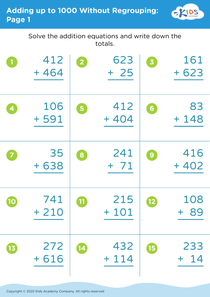
Enhance your child's math skills with our engaging "Adding up to 1000 with Regrouping Worksheets," designed for ages 4-9. These worksheets focus on developing problem-solving abilities through fun and interactive activities that cultivate a strong foundation in addition and regrouping concepts. With a variety of exercises, your child will practice adding larger numbers, improving their number sense, and boosting their confidence in math. Each worksheet aligns with educational standards, ensuring a comprehensive learning experience. Perfect for homeschooling or supplementary practice, these resources will make math enjoyable and effective. Encourage your child to excel in math with our stimulating and creative worksheets!
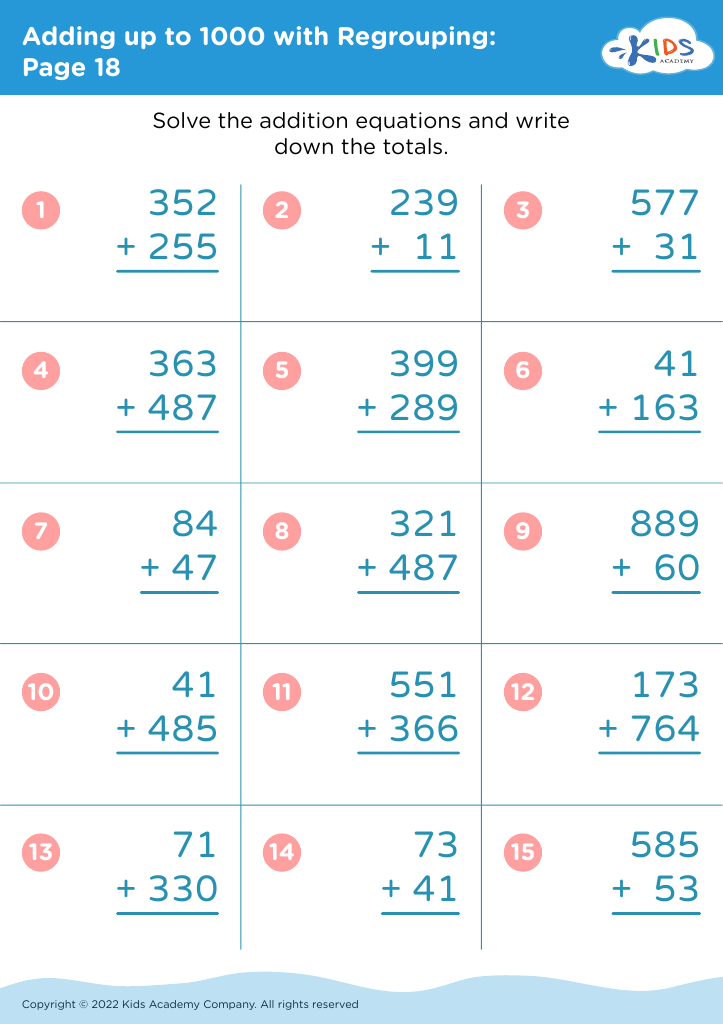
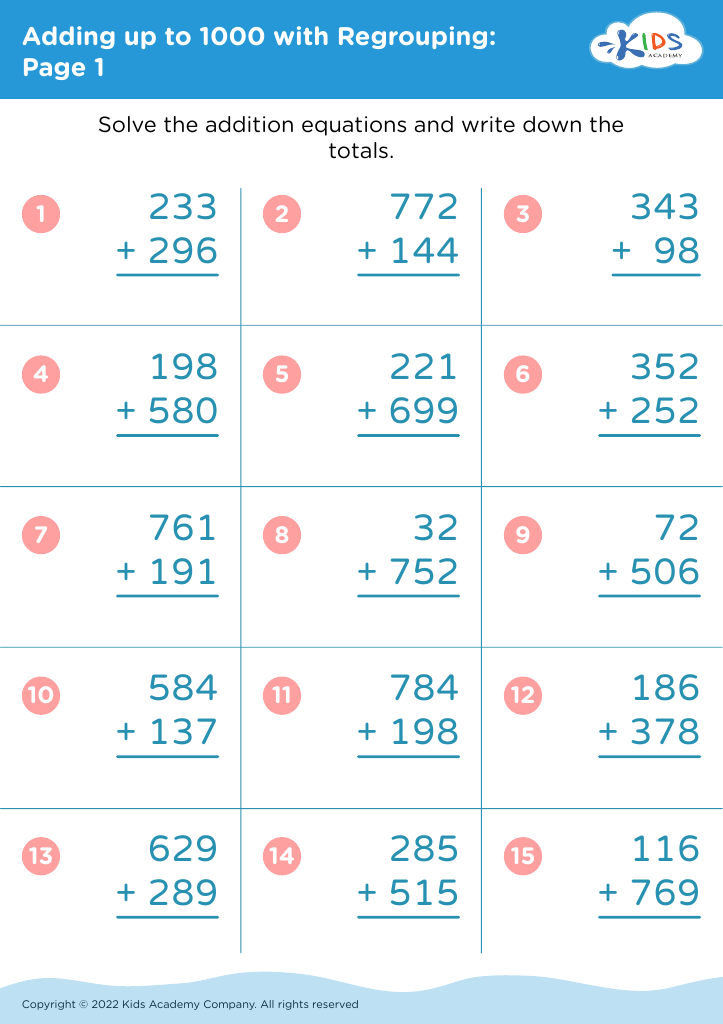
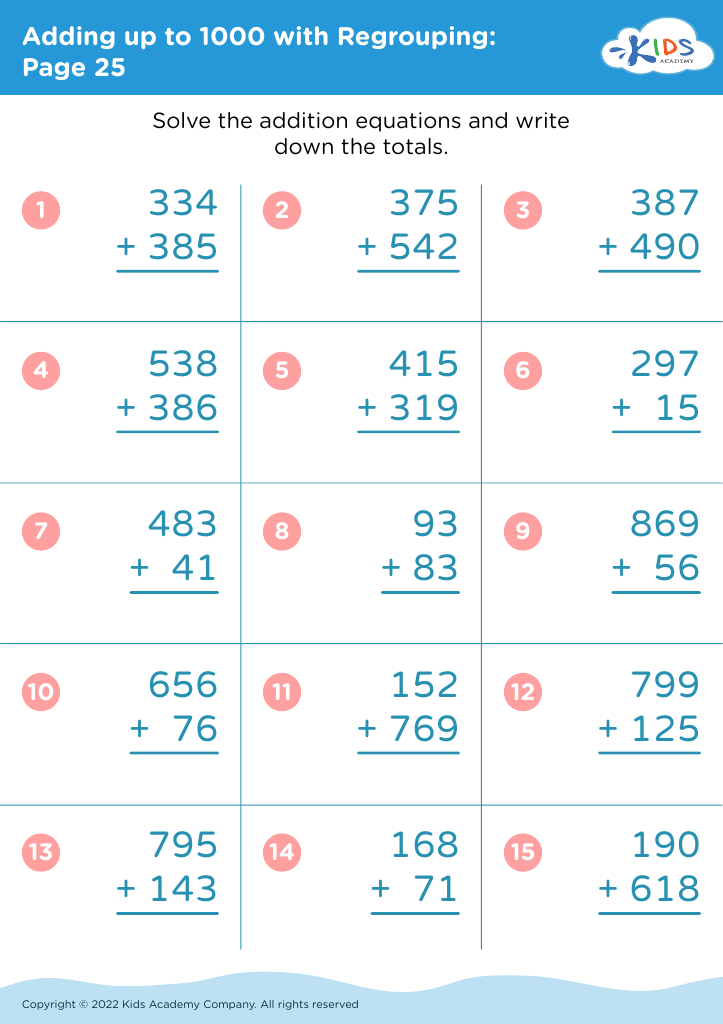


Parents and teachers should care about math problem-solving tasks like adding up to 1000 with regrouping for children aged 4-9, as this foundational skill fosters critical cognitive development. Mastering such skills not only enhances numerical fluency but also builds essential problem-solving strategies that apply in various contexts beyond mathematics.
At this early age, children develop their understanding of place value and the concept of regrouping, which are crucial building blocks for more advanced mathematical operations. This understanding supports various curricular goals and helps children approach complex problems with confidence and resilience.
Moreover, engaging in problem-solving encourages perseverance and critical thinking. It promotes a positive attitude towards math, countering any potential math anxiety, and instilling a growth mindset that sees challenges as opportunities to learn. This approach cultivates a love for learning, which is beneficial in and out of the classroom.
Additionally, tasks that involve adding up to 1000 with regrouping can be facilitated with fun, hands-on activities that help make learning enjoyable. This serves to strengthen the parent-child or teacher-student relationship, making math a shared adventure and empowering children to view mathematics as an essential and accessible life skill.