Shape Recognition Adding up to 1000 with Regrouping Worksheets for Ages 4-9
6 filtered results
-
From - To
Unlock your child's mathematical potential with our "Shape Recognition Adding Up to 1000 with Regrouping Worksheets" designed for ages 4-9. These engaging worksheets not only enhance addition skills but also introduce shape recognition in a fun and interactive way. Each activity promotes critical thinking as kids practice regrouping while identifying various shapes. Tailored to accommodate different learning styles, our worksheets support early math development and ensure that children build a solid foundation for future success. With vibrant visuals and age-appropriate challenges, this resource makes learning math enjoyable while fostering a love for learning in young minds. Dive into essential math skills today!
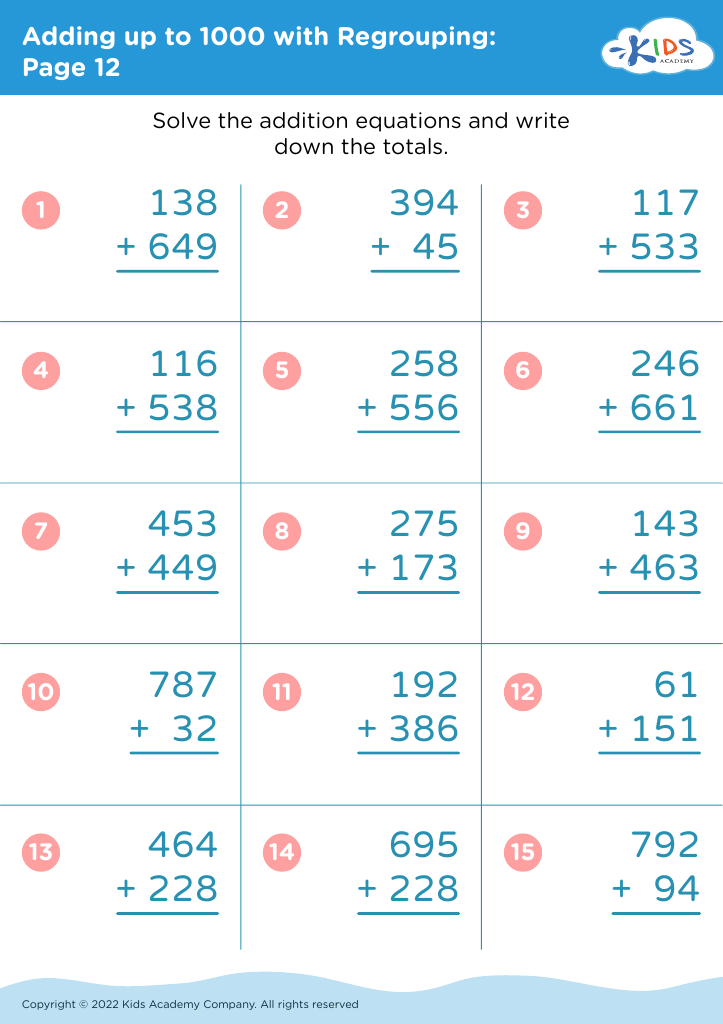
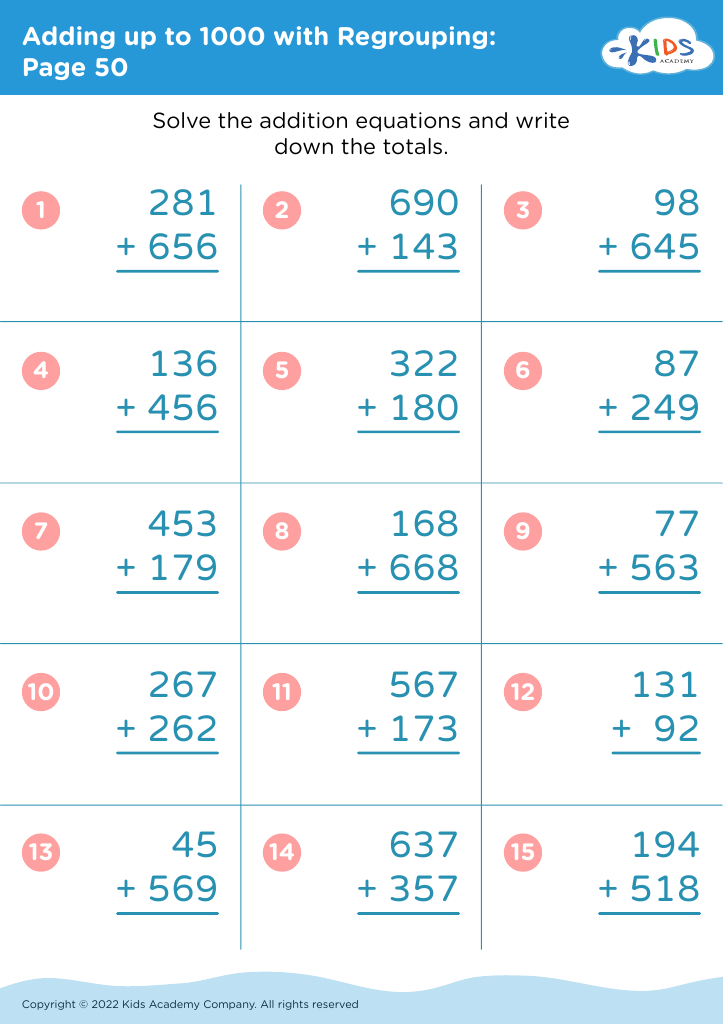
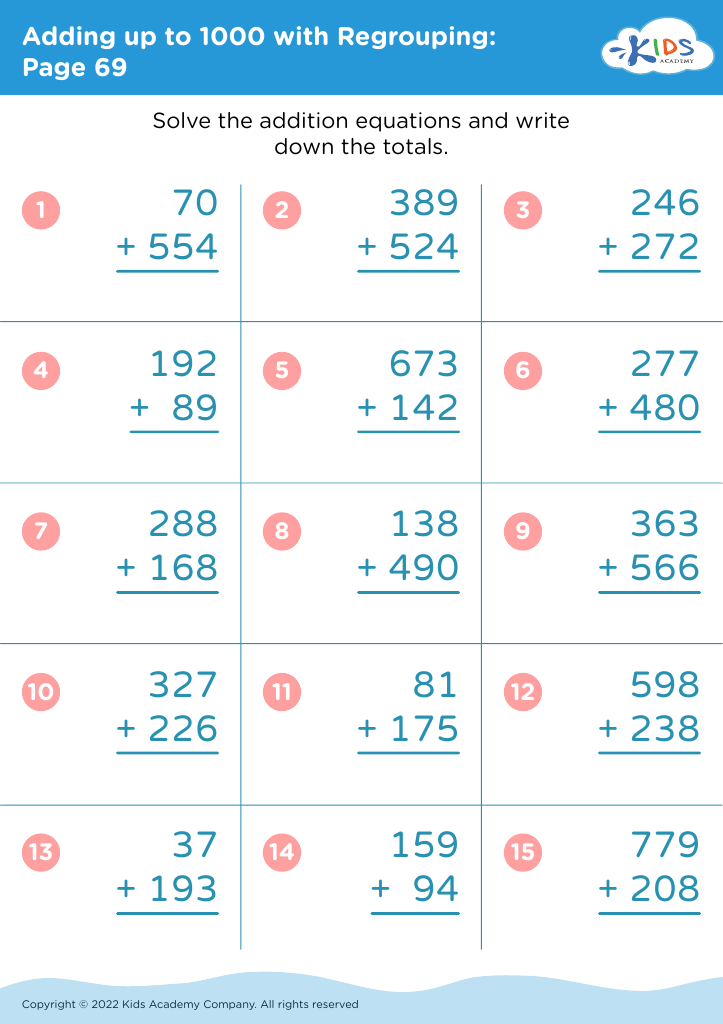
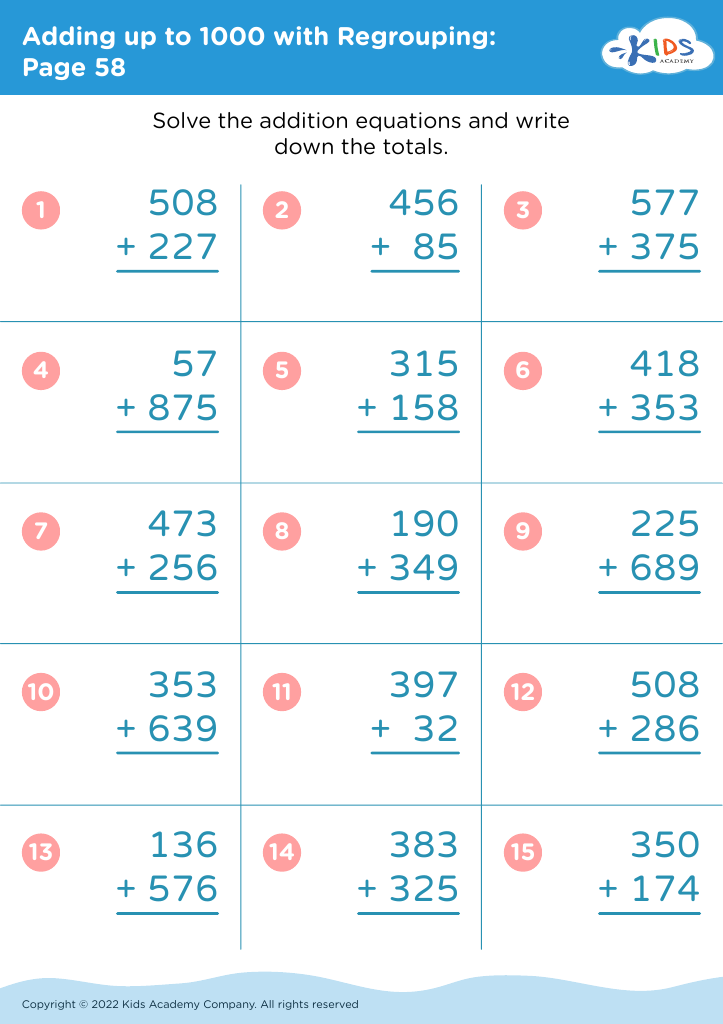
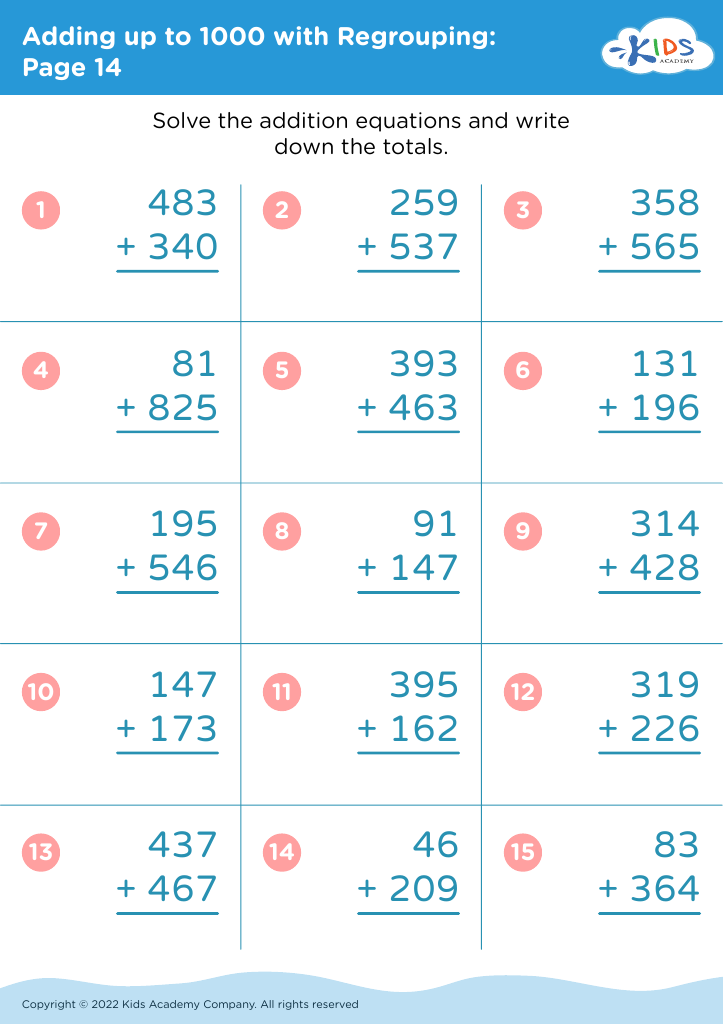
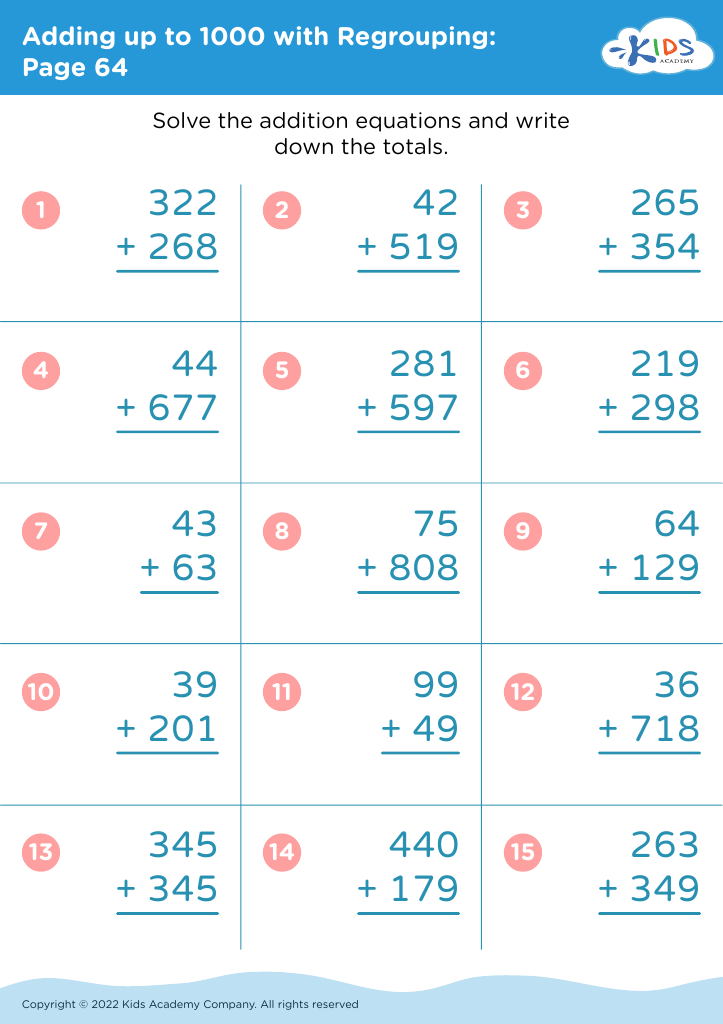


Shape recognition and understanding addition with regrouping are fundamental skills for children aged 4-9 that serve as building blocks for their mathematical, spatial, and problem-solving abilities. Parents and teachers should prioritize these areas for several reasons.
Firstly, shape recognition aids in developing spatial awareness, allowing children to understand their environment better. It is crucial for later skills in geometry and even everyday tasks like building and crafting. When children can identify and categorize shapes, they enhance critical thinking, observation, and classification abilities.
On the other hand, mastering addition with regrouping fosters numerical fluency. This skill helps children transition from basic addition to more complex mathematical concepts, which are essential as they progress through school. Regrouping, or carrying over, teaches children that numbers can be broken down and recomposed, enhancing their flexibility in thinking mathematically.
Furthermore, these skills can boost confidence, providing children with a sense of accomplishment as they grasp new concepts. Together, shape recognition and addition with regrouping lay a foundation for more advanced learning, vital for academic success in mathematics and beyond. Thus, investing time and effort in these areas is crucial for parents and educators aiming to support a child’s overall development.