Understanding fractions Adding up to 1000 with Regrouping Worksheets for Ages 4-9

Filters

18 filtered results

Clear all filters
Favorites
With answer key
Interactive

18 filtered results

Difficulty Level

Grade


Explore our "Understanding Fractions: Adding Up to 1000 with Regrouping Worksheets" designed for children ages 4-9. These engaging worksheets aim to simplify the concept of fractions while enhancing math skills through hands-on activities. Children will learn the fundamentals of adding fractions, understanding how they fit into the whole, and how to regroup numbers effectively. With colorful visuals and interactive exercises, kids will build their confidence in math, making learning both fun and effective. Perfect for both classroom use and at-home practice, these worksheets will enrich young learners' comprehension of fractions and their application in addition tasks up to 1000. Start their mathematical journey today!
Check out this FREE Trial Lesson on Adding up to 1000 with Regrouping for age 4-9!

Z

Favorites
With answer key
Interactive
  • 4-9
  • Understanding fractions
  • Adding up to 1000 with Regrouping
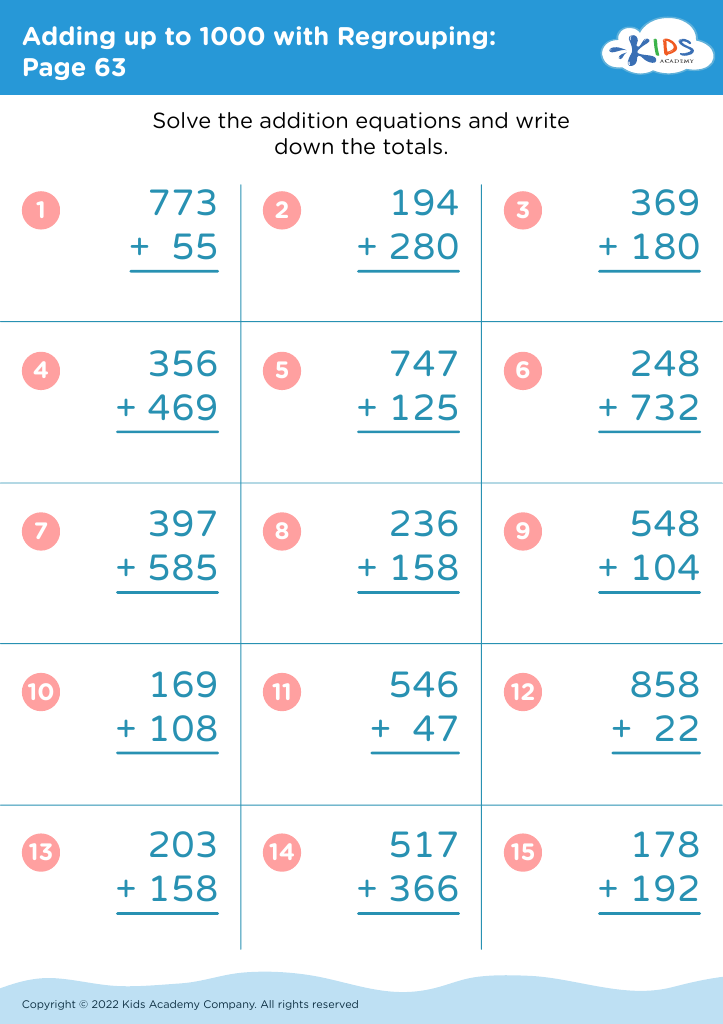
Adding up to 1000 with Regrouping: Page 63
Worksheet
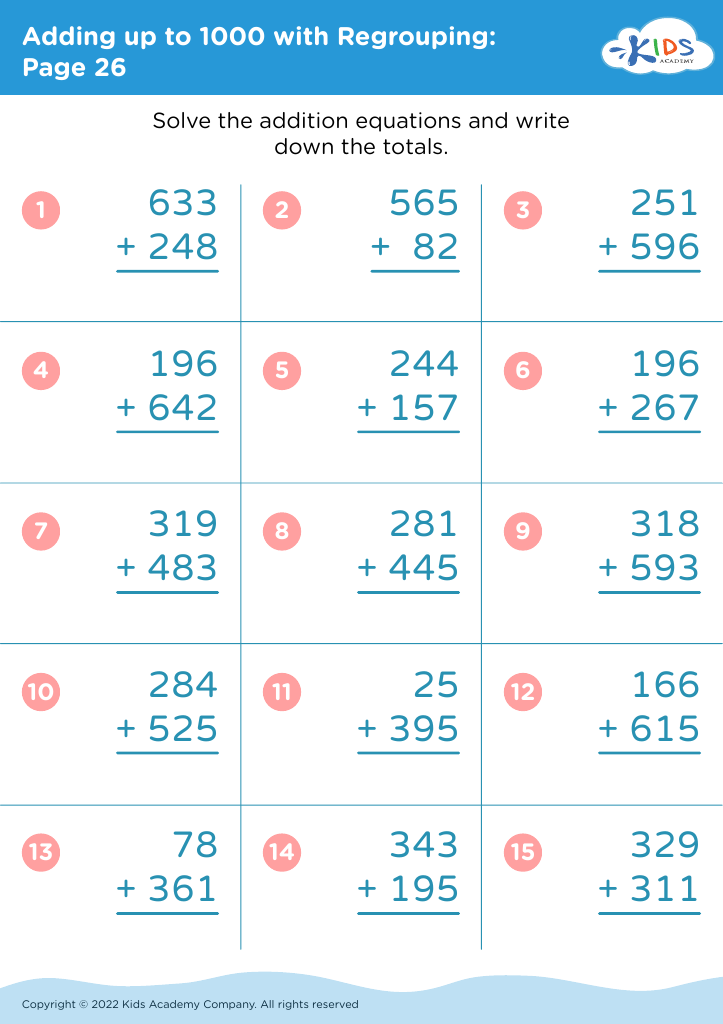
Adding up to 1000 with Regrouping: Page 26
Worksheet
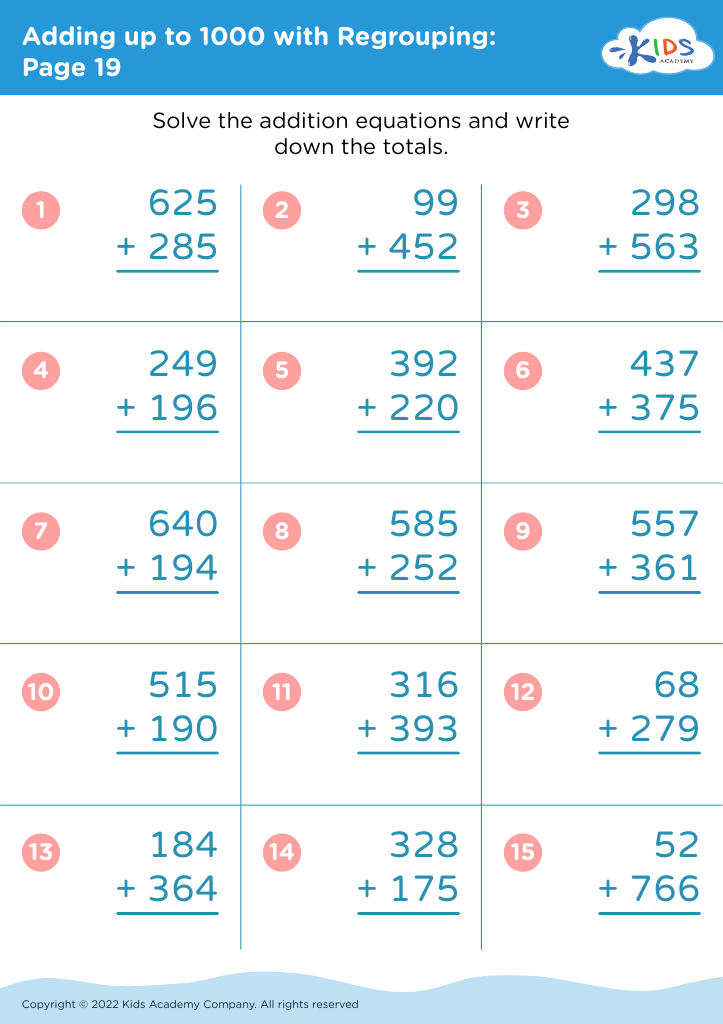
Adding up to 1000 with Regrouping: Page 19
Worksheet
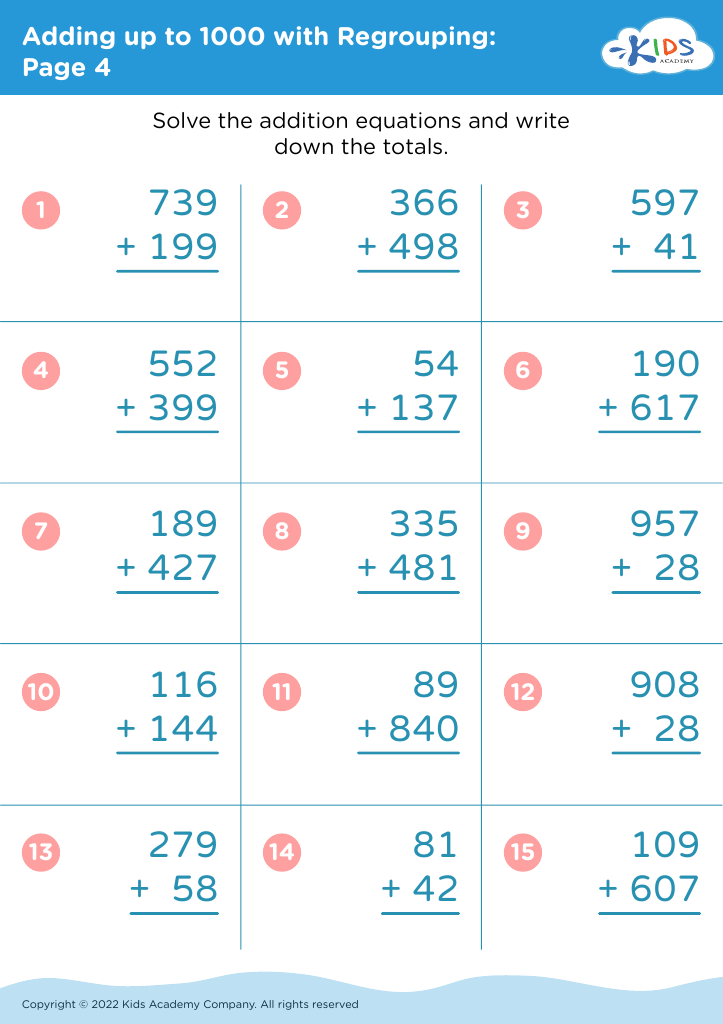
Adding up to 1000 with Regrouping: Page 4
Worksheet
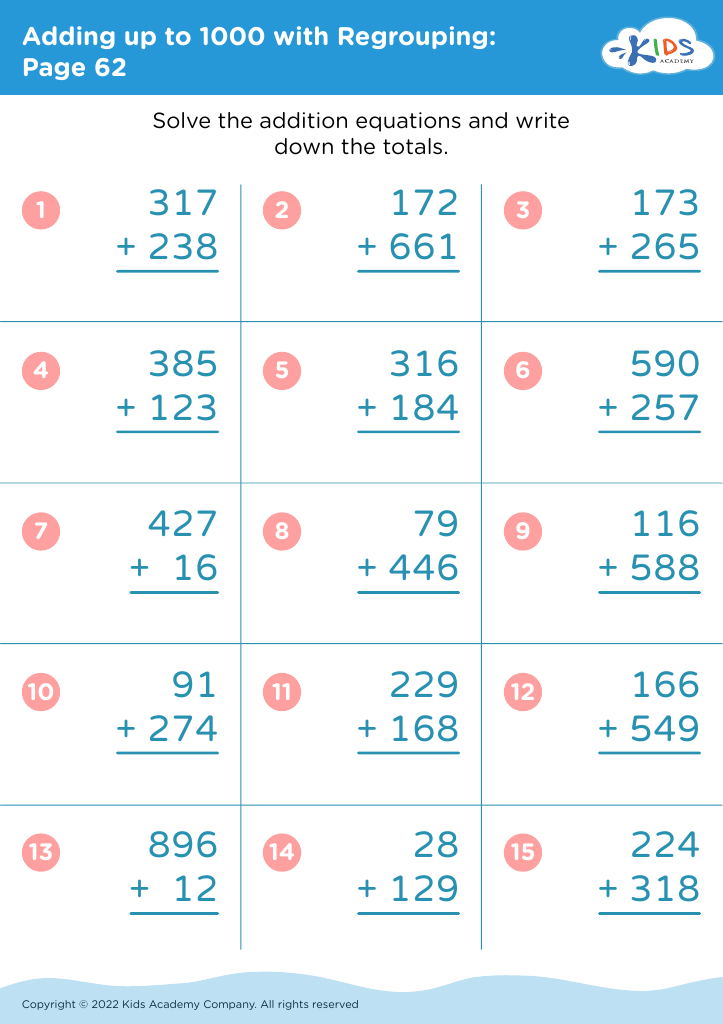
Adding up to 1000 with Regrouping: Page 62
Worksheet
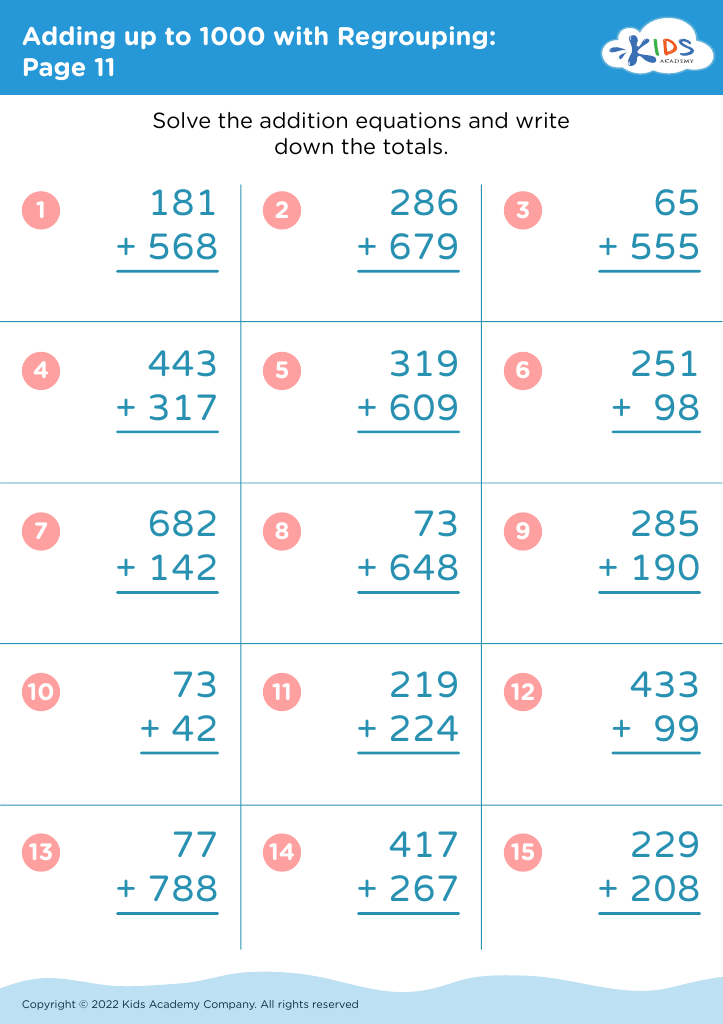
Adding up to 1000 with Regrouping: Page 11
Worksheet
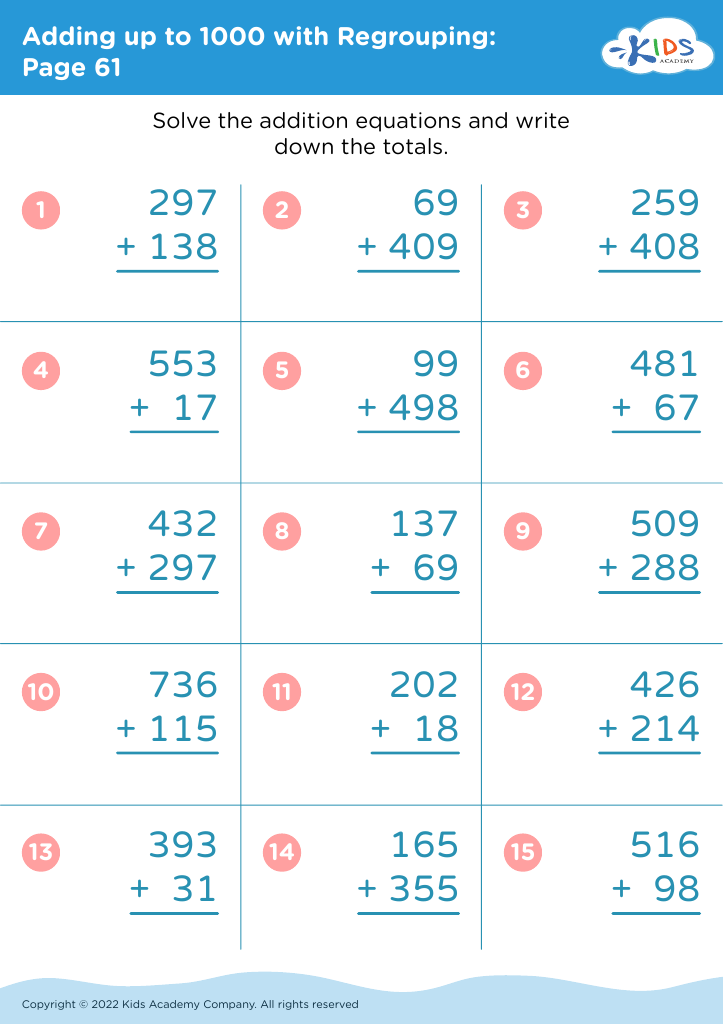
Adding up to 1000 with Regrouping: Page 61
Worksheet
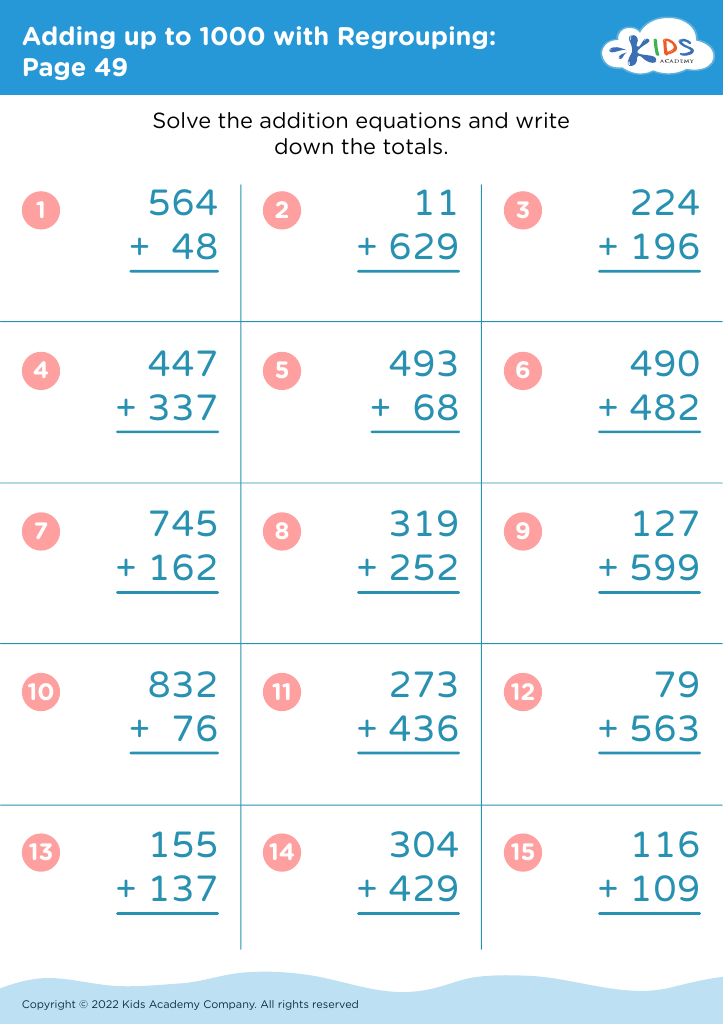
Adding up to 1000 with Regrouping: Page 49
Worksheet
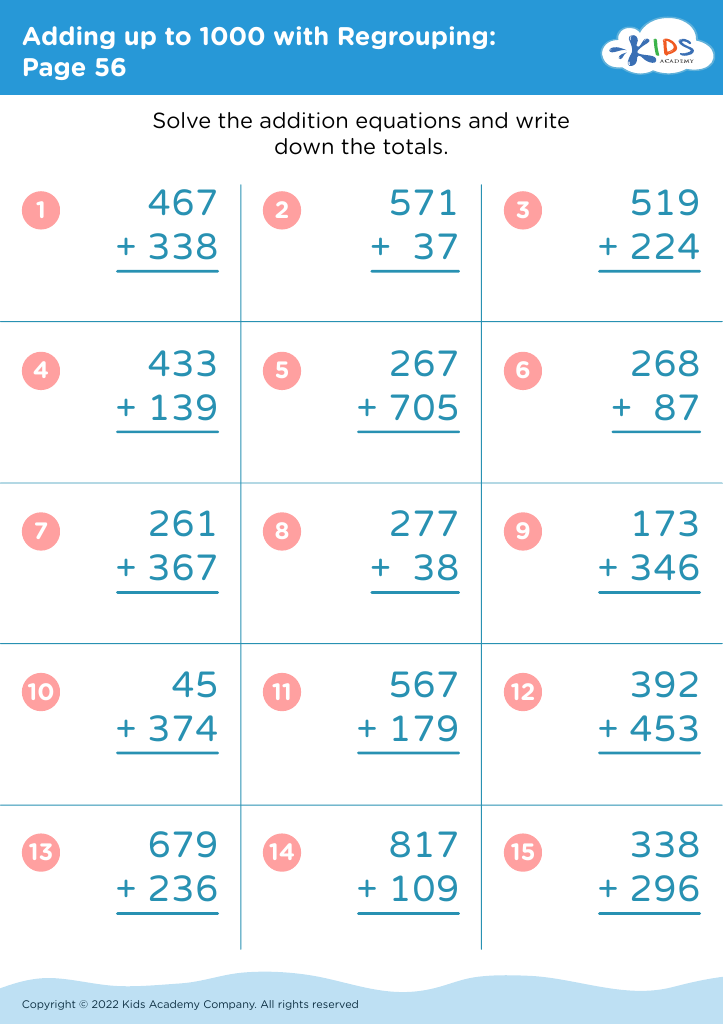
Adding up to 1000 with Regrouping: Page 56
Worksheet
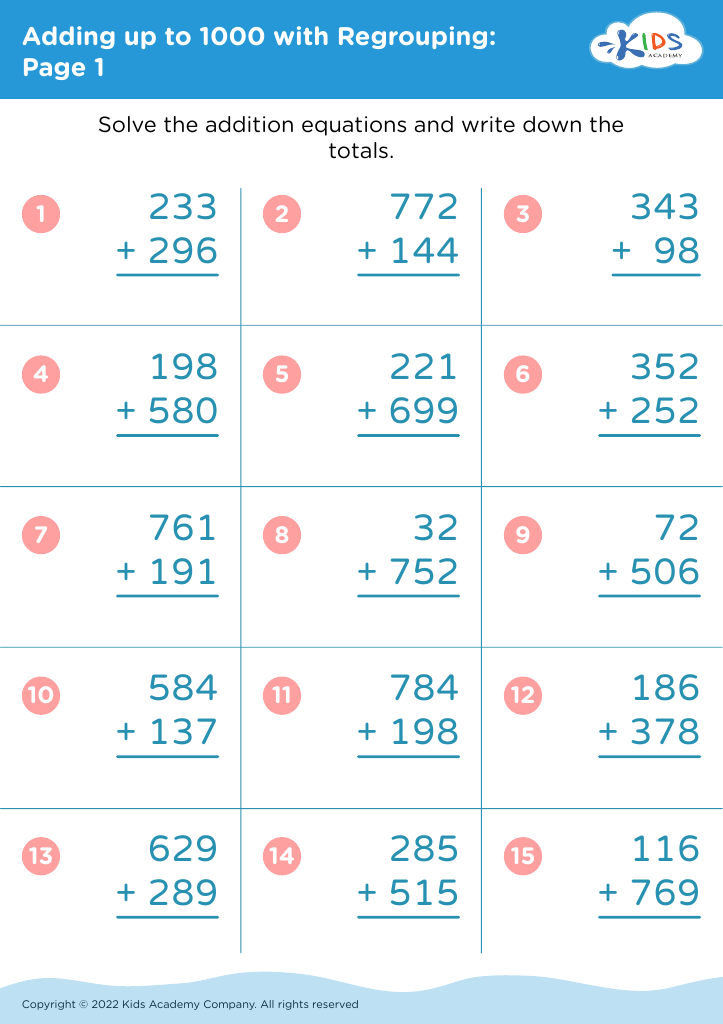
Adding up to 1000 with Regrouping: Page 1
Worksheet
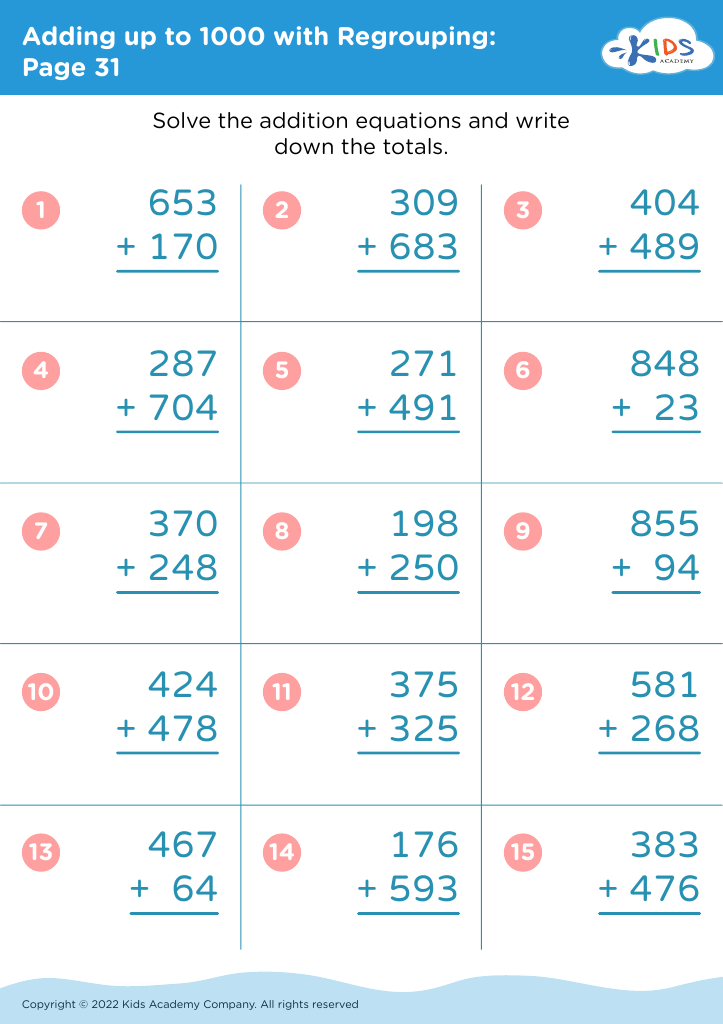
Adding up to 1000 with Regrouping: Page 31
Worksheet
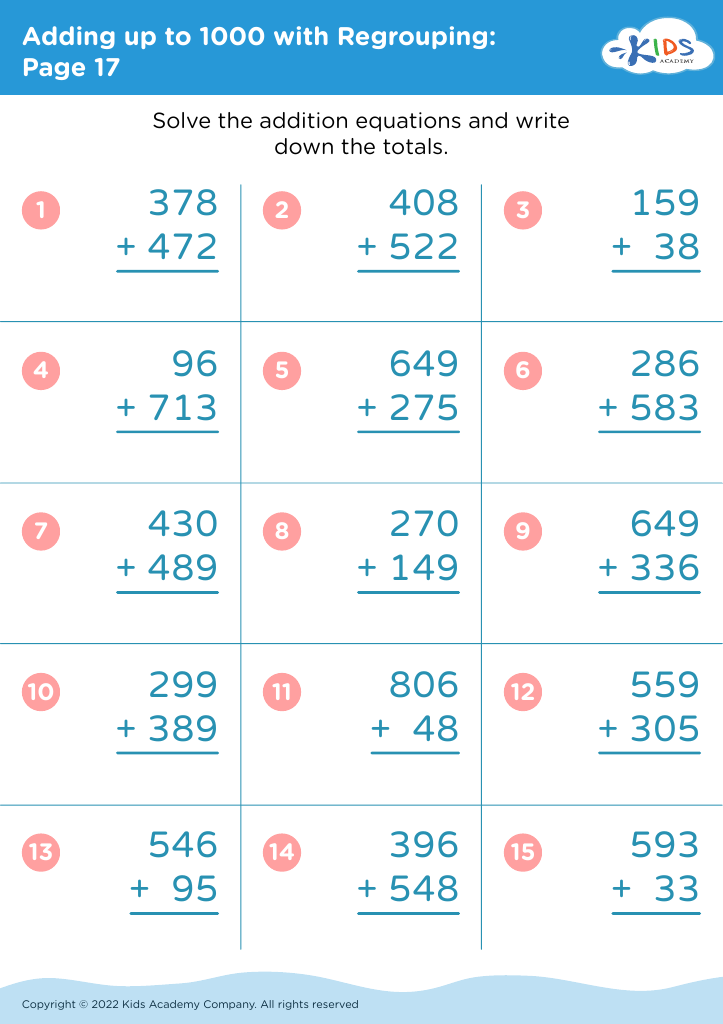
Adding up to 1000 with Regrouping: Page 17
Worksheet
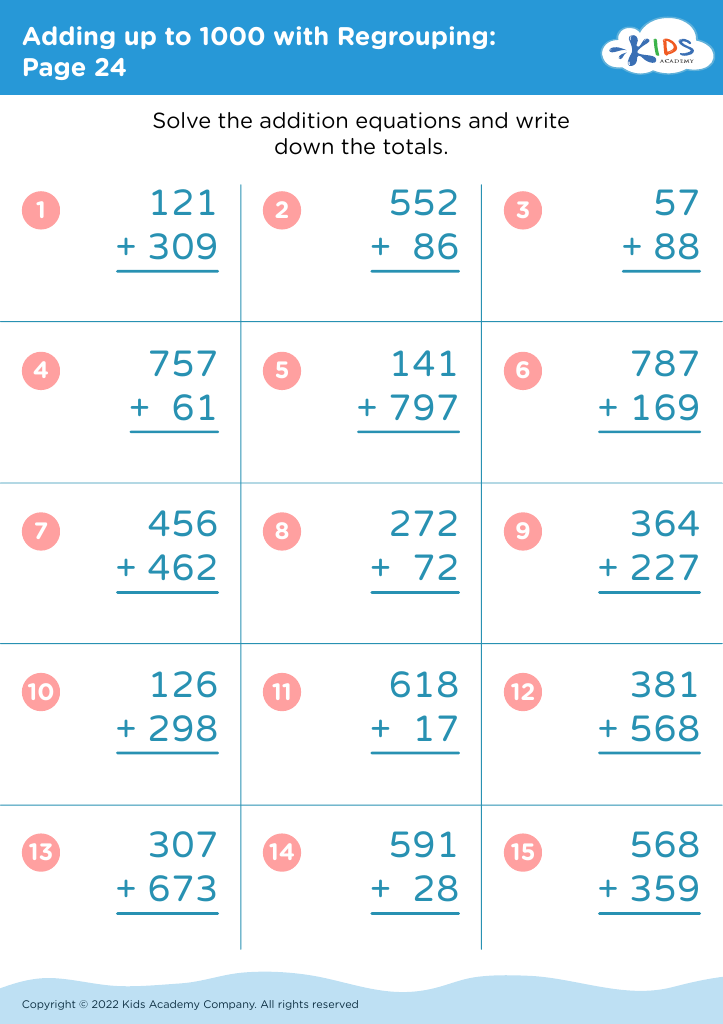
Adding up to 1000 with Regrouping: Page 24
Worksheet
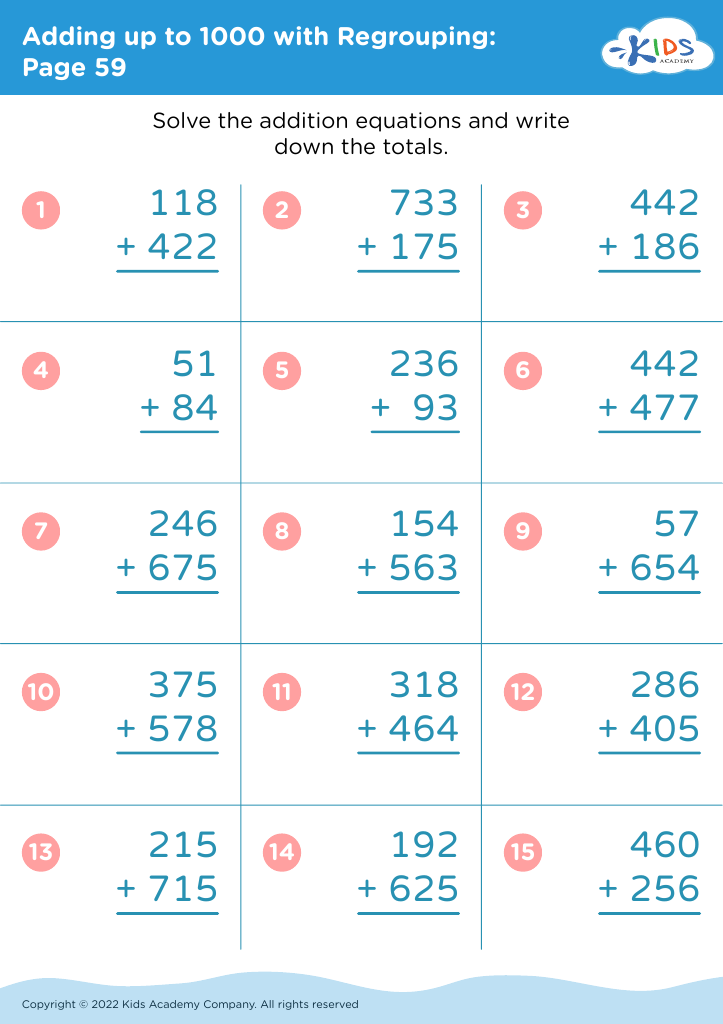
Adding up to 1000 with Regrouping: Page 59
Worksheet
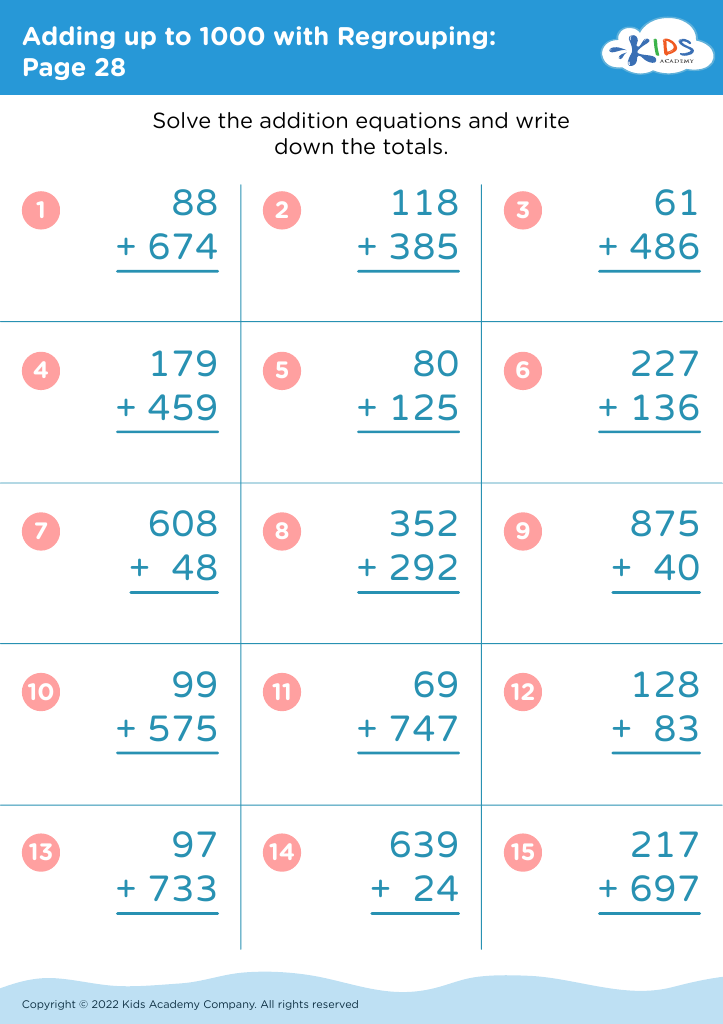
Adding up to 1000 with Regrouping: Page 28
Worksheet
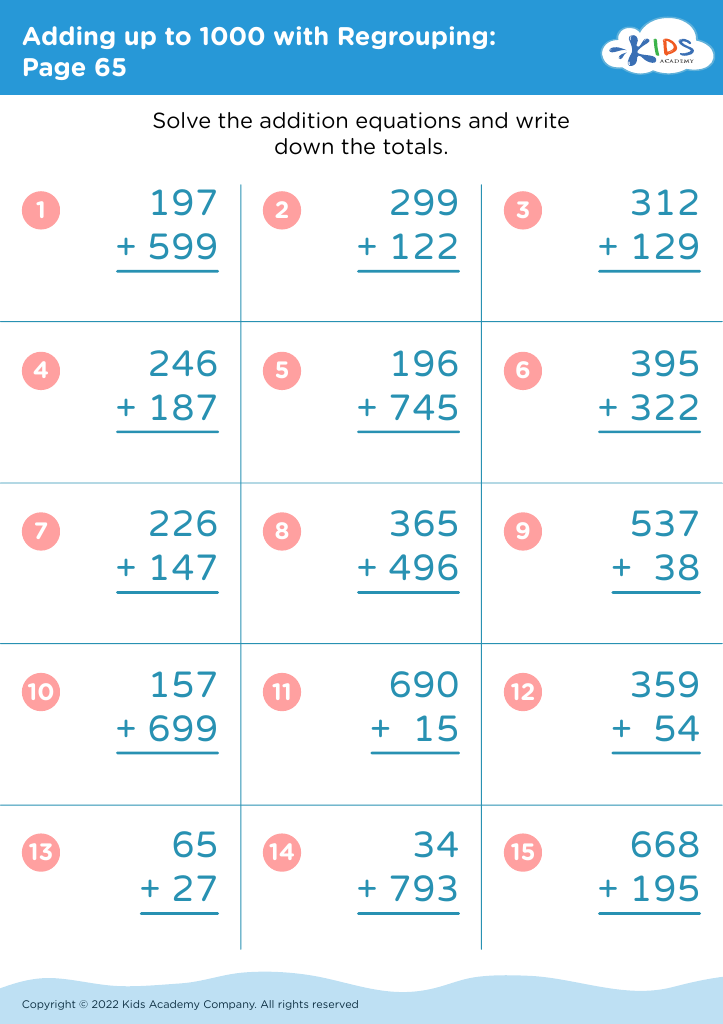
Adding up to 1000 with Regrouping: Page 65
Worksheet
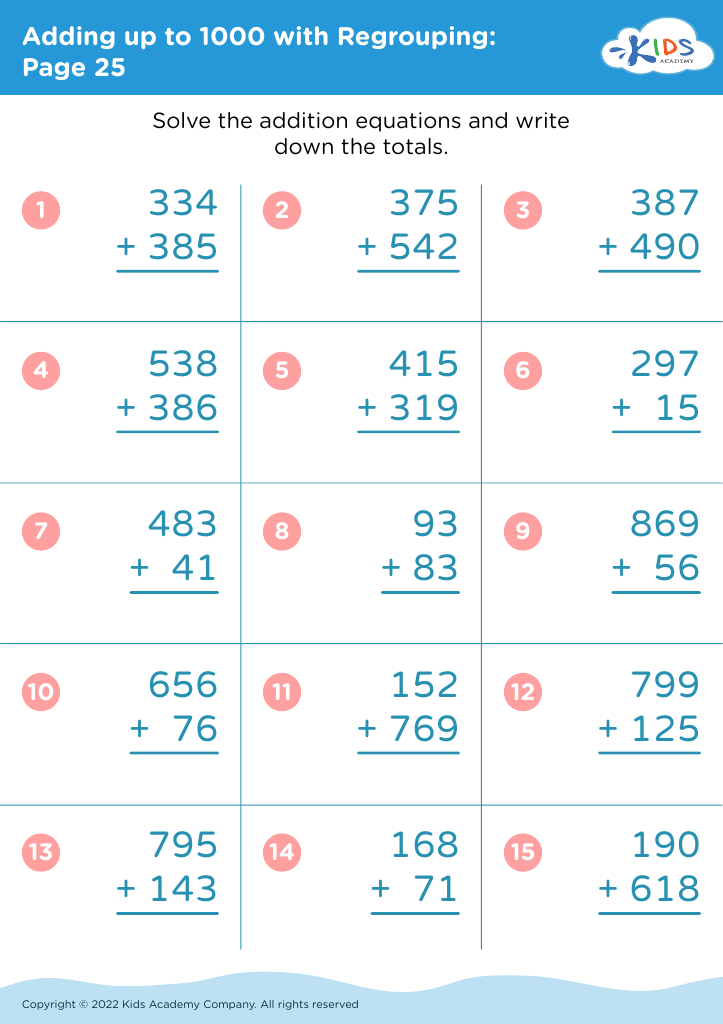
Adding up to 1000 with Regrouping: Page 25
Worksheet
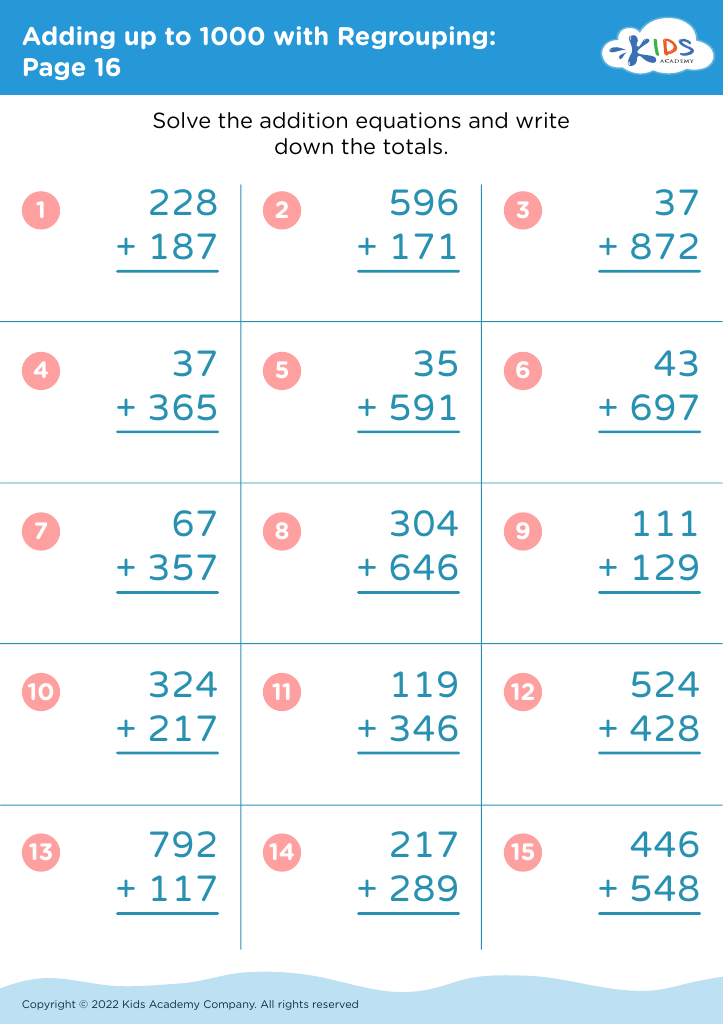
Adding up to 1000 with Regrouping: Page 16
Worksheet


Understanding fractions, particularly adding fractions up to 1000 with regrouping, is crucial for children aged 4-9, as it lays a strong foundation for their future math skills. At this age, students begin to form their numerical literacy, and grasping fractions can significantly impact their confidence and competence in mathematics. Fractions are everywhere in daily life, from sharing food to measuring ingredients in cooking, so establishing a solid understanding early on ripples into real-world applications.

Additionally, adding fractions with regrouping enhances critical thinking and problem-solving skills. It encourages children to think logically about quantities, size comparisons, and will reinforce their knowledge of whole numbers. This comprehension is foundational as they advance to more complex topics, such as algebra and geometry.

Moreover, strong fraction skills can improve children's performance in later grades, where they will encounter more advanced mathematical concepts. When parents and teachers invest time in teaching fractions, they not only support academic achievement but also foster a positive attitude toward learning math. By developing these essential skills now, we prepare children for a future of success in education and life, ultimately helping them to navigate an increasingly mathematical world.