Understanding Sequences Adding up to 1000 with Regrouping Worksheets for Ages 4-9
4 filtered results
-
From - To
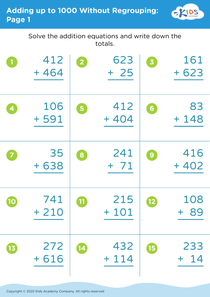
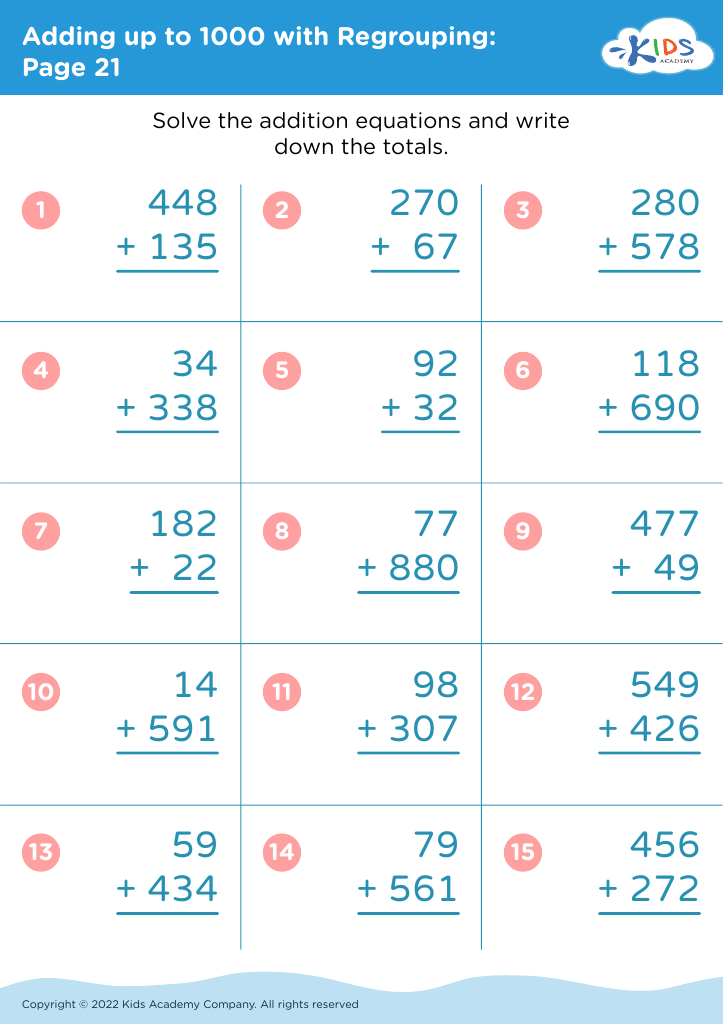
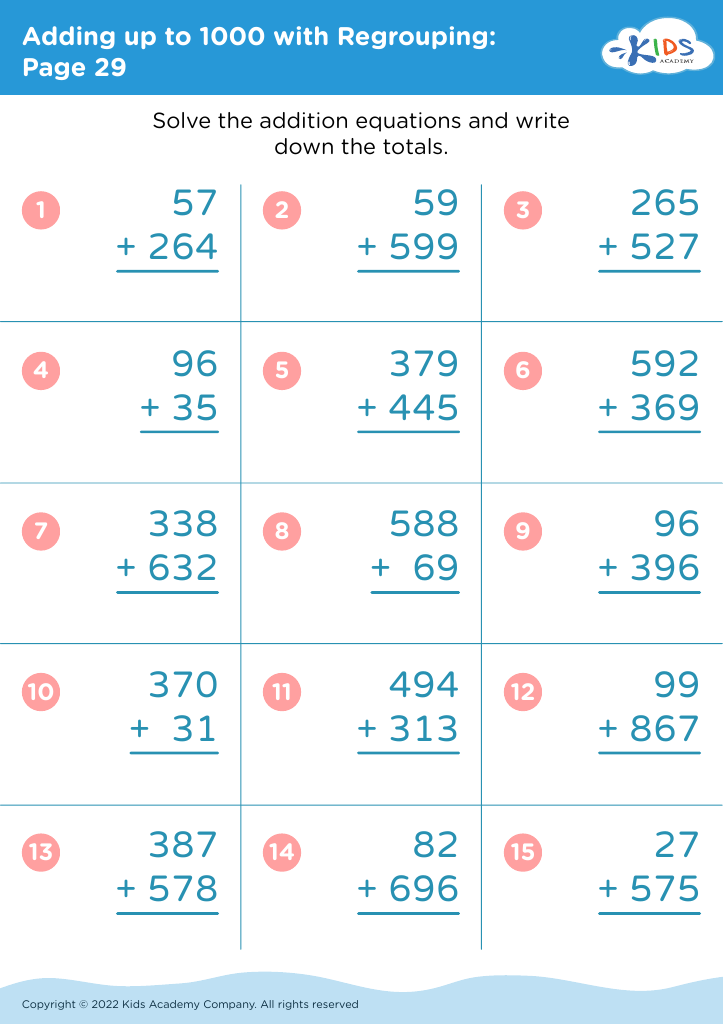
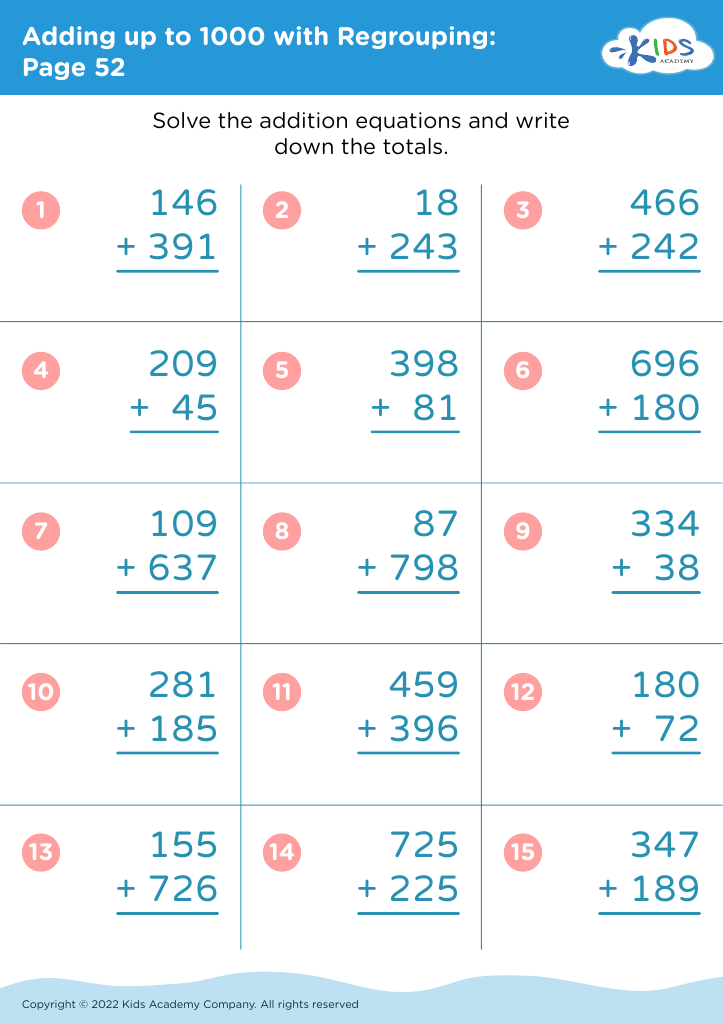
Discover engaging worksheets designed to help children ages 4-9 master the concept of adding up to 1000 with regrouping. Our resources focus on understanding sequences, enhancing math skills through fun, interactive activities. Each worksheet provides clear, step-by-step instructions that guide young learners through complex addition problems, reinforcing key concepts like carrying over and place value. Perfect for classroom use or homeschool practice, these activities ensure students build a strong foundation in arithmetic. Give your child a head start in math with our expertly crafted, easy-to-follow worksheets that make learning sequences enjoyable and effective.
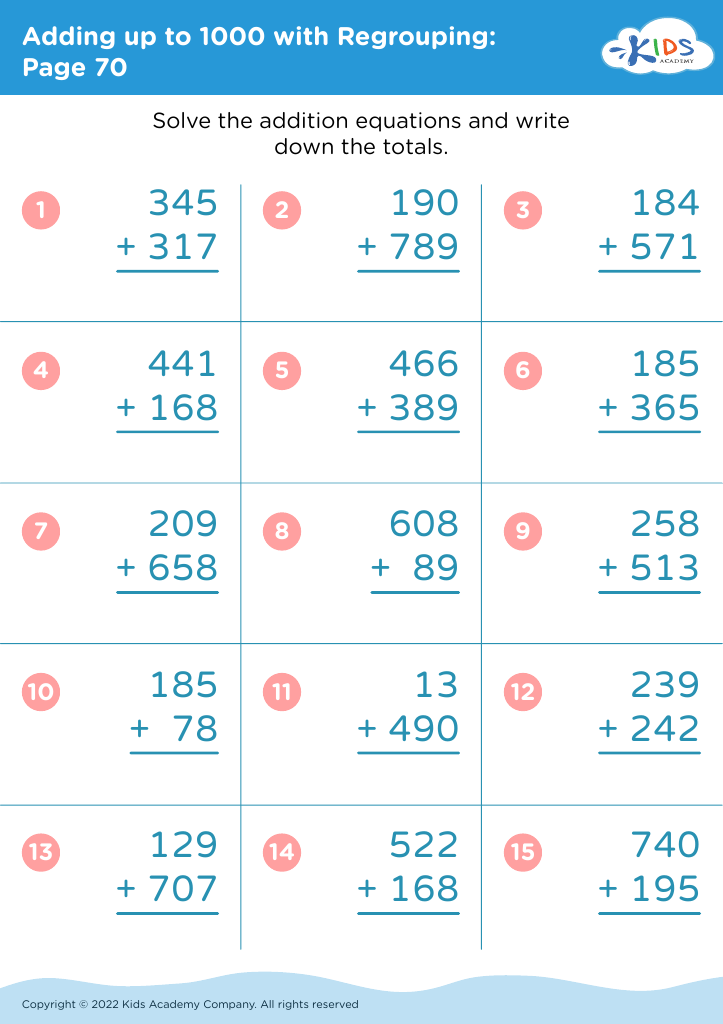


Understanding sequences and adding up to 1000 with regrouping is crucial for young children's mathematical development. At ages 4-9, kids are in a critical period for building foundational skills in numeracy. Grasping these concepts early on helps them develop strong computational abilities that will support future learning in mathematics.
Firstly, learning to count and recognize number sequences enhances children's numerical fluency. It creates a solid understanding of the base-10 system, an essential element of math education. Understanding sequences helps children see patterns in numbers, making it easier to grasp more complex mathematical concepts.
Additionally, adding up to 1000 with regrouping introduces children to the practical application of addition. It involves carrying over numbers in multi-digit addition, which is a stepping stone to more advanced operations like subtraction, multiplication, and division. This practice not only aids in arithmetic proficiency but also boosts problem-solving skills and logical thinking.
Lastly, early mastery of these skills promotes confidence in math. When children are competent in these basic skills, they feel more confident tackling higher-level math. This confidence keeps them engaged and interested in the subject as they progress through their education.
Therefore, parents and teachers should prioritize understanding sequences and adding up to 1000 with regrouping to build a robust mathematical foundation, ensuring long-term academic success.