Reading comprehension Adding up to 1000 Without Regrouping Worksheets for Ages 4-9
4 filtered results
-
From - To
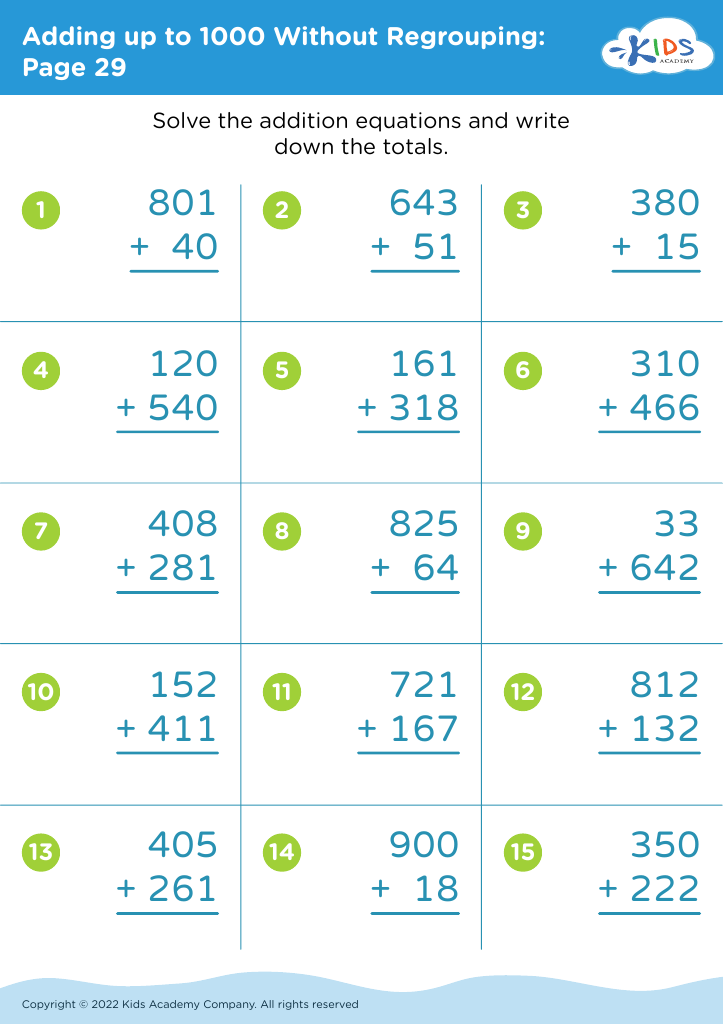
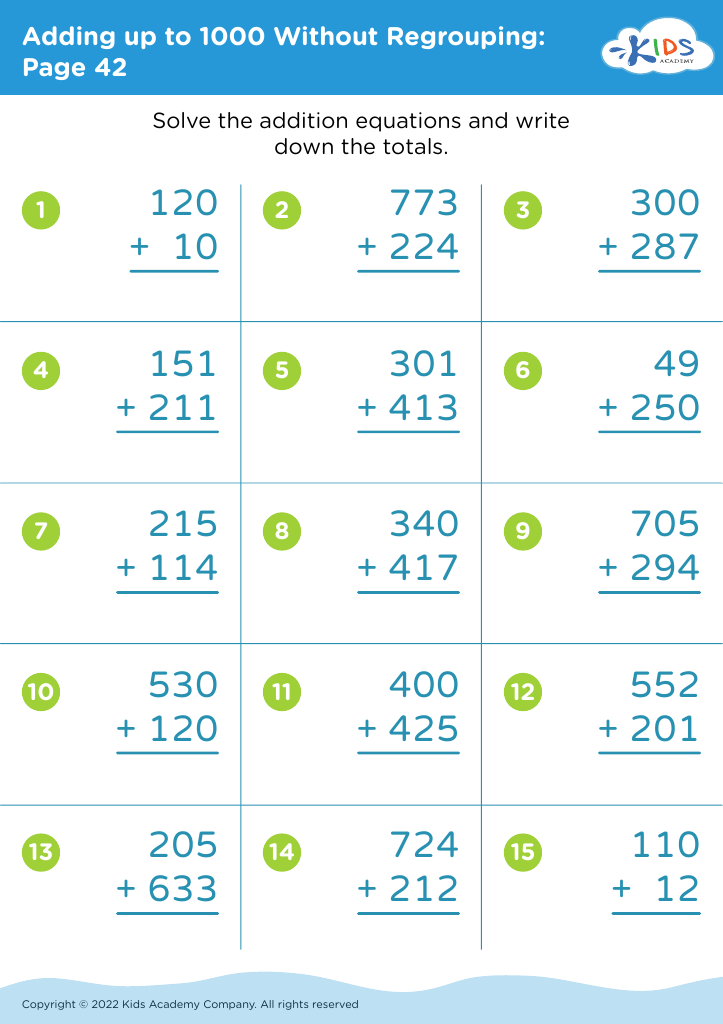
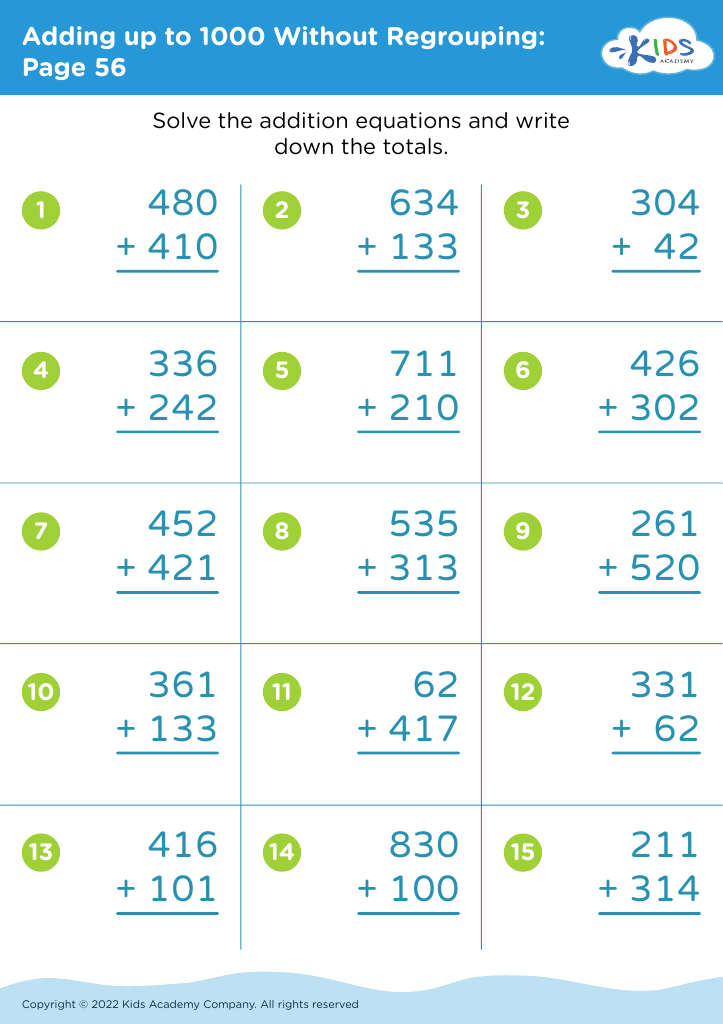
Enhance your child's reading comprehension skills with our "Reading Comprehension Adding Up to 1000 Without Regrouping Worksheets" designed for ages 4-9. These interactive worksheets seamlessly integrate math problems with engaging stories and scenarios, helping young learners grasp both numerical concepts and reading comprehension simultaneously. Each worksheet challenges children to solve addition problems without regrouping while answering reading comprehension questions to deepen their understanding. Ideal for classroom or at-home learning, these worksheets make complex concepts more accessible and enjoyable, fostering critical thinking and literacy skills. Watch your child's confidence soar as they master addition and enhance their reading comprehension effortlessly!
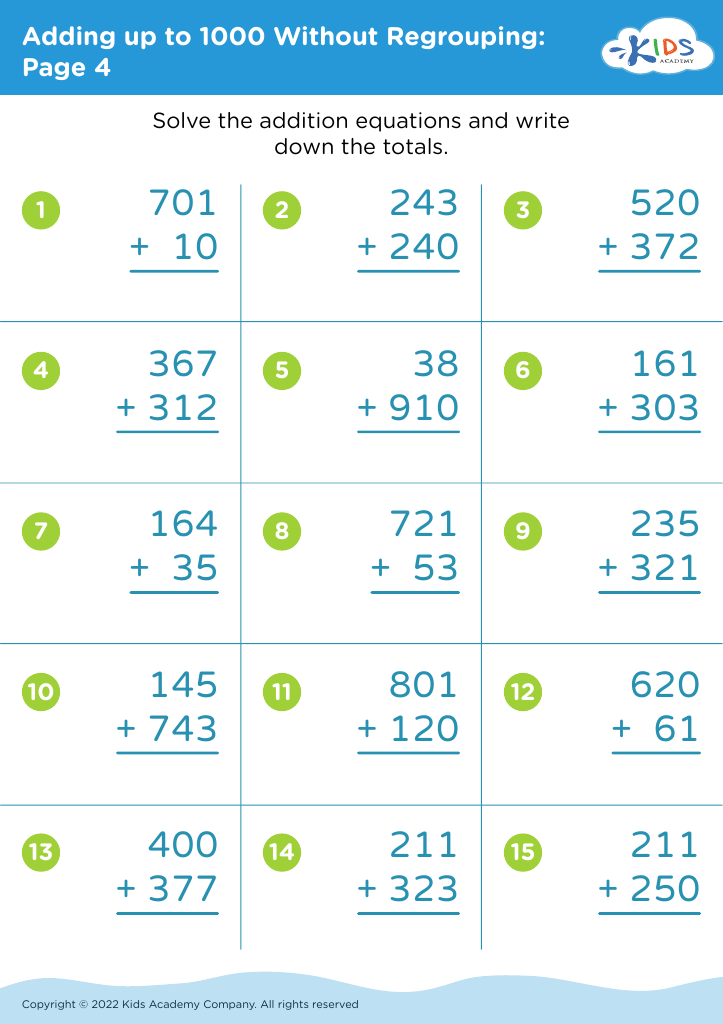


Reading comprehension is a foundational skill that significantly impacts a child's overall educational success and lifelong learning. For children aged 4-9, mastering reading comprehension enhances their ability to process information, build vocabulary, and develop critical thinking skills. This age group is particularly impressionable, making it essential for parents and teachers to invest in activities that encourage comprehension through reading.
Moreover, connecting reading comprehension with basic math concepts such as "adding up to 1000 without regrouping" promotes interdisciplinary learning. Understanding the language used in word problems or mathematical instructions requires a strong grasp of reading. When children comprehend what they read, they are better equipped to tackle mathematical challenges, fostering confidence and competence in both subjects.
For parents and teachers, emphasizing reading comprehension lays the groundwork for continuous academic achievement. High levels of comprehension lead to improved performance not just in literacy but across all curriculum areas. In an era where information is abundant, helping children interpret and analyze content crucially prepares them for future learning challenges. Parents and teachers, therefore, play an integral role in developing effective readers, ensuring children not only appreciate stories but also become adept at discerning and applying knowledge in real-world scenarios.