Recognizing shapes Adding up to 1000 Without Regrouping Worksheets for Ages 4-9
3 filtered results
-
From - To
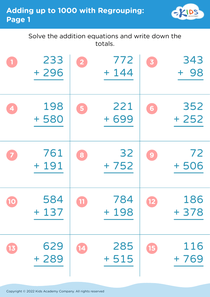
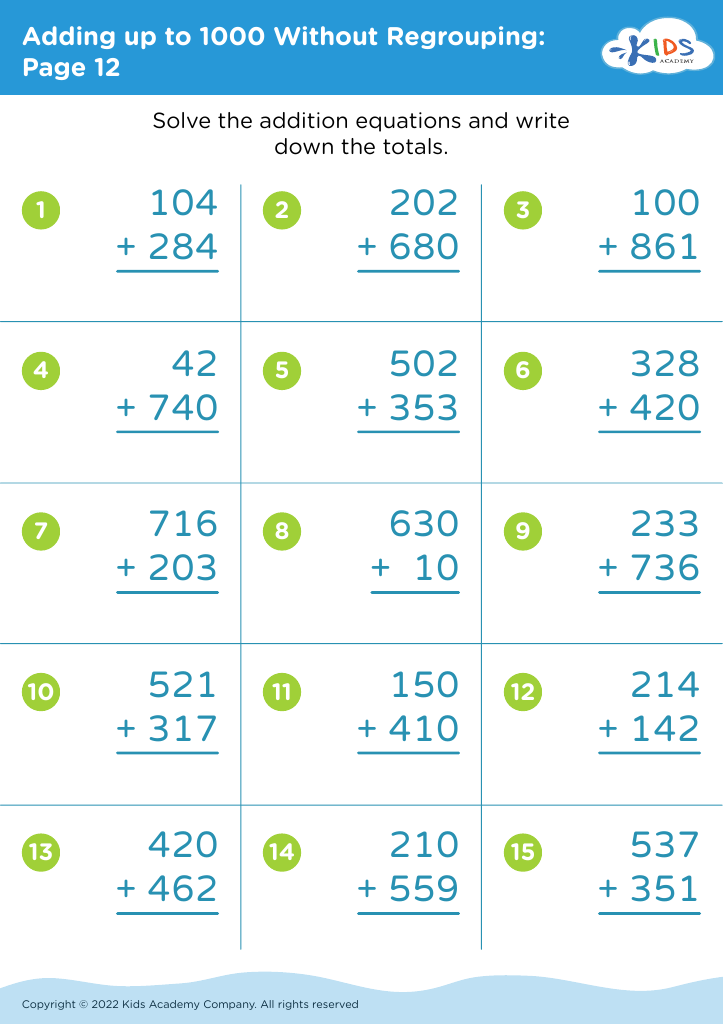
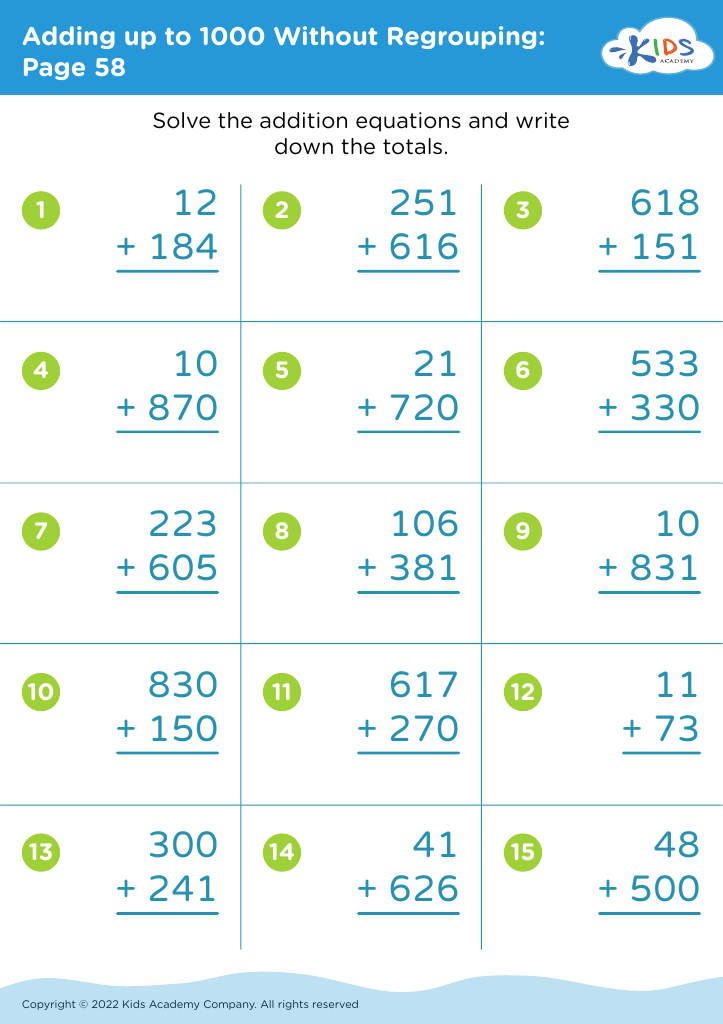
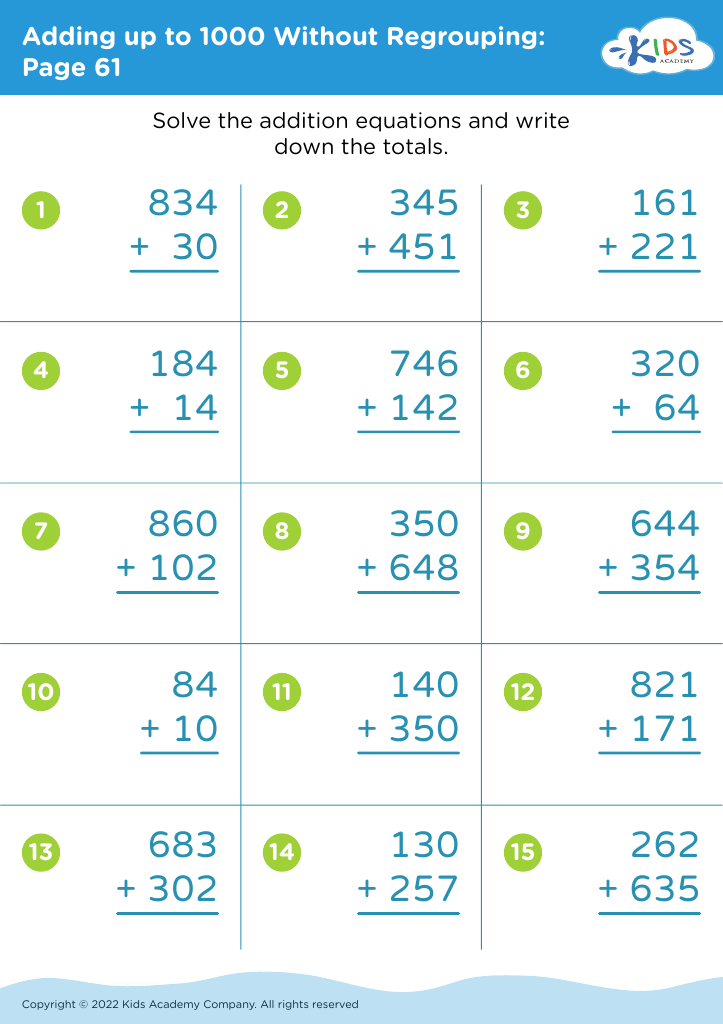
Welcome to our engaging "Recognizing Shapes Adding Up to 1000 Without Regrouping Worksheets" for children aged 4-9! Designed to blend shape recognition with fundamental math skills, these worksheets foster creativity and numerical understanding. Featuring vibrant illustrations, kids will identify shapes while practicing addition skills up to 1000 without the need for regrouping. Each worksheet reinforces essential concepts through fun activities, helping young learners develop confidence in math. Whether at home or in the classroom, these worksheets promote critical thinking and a love for learning. Dive into a world of shapes and numbers—and watch your child thrive in their math journey!


Recognizing shapes and mastering addition are foundational skills essential for young learners aged 4-9. Understanding shapes is not just about geometry; it fosters spatial awareness, critical thinking, and problem-solving abilities. Children learn to identify and categorize objects, which enhances their observational skills, promoting creativity and innovation in complex tasks later in life. Moreover, recognizing shapes is interconnected with early literacy and can support reading and writing by helping kids understand how letters and numbers are formed.
Similarly, adding up to 1000 without regrouping teaches children basic arithmetic skills, essential for everyday life. It helps build their confidence in math, facilitates number sense, and eliminates anxiety around calculations—crucial for future academic success. Mastering addition in this way allows children to develop mental math strategies, enhancing their cognitive flexibility while promoting a positive attitude toward math.
Parents and teachers play a significant role in nurturing these skills. By emphasizing shape recognition and basic addition, adults can enhance students' readiness for higher-level concepts in mathematics and science. Supporting these critical foundational skills ensures children are well-equipped for future learning, ultimately influencing their academic trajectory, self-esteem, and ability to tackle more challenging subjects as they progress.