Understanding division Adding up to 1000 Without Regrouping Worksheets for Ages 4-9
3 filtered results
-
From - To
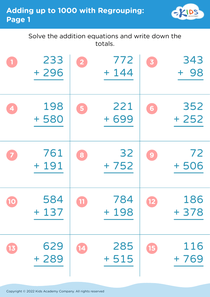
Explore our "Understanding Division: Adding Up to 1000 Without Regrouping" worksheets, designed specifically for children aged 4-9! These engaging and interactive resources help young learners grasp the essential concepts of division in a fun and supportive way. Each worksheet focuses on breaking down division into manageable parts, promoting critical thinking and problem-solving skills. With a series of exercises that encourage students to visualize and apply division in practical scenarios, they build a strong foundation in mathematics. Perfect for home or classroom use, our worksheets make learning division straightforward and enjoyable. Start fostering a love for math today!
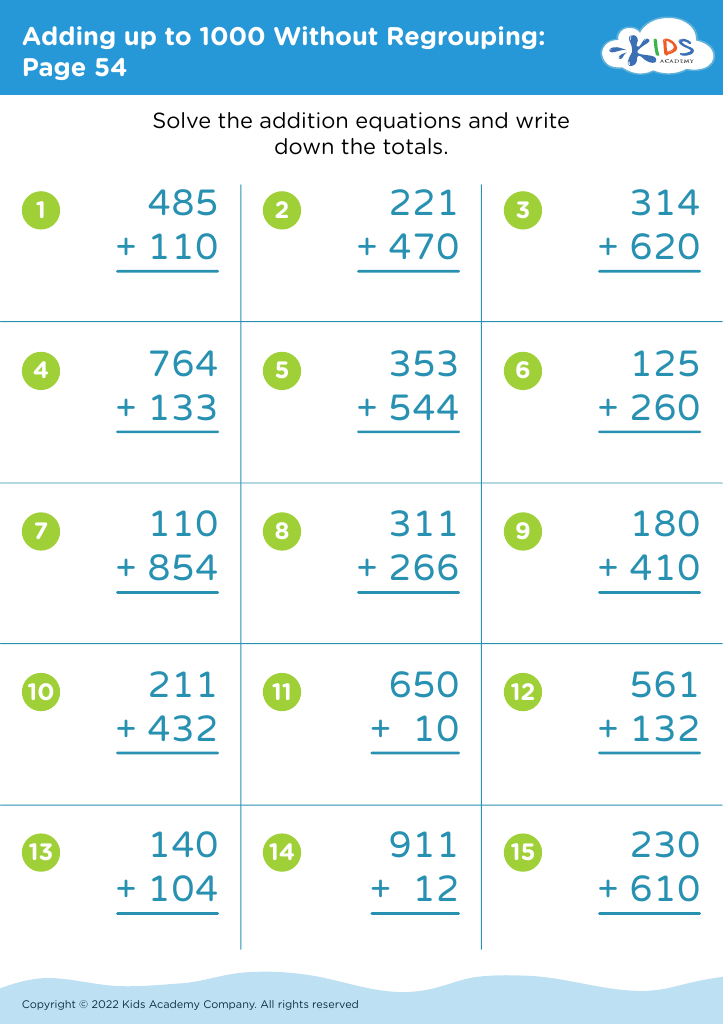
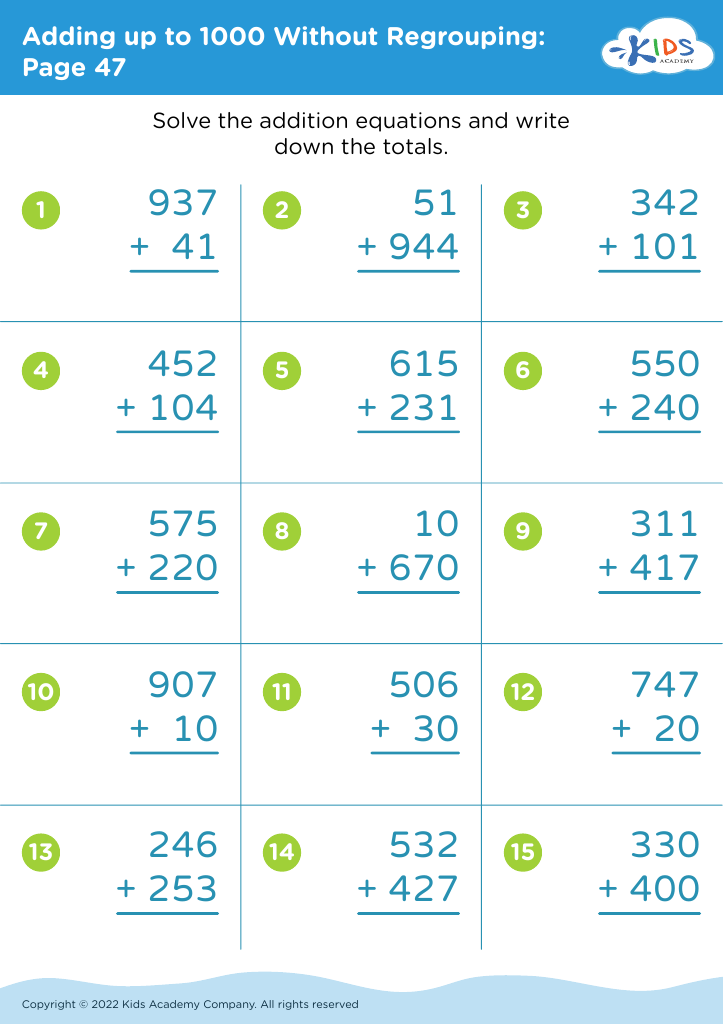
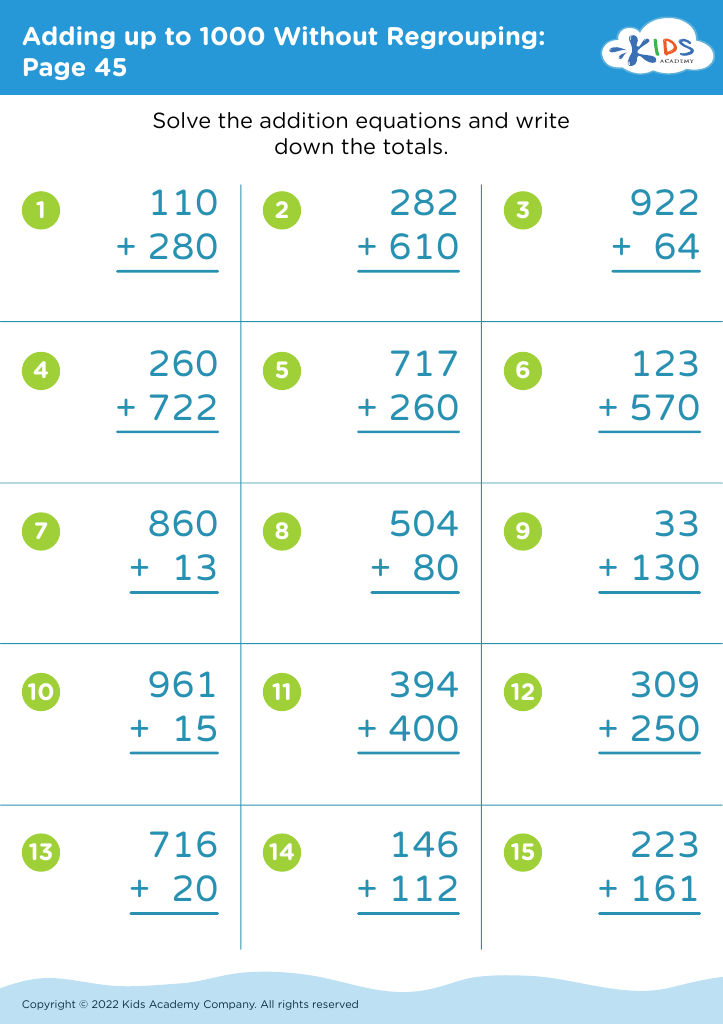


Understanding division and addition up to 1000 without regrouping is crucial for children aged 4-9, as it lays the foundation for their mathematical skills and cognitive development. Early mastery of these concepts helps kids grasp essential numeracy skills necessary for future academic success in mathematics.
Division teaches children about equal sharing and grouping, which fosters critical thinking and problem-solving abilities. It enables them to see relationships between numbers, and understand concepts of fairness and resource distribution.
Moreover, addition up to 1000 without regrouping helps enrich children's number sense. At this stage, straightforward addition enhances their confidence, making it easier to tackle more complex math later on. It also aids in recognizing patterns, sequences, and place values—all crucial for developing a robust mathematical foundation.
When parents and teachers emphasize these concepts, they not only equip children with necessary skills but also inspire a positive attitude toward math. Engaging in these essential math lessons early on will help sustain an interest in learning and build resilience, ultimately fostering a generation of confident, proficient mathematical thinkers. Ultimately, this understanding cultivates a lifelong appreciation for mathematics, freeing them from math anxiety as they advance in their educational journeys.