Alphabet Recognition Adding up to 1000 Worksheets for Ages 4-9
4 filtered results
-
From - To
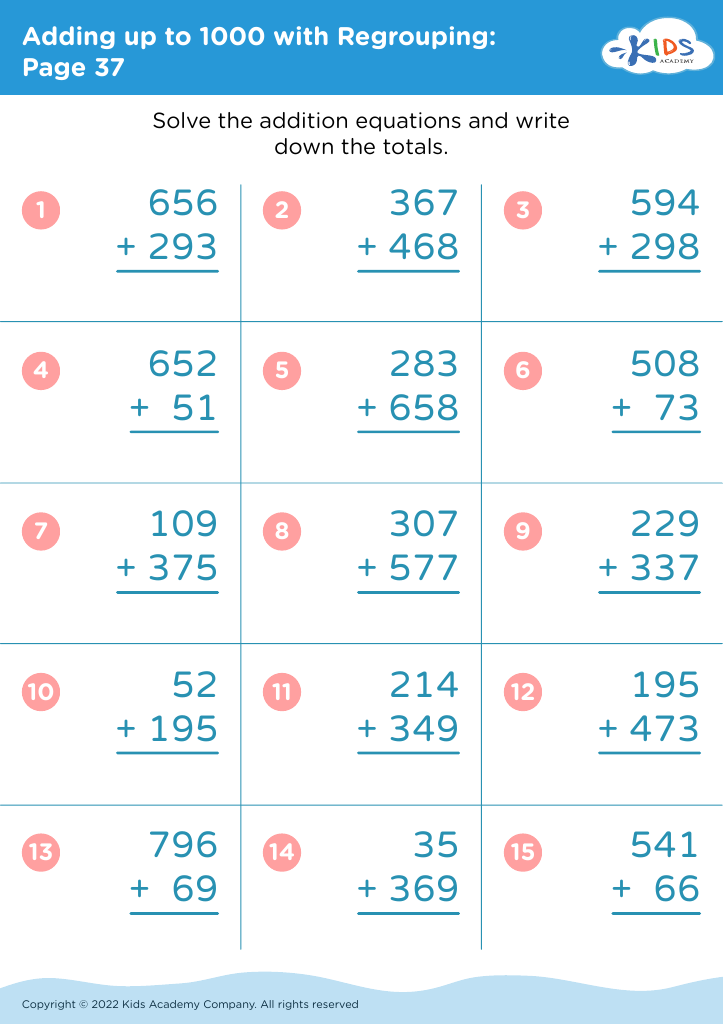
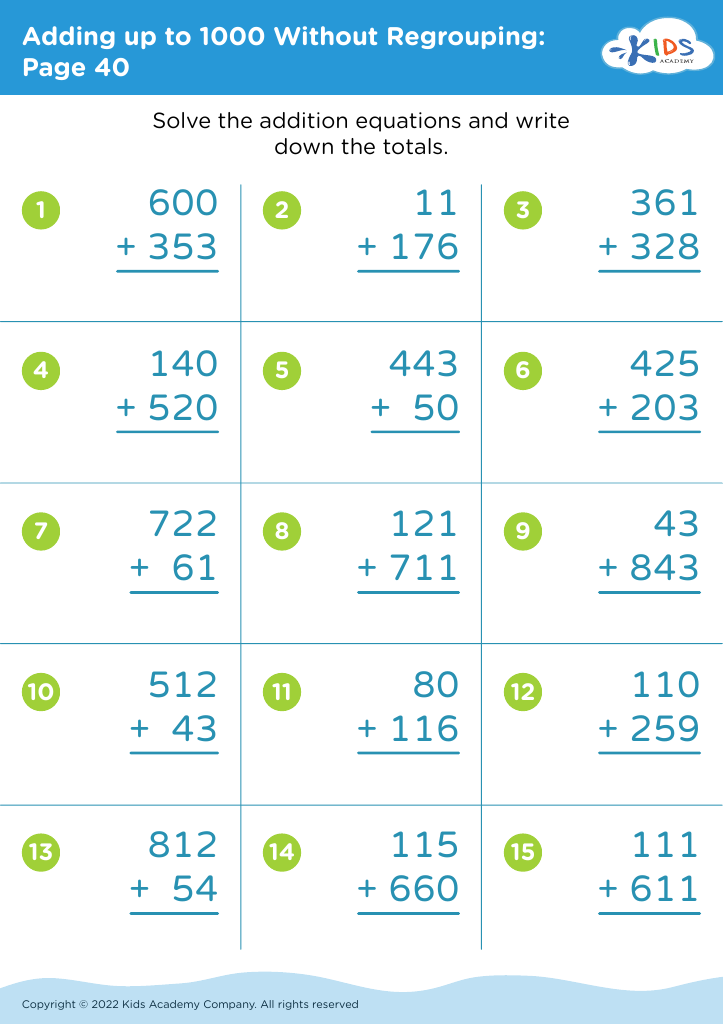
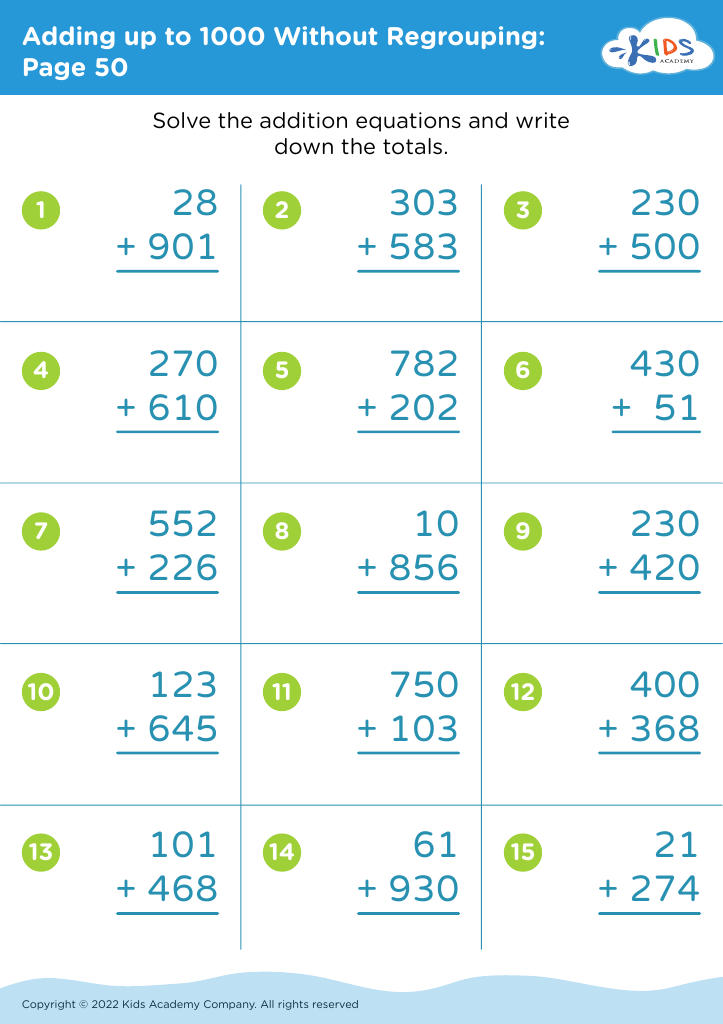
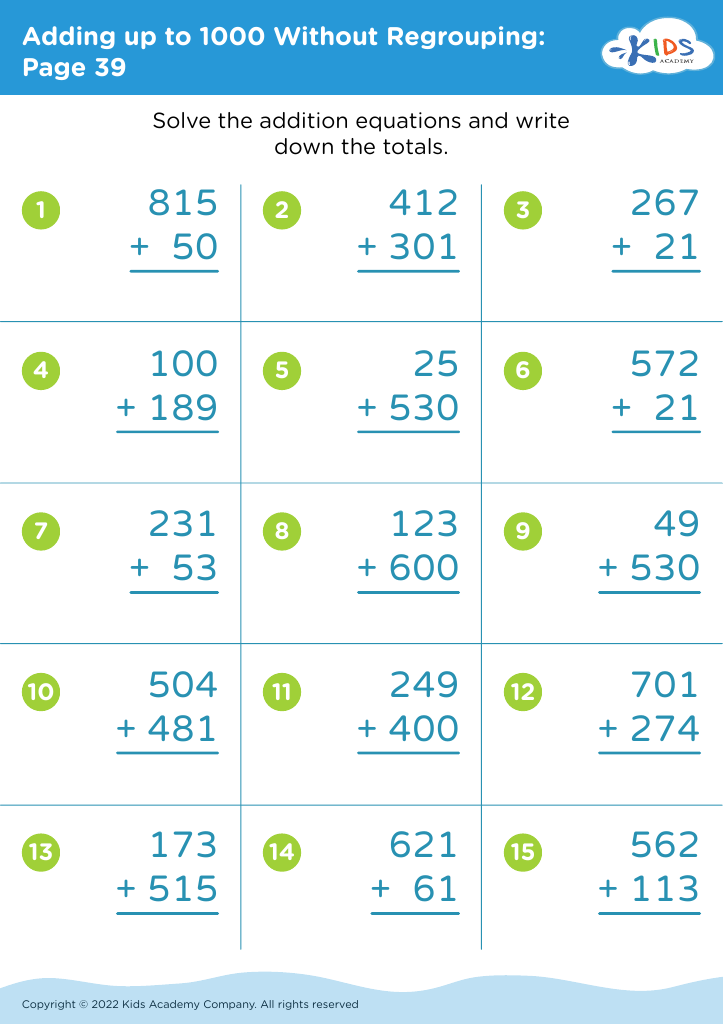
Unlock your child's potential with our "Alphabet Recognition Adding up to 1000 Worksheets," specifically designed for ages 4-9! These engaging worksheets seamlessly combine fundamental alphabet recognition skills with math practice, enabling young learners to enhance their literacy while mastering addition up to 1000. Each worksheet features colorful visuals and interactive activities that motivate children to recognize letters and shift their focus to numbers. Perfect for home or classroom use, these resources promote cognitive development and confidence in young learners. Watch your child thrive as they explore and learn through fun, educational exercises! Download and start enriching their learning journey today!



Alphabet recognition is a foundational skill in early education that plays a crucial role in a child's literacy development. For children ages 4-9, mastering the alphabet not only aids in reading but also enhances language skills, spelling, and writing abilities. When children recognize letters, they can decode words, which in turn builds their confidence in reading and communication.
For parents and teachers, fostering alphabet recognition is advantageous as it lays the groundwork for academic success. Engaging in activities that promote this skill can lead to better reading comprehension and vocabulary growth, essential components in a child's educational journey. Furthermore, strong literacy skills are linked to improved performance in other subjects, such as science and math.
In addition, alphabet recognition enhances cognitive development, encouraging children to make connections between sounds and symbols. When parents and teachers prioritize this skill, they create a rich learning environment that nurtures curiosity and a love for reading. This investment in literacy not only prepares children for future educational challenges but also equips them with essential tools for lifelong learning. Therefore, recognizing the importance of alphabet skills should be a shared priority for both parents and educators.








