Filters

16 filtered results

Clear all filters
Favorites
With answer key
Interactive

16 filtered results

Difficulty Level

Grade


Introducing our "Comparing Fractions Adding up to 1000" worksheets, meticulously designed for children ages 4-9. These engaging printables help young learners master the concept of comparing fractions while honing their addition skills up to 1000. Perfect for building a strong math foundation, each worksheet combines visual aids and interactive tasks, making learning fractions fun and effective. With a variety of exercises that progress in difficulty, kids will gain confidence and improve their numerical understanding effortlessly. Support your child’s math journey today with our expertly crafted worksheets, ensuring gradual and consistent progress that aligns with their developmental stage.
Check out this FREE Trial Lesson on Adding up to 1000 for age 4-9!

Sorting Objects into 3 Categories

Favorites
With answer key
Interactive
  • 4-9
  • Comparing Fractions
  • Adding up to 1000
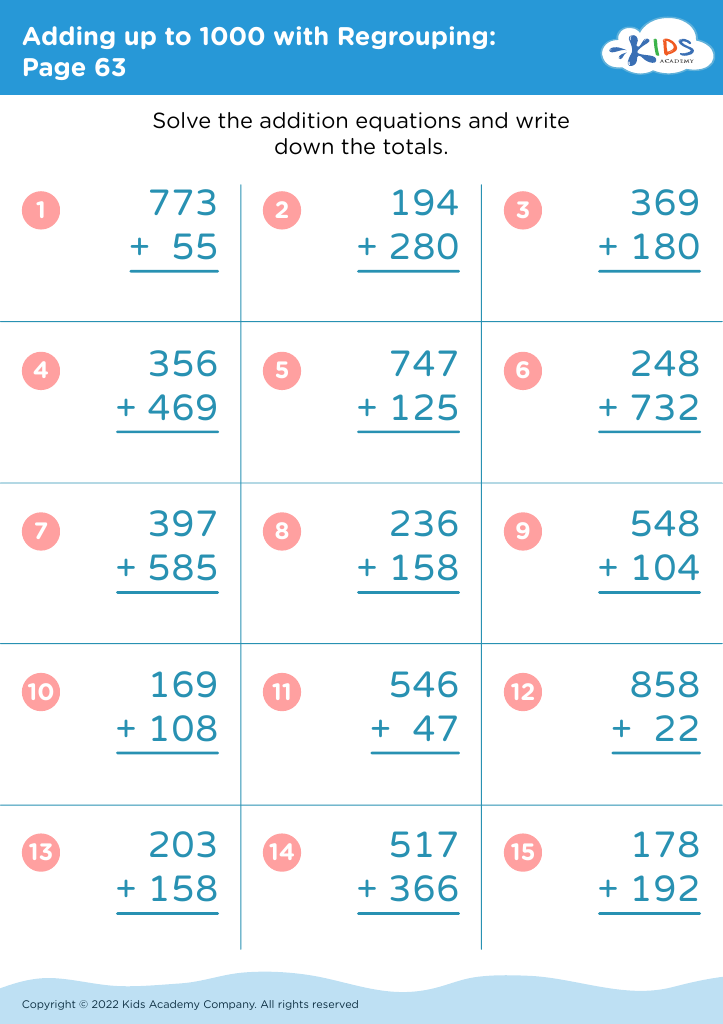
Adding up to 1000 with Regrouping: Page 63
Worksheet
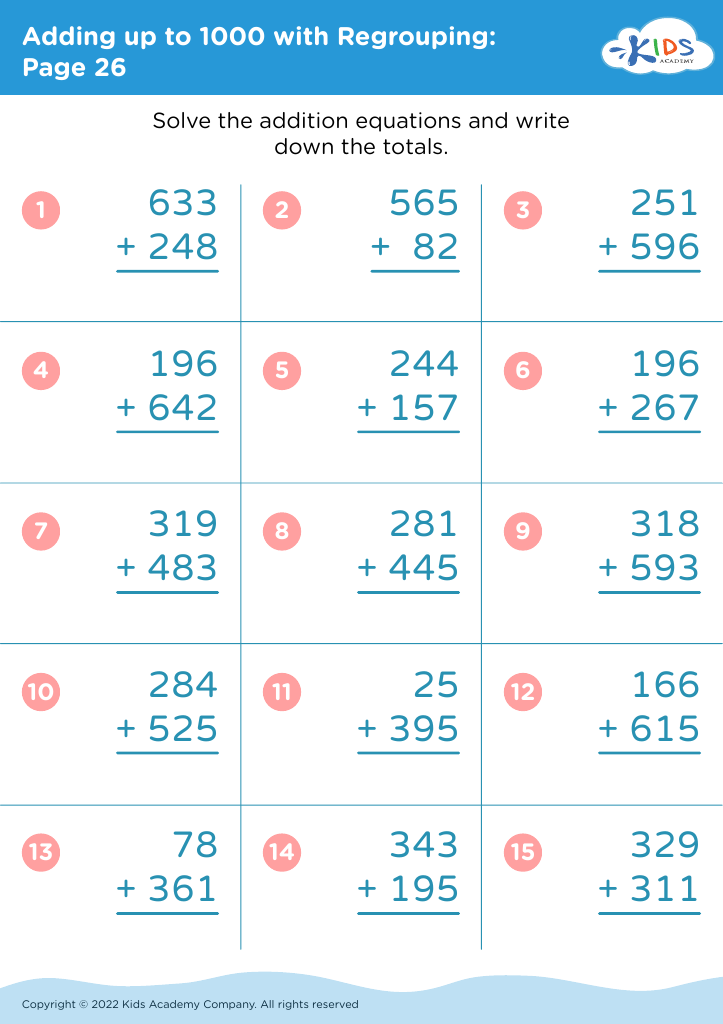
Adding up to 1000 with Regrouping: Page 26
Worksheet
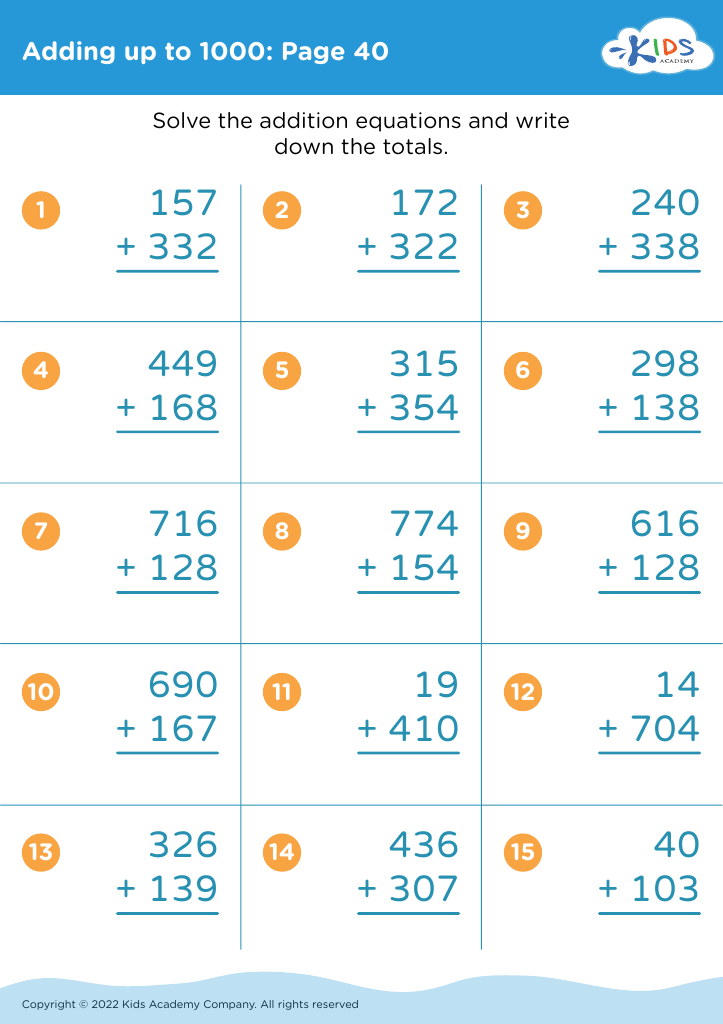
Adding up to 1000: Page 40

Adding up to 1000: Page 40

Adding up to 1000: Page 40
Worksheet
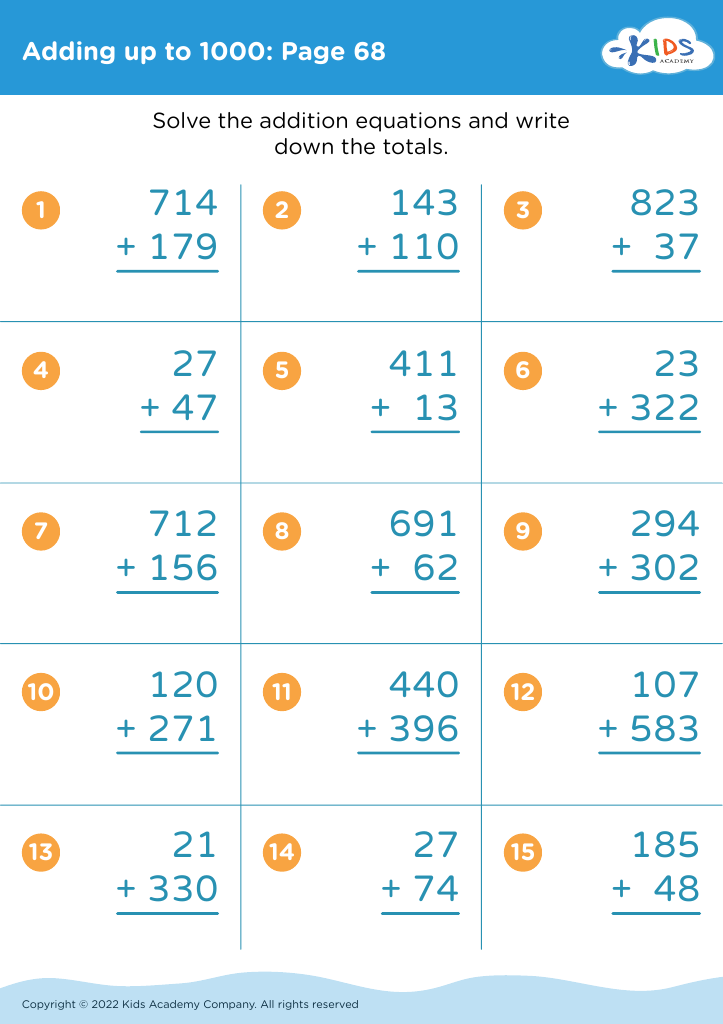
Adding up to 1000: Page 68

Adding up to 1000: Page 68

Adding up to 1000: Page 68
Worksheet
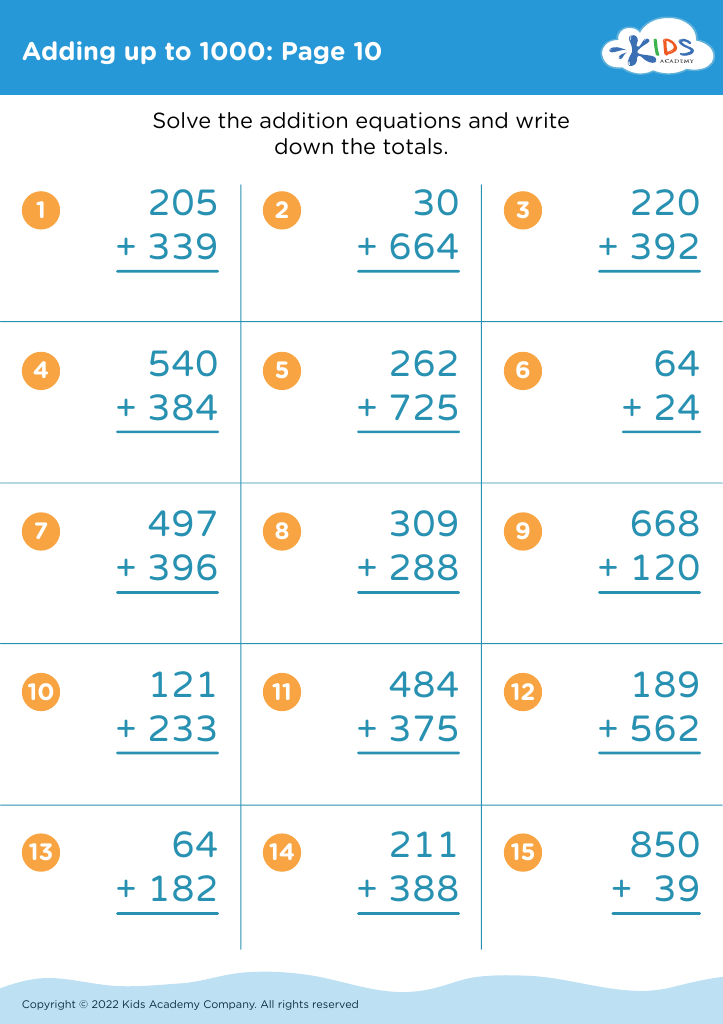
Adding up to 1000: Page 10

Adding up to 1000: Page 10

Adding up to 1000: Page 10
Worksheet
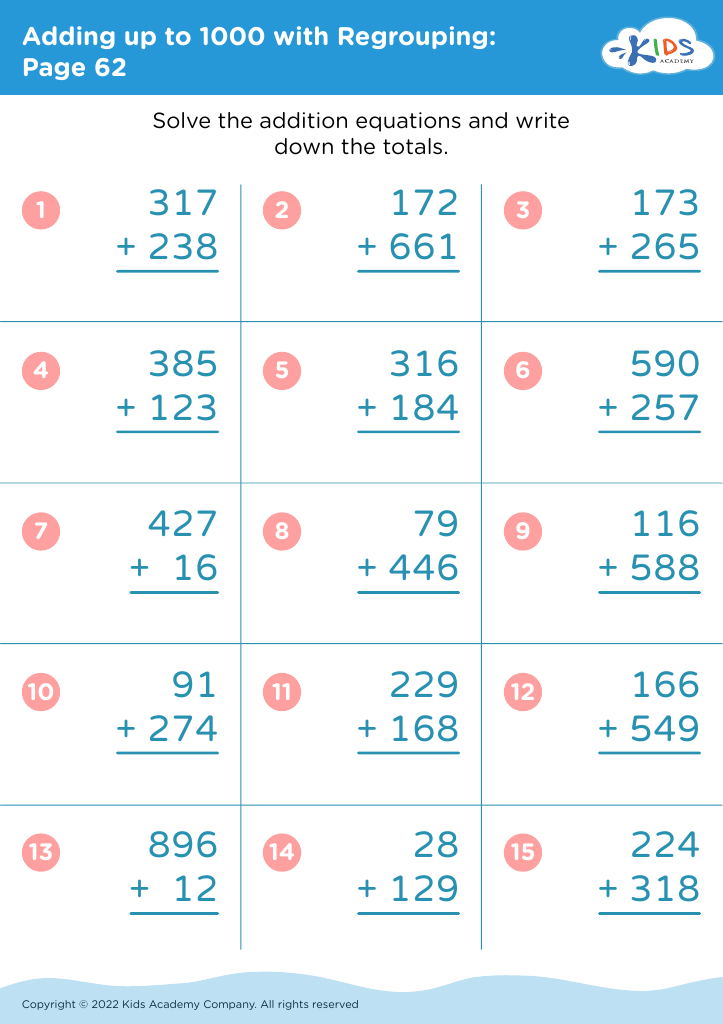
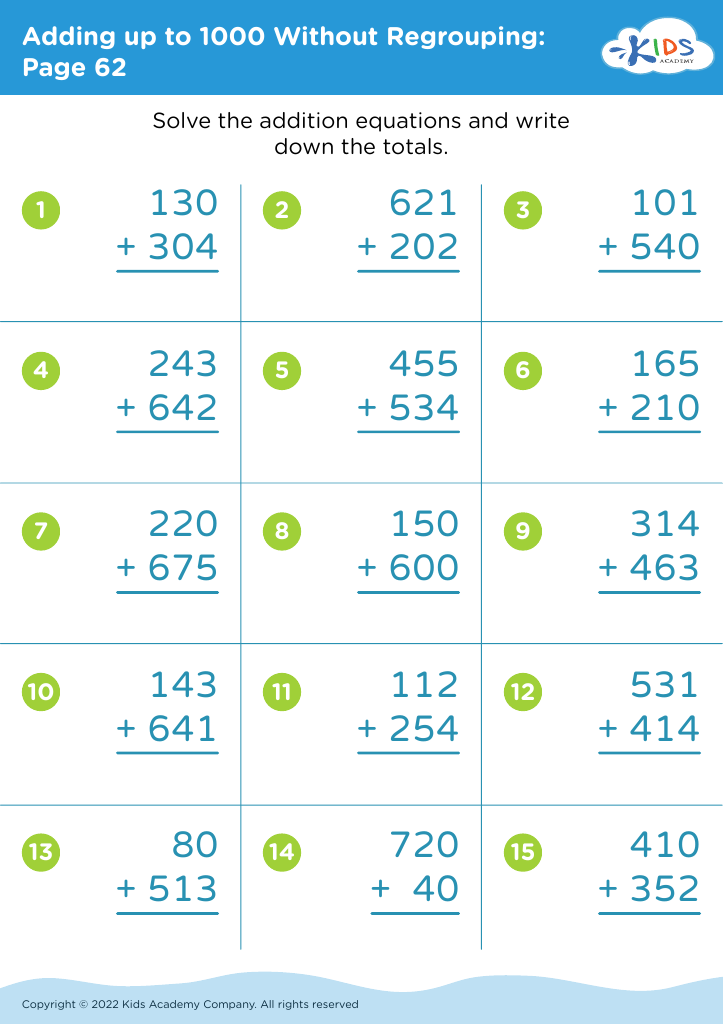
Adding up to 1000 with Regrouping: Page 62
Worksheet
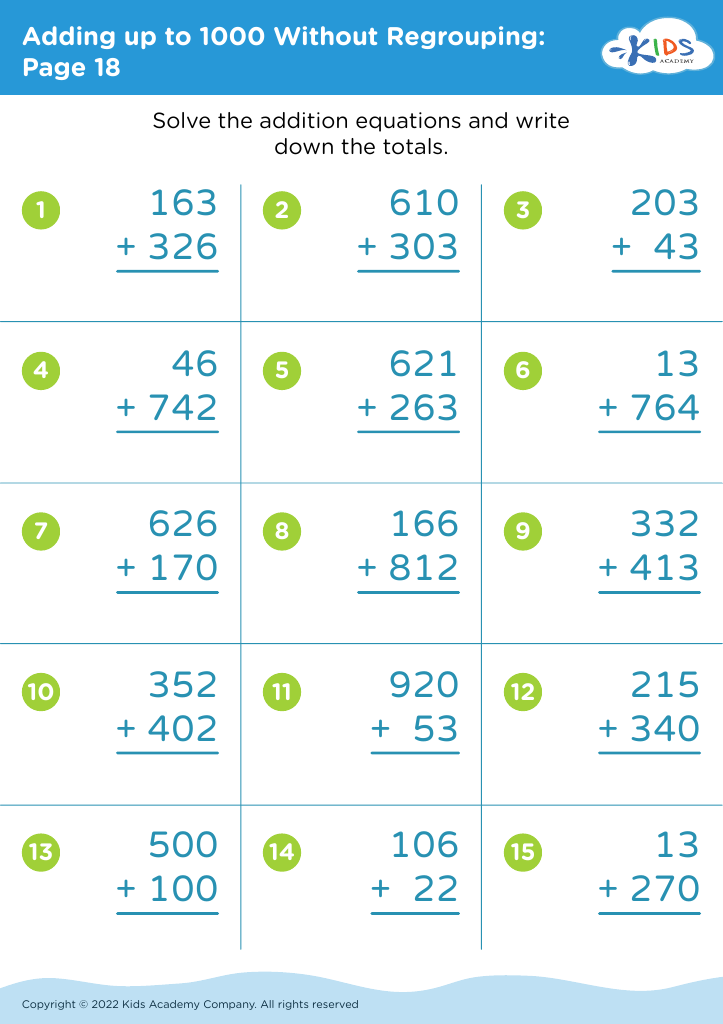
Adding up to 1000 Without Regrouping: Page 18
Worksheet
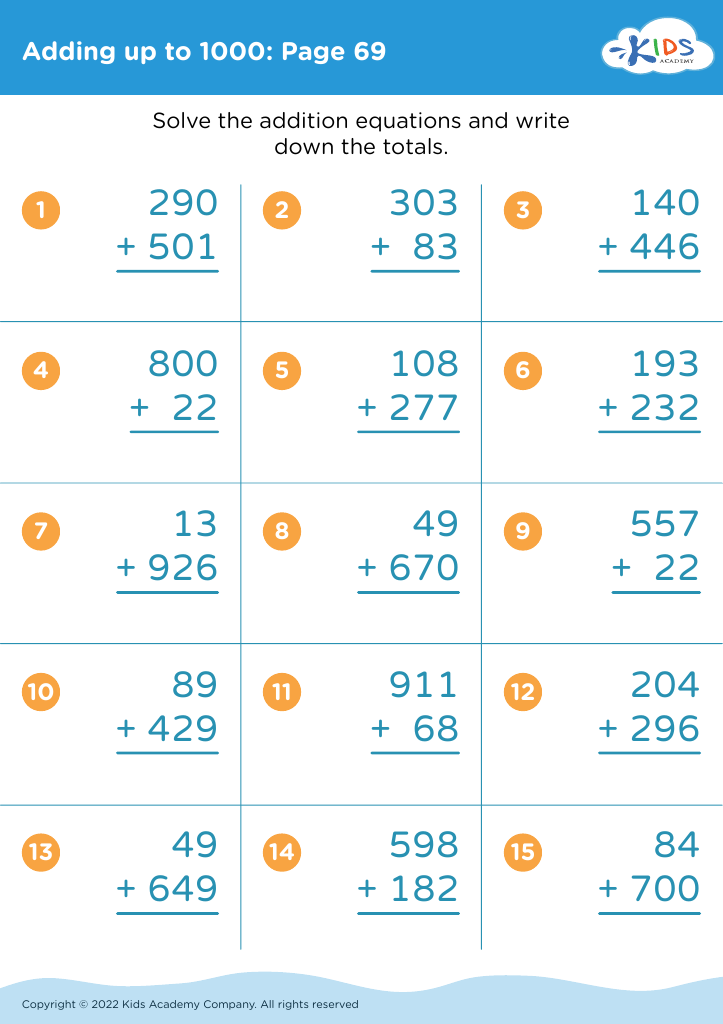
Adding up to 1000: Page 69

Adding up to 1000: Page 69

Adding up to 1000: Page 69
Worksheet
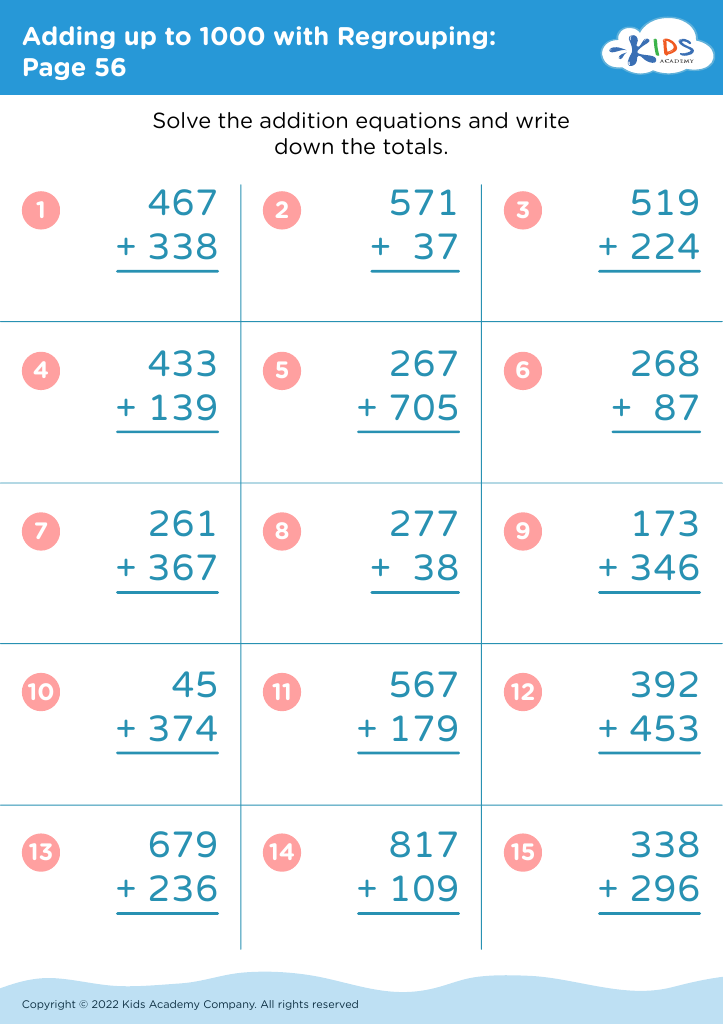
Adding up to 1000 with Regrouping: Page 56
Worksheet
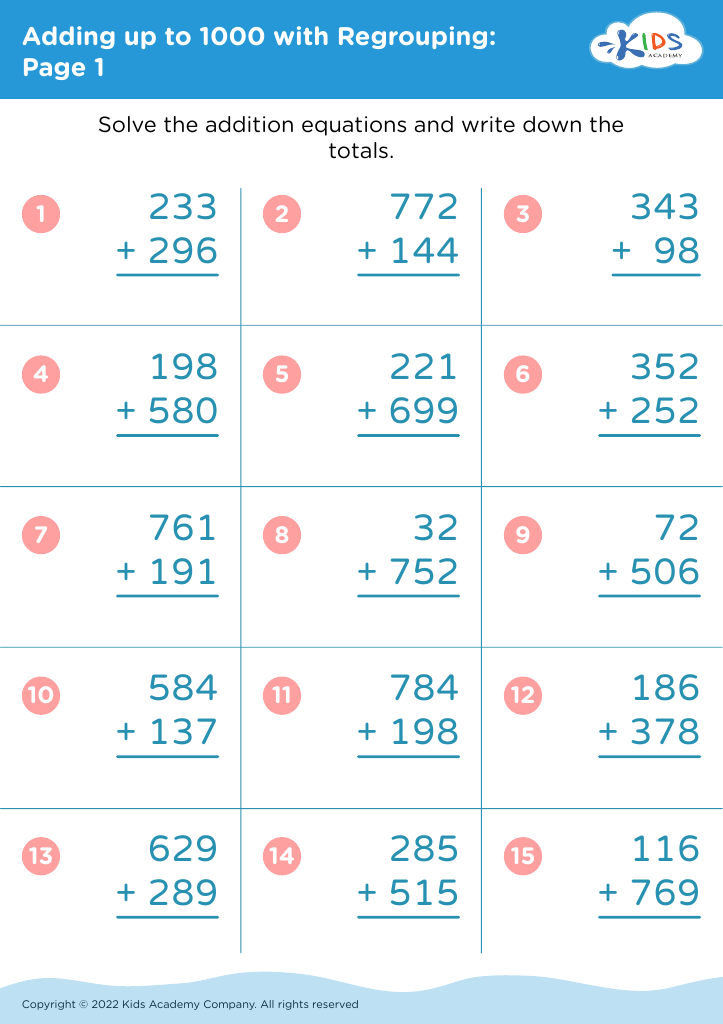
Adding up to 1000 with Regrouping: Page 1
Worksheet
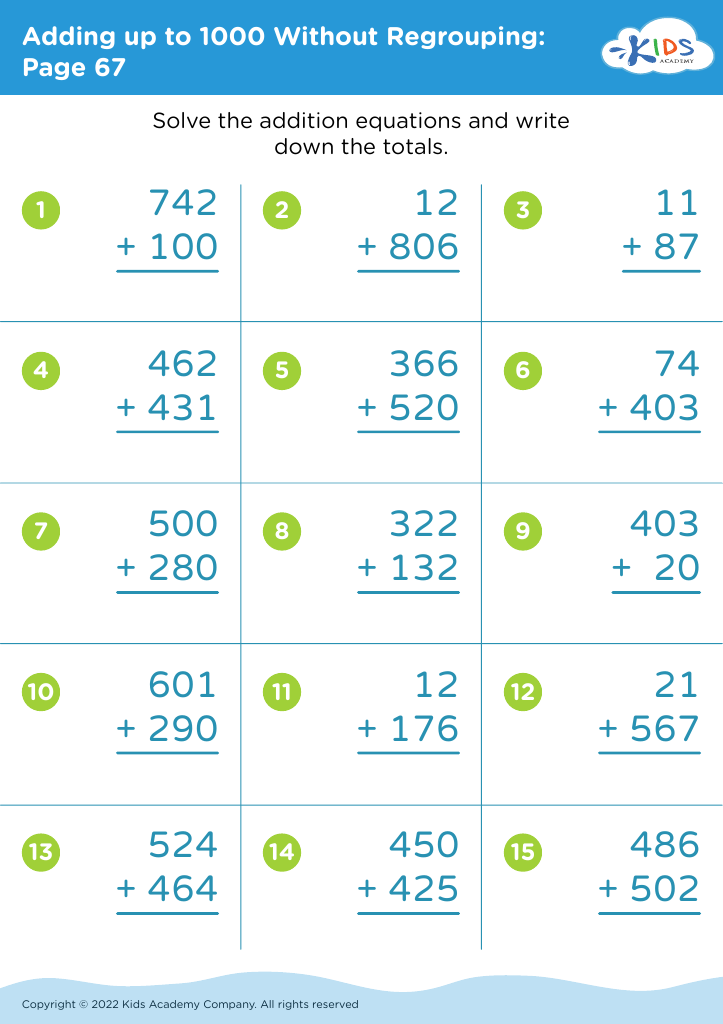
Adding up to 1000 Without Regrouping: Page 67
Worksheet
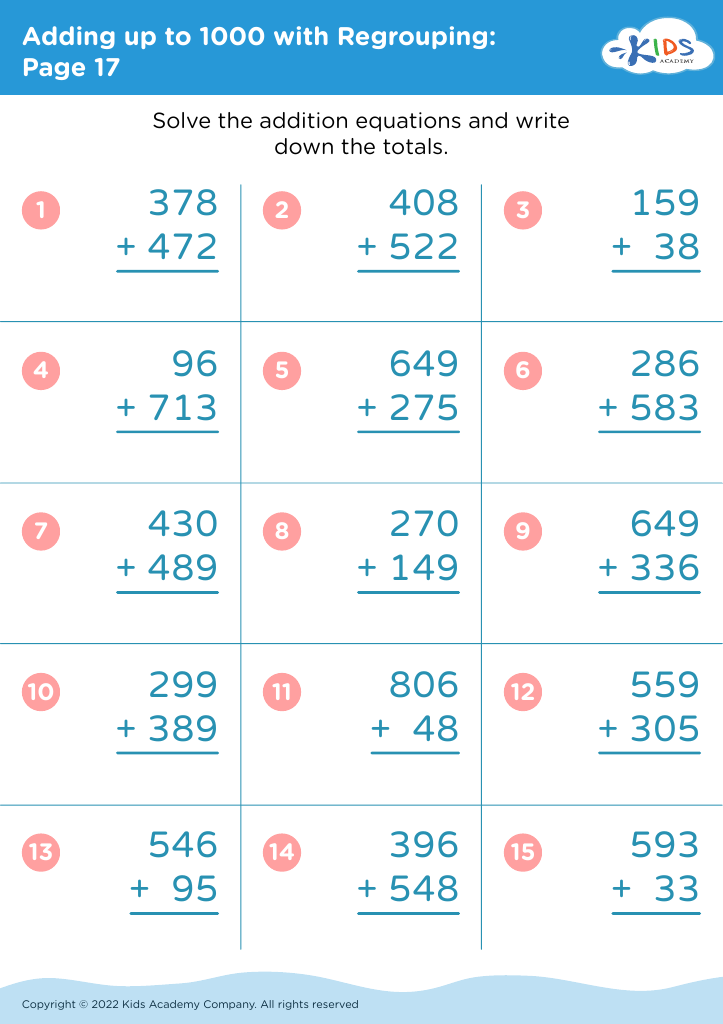
Adding up to 1000 with Regrouping: Page 17
Worksheet
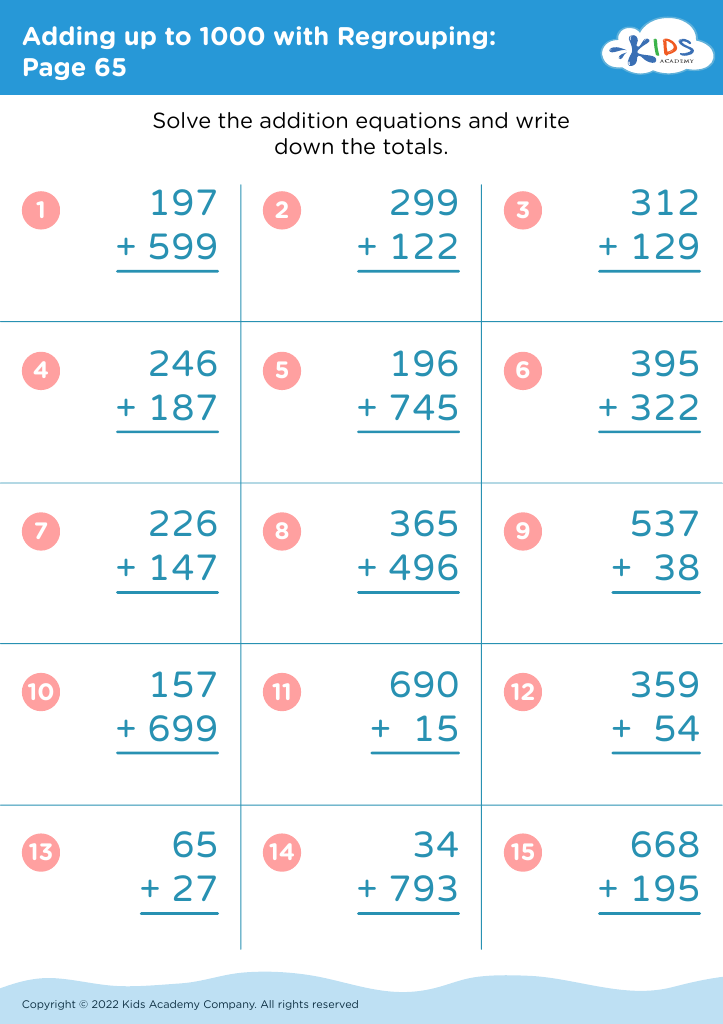
Adding up to 1000 with Regrouping: Page 65
Worksheet
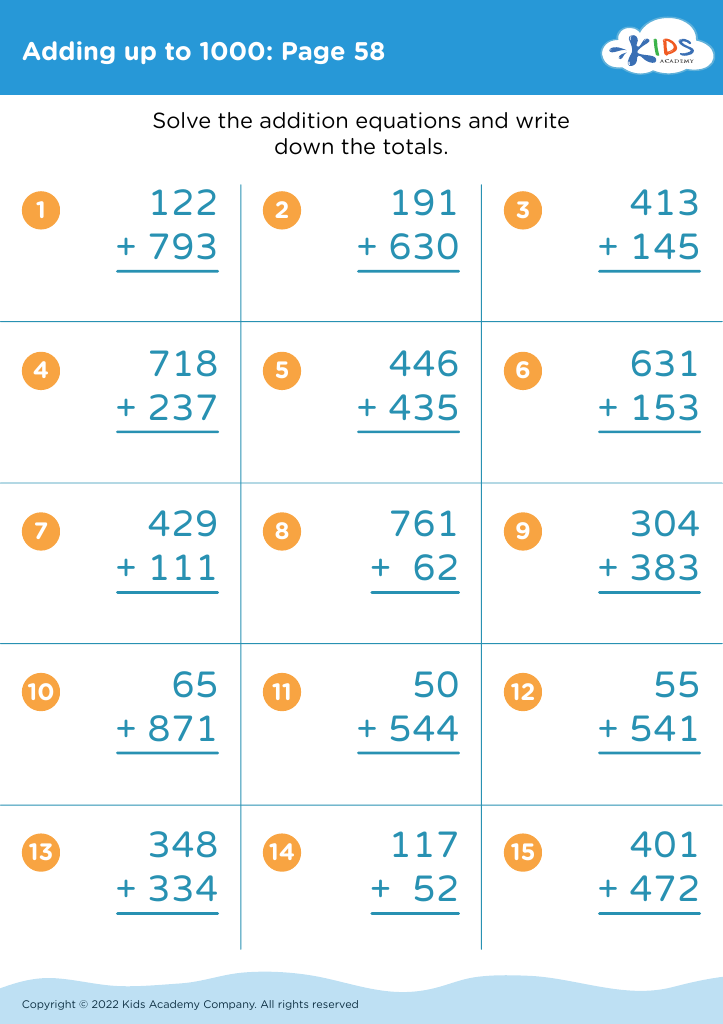
Adding up to 1000: Page 58

Adding up to 1000: Page 58

Adding up to 1000: Page 58
Worksheet
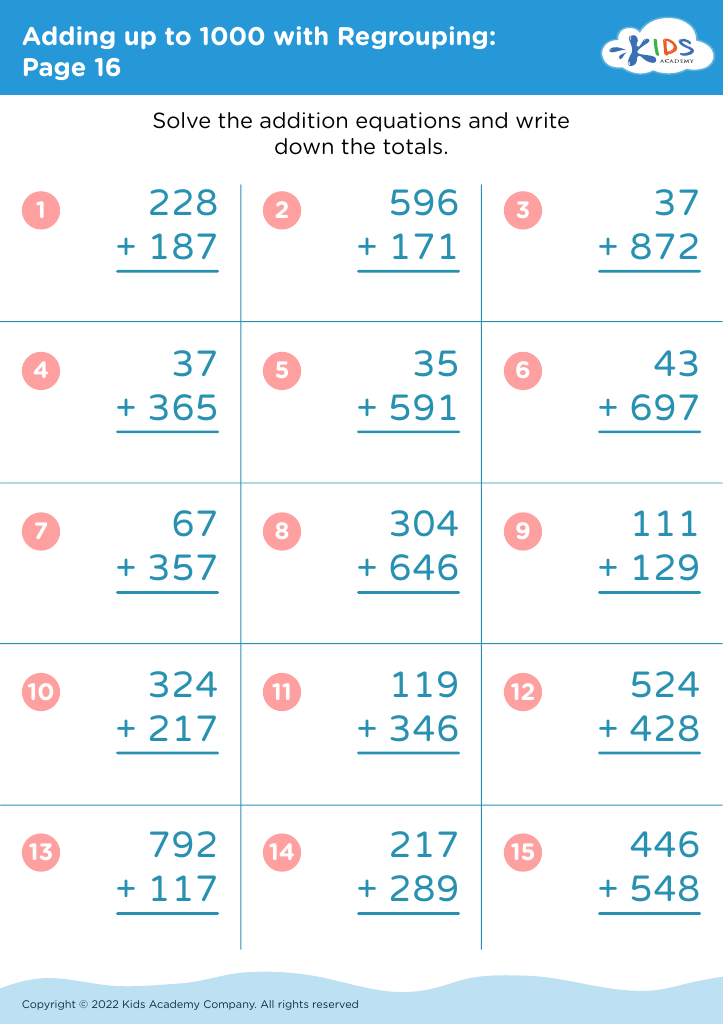
Adding up to 1000 with Regrouping: Page 16
Worksheet
Adding up to 1000 Without Regrouping: Page 62
Worksheet


Understanding comparing fractions and adding up to 1000 is foundational for children aged 4-9, as these skills build critical early numeracy competencies. Parents and teachers should prioritize this area because it nurtures logical reasoning, problem-solving, and abstract thinking, all crucial for later mathematics and everyday life.

At a young age, comparing fractions introduces children to the concept of wholes and parts, promoting a deeper understanding of number sense. For instance, grasping that 1/2 is greater than 1/4 helps children with proportional reasoning and prepares them for more complex math, like ratios and percents.

Adding up numbers to 1000 serves to enhance computational fluency and boosts confidence in handling larger numbers. It encourages the practice of fundamental arithmetic operations—addition and subtractions—that form the backbone of more advanced mathematical concepts.

Moreover, early engagement with these concepts can have significant, far-reaching effects beyond mathematics. It develops perseverance, attention to detail, and the ability to think logically, which are valuable life skills. Integration of such activities keeps learning interactive and enjoyable, positively influencing children's attitudes toward math.

Thus, focusing on these learning goals supports both cognitive development and nurtures a positive, resilient approach to learning, equipping children with strong foundational skills for future academic success.