Critical Thinking Adding up to 1000 Worksheets for Ages 4-9
5 filtered results
-
From - To
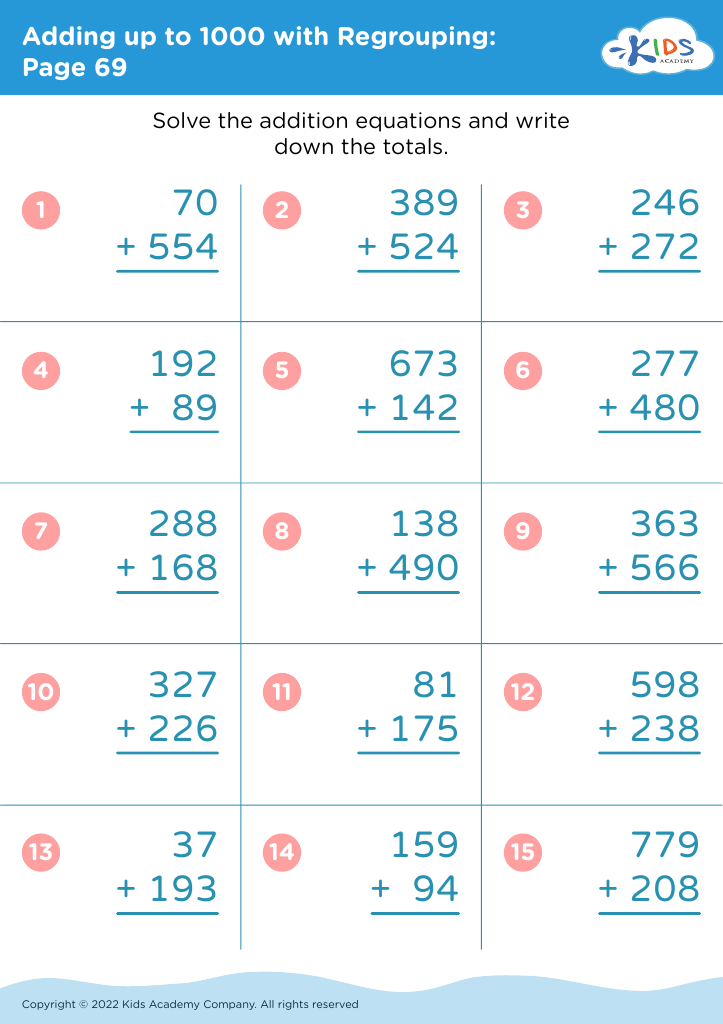
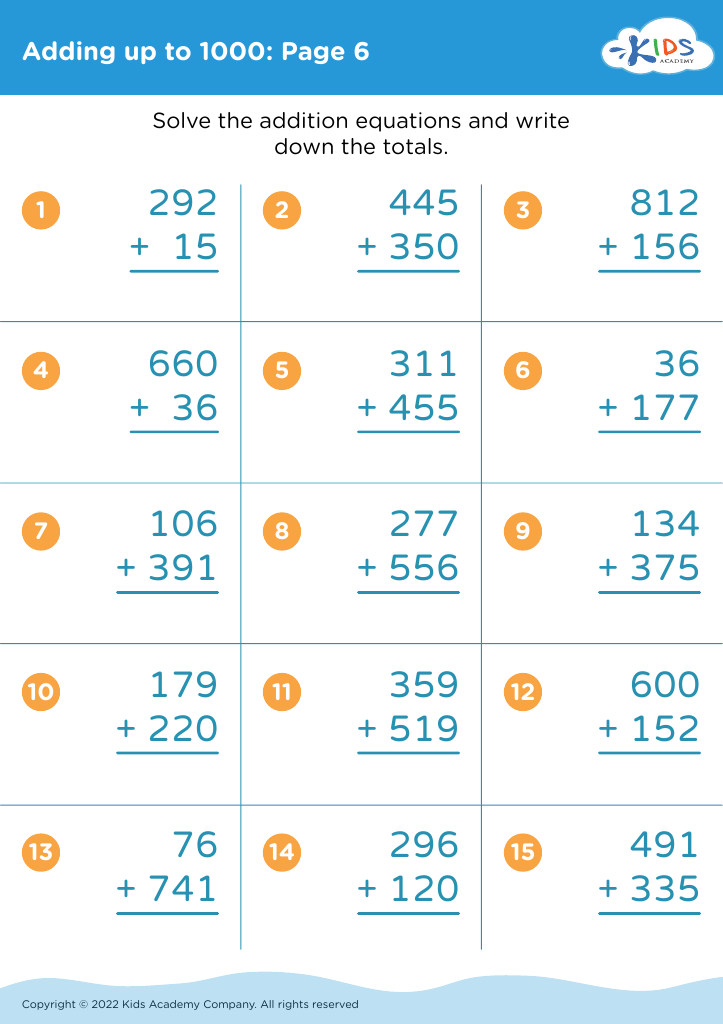
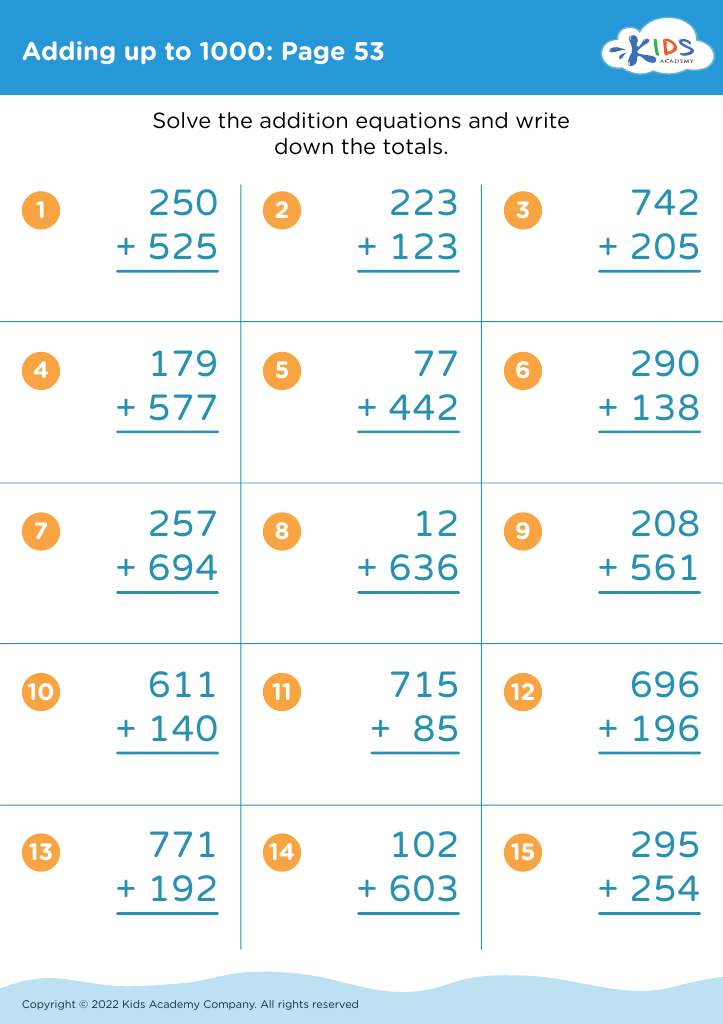
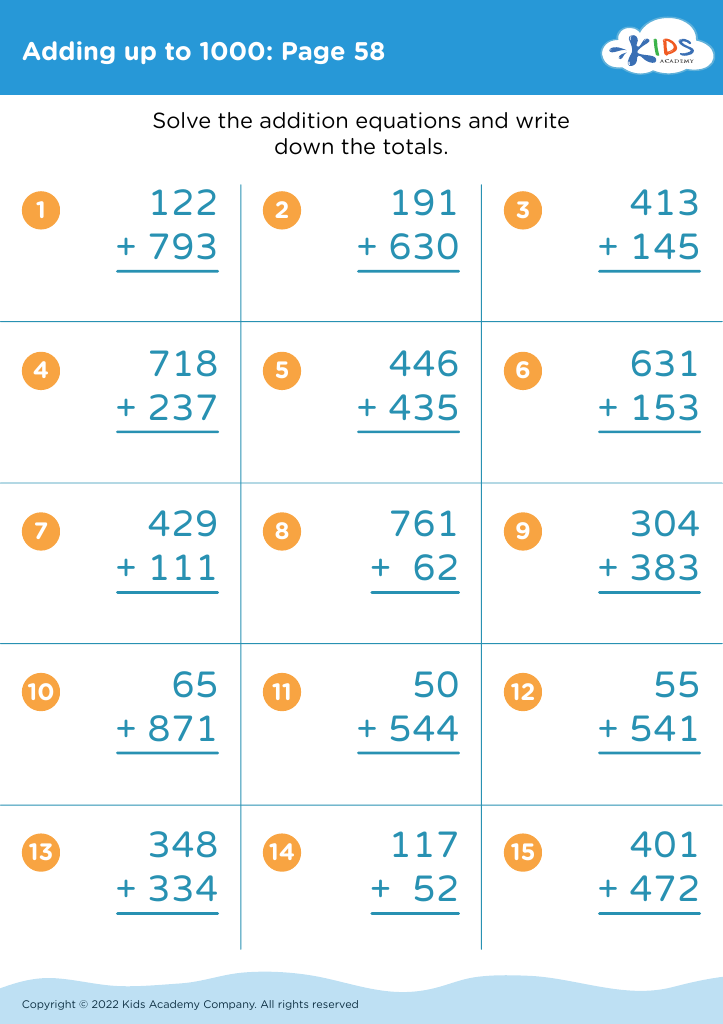
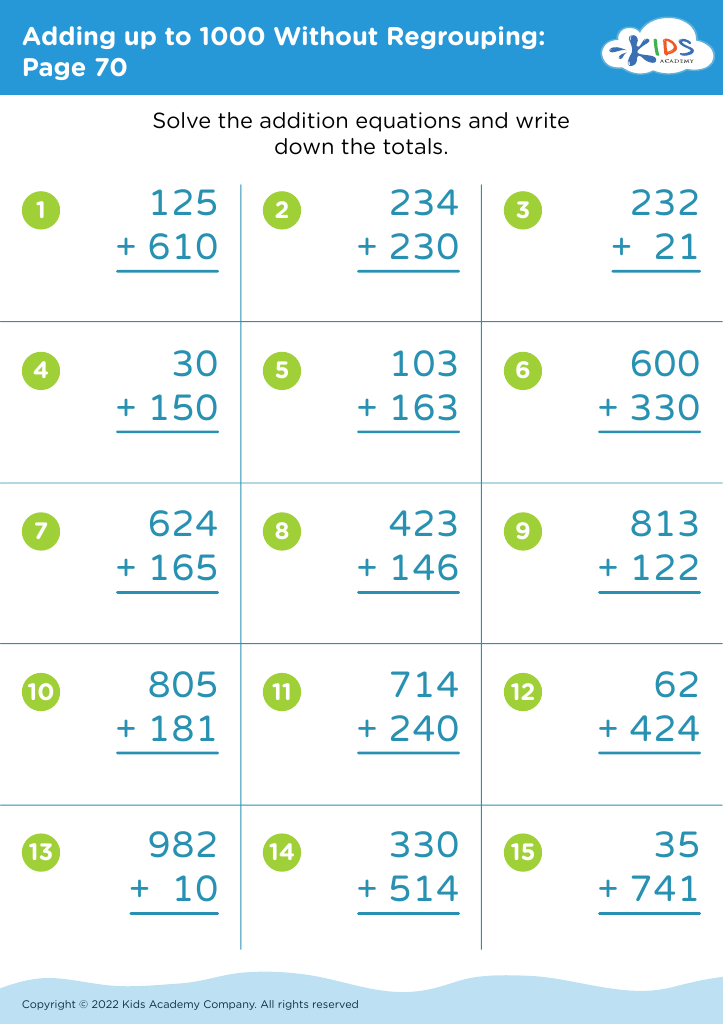
Enhance your child's critical thinking skills with our "Adding up to 1000 Worksheets," designed specifically for children aged 4-9. These engaging worksheets provide a variety of fun and challenging activities that promote essential math skills, encouraging young learners to think creatively and analytically. As children tackle addition problems, they will also develop problem-solving strategies and improve their mental agility. Our resources are tailored to foster a deeper understanding of numbers while instilling confidence in their abilities. Discover the perfect blend of learning and fun that prepares your child for lifelong success in math and beyond. Explore our worksheets today!



Critical thinking is an essential skill that parents and teachers should prioritize for children aged 4-9. During these formative years, children begin to develop cognitive abilities, and fostering critical thinking can tremendously impact their overall growth. Critical thinking empowers children to analyze, evaluate, and interpret information rather than merely accepting it at face value. This is crucial in an age where they are constantly bombarded with information from various sources, including social media and television.
By encouraging critical thinking, adults help children become more independent learners. They learn to ask questions, seek evidence, and develop reasoned arguments, which are foundational skills for lifelong learning. Moreover, critical thinking cultivates creativity, enabling children to approach problems from multiple angles and come up with innovative solutions.
Furthermore, nurturing critical thinking helps build self-confidence. When children articulate their thoughts and engage in thoughtful discussions, they grow more secure in their abilities. As a result, they become more effective communicators and decision-makers.
In conclusion, prioritizing critical thinking in early education lays the groundwork for academic success, boosts emotional intelligence, and prepares children to navigate a complex world thoughtfully and independently. Parents and teachers should work together to weave these skills into everyday activities and learning experiences.








