Fine Motor Skills Adding up to 1000 Worksheets for Ages 4-9
12 filtered results
-
From - To
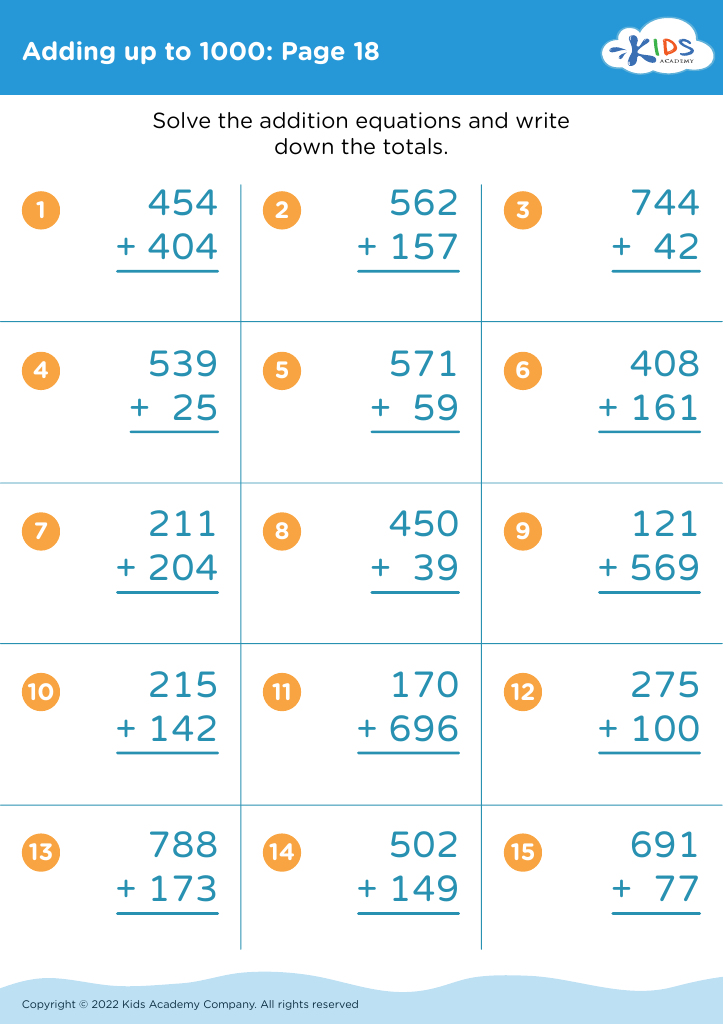
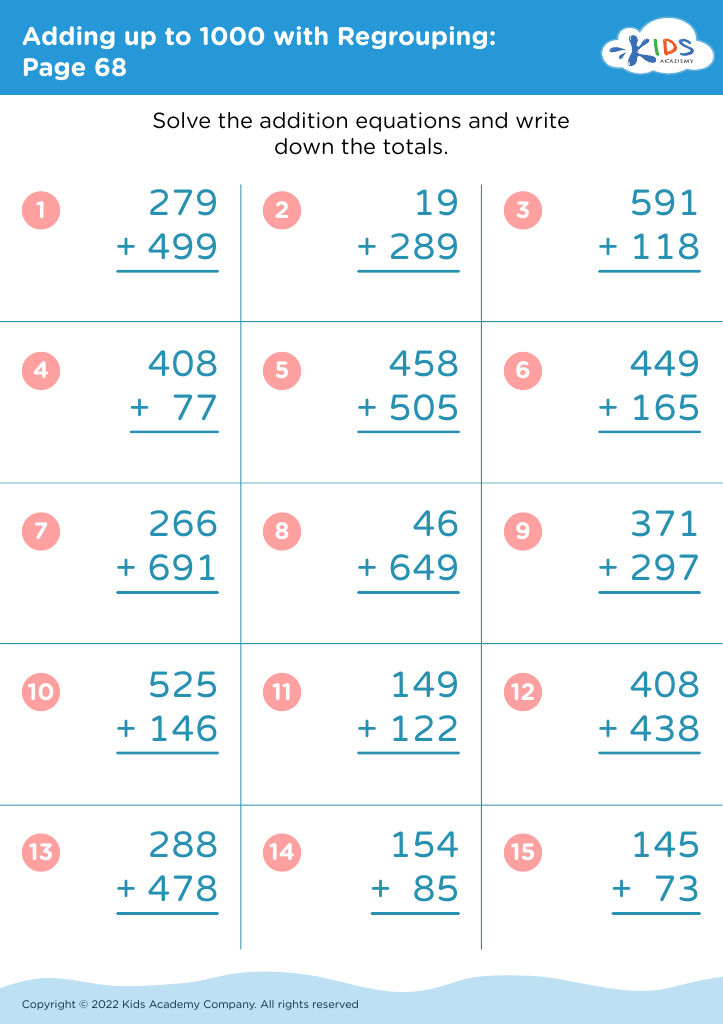
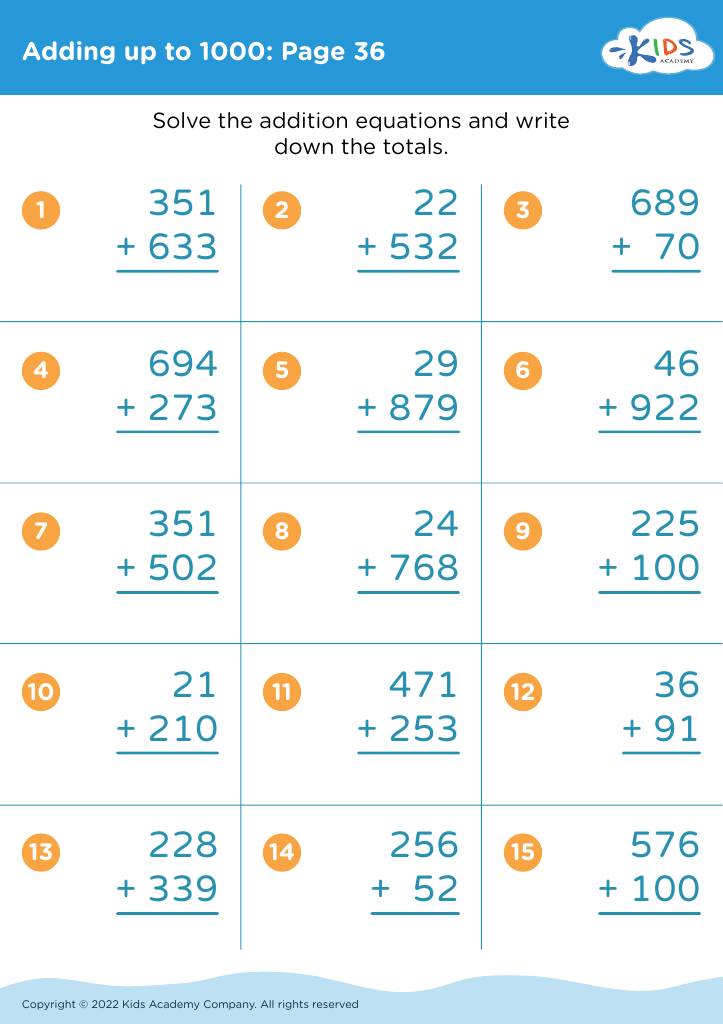
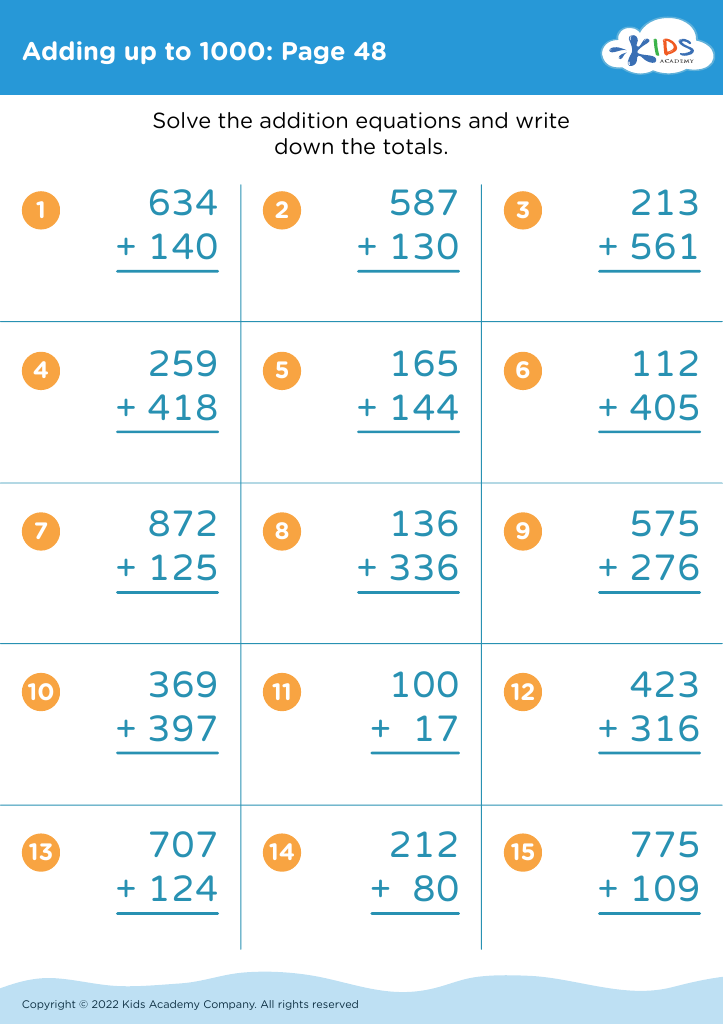
Enhance your child's fine motor skills with our engaging Adding up to 1000 Worksheets designed for ages 4-9! From simple sums to more complex equations, these printable worksheets offer an interactive way to practice addition skills while simultaneously developing essential pencil control, hand-eye coordination, and precision. Tailored for young learners, these activities make math both fun and educational, ensuring a solid foundation in arithmetic. Our resources are ideal for both classroom and at-home learning, providing continuous skill development and confidence in math. Make learning an adventure with our expertly crafted fine motor skill-enhancement materials!
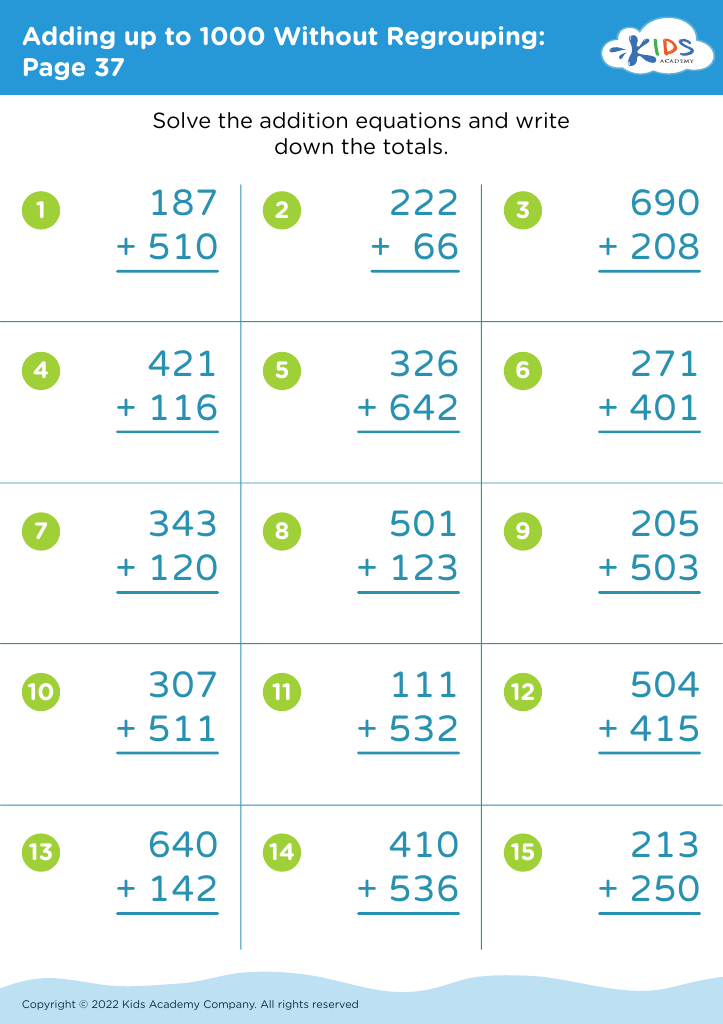
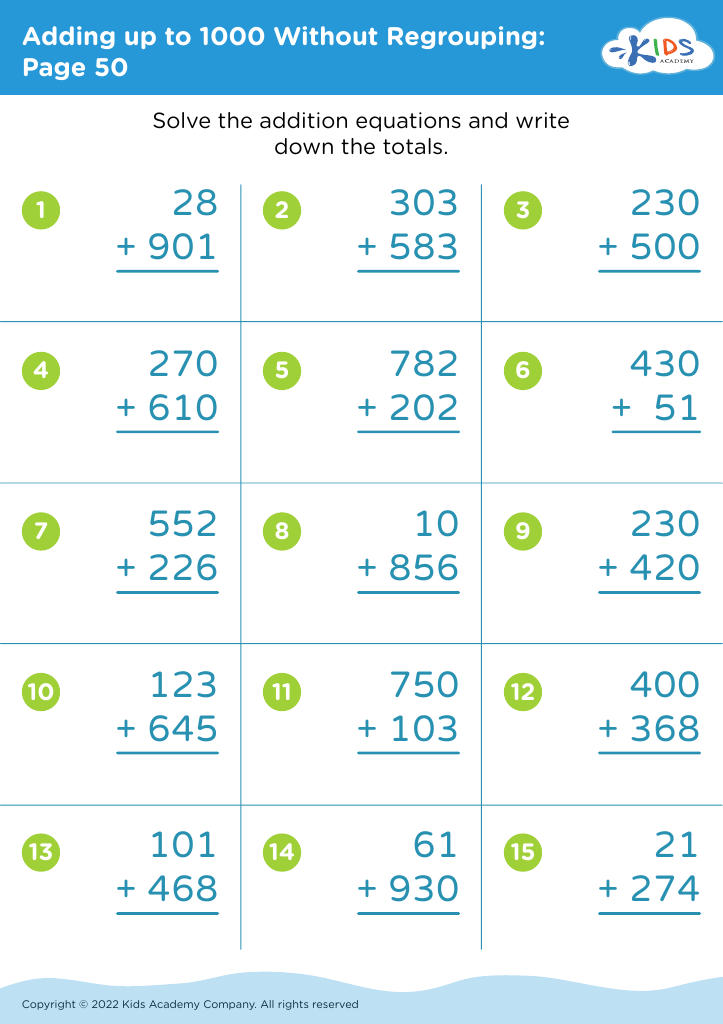
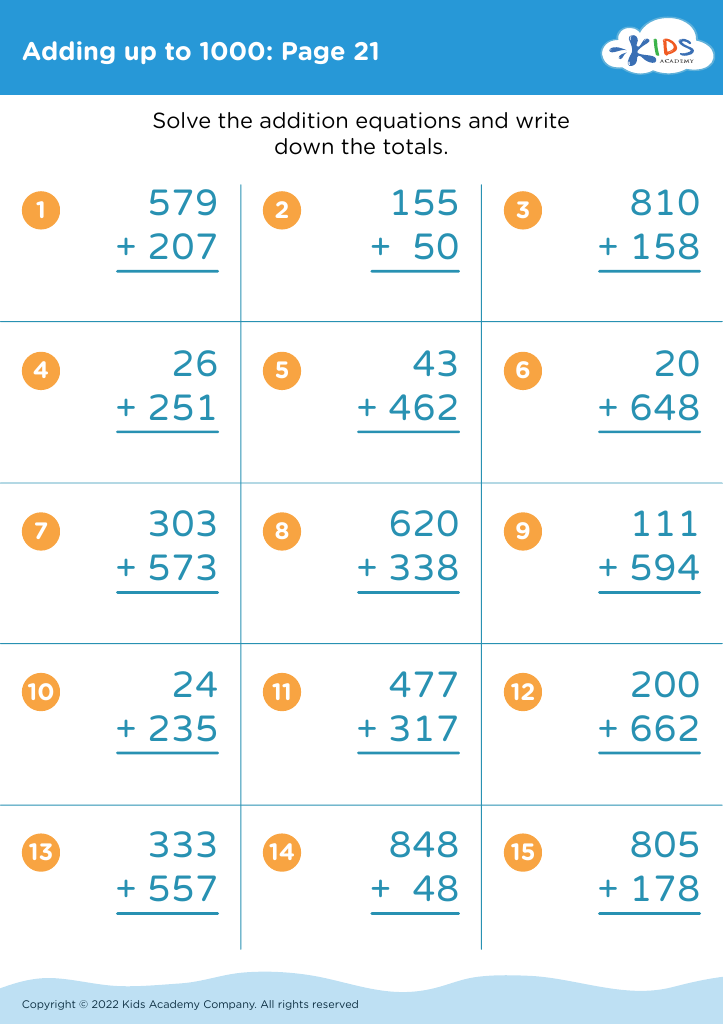
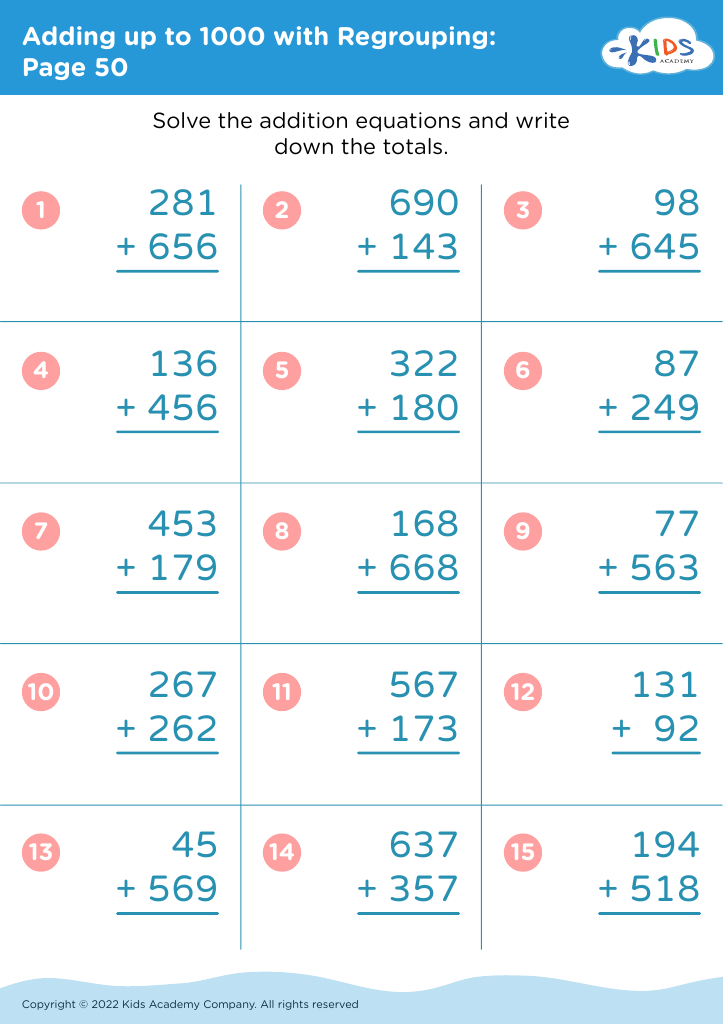
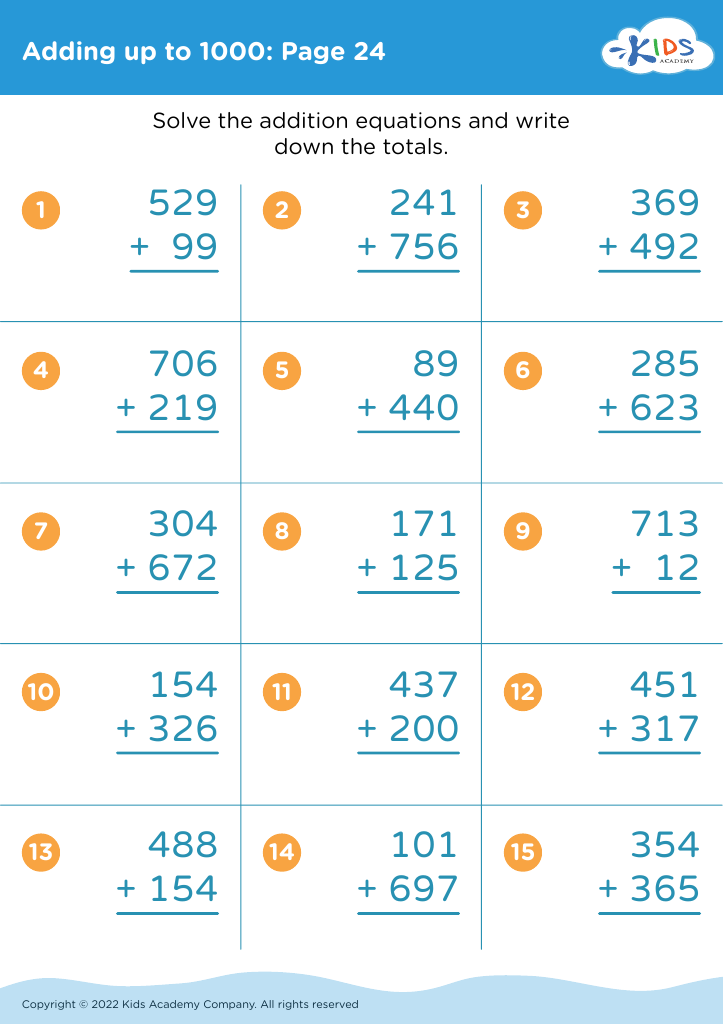
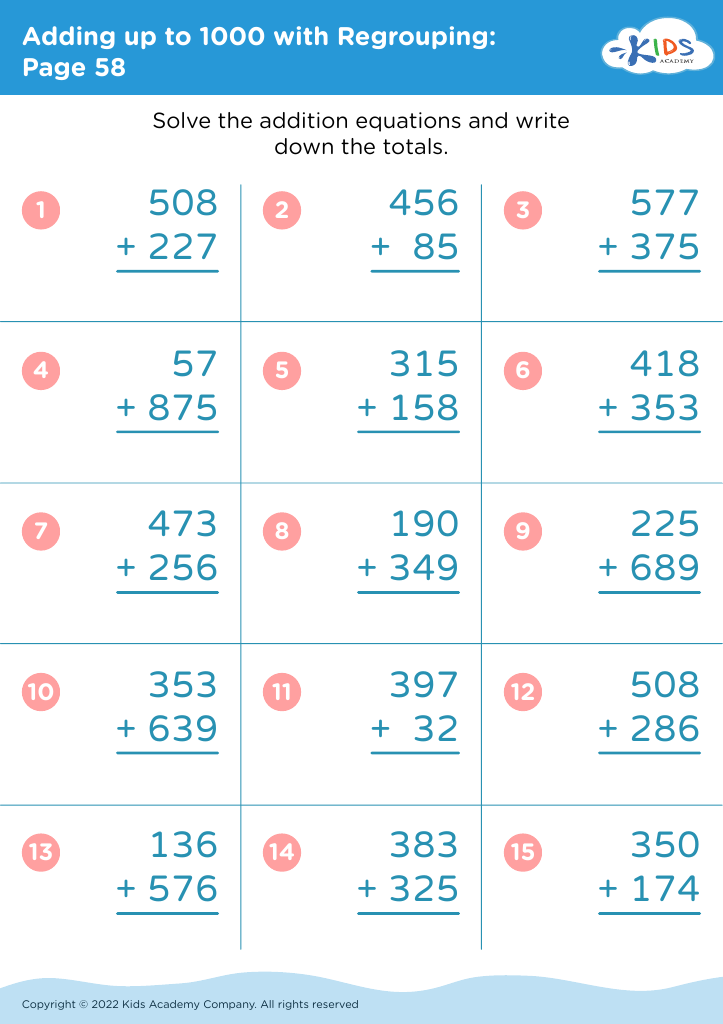
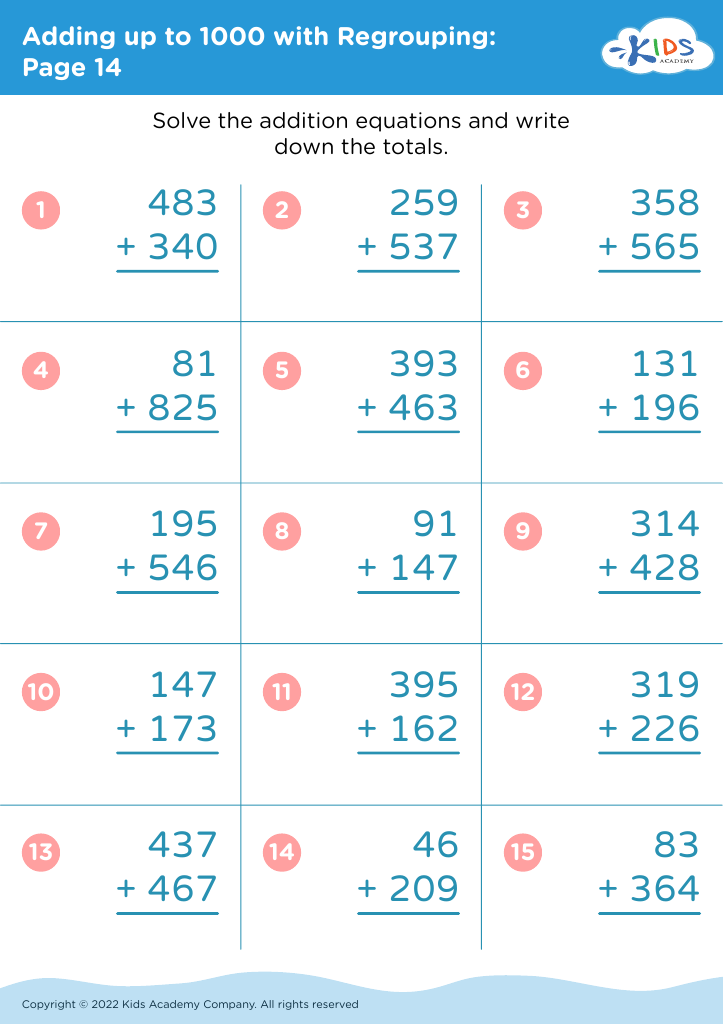
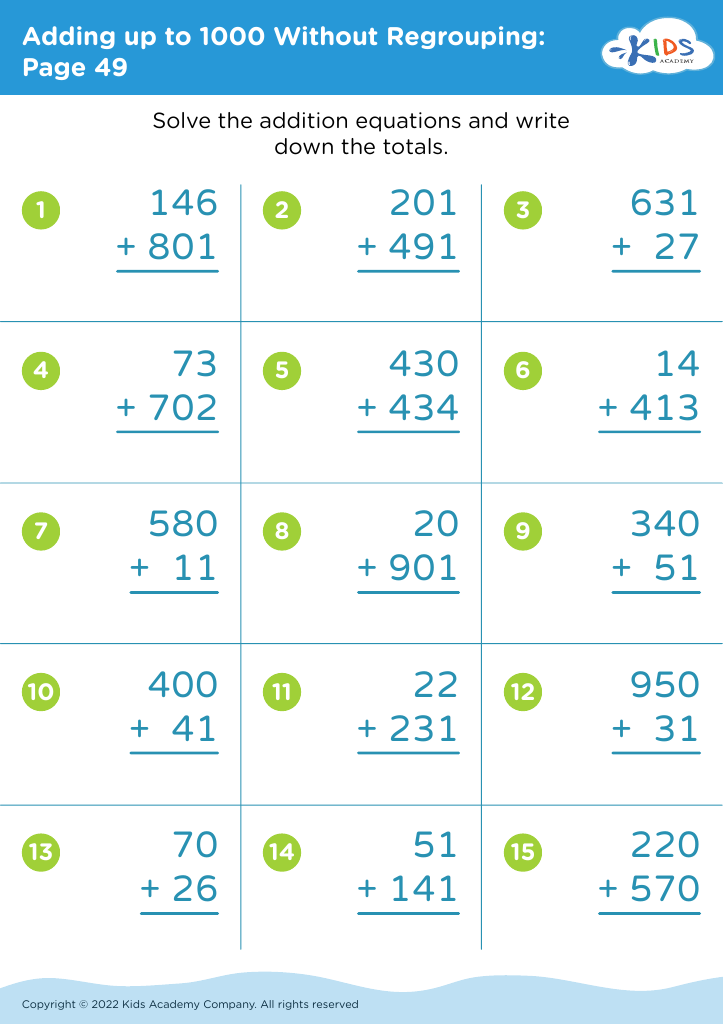



Fine motor skills are crucial for children aged 4-9, as they play a fundamental role in various developmental and academic tasks, including adding up to 1000. Fine motor skills involve the precise movements of the small muscles in the hands and fingers, vital for everyday activities and achieving academic success.
Firstly, practicing fine motor skills in the context of math tasks, such as adding up to 1000, enhances overall hand-eye coordination. This foundational development impacts daily activities like writing, cutting with scissors, and buttoning clothes. Fine motor skills also promote cognitive abilities, boosting a child's capacity to handle complex problems and retain information, setting the stage for future academic endeavors.
Developing these skills through arithmetic exercises helps children become proficient in essential math operations. Tasks like holding a pencil correctly to write numbers or manipulating objects like counting blocks improve finger dexterity and muscle control. This preparation is key for higher-level math operations and can foster a positive attitude toward mathematics.
Moreover, success in these early activities builds confidence, reduces frustration, and encourages a love for learning. In summary, focusing on fine motor skills when teaching tasks such as adding up to 1000 enhances academic success, personal independence, and lifelong learning, making it vital for both parents and teachers.








