Fraction Addition Adding up to 1000 Worksheets for Ages 4-9
5 filtered results
-
From - To
Welcome to our "Fraction Addition Adding Up to 1000 Worksheets" designed for children ages 4-9! These engaging worksheets make learning fraction addition fun and accessible. Our activities gradually introduce young learners to the concept of adding fractions, combining visual aids and hands-on exercises to enhance understanding. Perfect for home learning or classroom use, they help students build confidence in their math skills by working with fractions that sum up to 1000. With a variety of problems tailored to different skill levels, these worksheets support critical thinking and foster a love for math. Download now and watch your child's skills flourish!
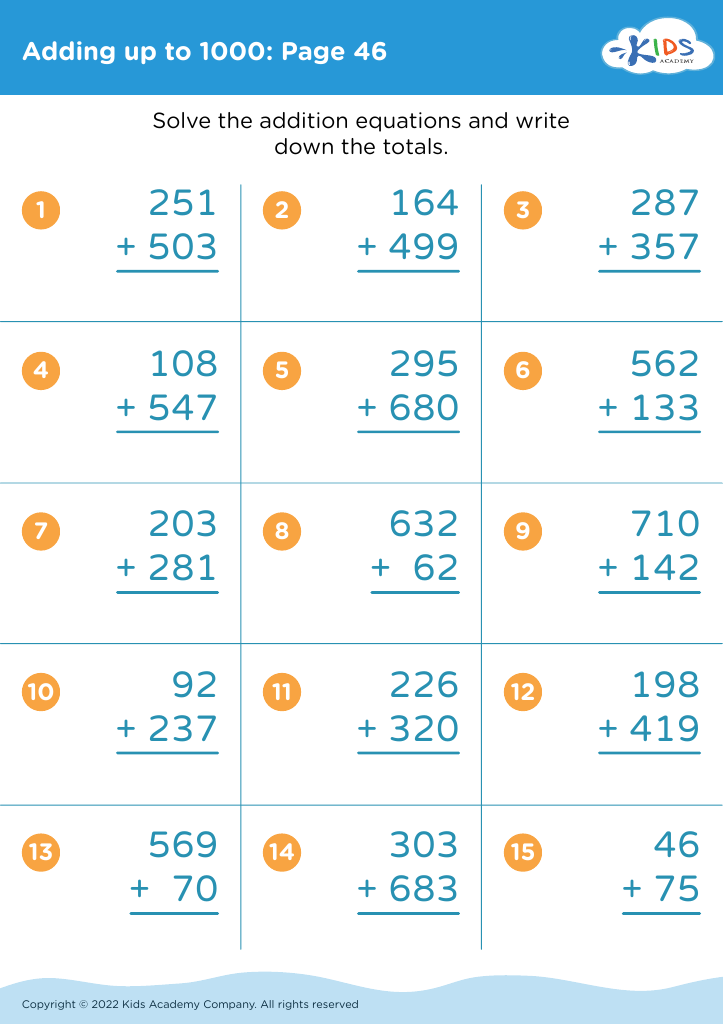
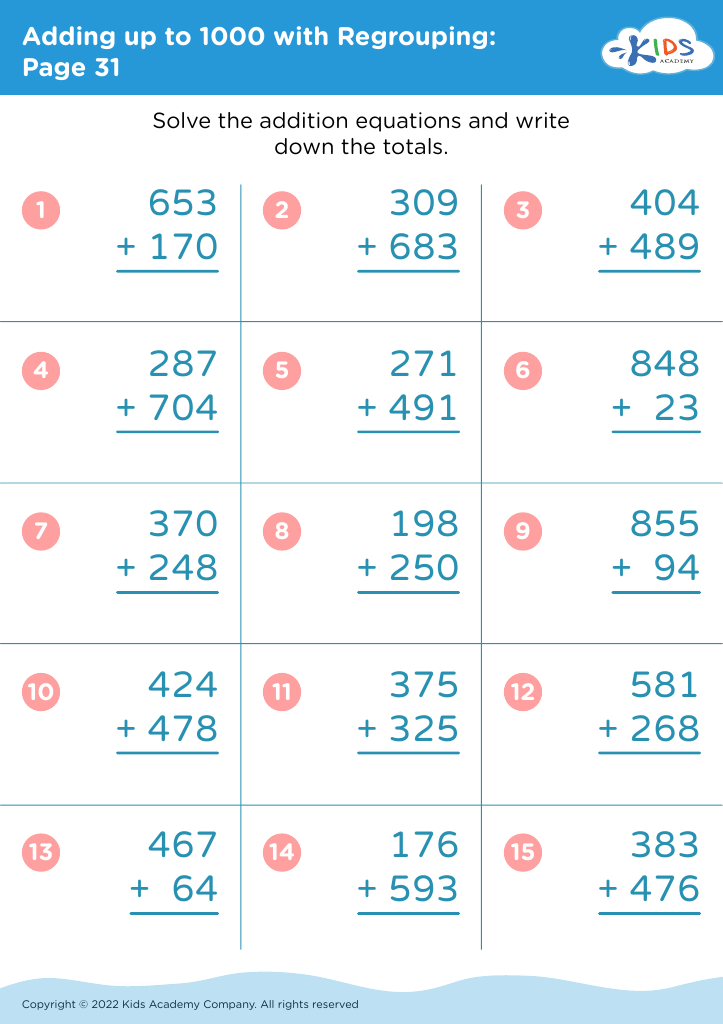
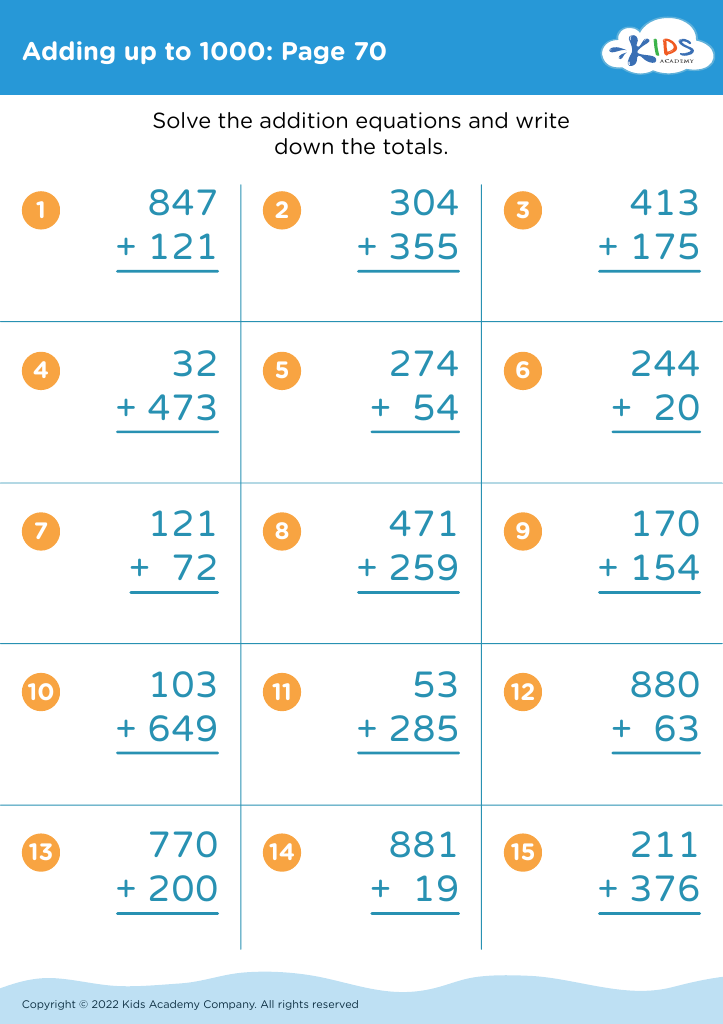
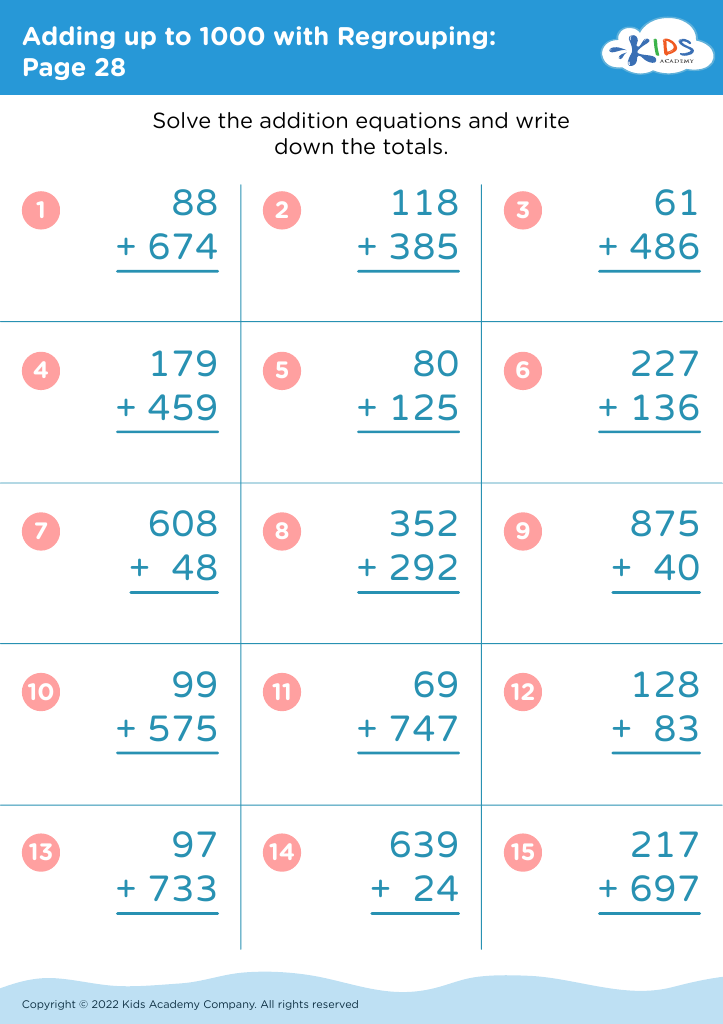
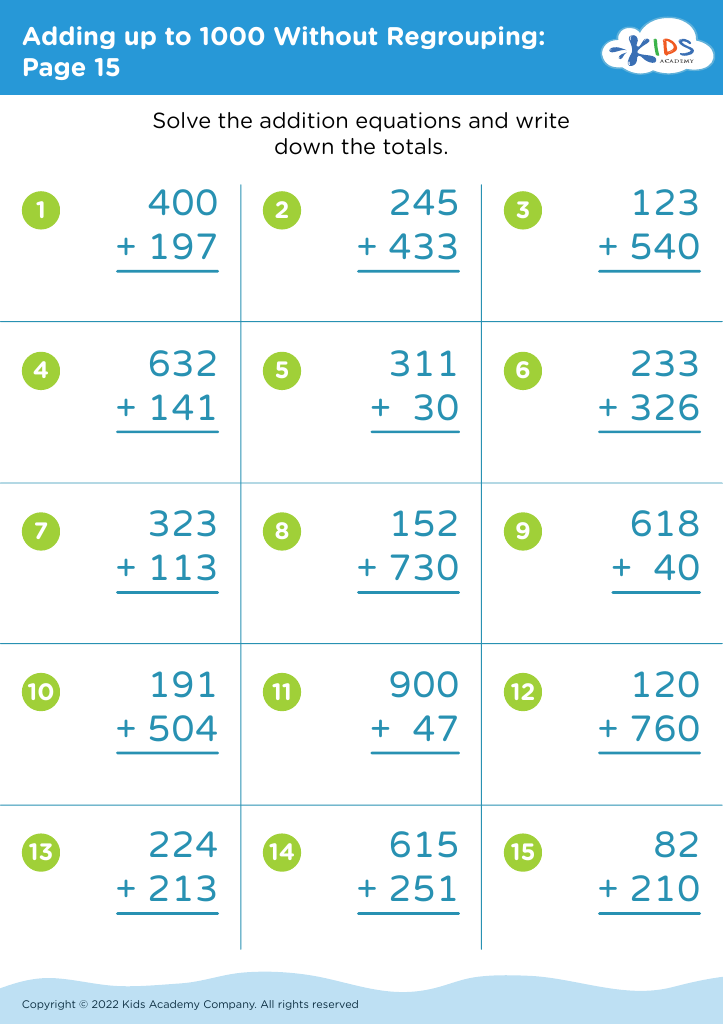



Understanding fraction addition is crucial for children aged 4-9, as it forms the foundation for more advanced math skills and critical thinking. At this age, learners are highly impressionable and develop essential mathematical reasoning through engaging and hands-on activities. Being able to add fractions helps children grasp the concept of part-whole relationships, promoting their understanding of numbers beyond whole integers.
Additionally, mastering fraction addition fosters problem-solving abilities and logical reasoning. When children add fractions, they learn to identify common denominators, enhancing their flexibility in thinking. This skill translates to real-life situations, enabling them to make sense of more complex scenarios, such as sharing, measuring, and cooking.
For parents and teachers, recognizing the importance of fraction addition encourages them to create supportive environments for learning. Celebrating small successes in fractions empowers children, leading to increased confidence and a positive attitude toward math. Furthermore, this skill aligns with developmental milestones, ensuring children are on track for future academic success.
In summary, fostering an early understanding of fraction addition not only enriches children's current learning experiences but also paves the way for lifelong mathematical competence, making it vital for parents and educators to prioritize this skill.








