Fraction simplification Adding up to 1000 Worksheets for Ages 4-9
7 filtered results
-
From - To
Discover our engaging Fraction Simplification Adding Up to 1000 Worksheets, designed for children ages 4-9! These worksheets provide an exciting way for young learners to grasp the concept of fractions while developing their addition skills up to 1000. Featuring colorful graphics and age-appropriate exercises, students will enhance their mathematical understanding through hands-on practice. As they simplify fractions and complete addition problems, they will build confidence in their abilities. Perfect for classroom or home use, our interactive worksheets cater to various learning styles, making math enjoyable and accessible. Start your child’s journey into the world of fractions and mathematics today!
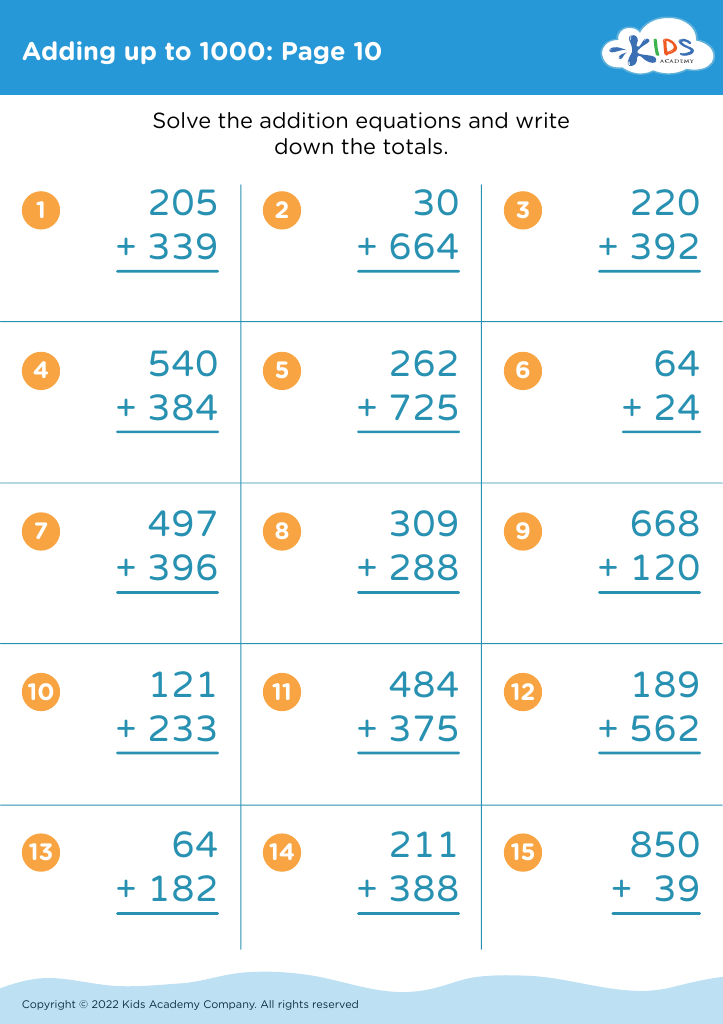
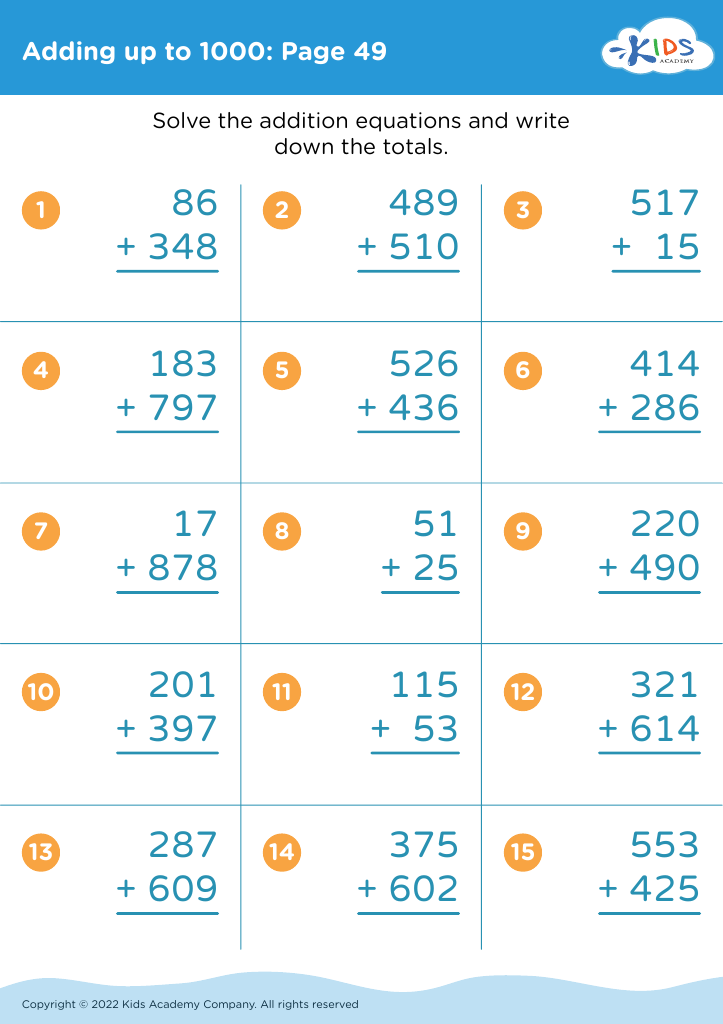
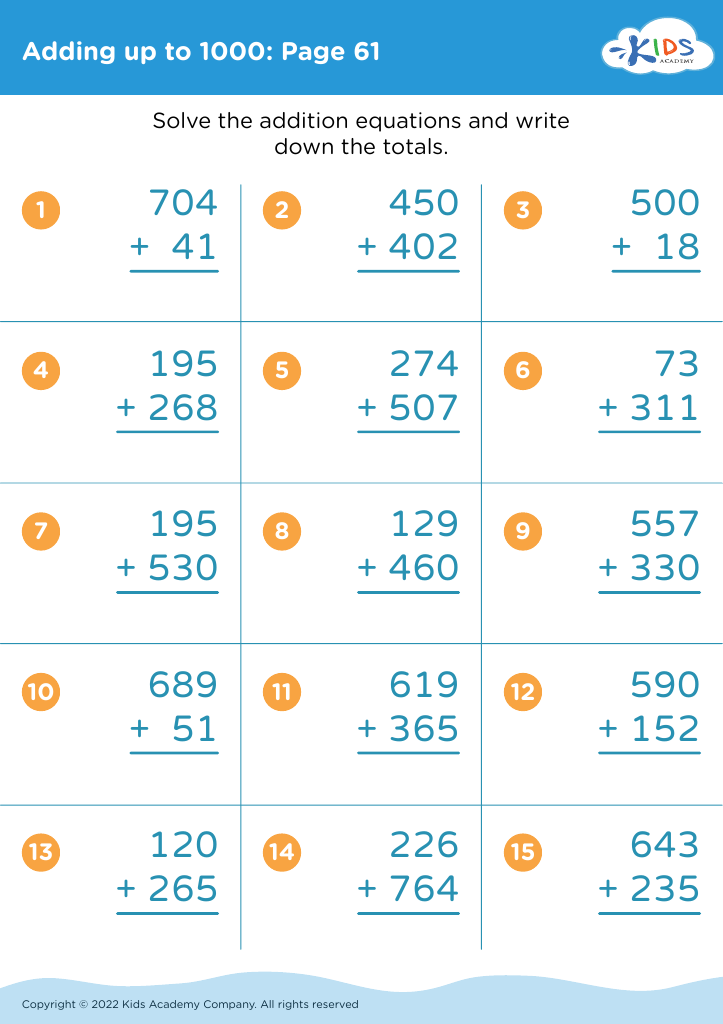
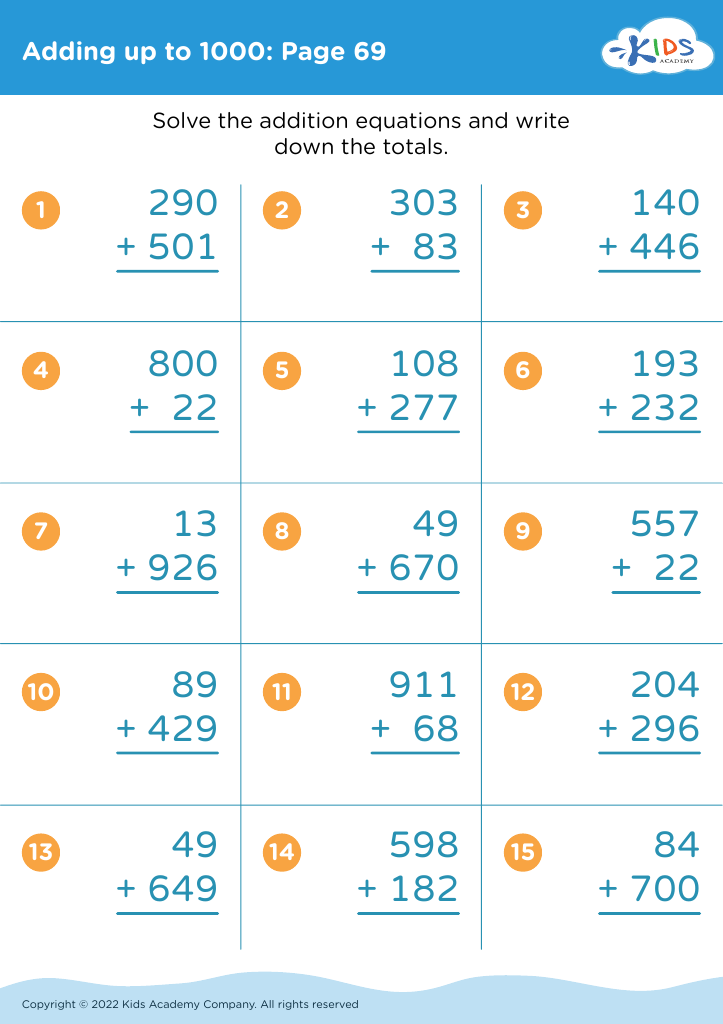
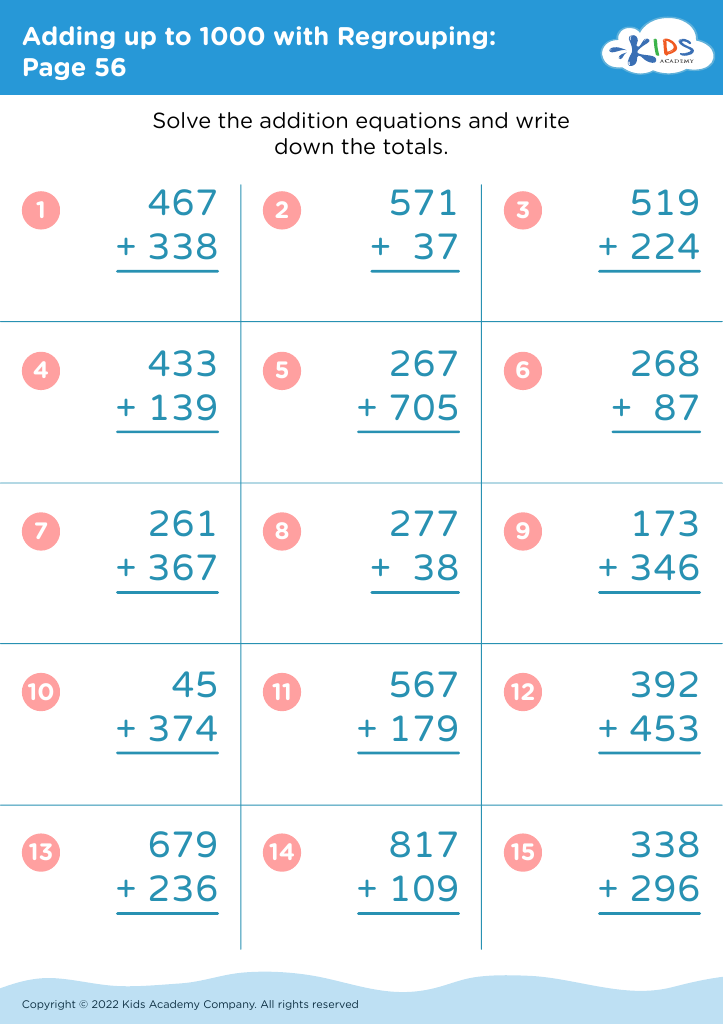
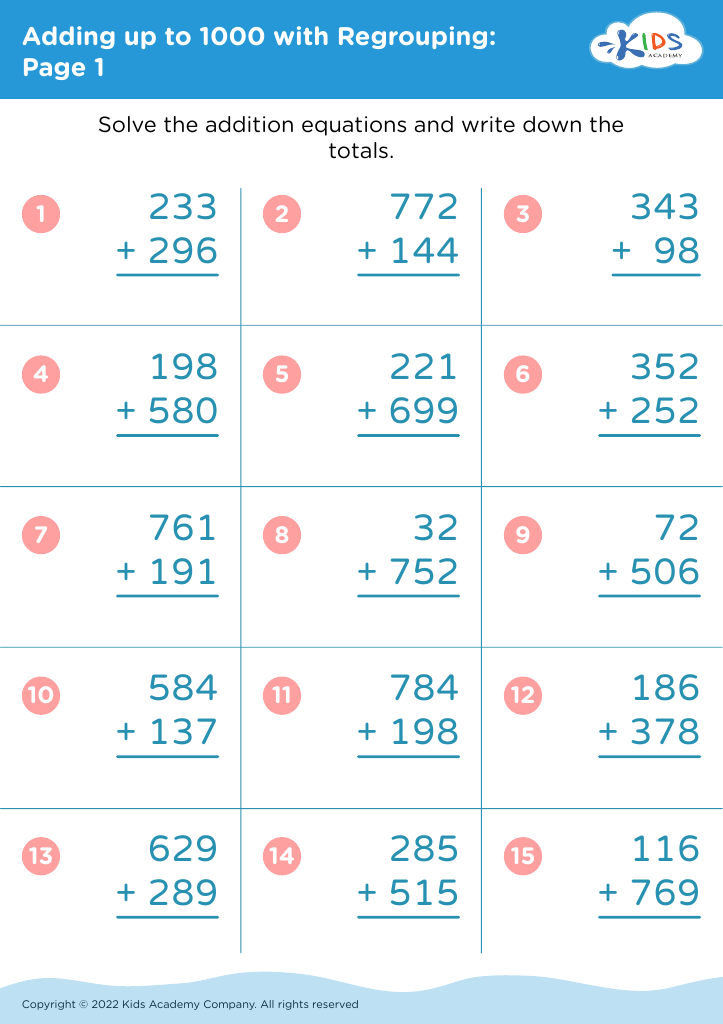
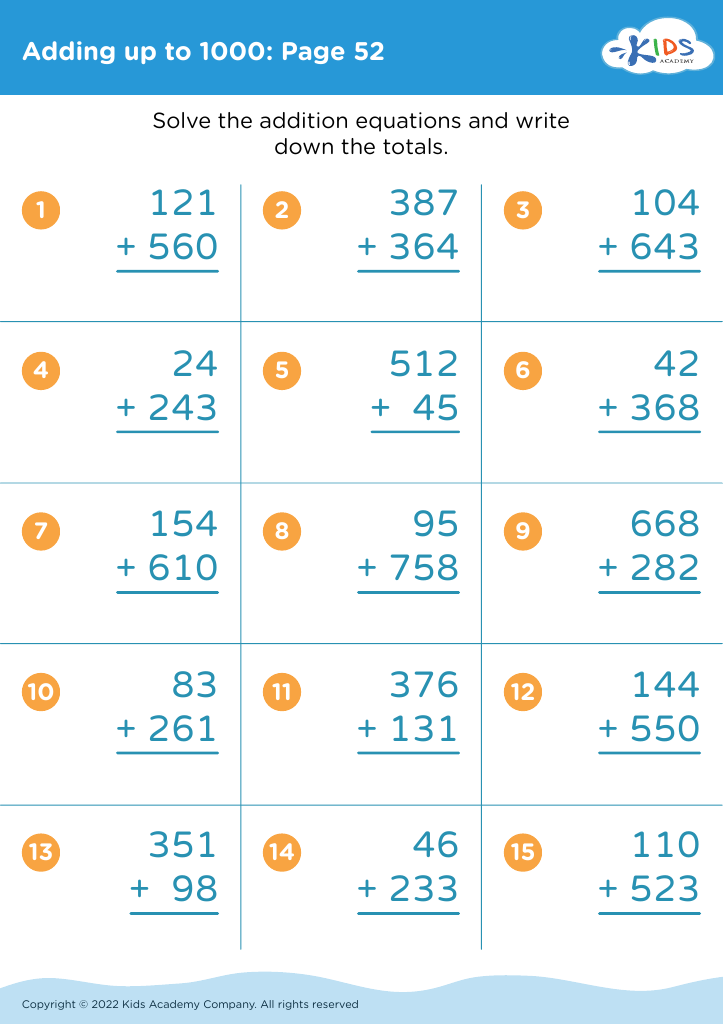



Fraction simplification and addition up to 1,000 are critical skills for children aged 4-9 as they lay the foundation for advanced mathematical concepts. Understanding fractions helps children grasp the basics of parts and wholes, fostering their ability to compare, estimate, and reason logically about quantities. Simplifying fractions not only makes them easier to work with but also strengthens critical thinking skills as students learn to manipulate numbers effectively.
Additionally, mastering addition up to 1,000 enhances a child's number sense and prepares them for more complex calculations, which are essential in everyday life. Engaging with these concepts at an early age helps children build confidence and improve their problem-solving abilities. Teachers and parents play a pivotal role in this process by providing engaging and fun learning experiences that promote mathematical exploration.
Moreover, these skills are interconnected; simplification reinforces the understanding of addition and vice versa. By fostering a strong mathematical foundation in early childhood, parents and teachers equip children to navigate future academic challenges more effectively. Encouraging a positive attitude towards math early on can foster lifelong skills that influence future learning, decision-making, and even career opportunities. Hence, it's crucial for educators and parents to prioritize these concepts in early education.








