Identify shapes Adding up to 1000 Worksheets for Ages 4-9
4 filtered results
-
From - To
Enhance your child's math and geometry skills with our "Identify Shapes Adding up to 1000" worksheets, tailored for ages 4-9. These engaging activities blend basic addition and shape recognition, fostering critical thinking and problem-solving abilities. Each worksheet progresses in difficulty, ensuring a gradual and solid understanding. Perfect for home or classroom use, these printable resources support independent learning, making math fun and exciting. Our worksheets not only help young learners master addition up to 1000 but also enhance their spatial awareness and shape identification skills. Try them now and see the difference in your child's confidence and abilities!
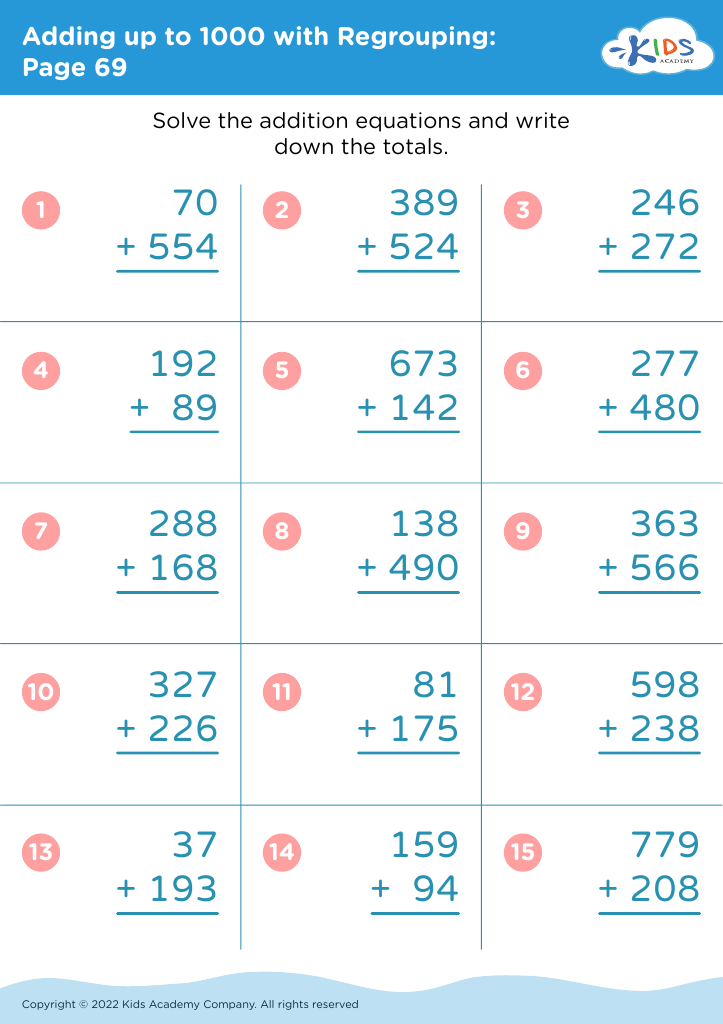
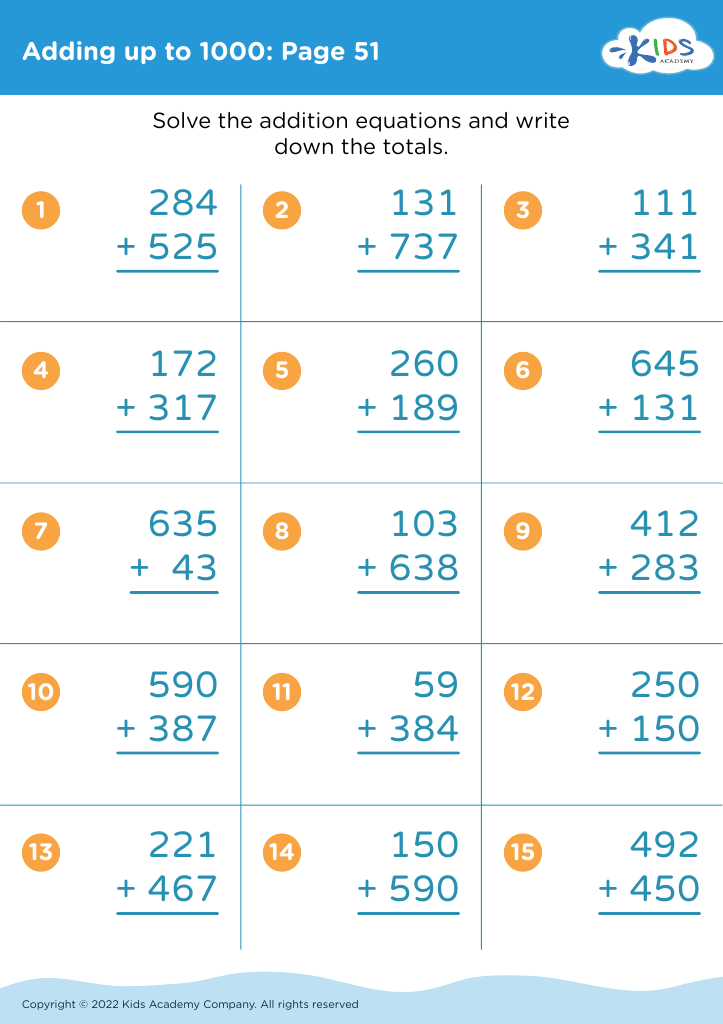
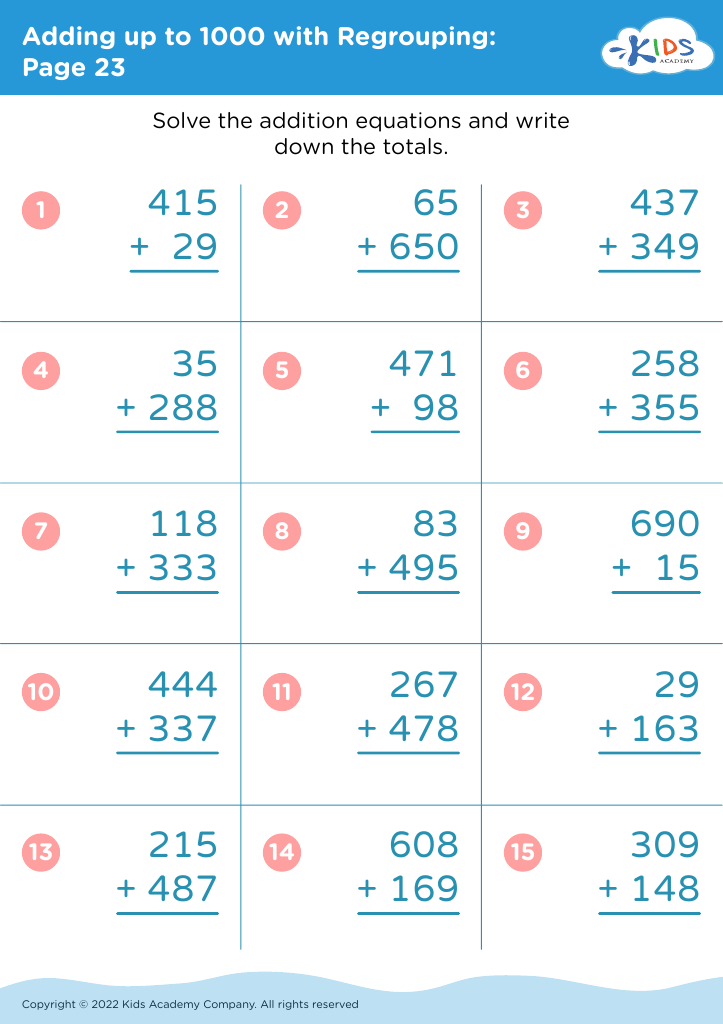
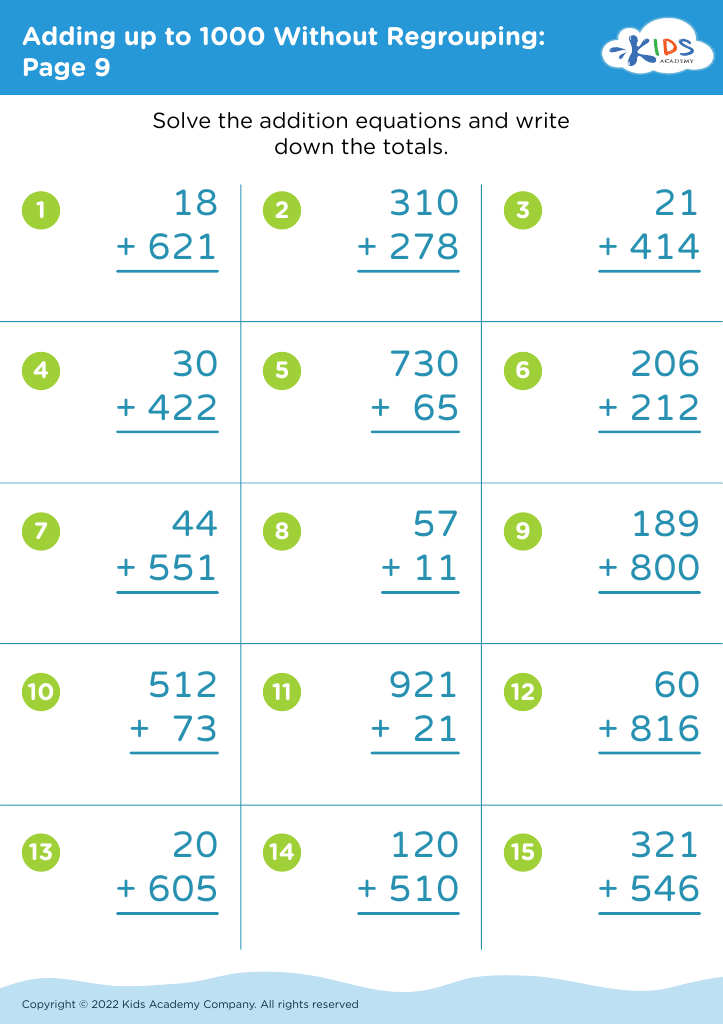



Parents and teachers play a crucial role in cultivating foundational skills in young children, and focusing on activities that integrate shape identification and basic arithmetic, like adding up to 1000, brings valuable benefits. First, understanding shapes helps children recognize patterns, a fundamental skill in both mathematics and the natural world. With shape identification, kids learn to observe details, classify objects, and organize their environment.
Similarly, introducing basic arithmetic like adding up to 1000 encourages problem-solving and mathematical thinking. These activities promote number sense, essential for more advanced math concepts encountered later in school. They also foster cognitive development and logical reasoning, crucial skills for everyday decision-making.
For ages 4-9, hands-on and visually engaging practices make learning enjoyable and effective, helping maintain children's natural curiosity and interest in learning. Furthermore, success in these early math skills builds confidence, setting a strong foundation for future academic endeavors.
Incorporating these activities in education ensures children's well-rounded development in critical thinking, spatial awareness, and numeracy, equipping them with skills necessary for various real-life applications. Ultimately, fostering these abilities in early childhood creates a lifelong positive attitude towards learning and problem-solving, benefiting them both academically and personally.








