Math problem-solving Adding up to 1000 Worksheets for Ages 4-9
4 filtered results
-
From - To
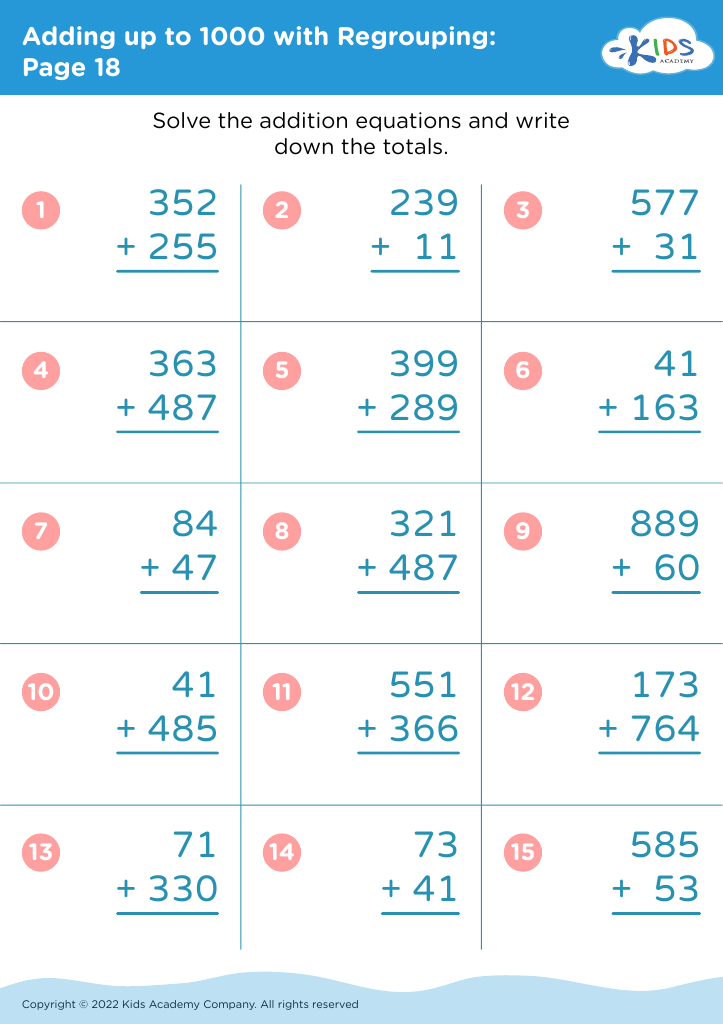
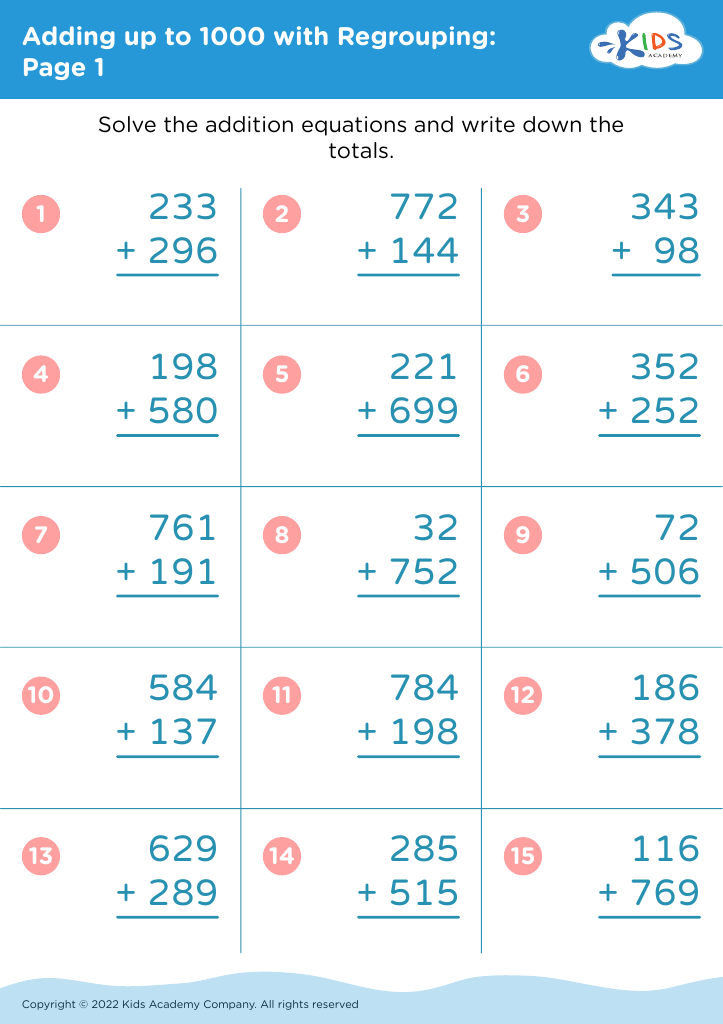
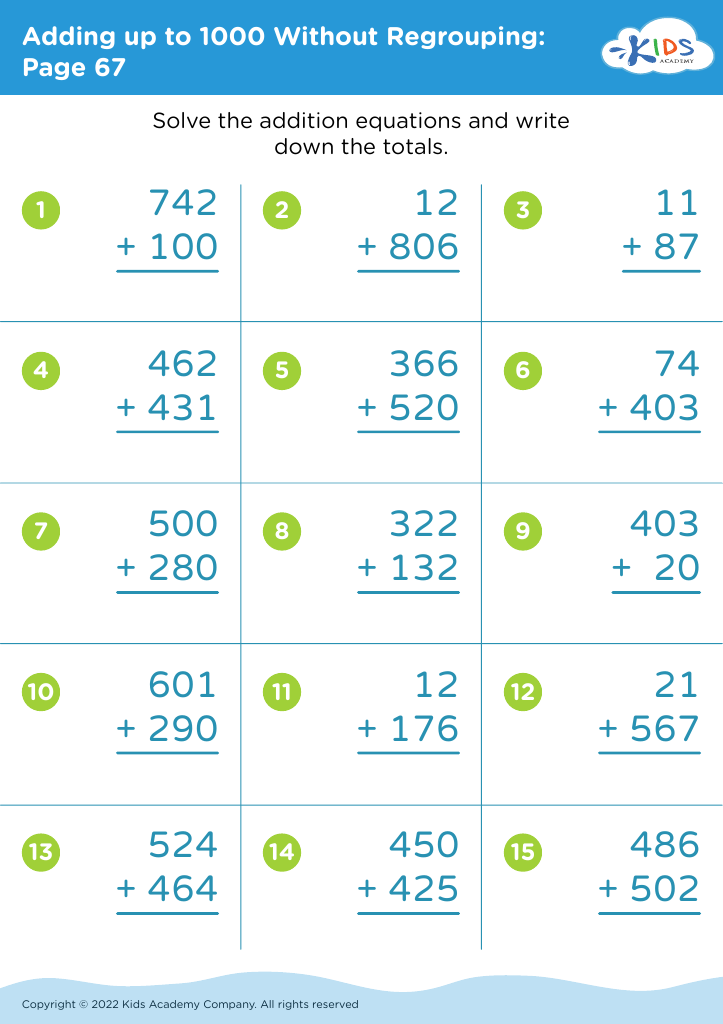
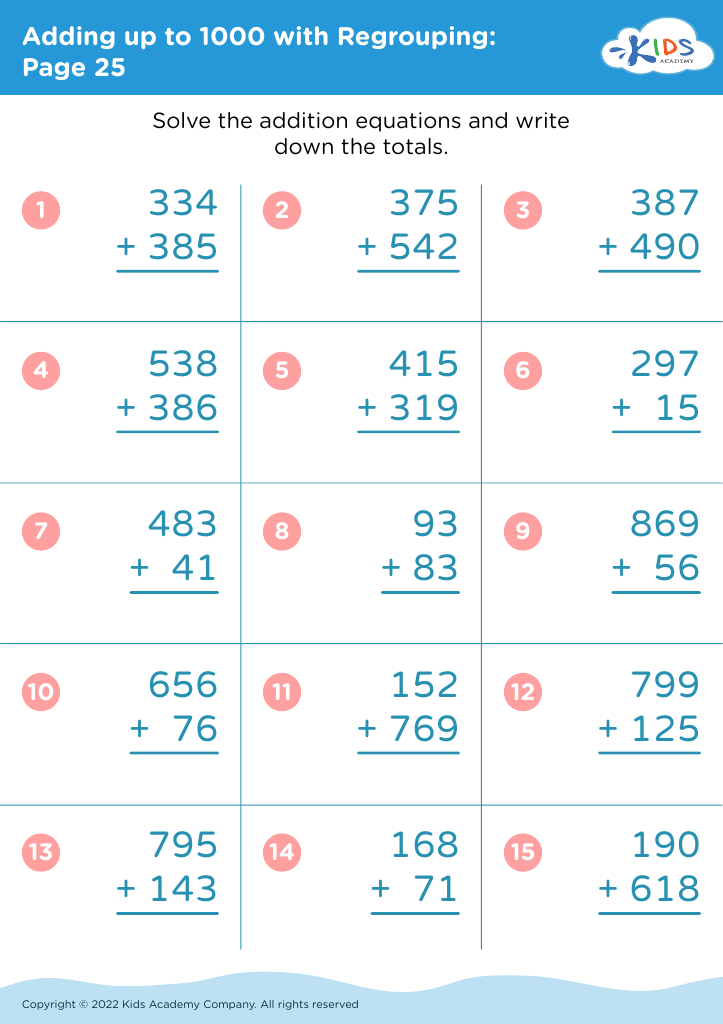
Enhance your child's math skills with our engaging "Adding up to 1000 Worksheets" tailored for ages 4-9. These worksheets offer a fun and interactive way to practice addition, promoting problem-solving abilities and improving numerical fluency. Perfect for young learners, each activity is designed to build confidence while developing a strong mathematical foundation. With colorful visuals and gradual difficulty progression, our resources are ideal for both classroom and home use. Download today from Kids Academy and watch your child's arithmetic skills blossom as they add their way up to 1000!



Introducing young children, ages 4-9, to math problem-solving, including adding up to 1000, is pivotal for several reasons. During these formative years, their brains are highly receptive to learning. Math practices enhance cognitive skills like logical reasoning, pattern recognition, and analytical thinking. By progressing to larger numbers, such as up to 1000, children develop a strong number sense, become comfortable with more extensive computations, and build confidence in their mathematical abilities.
Moreover, early exposure to math cultivates a positive attitude toward the subject, reducing the likelihood of math anxiety later in life. Confident problem-solvers can better tackle everyday tasks and academic challenges. This early competence in math also lays a foundation for advanced STEM (science, technology, engineering, and mathematics) education.
Parents and teachers play a critical role in nurturing these skills by providing an engaging and supportive learning environment. Utilizing playful and real-world math applications, children can appreciate the relevance and fun of mathematics. Encouraging curiosity and regular practice helps solidify these skills. Ultimately, embracing early math education empowers children to excel in their future academic and personal endeavors, making it an essential focus for educators and parents alike.








