Number Sequencing Adding up to 1000 Worksheets for Ages 4-9
5 filtered results
-
From - To
Dive into a world of numbers with our "Number Sequencing Adding up to 1000 Worksheets for Ages 4-9." These engaging activities are designed to enhance your child's math skills through fun and interactive exercises. Perfect for building a strong foundation in number sequencing, these worksheets help kids practice and master adding up to 1000. Tailored for children ages 4-9, each worksheet reinforces logical thinking, sequencing abilities, and numerical fluency. Ideal for both classroom and home learning, our expertly crafted worksheets make math both enjoyable and educational. Start your child's journey to math proficiency today with Kids Academy's top-quality resources!
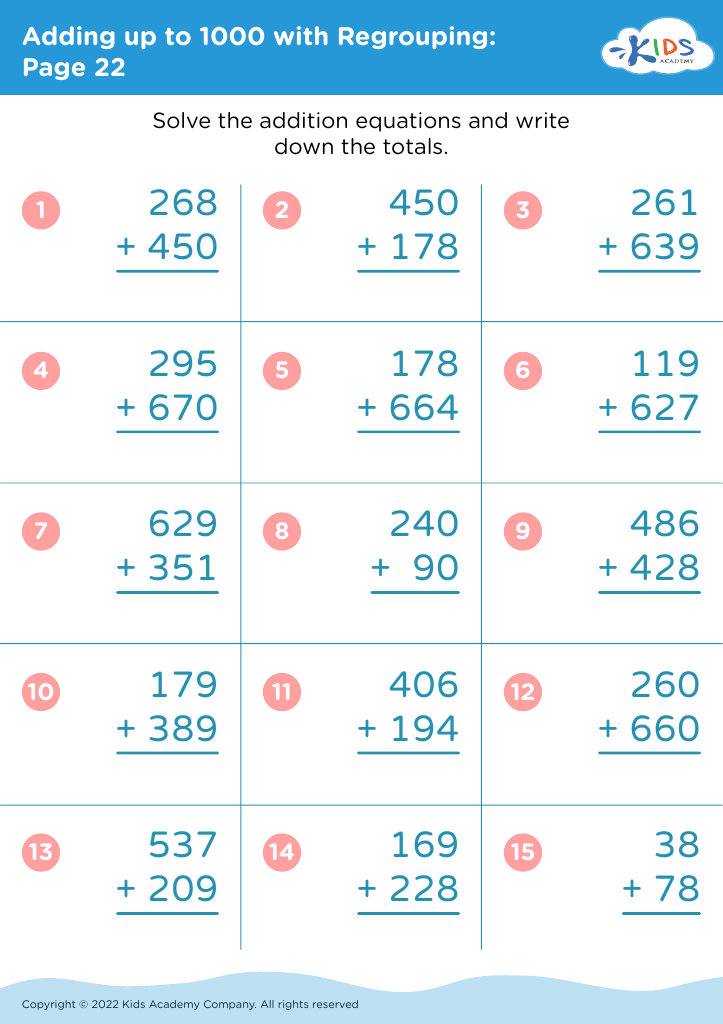
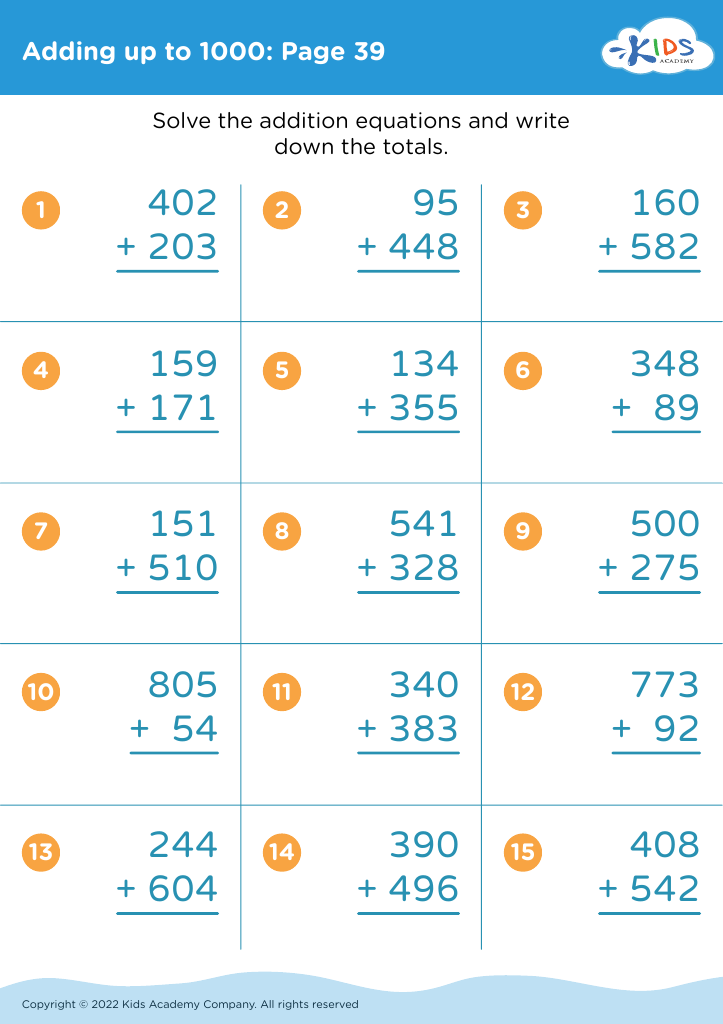
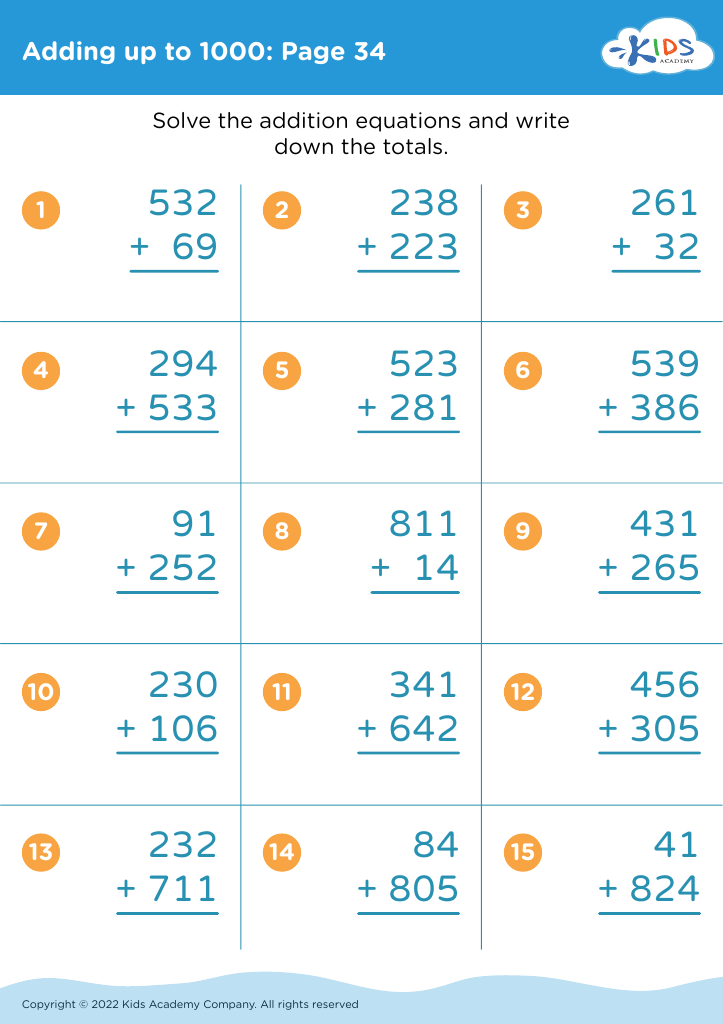
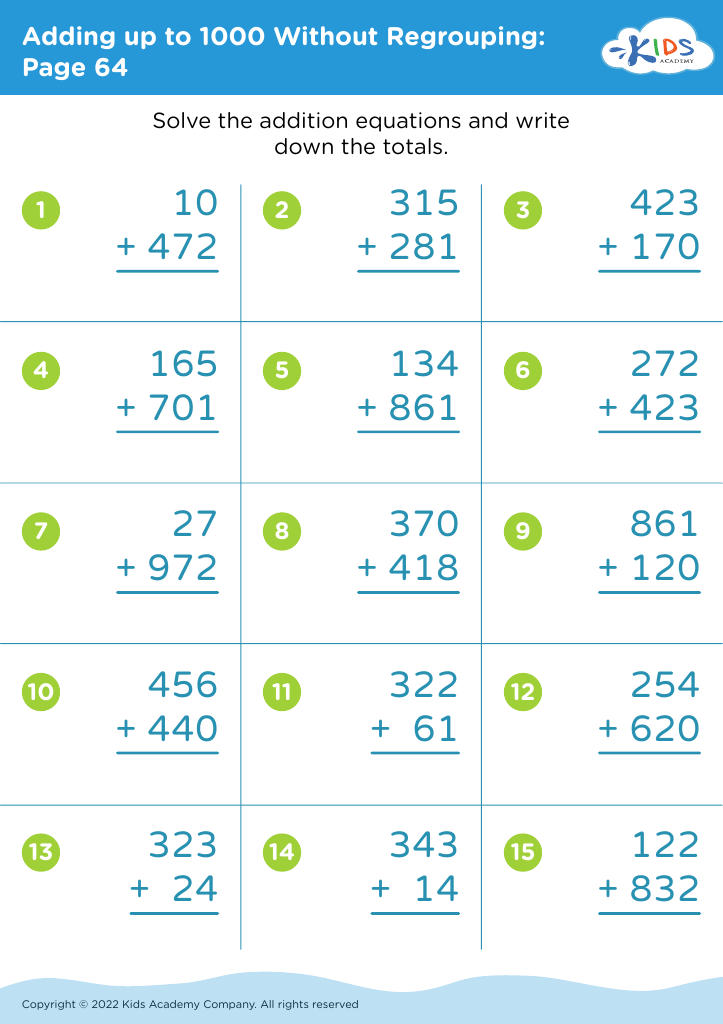
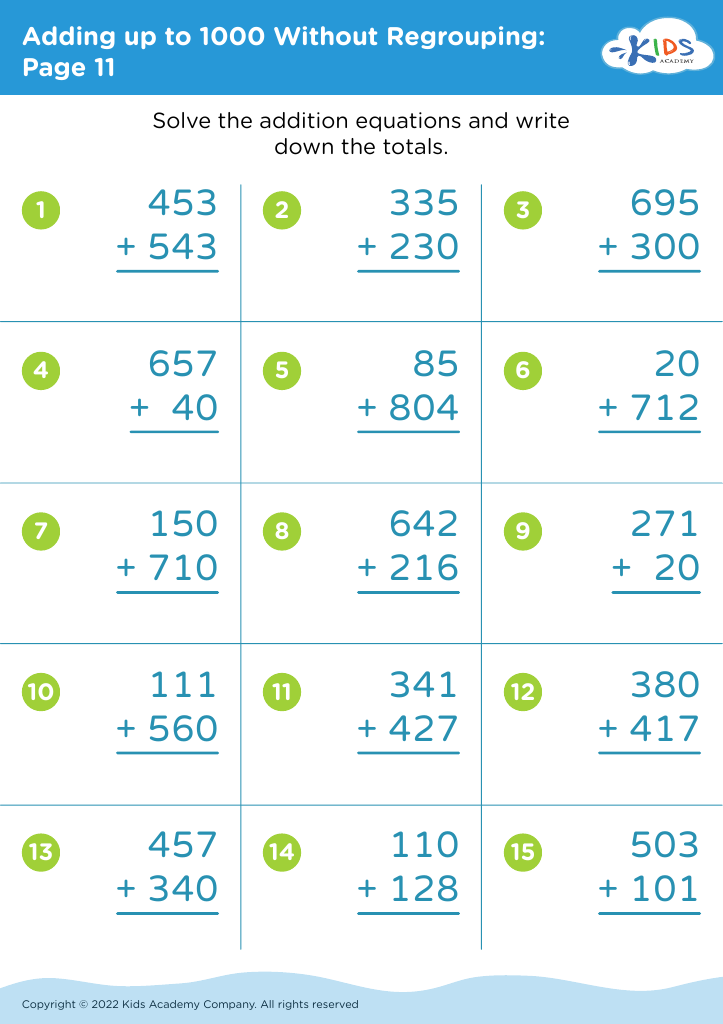



Parents and teachers should prioritize number sequencing and the concept of adding up to 1000 for children aged 4-9 as it lays a crucial foundation for their mathematical development. At this age, children are in a key developmental phase where they grasp basic numerical concepts and learn to recognize patterns, enhancing their cognitive abilities in other areas such as problem-solving and logical thinking.
Learning number sequencing helps children understand the order and relationship between numbers, which is essential for mastering more complex mathematical operations later on, like addition, subtraction, multiplication, and division. For example, recognizing that 56 comes before 57 and after 55 is fundamental when adding or subtracting numbers in sequences. By practicing addition up to 1000, children get comfortable with larger numbers, building their confidence and proficiency, which is crucial as they encounter more challenging mathematical tasks.
Furthermore, these early mathematical skills are linked to higher academic achievement, demonstrating the importance of early intervention for long-term success. Activities involving sequencing and adding numbers are also intrinsically engaging for young children, making learning enjoyable while developing their concentration, memory, and persistence. In summary, fostering these skills sets the stage for a positive, successful relationship with math throughout their education and beyond.








