Practice subtraction Adding up to 1000 Worksheets for Ages 4-9
3 filtered results
-
From - To
Discover engaging subtraction worksheets designed specifically for young learners aged 4-9. Our "Practice Subtraction Adding up to 1000" resources help children master essential subtraction skills through fun and interactive exercises. With colorful illustrations and graded difficulty, these worksheets promote confident problem-solving while aligning with educational standards. Whether used in the classroom or at home, our worksheets offer an effective way to reinforce subtraction concepts, enhancing math fluency. Encourage your child's learning journey with these specially crafted activities that make math enjoyable and approachable. Perfect for beginners and those looking to strengthen their math foundations, these worksheets are a must-have educational tool!
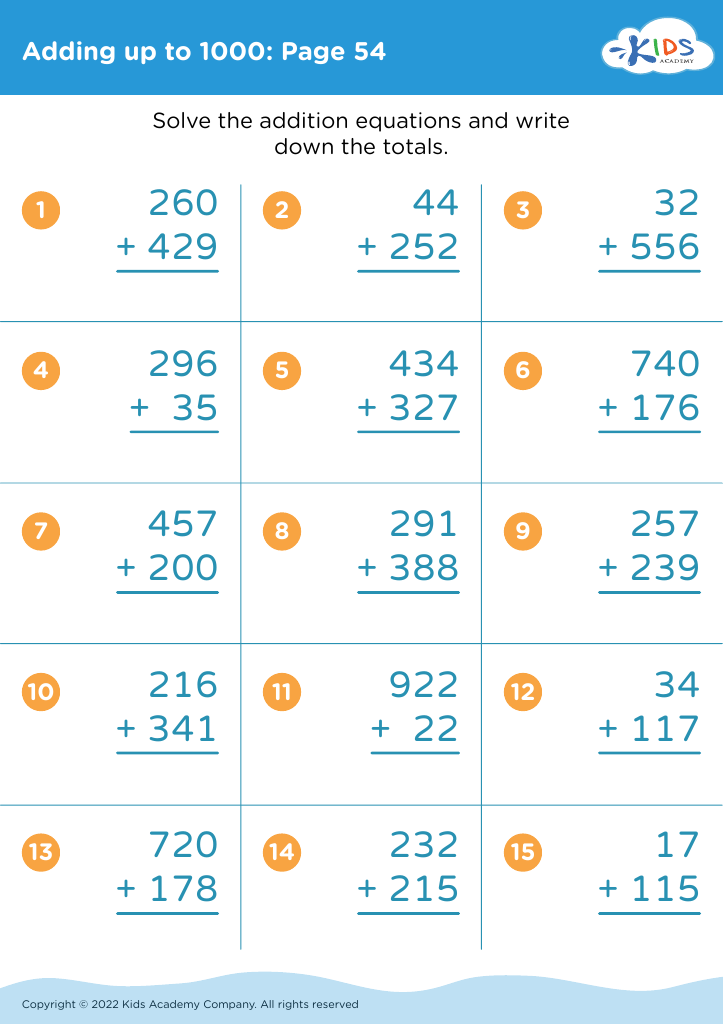
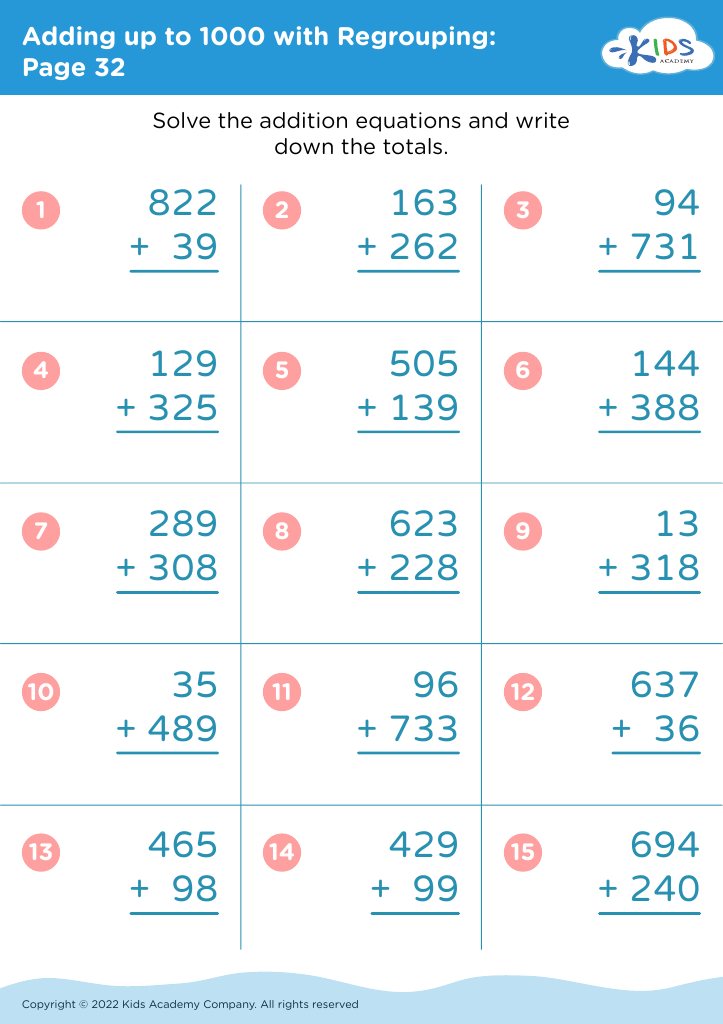
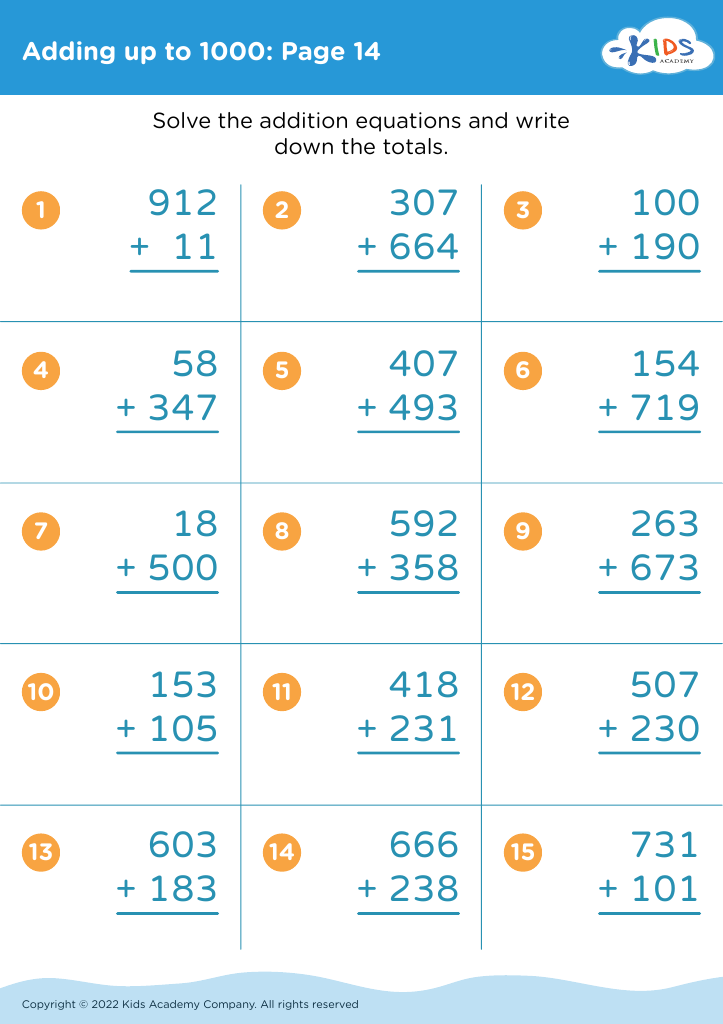



Practice subtraction, especially for numbers adding up to 1000, is crucial for children aged 4-9 for several reasons. First, mastering subtraction is foundational to overall mathematical understanding. This age group is at a pivotal stage in cognitive development where they are learning to understand numbers, what they represent, and how they connect with each other.
By engaging in subtraction exercises, children enhance their problem-solving skills and critical thinking abilities. This practice not only builds their confidence in handling numbers but also prepares them for more advanced mathematical concepts in later grades. Understanding subtraction helps students develop a deeper comprehension of addition, as these operations are interconnected.
Furthermore, learning to subtract effectively allows children to handle real-world situations, such as budgeting their pocket money or sharing resources equitably. Parents and teachers can support this learning by incorporating fun activities, games, and practical exercises that make subtraction relatable and enjoyable.
Encouraging such practice fosters a positive attitude towards math, helping to reduce anxiety associated with the subject. Ultimately, a strong foundation in subtraction equips children with essential life skills, ensuring they thrive both academically and personally as they progress through their education.








