Understanding Sequences Adding up to 1000 Worksheets for Ages 4-9
6 filtered results
-
From - To
Welcome to our "Understanding Sequences Adding Up to 1000" worksheets page, designed for children aged 4-9. These engaging, interactive worksheets help young learners grasp the fundamental concepts of sequences while harnessing their addition skills. With a focus on building confidence through practice, our resources are tailored to cater to varied learning styles, ensuring every child can thrive. Each worksheet features fun exercises that promote critical thinking, enabling kids to recognize patterns and enhance their comprehension of numbers up to 1000. Perfect for classroom or home use, our worksheets provide a solid foundation for mathematical understanding while making learning enjoyable!
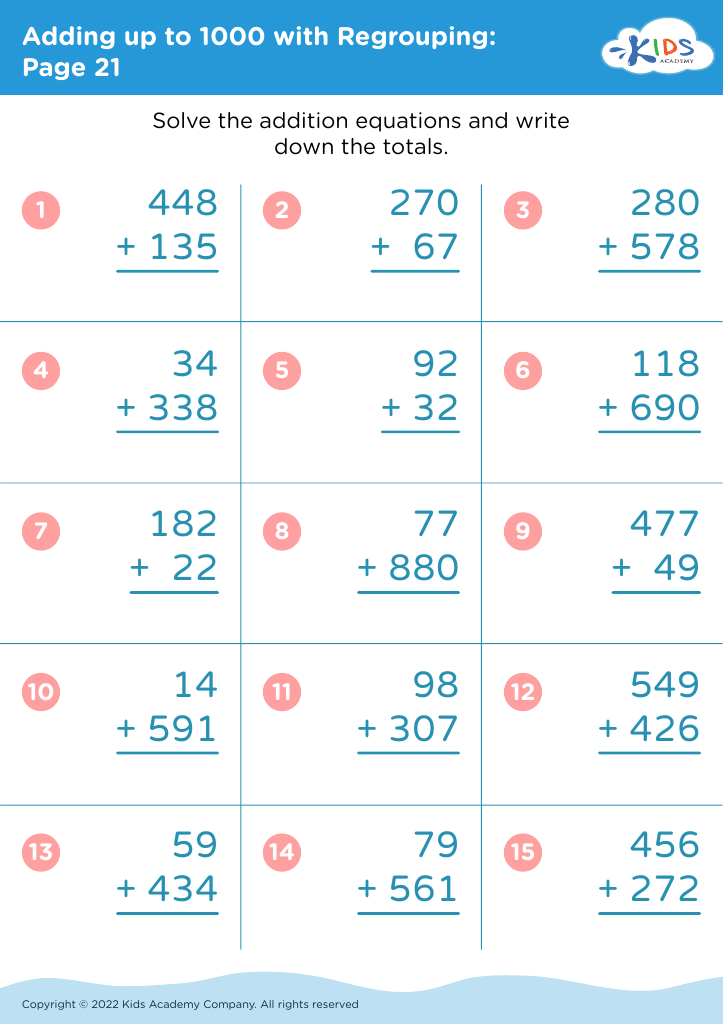
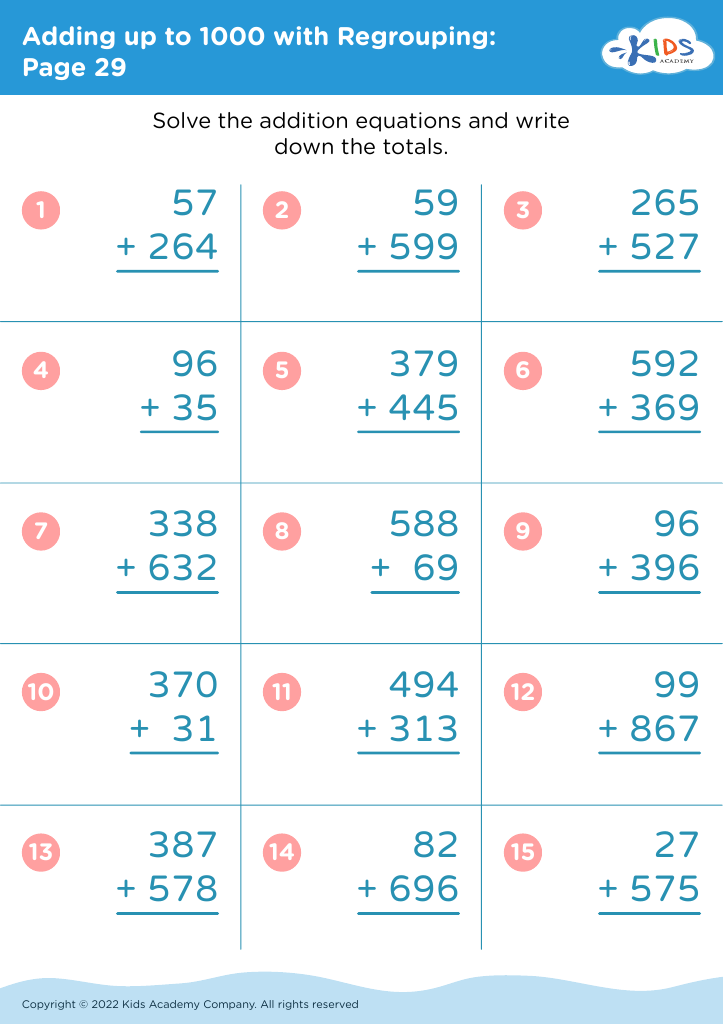
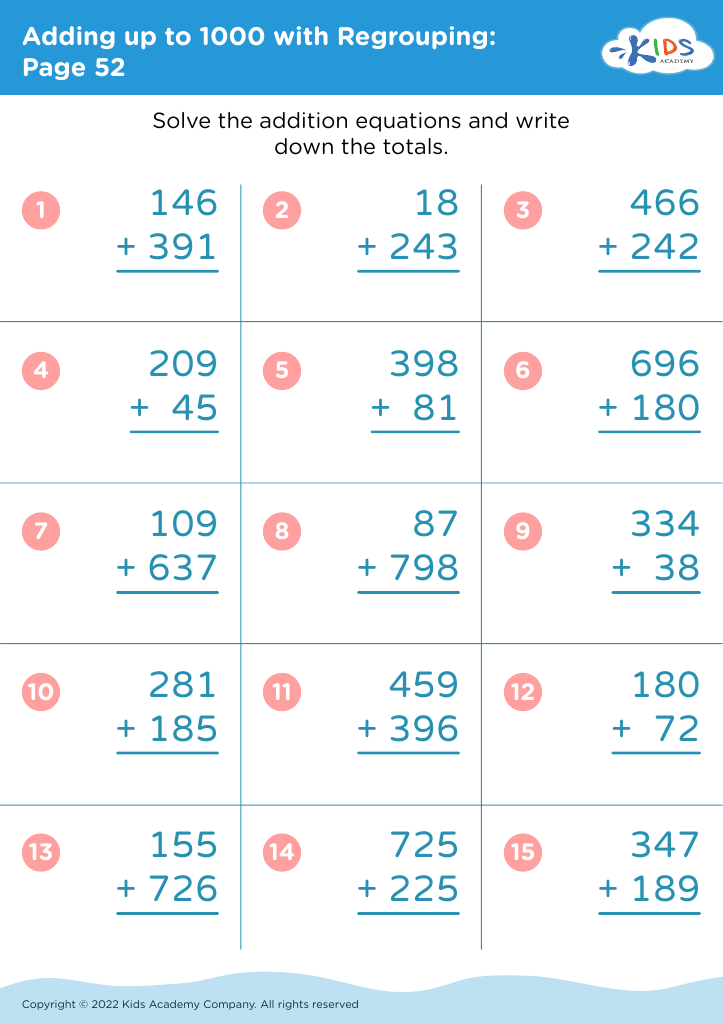
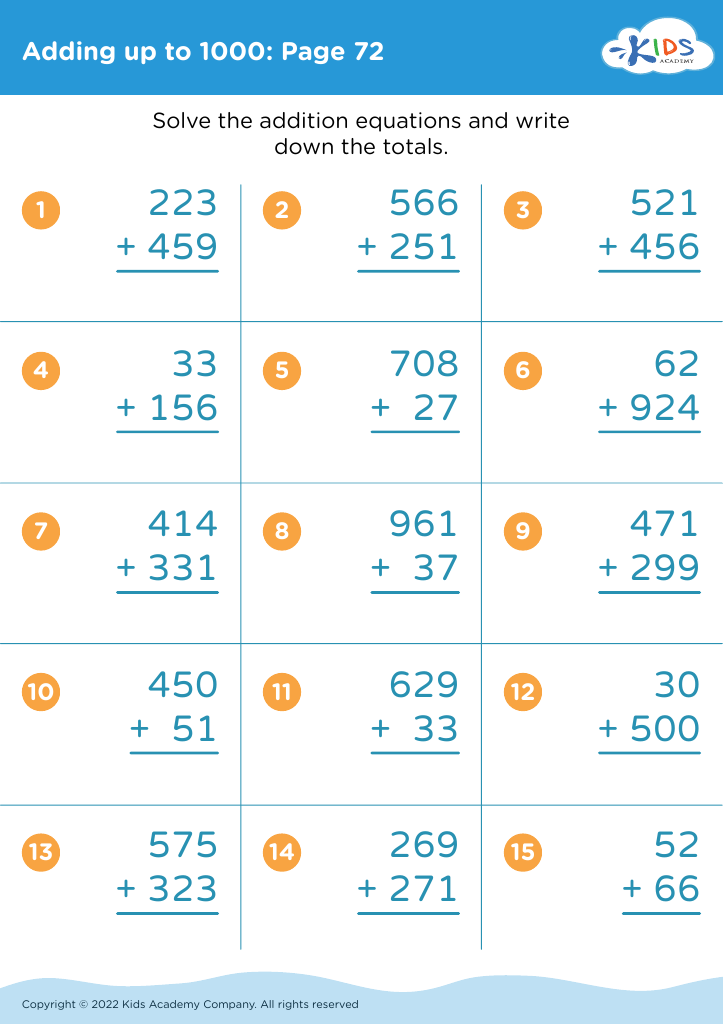
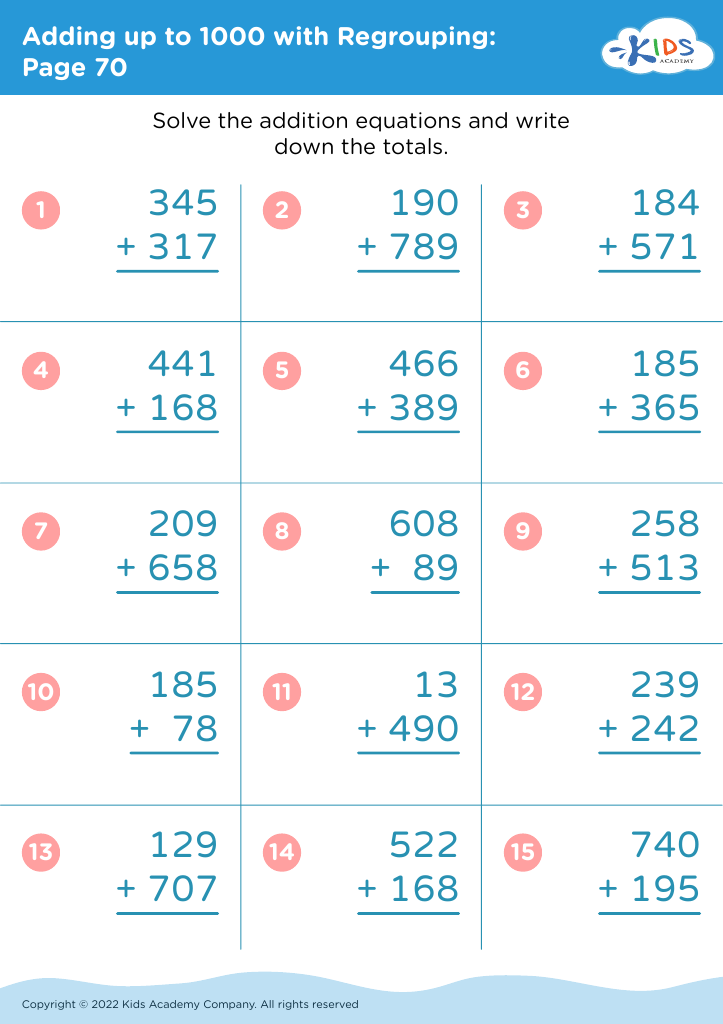
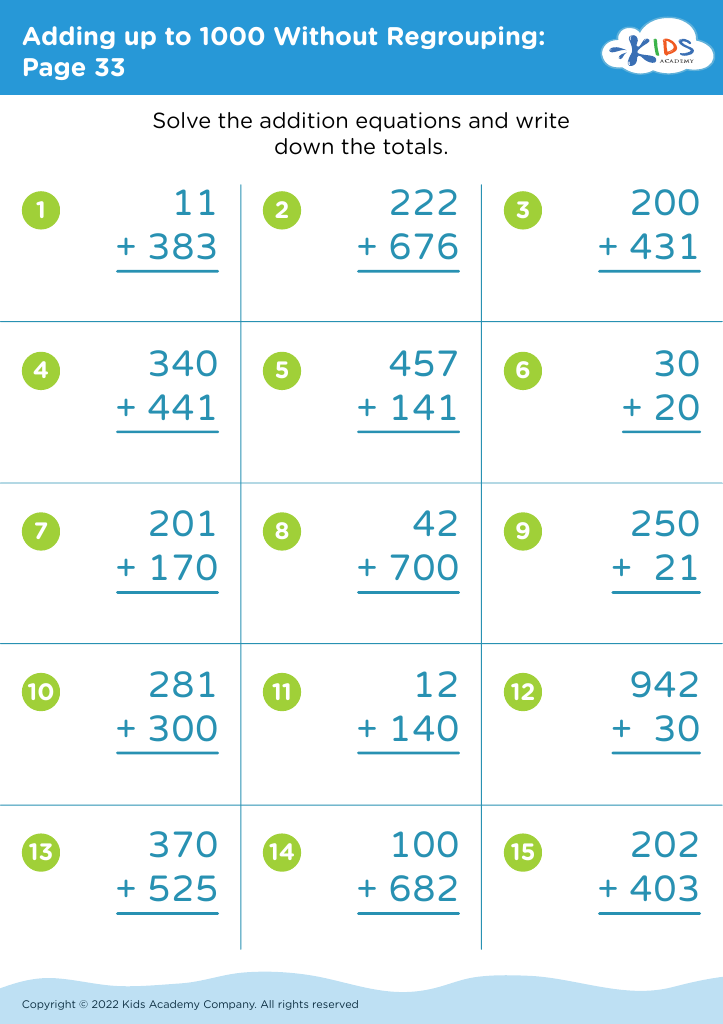



Understanding sequences that add up to 1000 is crucial for children ages 4-9 as they build a strong mathematical foundation essential for future learning. This educational concept enhances their number sense and introduces them to the world of addition, subtraction, and pattern recognition, which are vital skills in everyday life.
For parents and teachers, fostering this understanding promotes critical thinking and problem-solving abilities in young learners. As children engage with sequences and addition activities, they learn to recognize patterns and relationships between numbers, paving the way for more complex mathematical concepts in later grades.
Additionally, grasping how numbers can be combined in sequences to reach a sum encourages mental flexibility and enhances cognitive development. By mastering this skill early on, children are better prepared for tasks involving calculations, especially as they progress to more advanced topics like multiplication, division, and algebra.
Furthermore, engaging with numbers through fun activities can make learning enjoyable, sparking a lifelong interest in math. Ultimately, by nurturing these early skills, parents and teachers play a critical role in equipping children for future academic success, ensuring they are confident and capable learners as they advance in their education.








