Understanding sequencing Adding up to 1000 Worksheets for Ages 4-9
3 filtered results
-
From - To
Discover our "Understanding Sequencing Adding up to 1000 Worksheets," designed specifically for children aged 4-9! These engaging worksheets help young learners grasp the concept of sequencing through practical exercises that advance their mathematical skills. By focusing on sequences in numbers, students enhance their ability to add and manipulate values leading up to 1000. Our colorful, easy-to-follow activities ensure that kids stay motivated while developing critical thinking and problem-solving abilities. Perfect for homework or classroom use, these resources provide the foundation needed for more complex mathematical concepts. Ignite your child's love for math and enhance their learning experience today!
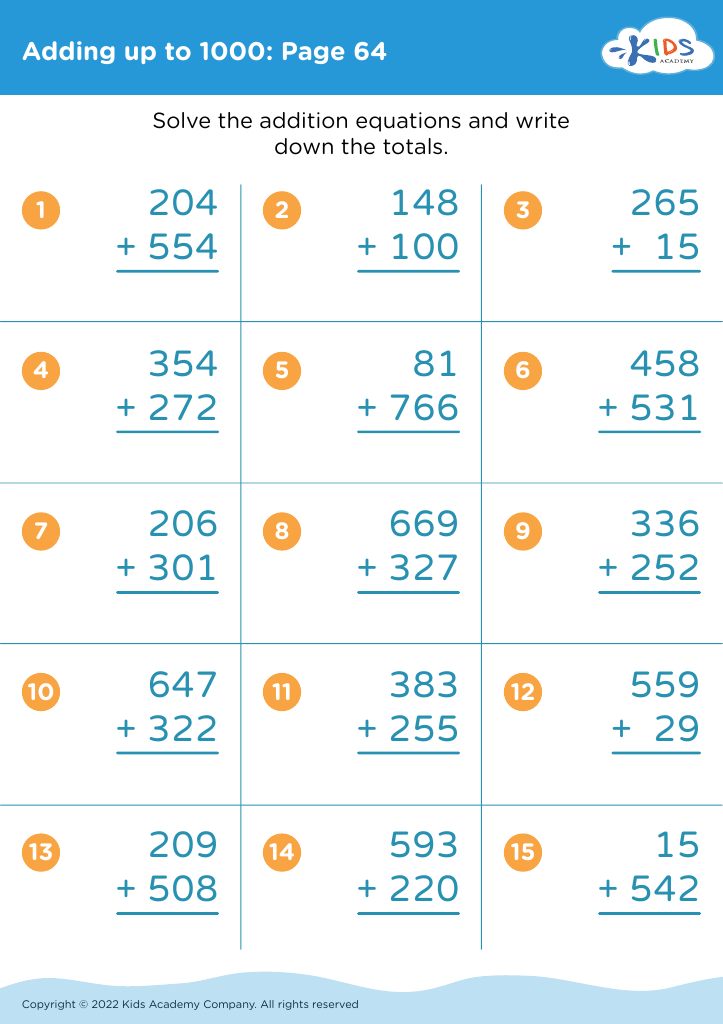
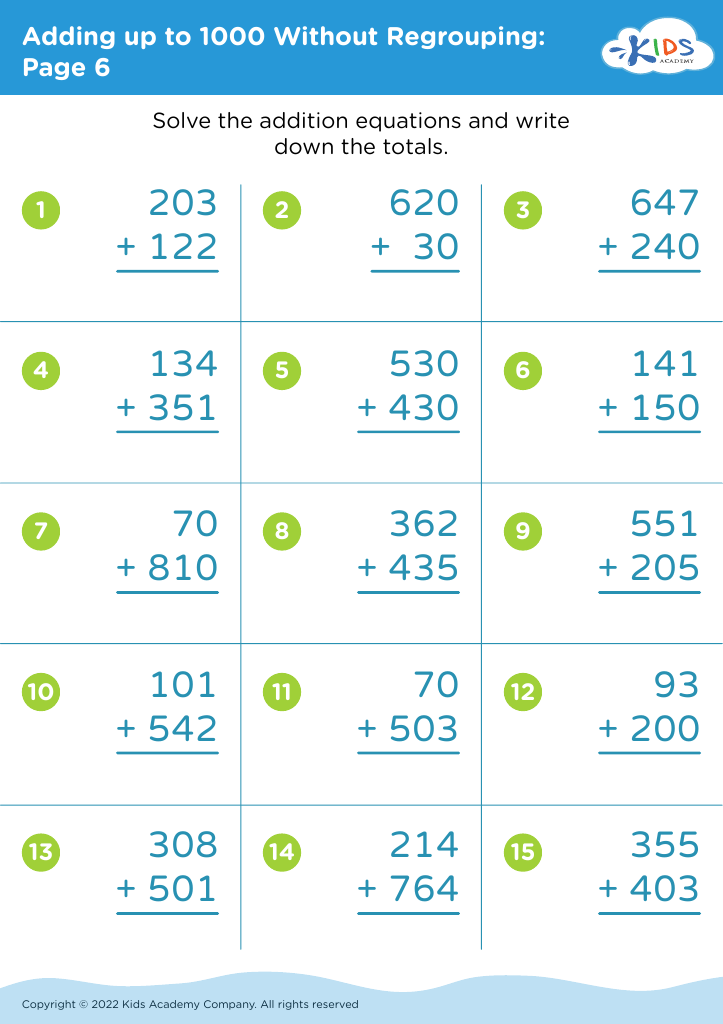
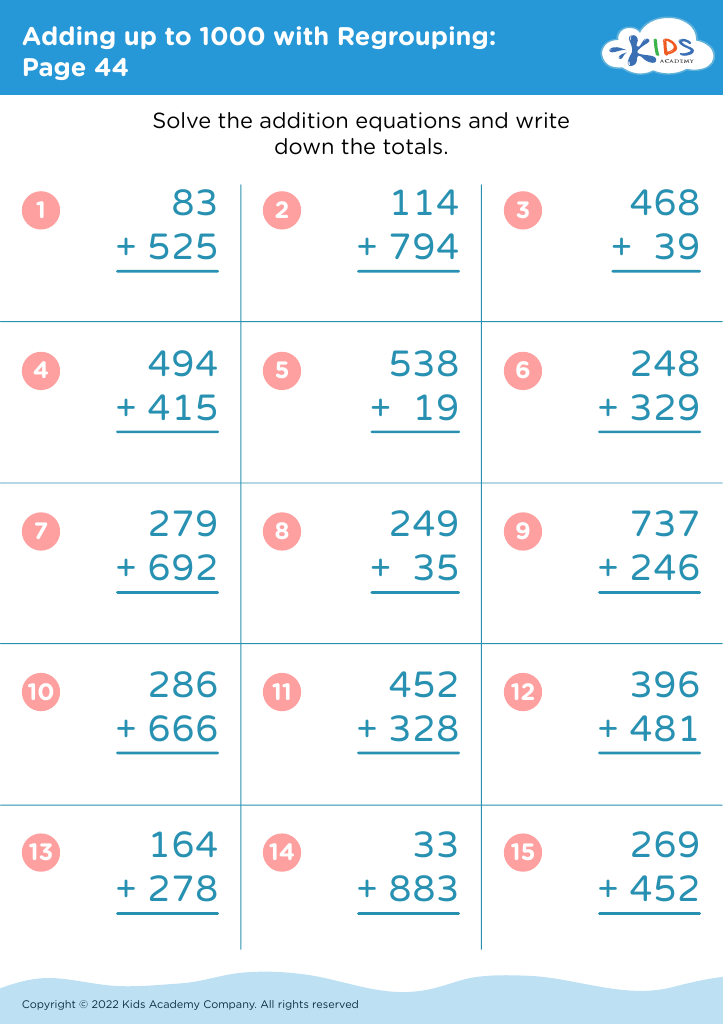



Understanding sequencing and the concept of adding up to 1000 are foundational skills for children aged 4-9, and it's crucial for parents and teachers to care about these concepts for several reasons.
First, sequencing helps children develop critical thinking and organizational skills. It allows them to understand the order in which tasks should be completed, which is pivotal in both daily activities and more complex problem-solving situations. For example, a child who understands sequencing can effectively follow a recipe, complete a story, or analyze cause and effect.
Second, adding up to 1000 strengthens their numerical fluency. At ages 4-9, students are building their foundational math skills, and mastering addition up to 1000 helps them grasp larger concepts in arithmetic and prepares them for future math challenges. These skills foster confidence and reduce math anxiety.
Moreover, a strong grasp of these concepts enhances logical reasoning, improves academic performance, and lays the groundwork for more advanced math topics in higher grades. Additionally, parents and teachers can use this knowledge to create engaging activities, making learning fun and interactive. By prioritizing these skills, adults can facilitate a child's overall cognitive development and pave the way for lifelong learning positive experiences.








