Word Recognition Adding up to 1000 Worksheets for Ages 4-9
3 filtered results
-
From - To
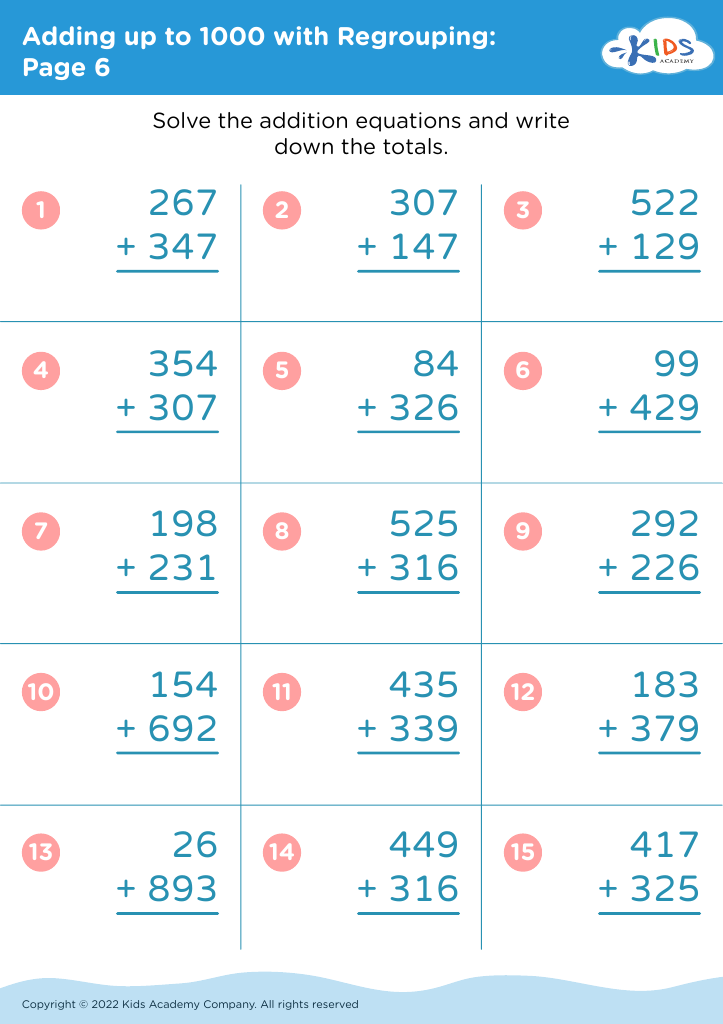
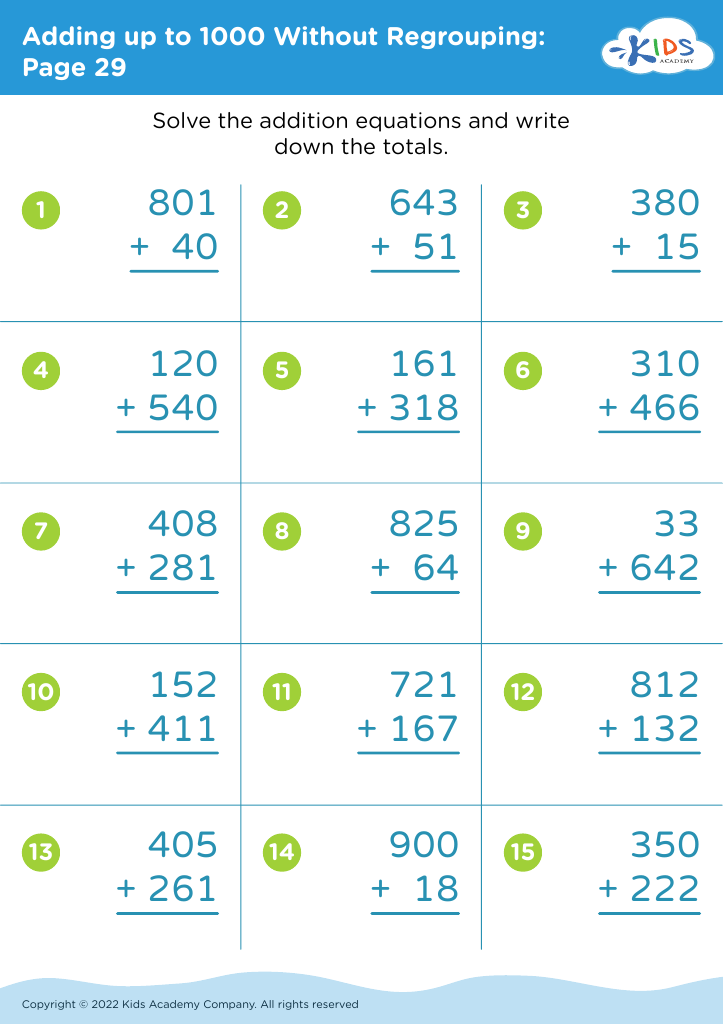
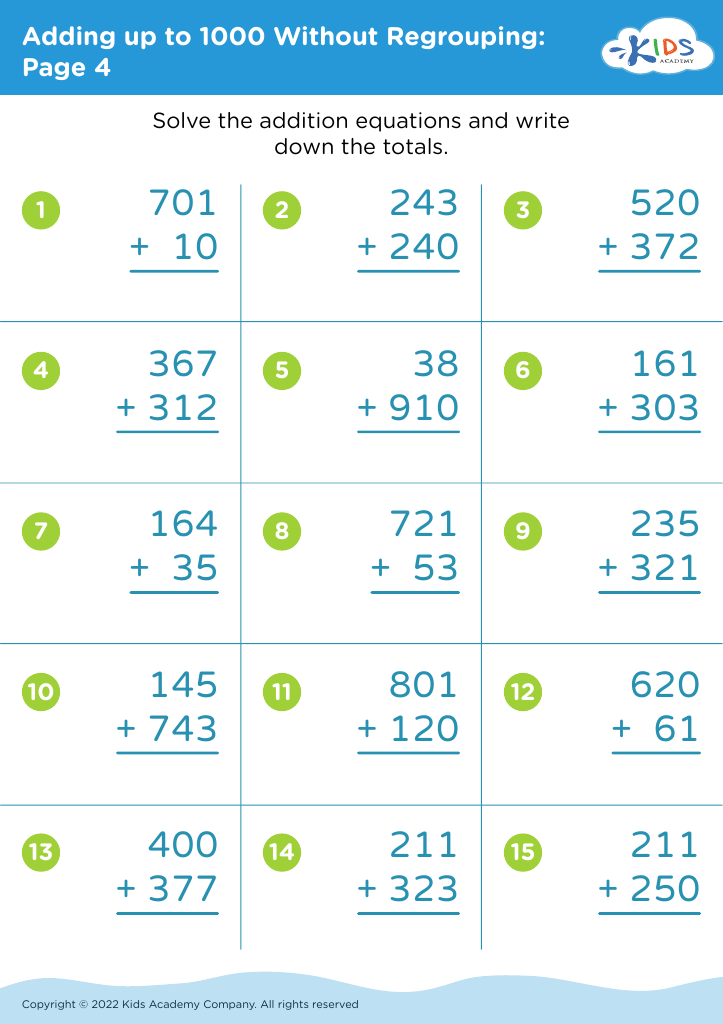
Discover dynamic "Word Recognition Adding up to 1000 Worksheets" perfect for kids aged 4-9 at Kids Academy! These engaging printable worksheets harmonize early math skills with word recognition practice, nurturing your child’s ability to add numbers up to 1000 while simultaneously boosting their literacy. Carefully designed for young learners, each worksheet promotes understanding through fun, interactive activities, transforming learning into an enjoyable adventure. Tailored to spark curiosity and confidence in both reading and math, our resources offer an excellent foundation for your child’s educational journey. Visit Kids Academy and support your child's growth today!



Word recognition, especially in the context of numerals, is a critical foundational skill for young children, ages 4-9. Learning to recognize, read, and work with numbers up to 1000 establishes a solid base for future mathematical understanding and competence. This age range is a vital period for cognitive development, and children are rapidly building the neural pathways necessary for mathematical reasoning and problem-solving.
First, mastering word recognition of numbers up to 1000 enhances numerical literacy. It allows children to navigate everyday tasks such as reading schedules, understanding prices, and measuring quantities, fostering independence and practical life skills.
Second, this skill supports academic readiness and success. As children progress through their education, they will encounter increasingly complex mathematical concepts that build on the understanding of numbers up to 1000. This competency also aids in grasping place value, a crucial aspect of mathematics that underpins all computational skills including addition, subtraction, multiplication, and division.
Furthermore, engaging with numbers from a young age promotes a positive attitude towards math, a subject that many students can find challenging later on. Early exposure to numerical concepts builds confidence and reduces math-related anxiety.
Parents and teachers can utilize games, interactive activities, and real-life examples to make learning about numbers engaging, ensuring children develop these essential skills in a fun and supportive environment.








