Basic arithmetic practice Adding Up to 5 Worksheets for Ages 4-9
8 filtered results
-
From - To
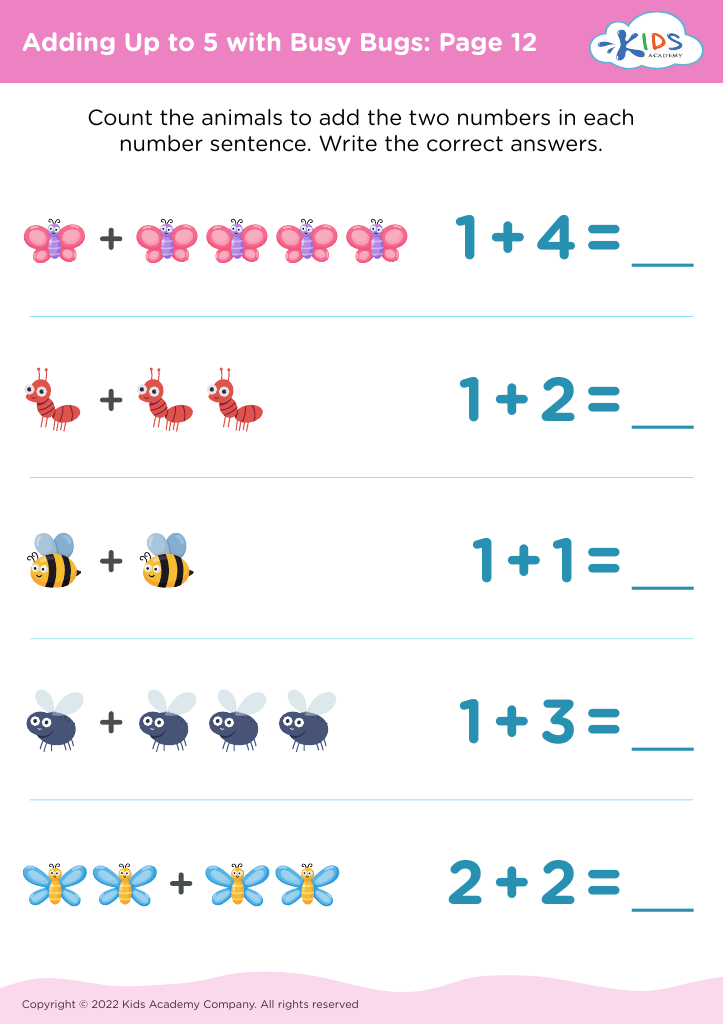
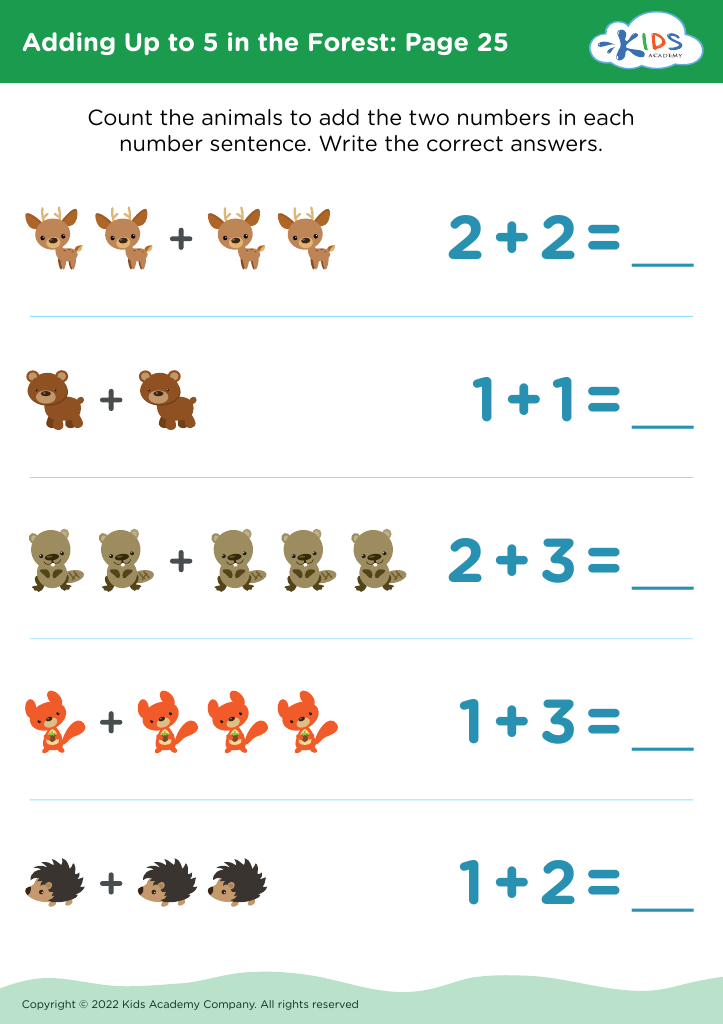
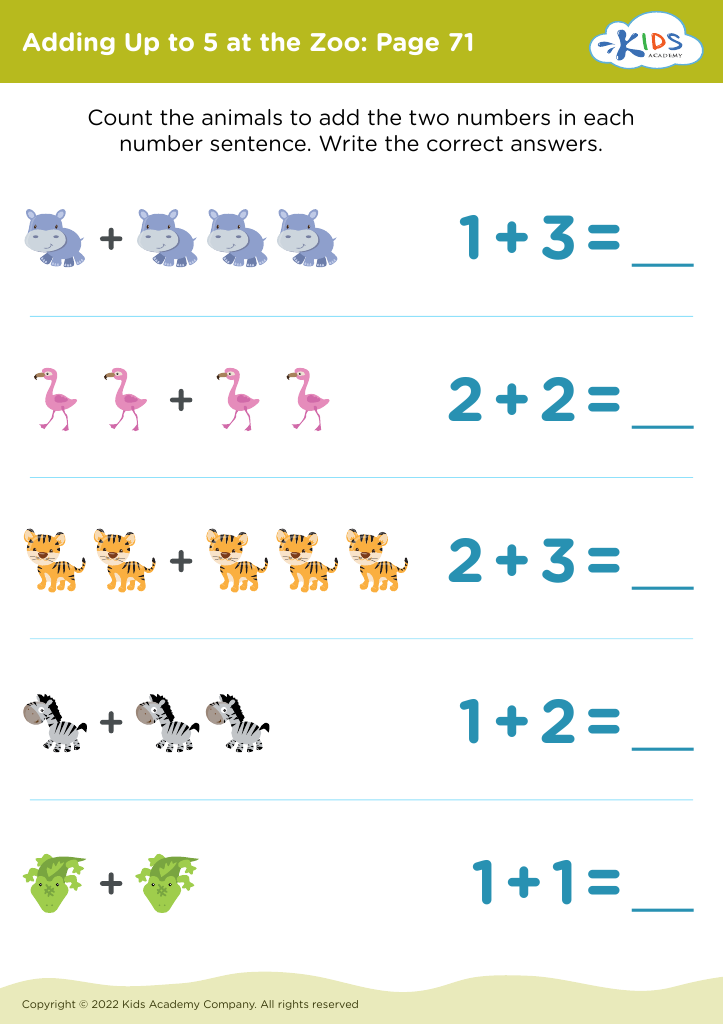
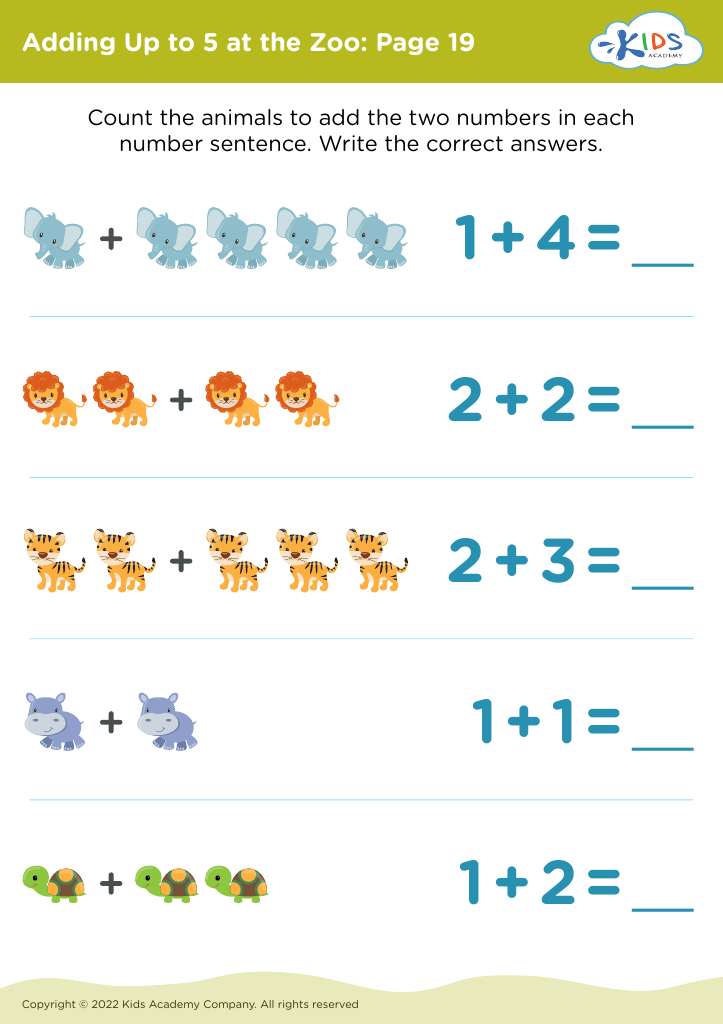
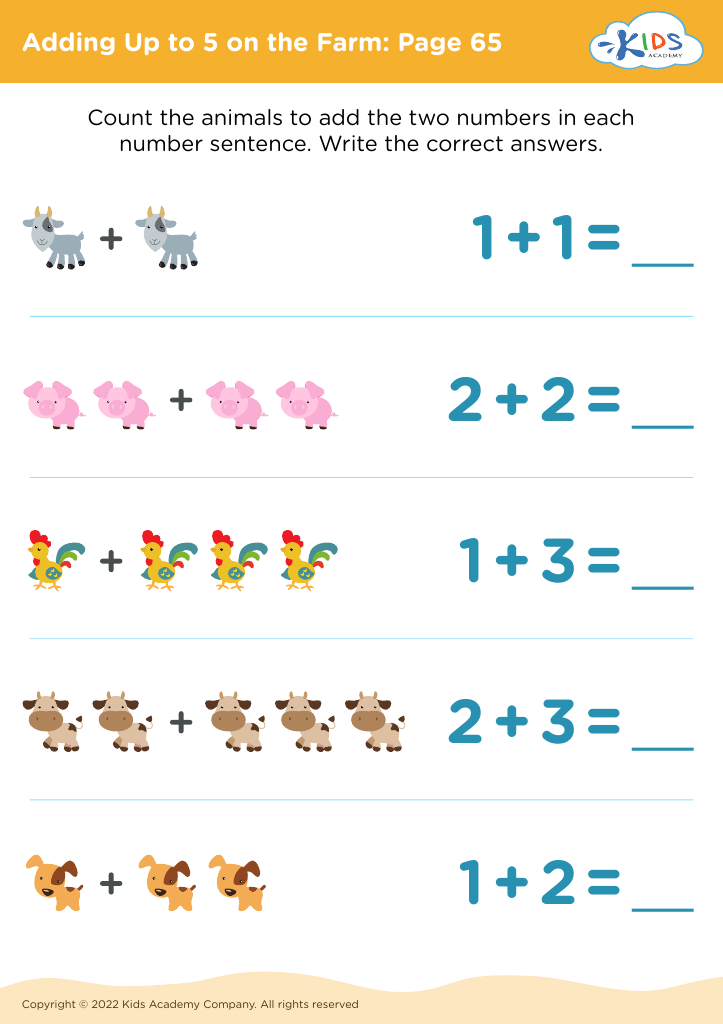
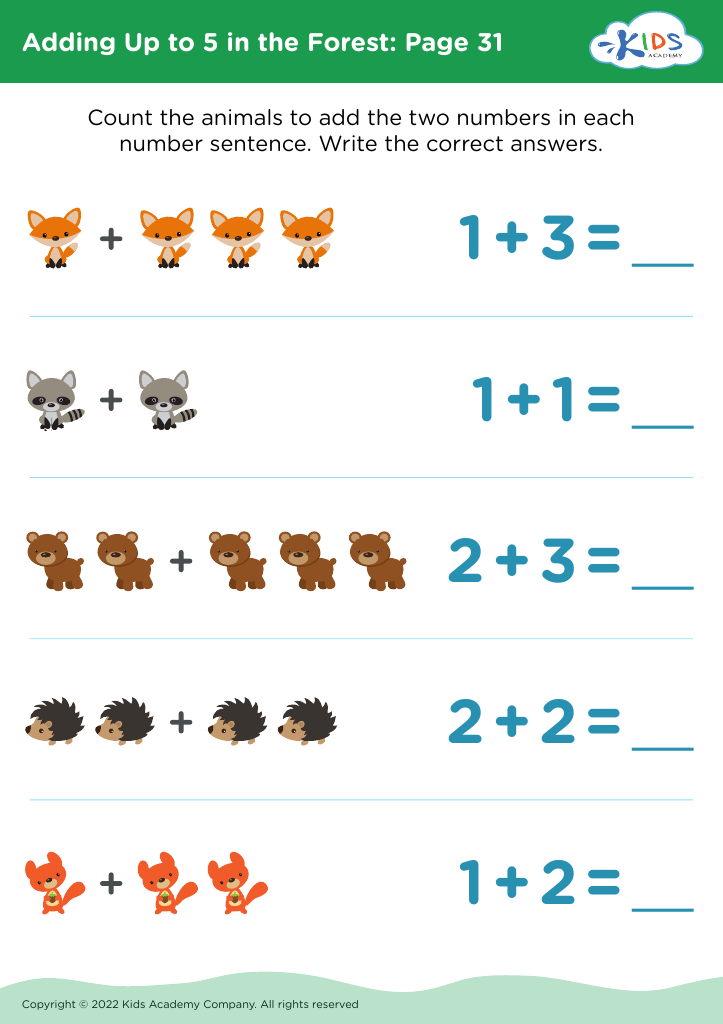
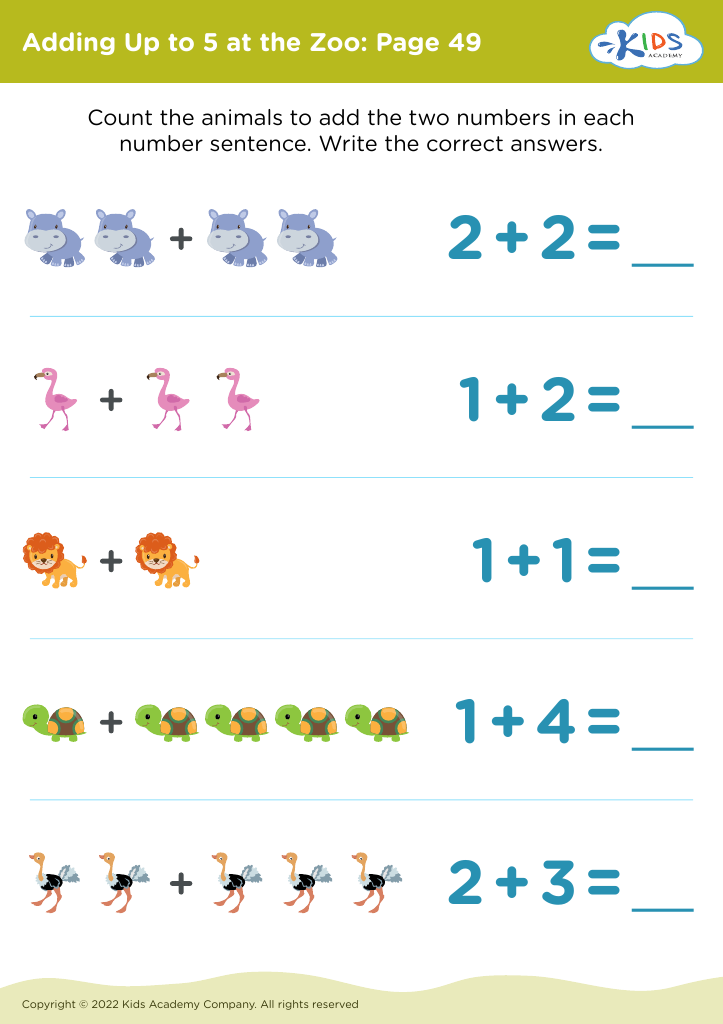
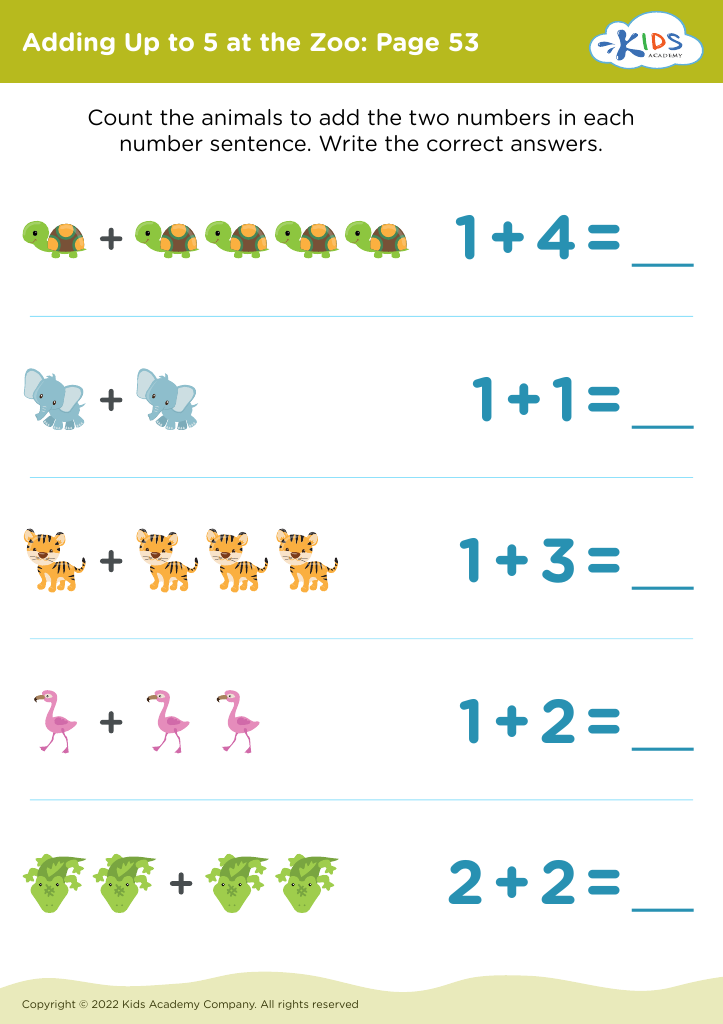
Introduce young learners to the fun world of math with our "Basic Arithmetic Practice: Adding Up to 5 Worksheets for Ages 4-9". Specially designed for kids, these engaging worksheets help children master addition within 5, enhancing their early math skills. Each worksheet features colorful illustrations and simple problems to solve, ensuring that learning remains joyful and effective. Perfect for both classroom settings and home practice, our resources support foundational arithmetic comprehension, encouraging confidence and precision. Foster a love for numbers and develop critical thinking skills today with our expertly crafted math worksheets. Ideal for students aged 4 to 9.






%20(1).jpg)

Learning basic arithmetic, particularly adding up to 5, is foundational for early childhood development and successes in mathematics for ages 4-9. This elementary concept lays the groundwork for more advanced mathematical skills, critical thinking, and problem-solving abilities. Firstly, mastering simple addition aids in developing number sense, which includes the understanding and relationship of numbers. Number sense is crucial as it impacts the ability to manipulate numbers and understand their value and relationships, fostering flexibility in learning more complicated mathematical concepts later on.
For young children, these early experiences with addition are often their first exposure to mathematical operations, helping them become comfortable and confident with numbers. Such confidence is crucial for reducing math anxiety and increasing a positive attitude towards learning mathematics.
Furthermore, early arithmetic skills are linked to higher performance in math and other academic areas. Children who grasp basic addition can transition more readily to complex concepts, such as subtraction, multiplication, and division. This foundation also supports cognitive development, reinforcing skills such as memory, logical reasoning, and pattern recognition.
Parents and teachers play a critical role in nurturing these skills by providing engaging, age-appropriate learning experiences. This support can include playful activities like counting games, educational toys, and interactive digital apps tailored to making learning enjoyable. Ensuring automaticity in basic arithmetic paves the way for lifelong mathematical proficiency.








