Counting skills Adding Up to 5 Worksheets for Ages 4-9 - Page 5
102 filtered results
-
From - To


%20(1).jpg)




.jpg)
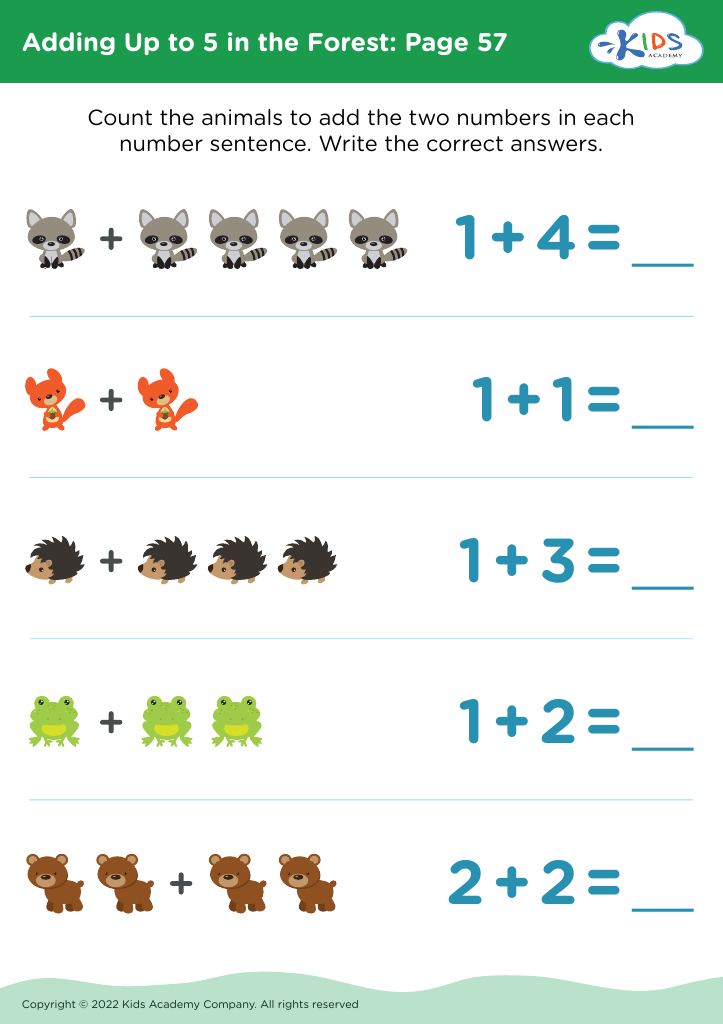
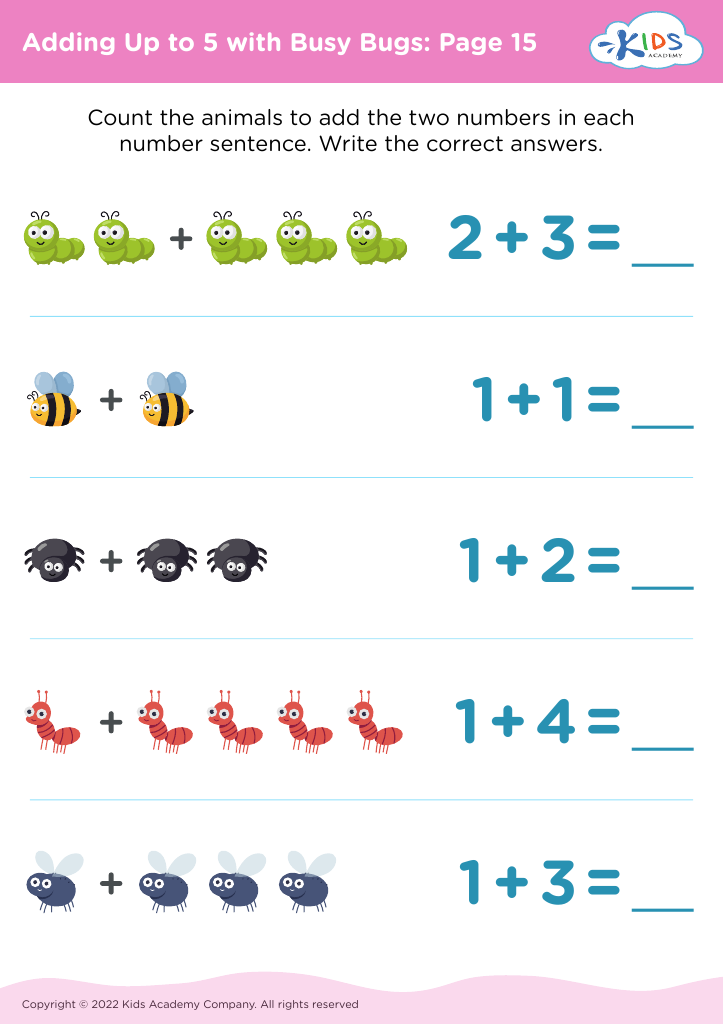
Counting skills, particularly the ability to add up to 5, are foundational for children ages 4-9. Parents and teachers should care about developing these skills because they serve as the building blocks for more complex mathematical concepts. Mastering simple addition fosters confidence and encourages a positive attitude toward math, which can influence a child's academic journey.
These skills also facilitate cognitive development. Engaging in counting activities enhances children's problem-solving abilities, logical thinking, and reasoning skills. Furthermore, adding up to 5 employs hands-on learning through manipulatives like blocks or fingers, thus making abstract concepts tangible and relatable.
Socially and emotionally, early competence in counting can empower children, as they realize their ability to engage in games and activities involving numbers. This sense of achievement can boost self-esteem and encourage collaboration, crucial interpersonal skills.
In sum, counting skills create a strong math foundation essential for lifelong learning. They prepare children for future educational endeavors and provide essential life skills. Both parents and teachers play a critical role in nurturing this foundation, ensuring that children not only grasp the concept but also find joy in learning mathematics.








