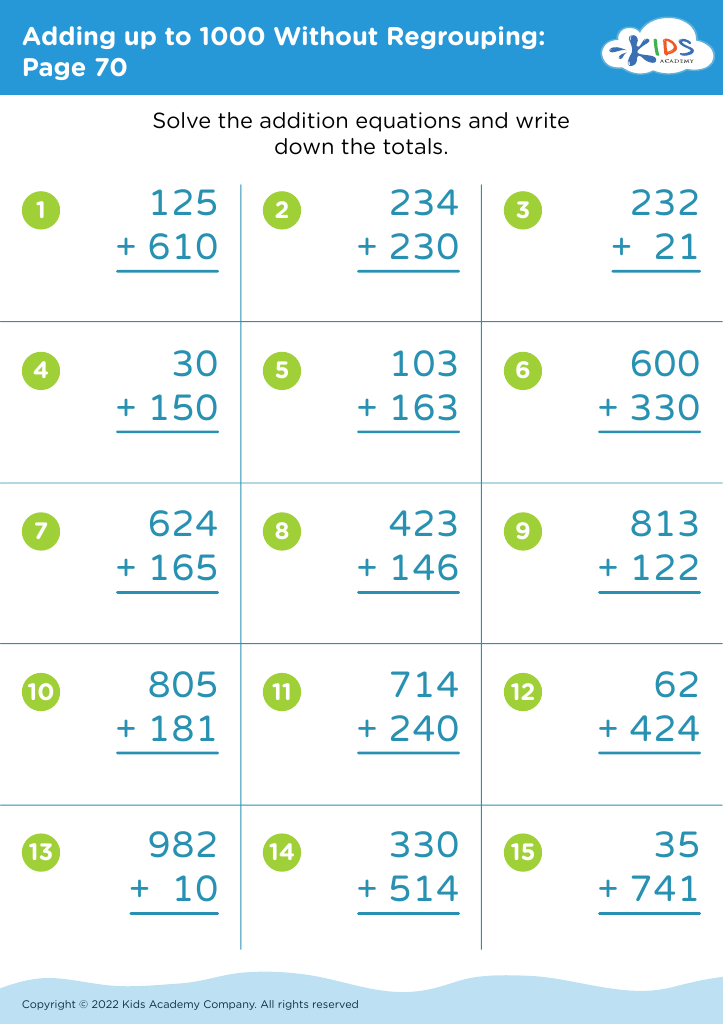








Critical thinking addition and subtraction for ages 4-9 are more than just learning basic math operations; they play a pivotal role in cognitive development. When young children engage in critical thinking through these mathematical practices, they're improving their problem-solving skills and becoming adept at thinking more logically. This process fosters an inquiring mindset vital for future academic success in all subjects.
For parents and teachers, nurturing these skills in early childhood is crucial. At this stage, children's brains are highly adaptable and primed to absorb new information. Engaging them in critical thinking exercises helps strengthen neural connections, making it easier for them to grasp more complex concepts later on.
Moreover, applying addition and subtraction in various contexts—such as puzzles, stories, or real-life situations—helps children see the practical value of math. This real-world application encourages curiosity and maintains their interest in learning, laying a strong foundation for subsequent educational endeavors.
Finally, developing these skills early builds confidence. When children learn to approach problems methodically and find solutions independently, they become more self-reliant. Self-reliance fosters a love for learning and resilience, important traits that will benefit them throughout their educational journey and beyond. Therefore, it’s imperative for parents and teachers to instill critical thinking through addition and subtraction from a young age.








