Enhances counting skills Addition & Subtraction Worksheets for Ages 4-9
6 filtered results
-
From - To
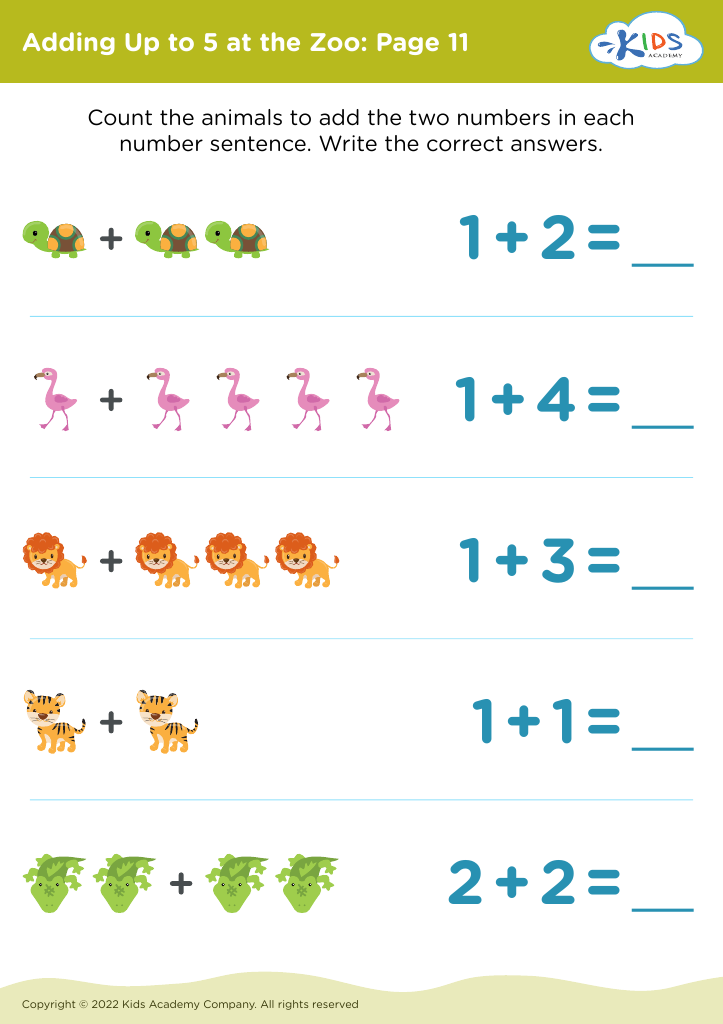
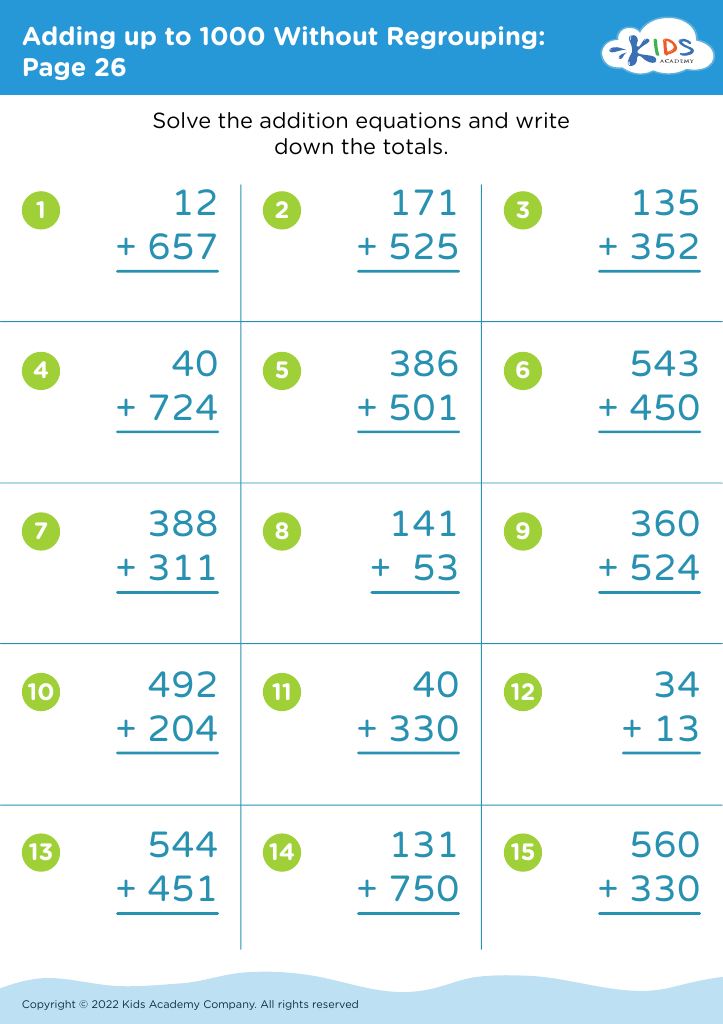
Boost your child's counting abilities with our engaging Addition and Subtraction Worksheets designed for ages 4 to 9! These fun and interactive resources provide an excellent way for young learners to practice essential math skills. Our worksheets promote number recognition, counting techniques, and arithmetic operations through vibrant visuals and exciting exercises. Tailored to adapt to various learning styles, they can be used in-class or at home, ensuring a comprehensive understanding of addition and subtraction. Foster confidence in math and set your child on the path to academic success. Discover the joy of learning with our skill-enhancing worksheets today!
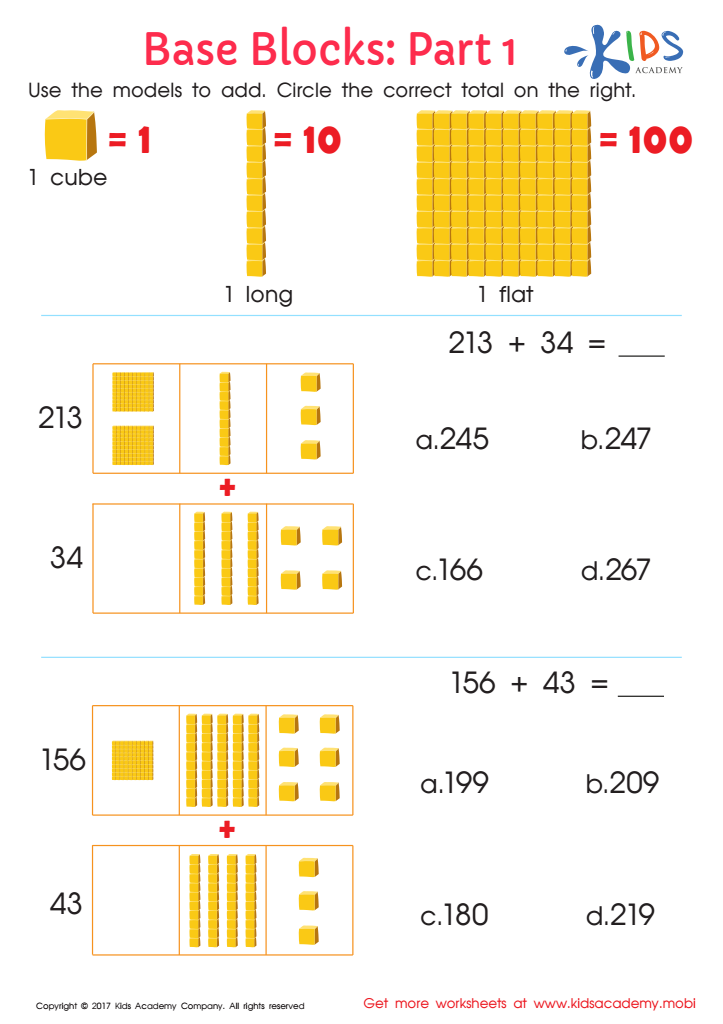
Base Ten Blocks Worksheet: Part 1
 Assign to My Students
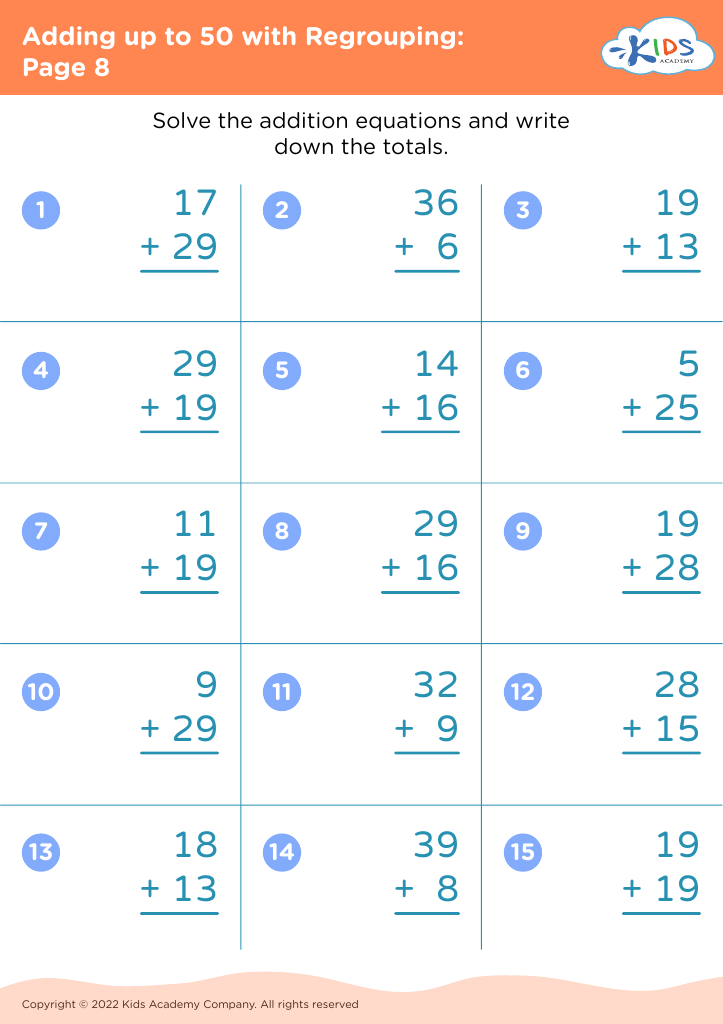
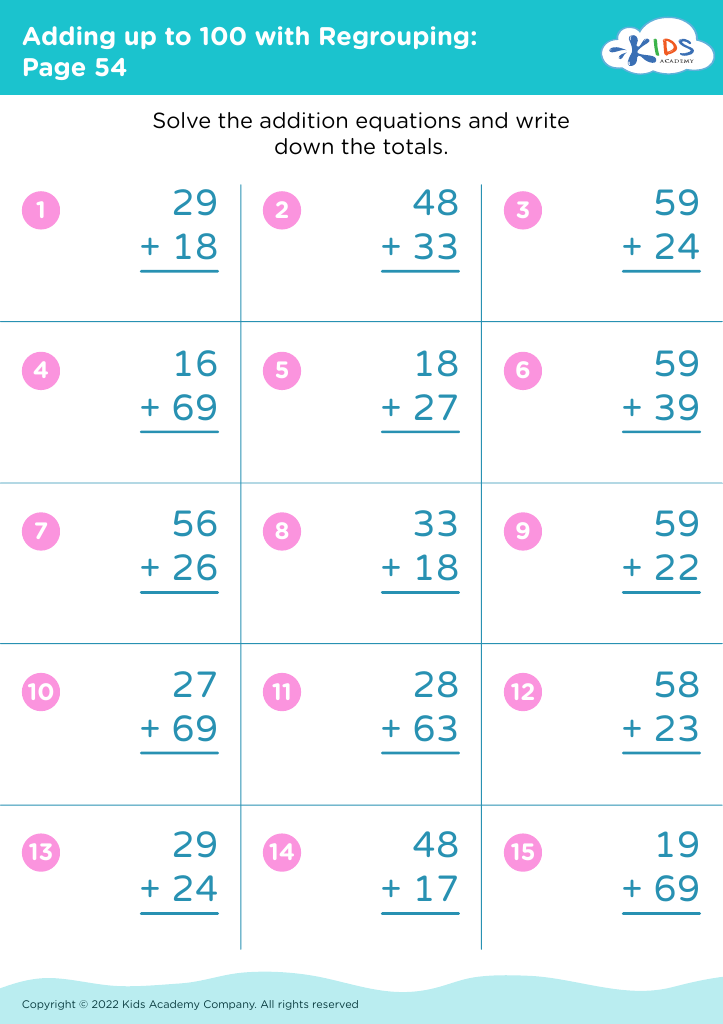
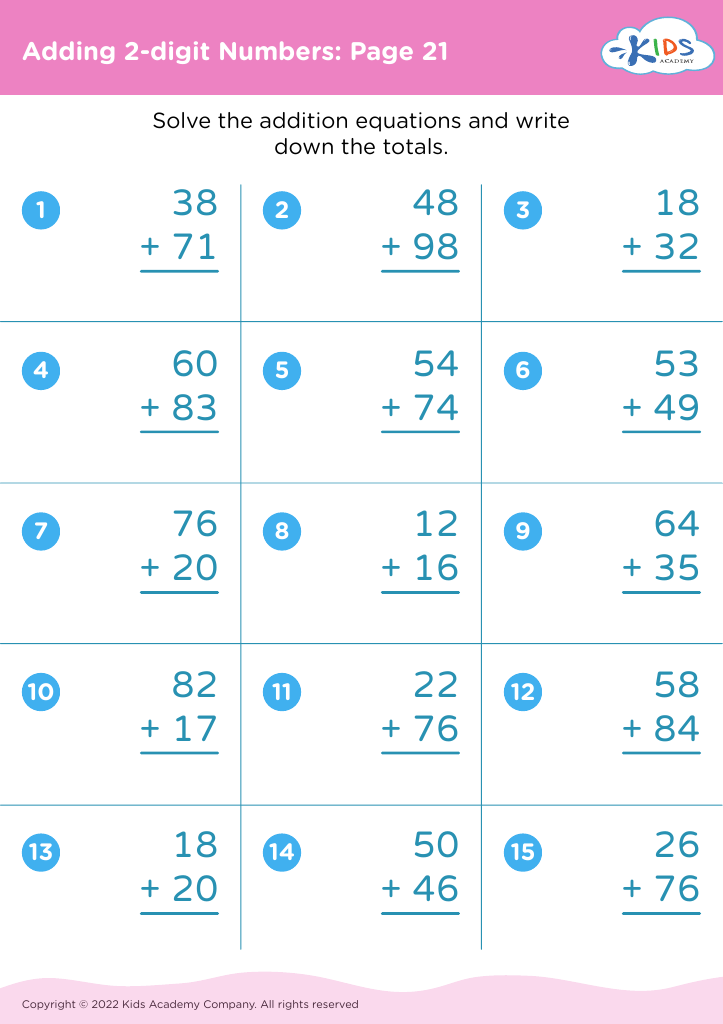








Enhancing counting skills in children aged 4 to 9 is crucial for their early mathematical development. This foundational skill serves as a bridge to more complex mathematical concepts, such as addition and subtraction. When children are proficient in counting, they gain confidence and an understanding of numbers, which are vital for everyday problem-solving and financial literacy in the future.
For parents and teachers, fostering these skills can lead to improved academic performance, as strong counting abilities directly influence a child's success in math-related subjects. Additionally, counting enhances critical thinking and logic, as children learn to recognize patterns, sequences, and relationships between numbers. Engaging them in playful counting activities promotes an enjoyable learning experience, fostering a love for math.
Moreover, emphasized counting skills can help children develop a sense of achievement, motivating them to tackle more challenging mathematical problems. As proficient counters learn to master addition and subtraction, they gain essential tools for navigating real-world situations, such as budgeting, planning, and decision-making.
In summary, prioritizing counting skills for children ages 4 to 9 lays the groundwork for mathematical proficiency, boosts confidence, enhances cognitive development, and instills a positive attitude toward learning—all keys to preparing children for future success.








