Improve problem-solving abilities Addition & Subtraction Worksheets for Ages 4-9
3 filtered results
-
From - To
Boost your child's problem-solving skills with our engaging Addition & Subtraction Worksheets, specially designed for ages 4-9. This collection focuses on enhancing mathematical understanding through fun, interactive activities that encourage critical thinking and logical reasoning. Each worksheet challenges young learners to apply addition and subtraction in a variety of contexts, making math both enjoyable and educational. With brightly colored graphics and simple instructions, these worksheets provide the perfect blend of skill-building and creativity. Help your child become a confident problem solver while laying a strong foundation in math. Start exploring our worksheets today and watch their skills flourish!
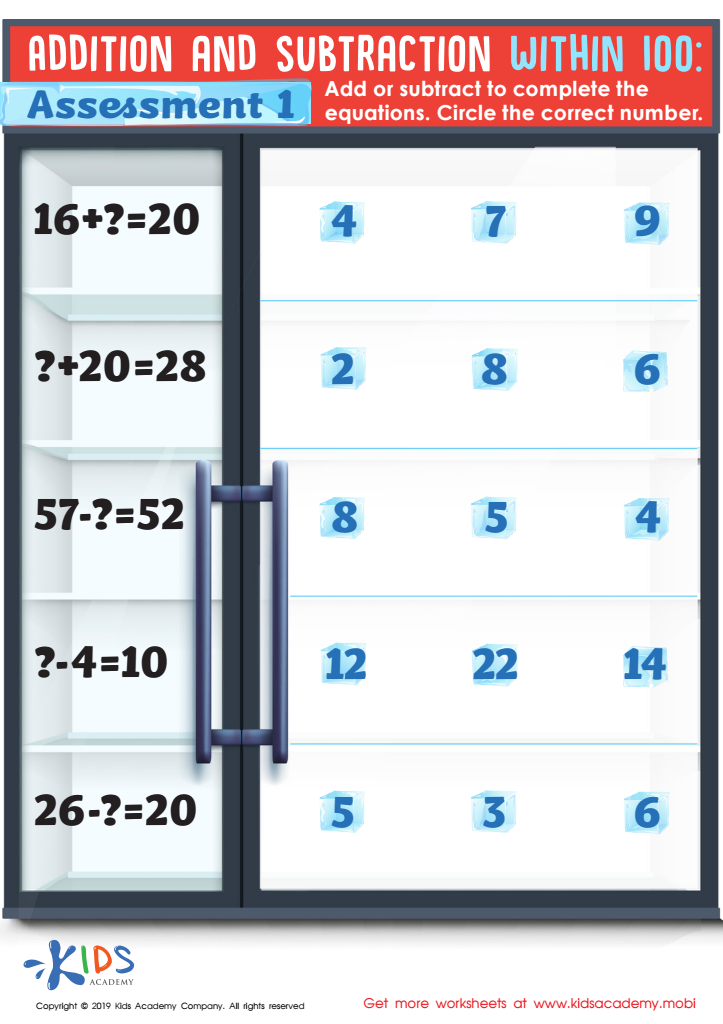
Addition and Subtraction within 100: Assessment 1 Worksheet
 Assign to My Students
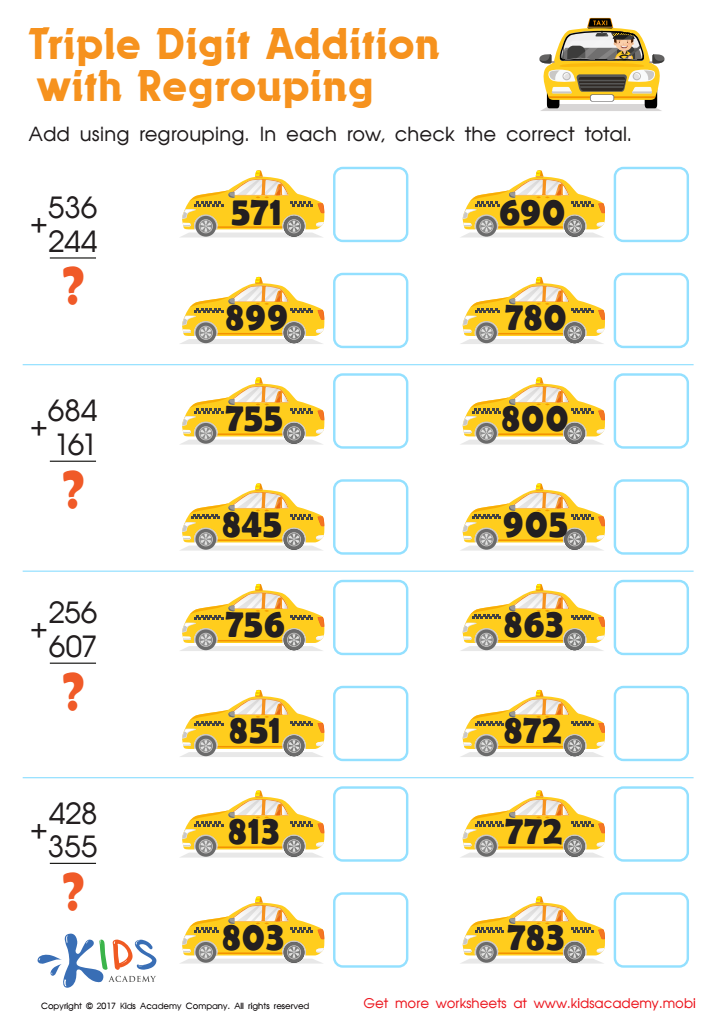
Triple Digit Addition with Regrouping Worksheet








Parents and teachers should prioritize improving problem-solving abilities in addition and subtraction for children aged 4-9 because these skills form the foundation for future academic success and critical thinking. Early mastery of these basics not only equips children with the necessary mathematical knowledge but also fosters a sense of confidence.
At this developmental stage, children learn best through play and hands-on activities. Engaging in fun problem-solving exercises can optimize their learning experience, making complex concepts more accessible. Strong problem-solving skills also promote resilience, as children learn to approach challenges methodologically, developing perseverance and strategy.
Enhancing these abilities can also improve a child's analytical thinking. When children learn to break down math problems, it transforms their approach to obstacles they face, both in school and in everyday life. Moreover, building a solid understanding of addition and subtraction is essential as they progress to more advanced math concepts, often the gateway to STEM fields.
Ultimately, by focusing on problem-solving in these early years, parents and educators can ensure that children not only excel in math but also cultivate essential life skills such as critical thinking, creativity, and adaptive reasoning, preparing them for a successful future.








