Math problem-solving skills Addition & Subtraction Worksheets for Ages 4-9
4 filtered results
-
From - To
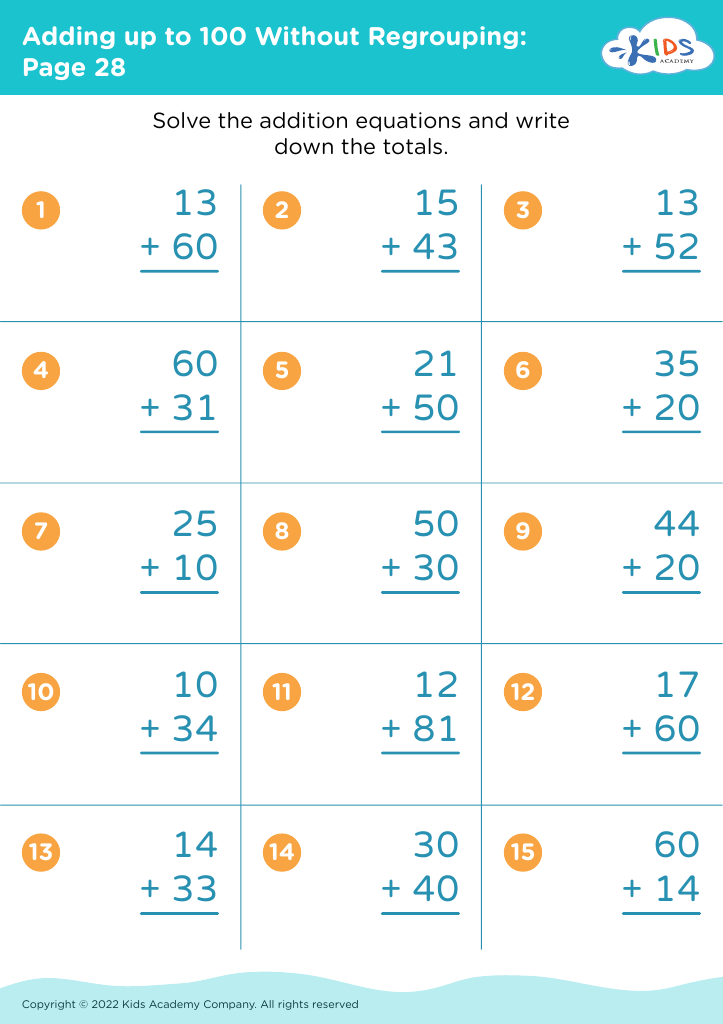
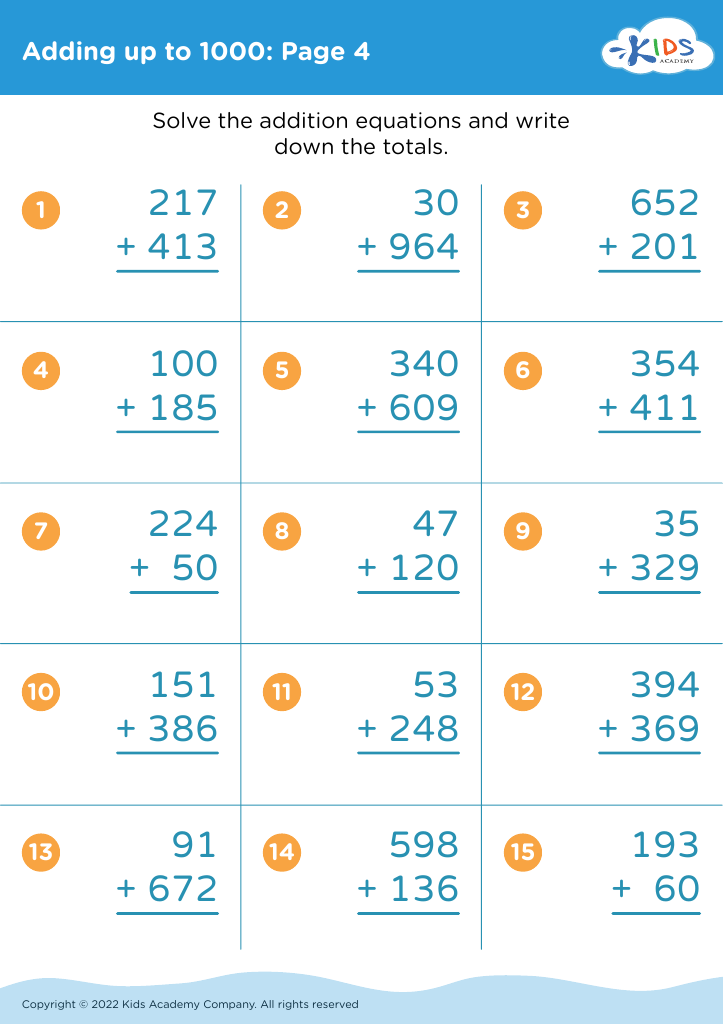
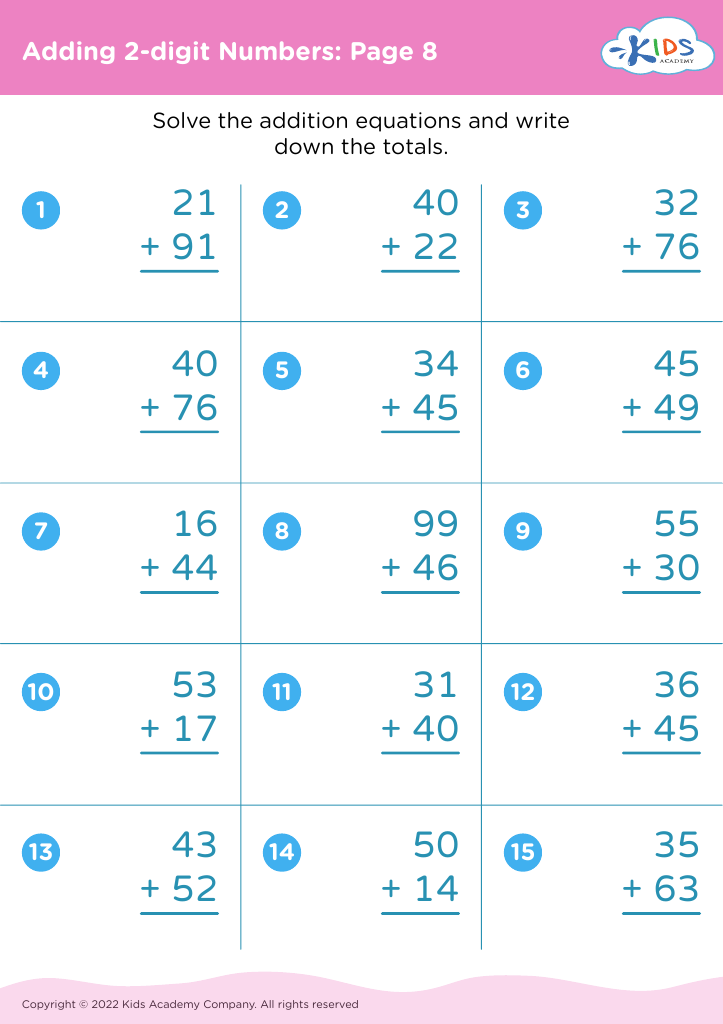
Enhance your child's math problem-solving skills with our engaging Addition & Subtraction Worksheets designed for ages 4-9. Each worksheet offers fun, educational activities to build a solid foundation in basic math. Kids will practice adding and subtracting while developing critical thinking and analytical skills. With colorful, easy-to-follow exercises, our worksheets keep young minds interested and motivated to learn. Ideal for homeschooling parents and teachers, these resources support classroom learning and reinforce essential math concepts. Empower your child to tackle math challenges confidently and excel in their educational journey with our expertly crafted worksheets.
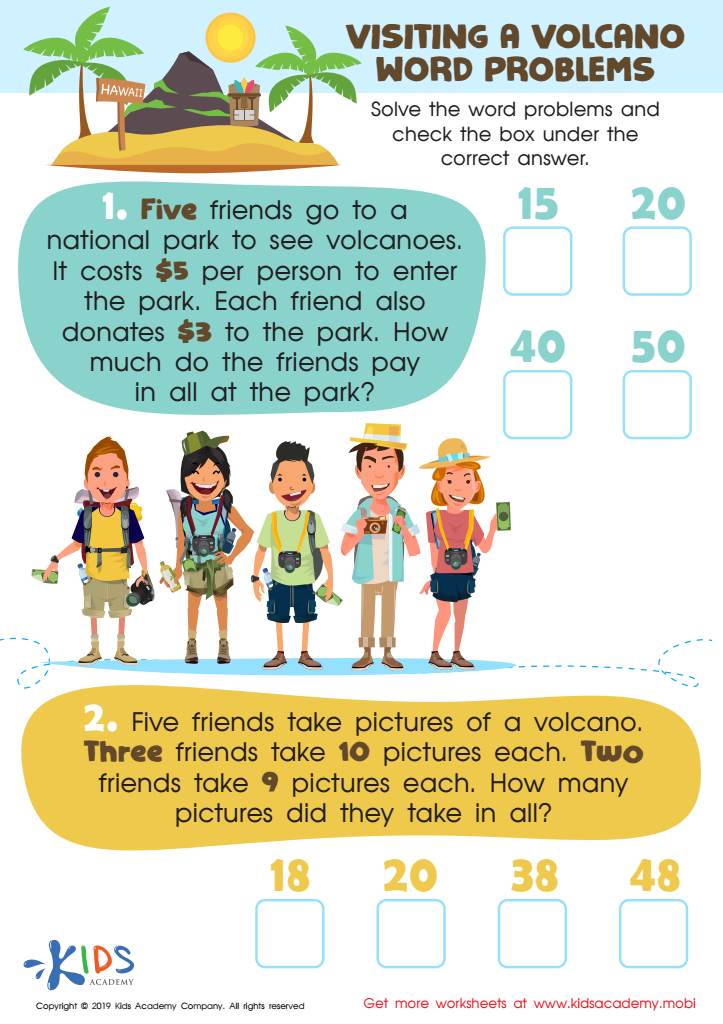
Visiting a Volcano Word Problems Worksheet
 Assign to My Students








Math problem-solving skills, particularly in addition and subtraction, are crucial for children aged 4-9 for various reasons. At this age, children are in a critical stage of cognitive development and are highly receptive to learning foundational concepts that will support their future academic success. Understanding addition and subtraction is essential for early numeracy, as these basic operations form the building blocks for more complex mathematical concepts.
First, mastering these skills enhances a child's confidence in their ability to tackle and solve problems, which is important for their overall educational journey. It fosters a growth mindset, making them feel capable and positive about learning new things.
Second, addition and subtraction are practical skills used in everyday life, from counting toys and sharing snacks to more complex scenarios such as managing allowances and understanding time. Early proficiency in these areas equips children with the tools they need to navigate daily activities effectively.
Moreover, problem-solving through math encourages logical thinking and reasoning. It helps develop critical brain functions like analytical thinking, attention to detail, and strategy planning. These cognitive skills are transferable and beneficial across other areas of learning and life.
Parents and teachers play a pivotal role in nurturing these skills. Providing a supportive and enriched learning environment, they can help children practice, understand, and enjoy math, setting a strong foundation for their educational and personal development.








