Filters

570 filtered results

Clear all filters
Favorites
With answer key
Interactive

570 filtered results

Difficulty Level

Grade


Check out this FREE Trial Lesson on Addition & Subtraction for age 4-9!

Add 10 to a 2 digit Number

Favorites
With answer key
Interactive
  • 4-9
  • Number Recognition
  • Addition & Subtraction
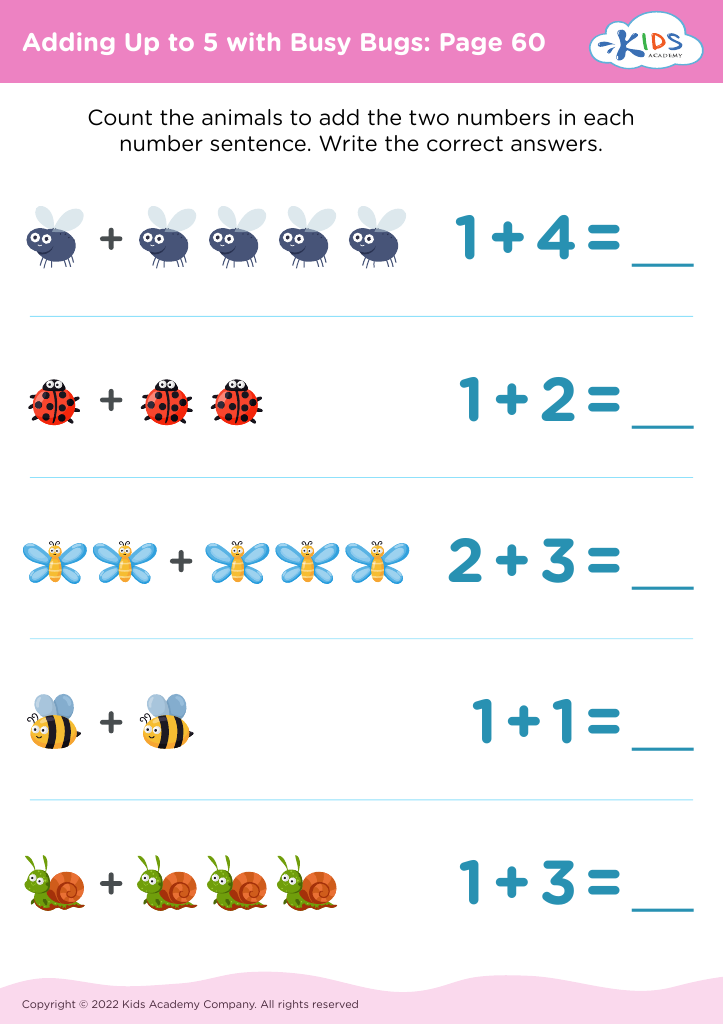
Adding Up to 5 with Busy Bugs: Page 60
Worksheet
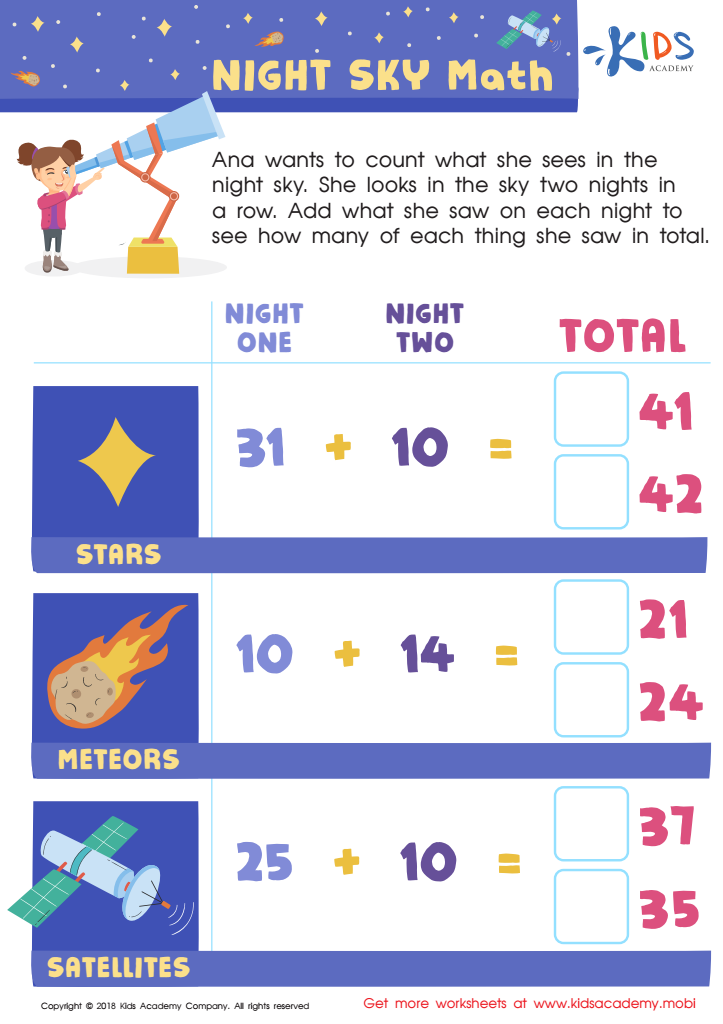
Night Sky Math Worksheet

Night Sky Math Worksheet

Kids can use this colorful worksheet to learn math and addition while also exploring the night sky. Invite them to use a telescope to identify the things they see. Ask them to join Ana, the little girl in the worksheet, to count what she saw in two nights. Help them add the totals of each night to find out how many of each item she saw!
Night Sky Math Worksheet
Worksheet
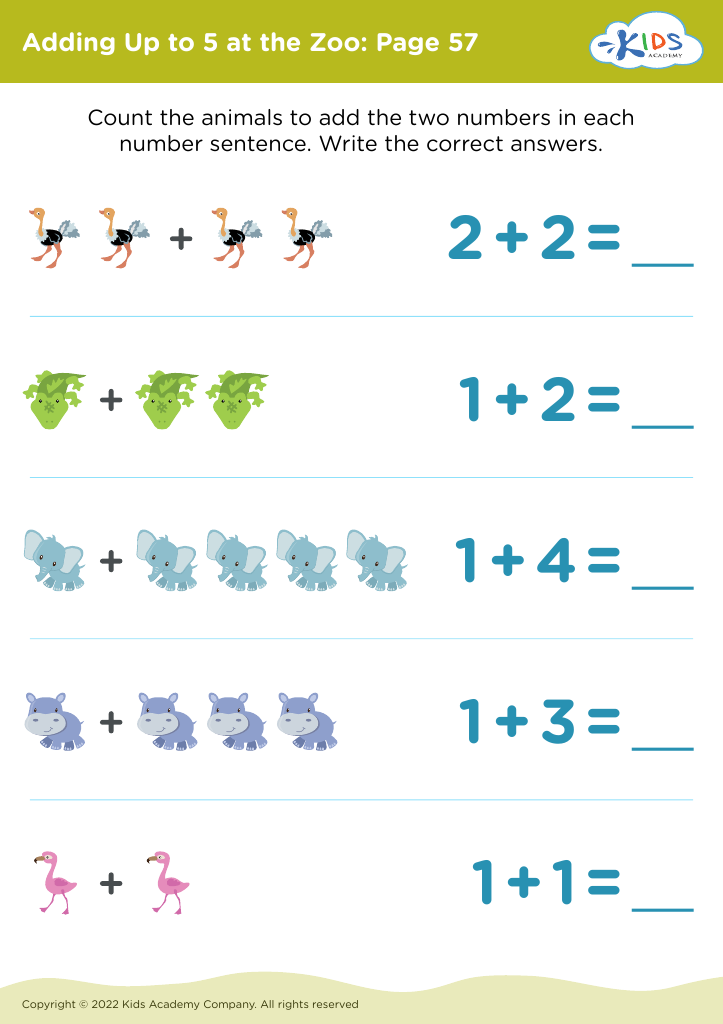
Adding Up to 5 at the Zoo: Page 57
Worksheet
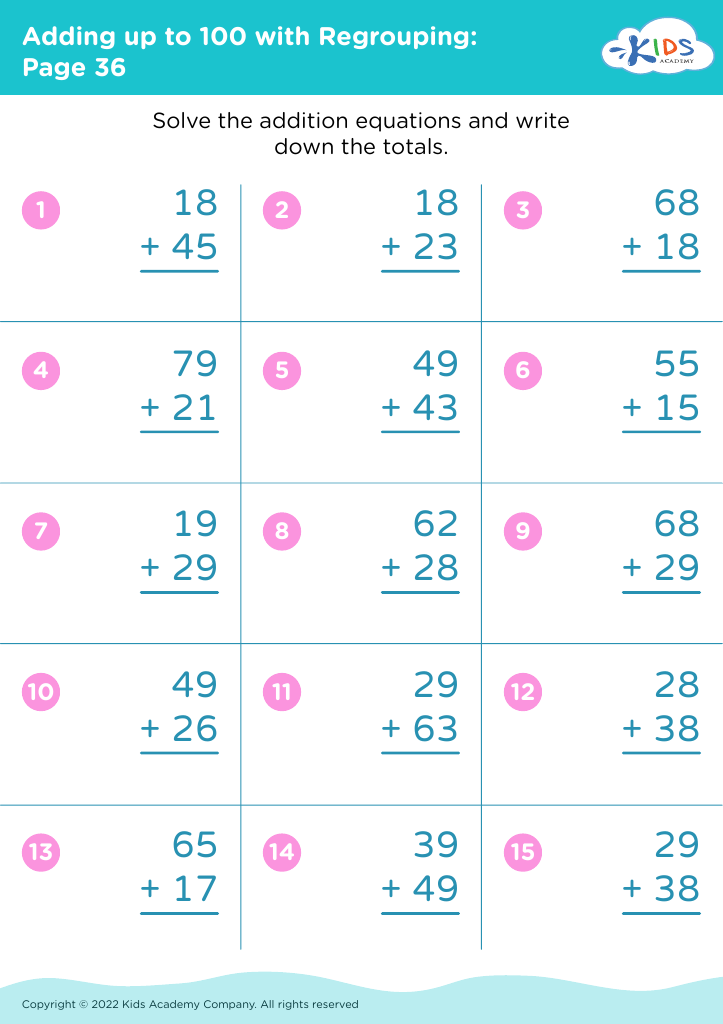
Adding up to 100 with Regrouping: Page 36
Worksheet
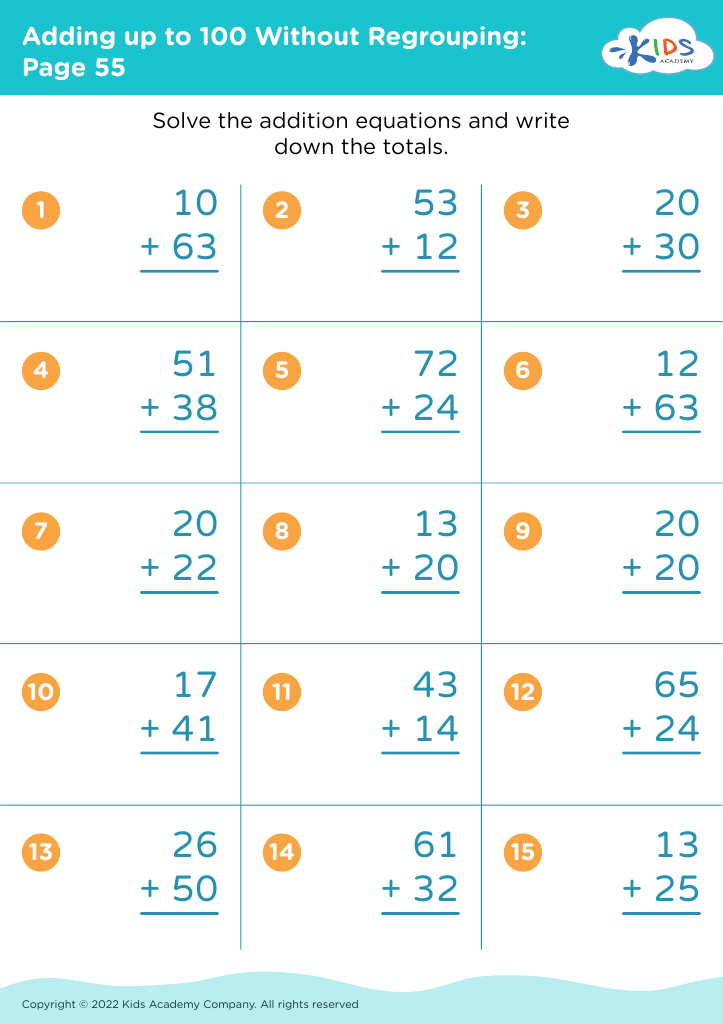
Adding up to 100 Without Regrouping: Page 55
Worksheet
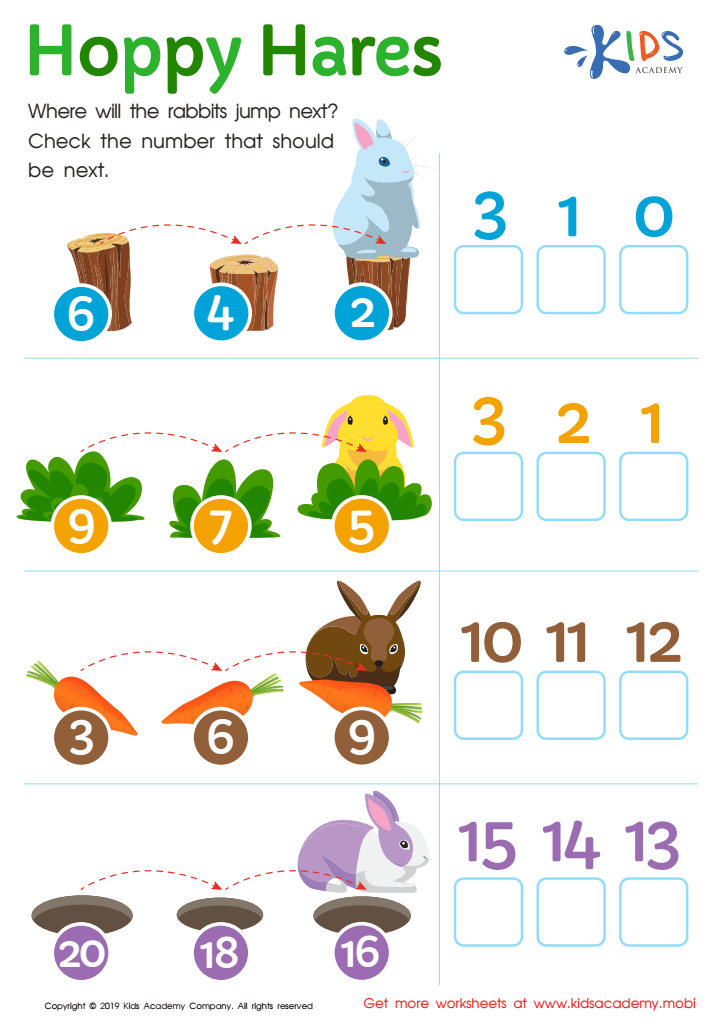
Hoppy Hares Worksheet

Hoppy Hares Worksheet

Ask your kids if they can identify the rabbits in the picture, then help them solve the math problems. The rabbits need to hop from place to place, so look at the numbers and help your kids figure out the next one. These cute and friendly little animals make great pets. Have fun solving this worksheet together!
Hoppy Hares Worksheet
Worksheet
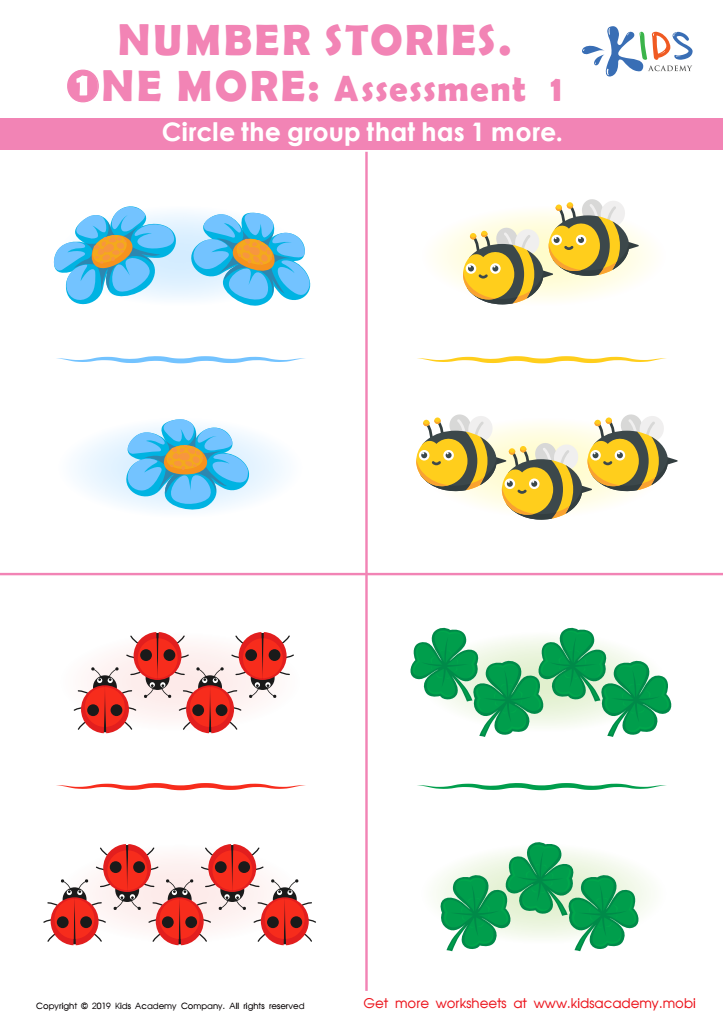
Number Stories One More - Assessment 1 Worksheet Preview

Number Stories One More – Assessment 1 Worksheet
Does your child need a fun way to practice distinguishing between different groups of numbers? This free PDF worksheet will have them circle the group that has one more. With its colorful nature drawings, it's an attractive activity that visual learners will enjoy!
Number Stories One More – Assessment 1 Worksheet
Worksheet
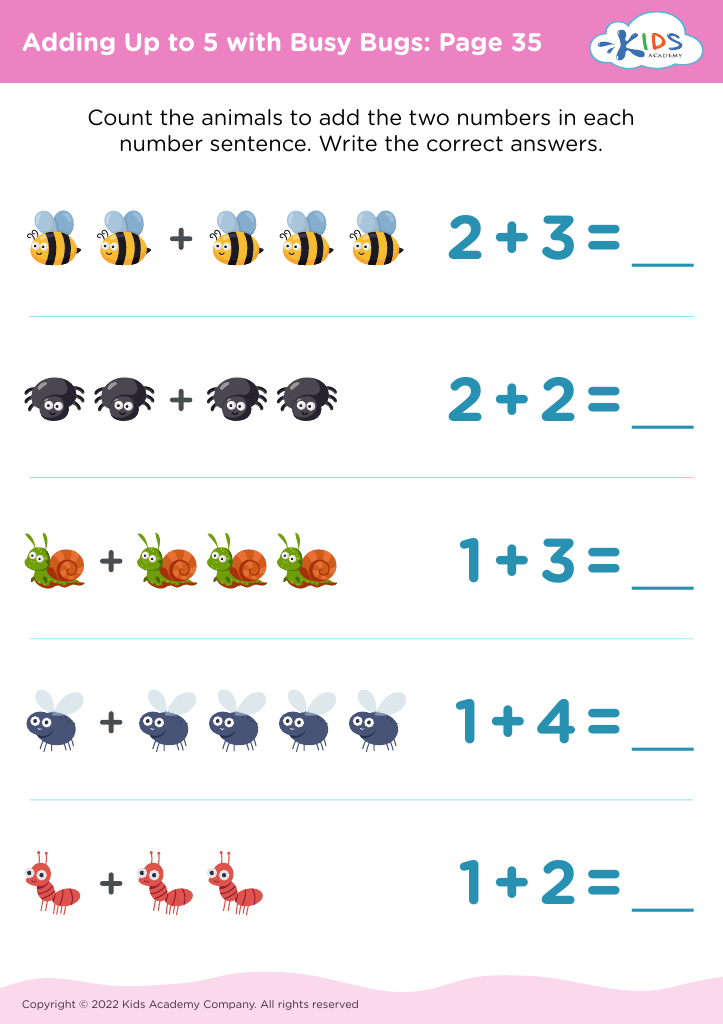
Adding Up to 5 with Busy Bugs: Page 35
Worksheet
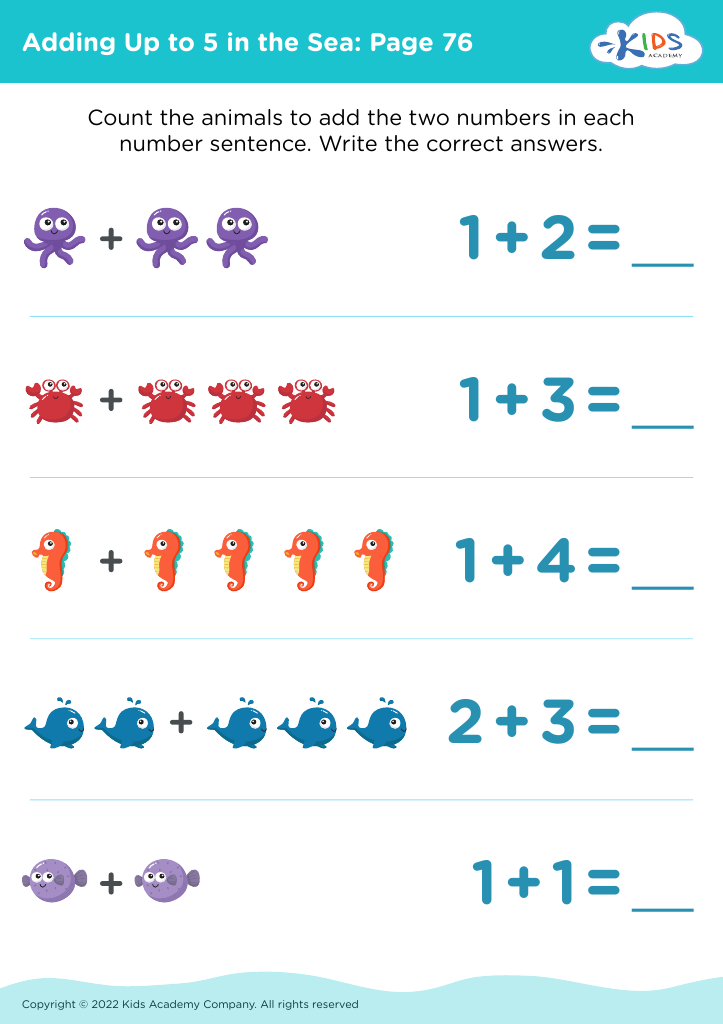
Adding Up to 5 in the Sea: Page 76
Worksheet
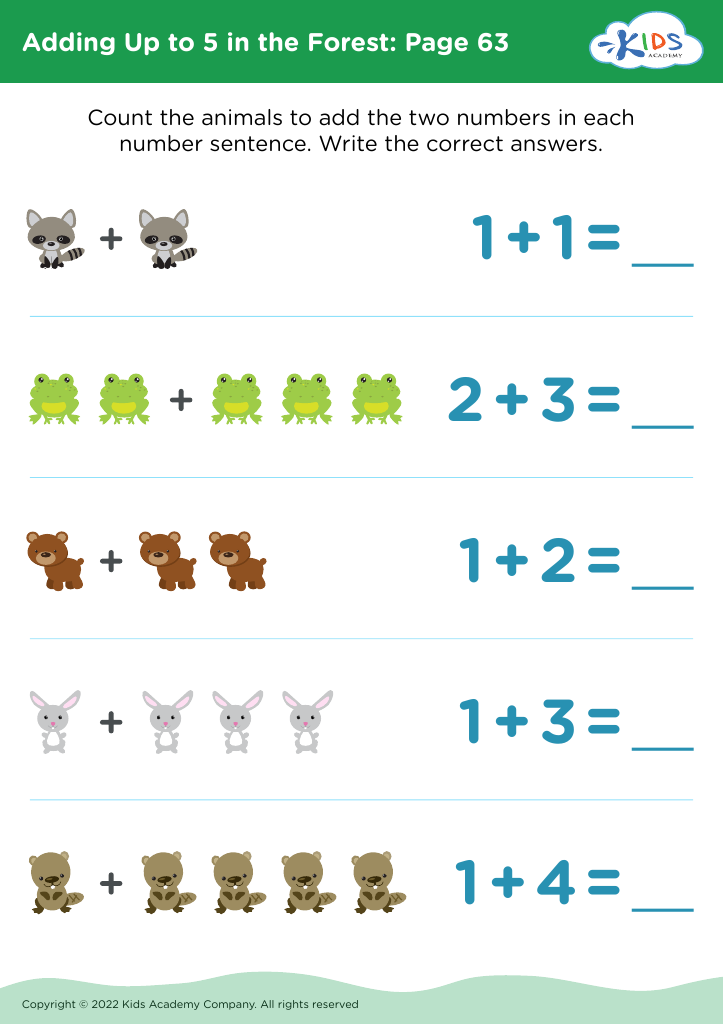
Adding Up to 5 in the Forest: Page 63
Worksheet
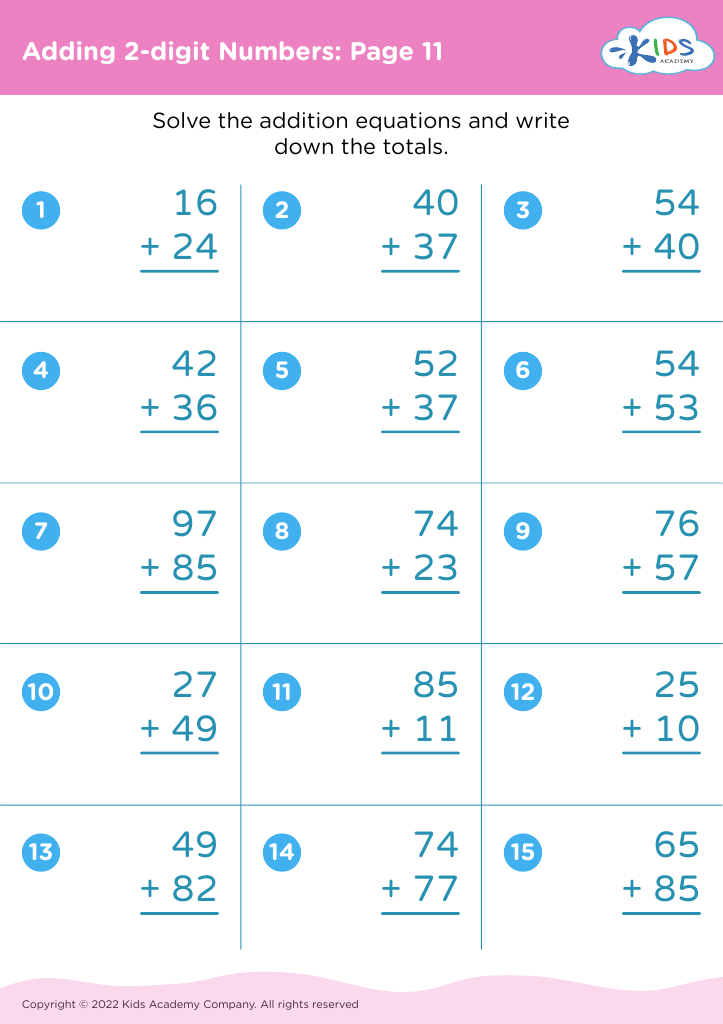
Adding 2-digit Numbers: Page 11

Adding 2-digit Numbers: Page 11

Adding 2-digit Numbers: Page 11
Worksheet
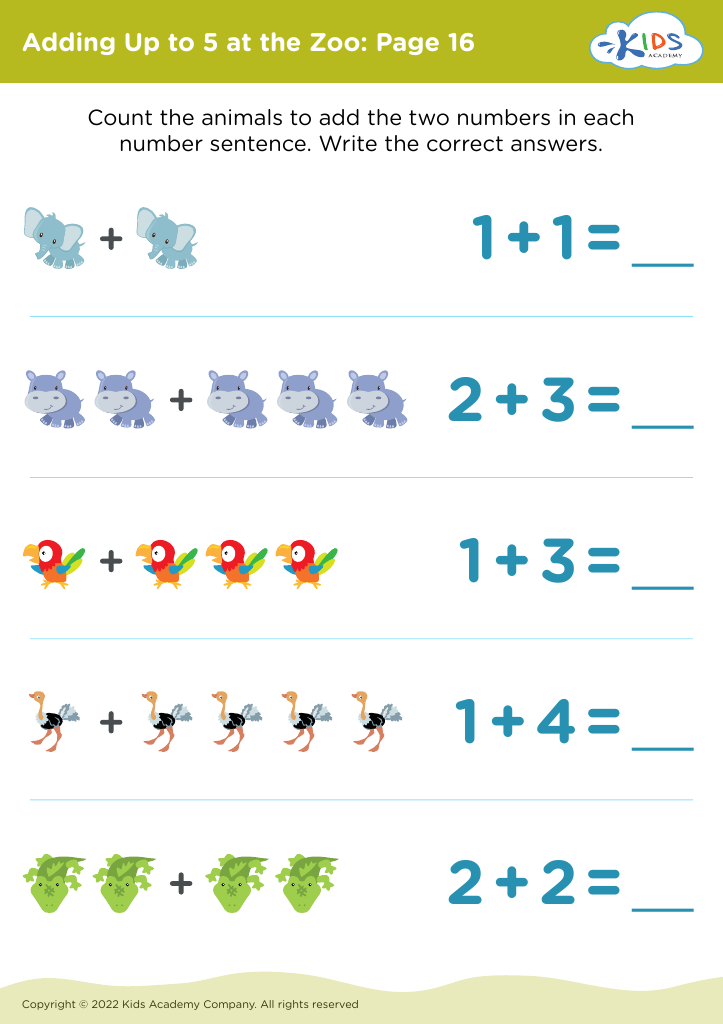
Adding Up to 5 at the Zoo: Page 16
Worksheet
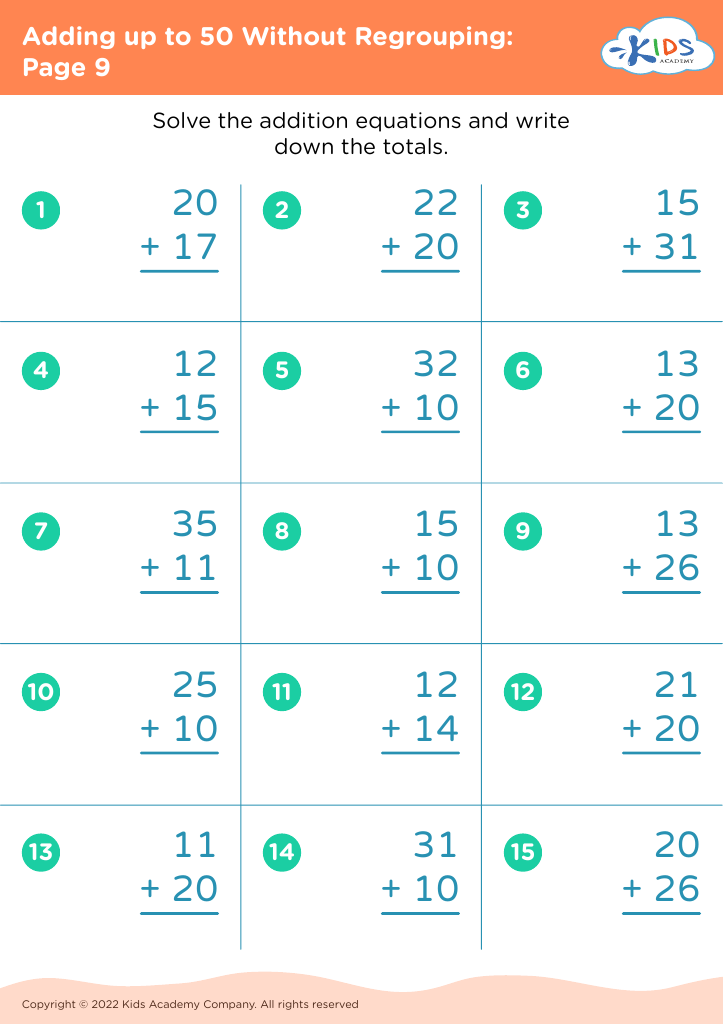
Adding up to 50 Without Regrouping: Page 9
Worksheet
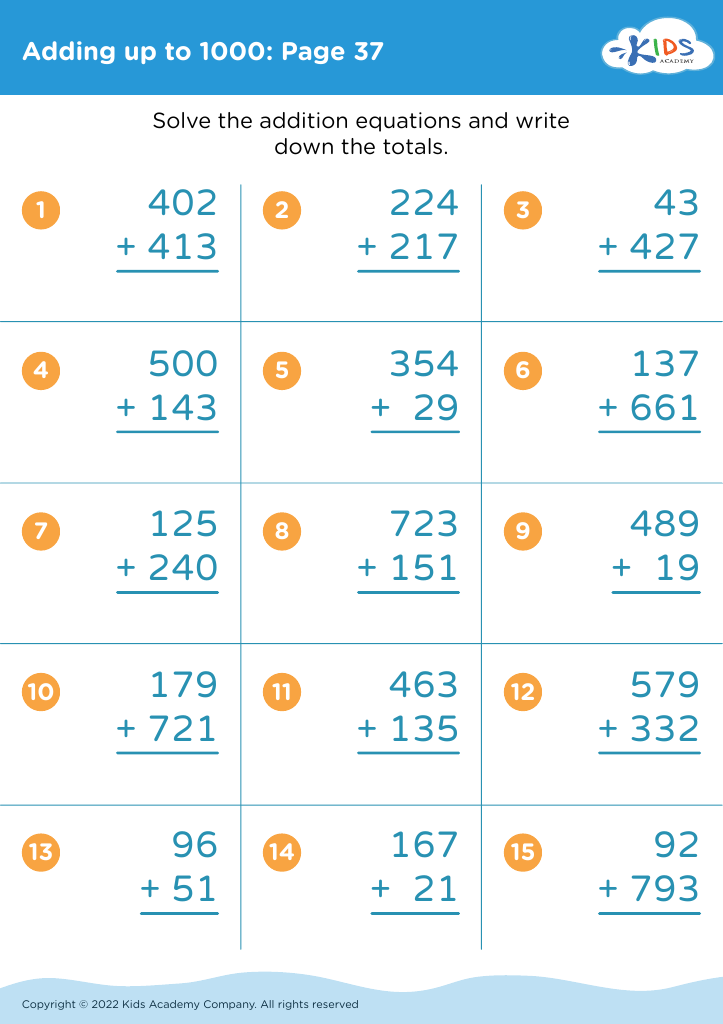
Adding up to 1000: Page 37

Adding up to 1000: Page 37

Adding up to 1000: Page 37
Worksheet
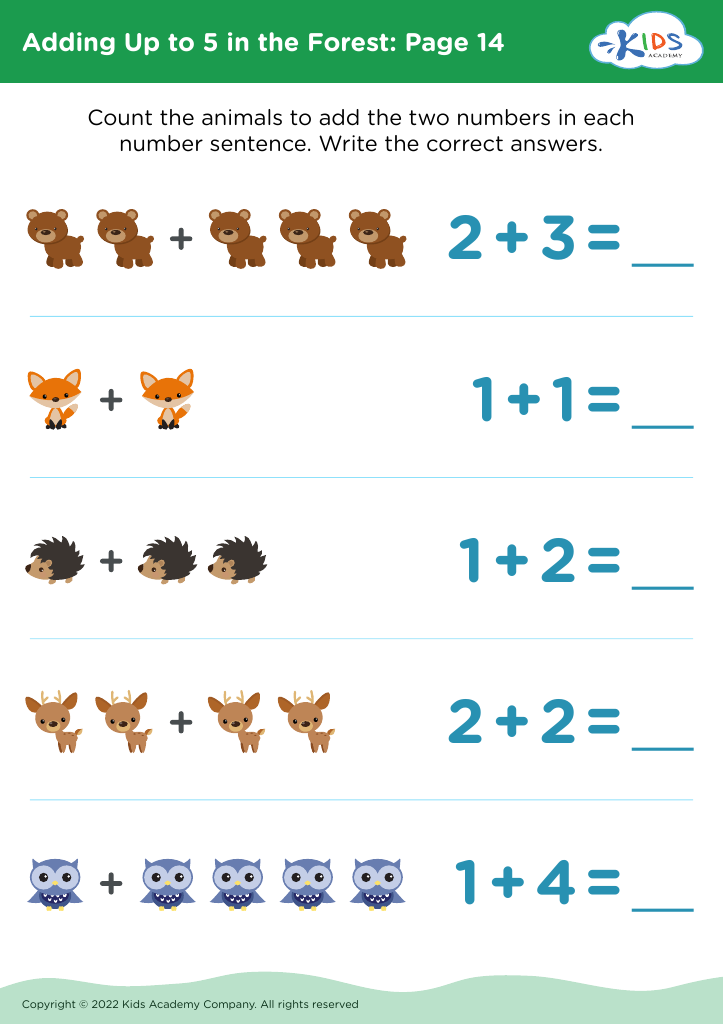
Adding Up to 5 in the Forest: Page 14
Worksheet
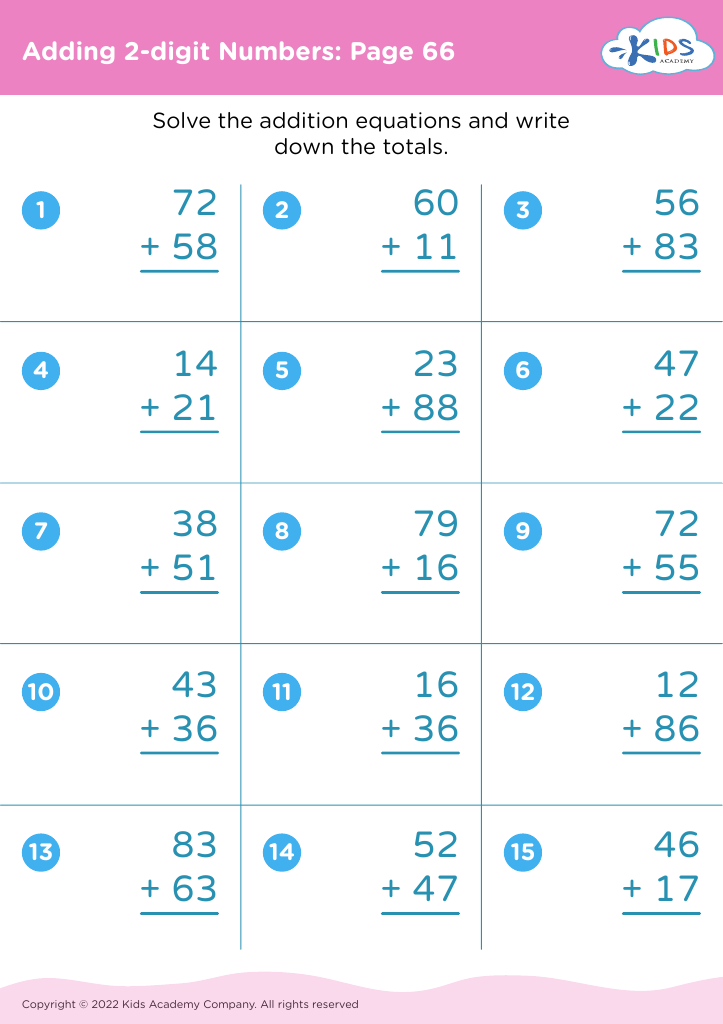
Adding 2-digit Numbers: Page 66

Adding 2-digit Numbers: Page 66

Adding 2-digit Numbers: Page 66
Worksheet
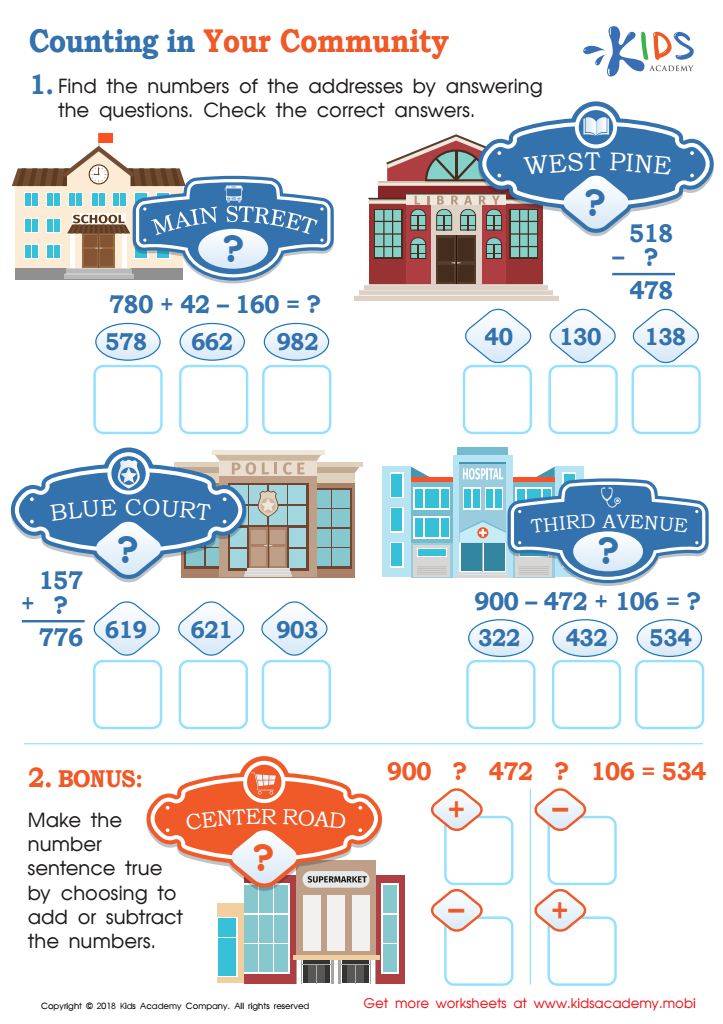
Counting in Your Community Worksheet
Counting in Your Community Worksheet
Introduce your kids to the idea of a community, where different people and buildings co-exist, each playing their part for the community's progress. Ask them to name the buildings they see in their community. Then work through this worksheet to find the numbers of the addresses by answering the questions. Check the answers once they've solved the equations.
Counting in Your Community Worksheet
Worksheet
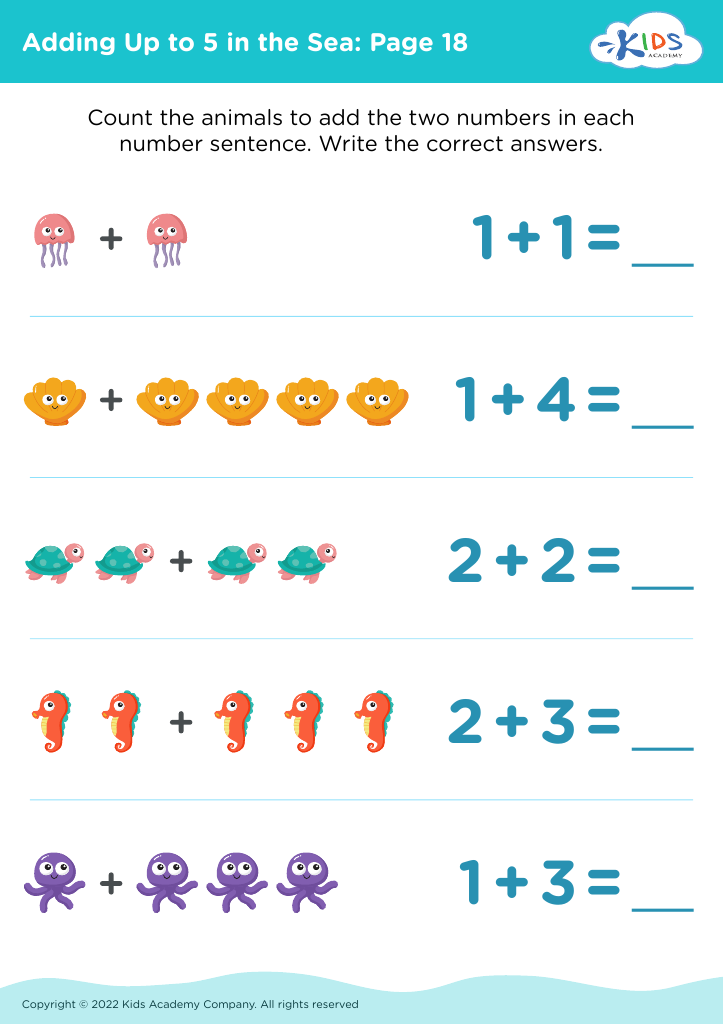
Adding Up to 5 in the Sea: Page 18
Worksheet
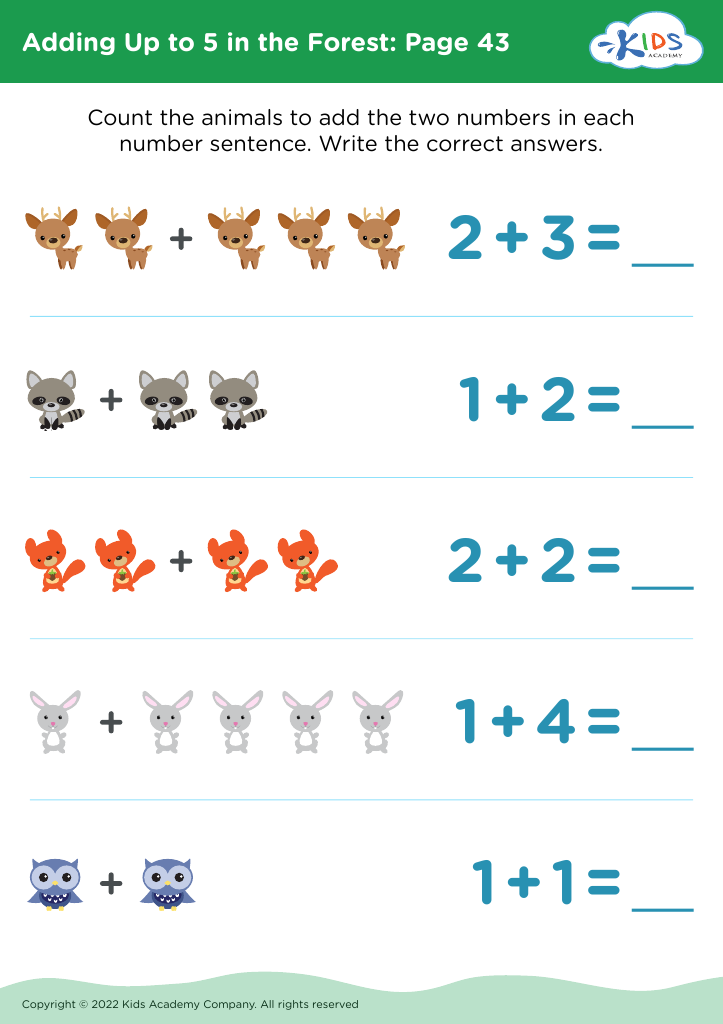
Adding Up to 5 in the Forest: Page 43
Worksheet
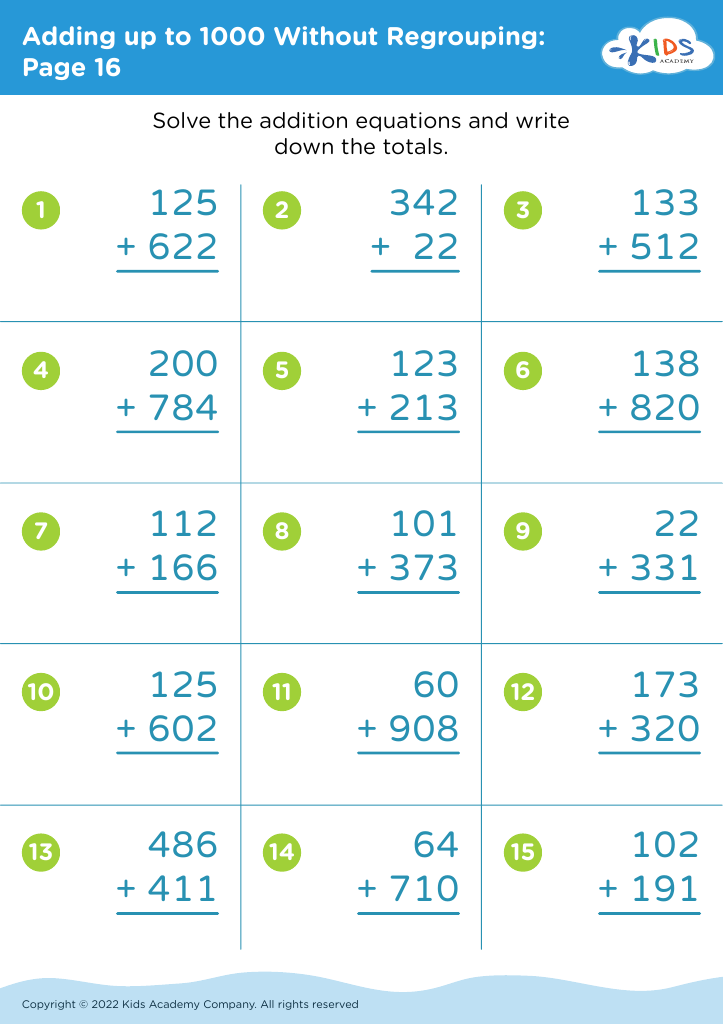
Adding up to 1000 Without Regrouping: Page 16
Worksheet
Add it Up Worksheet

Add it Up Worksheet

Add it Up Worksheet

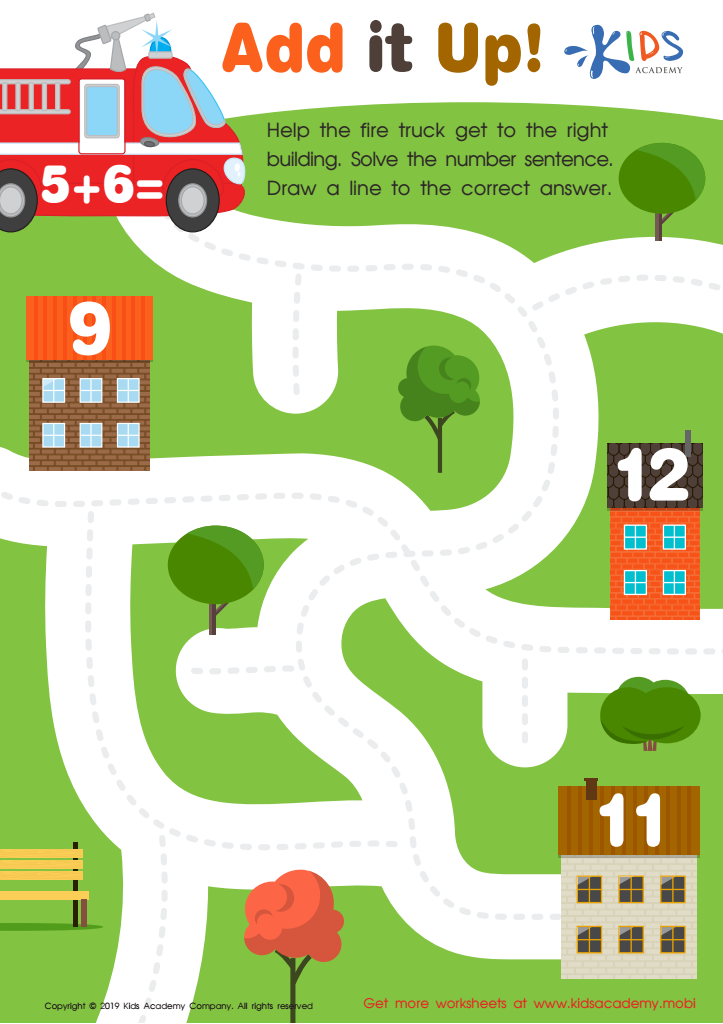
The fire service is the right number to call in case of a fire. Test your children's safety knowledge by asking them other emergency numbers. Have them identify the fire truck in the worksheet and solve the number sentences. Guide them in drawing a line to the right answer.
Add it Up Worksheet
Worksheet
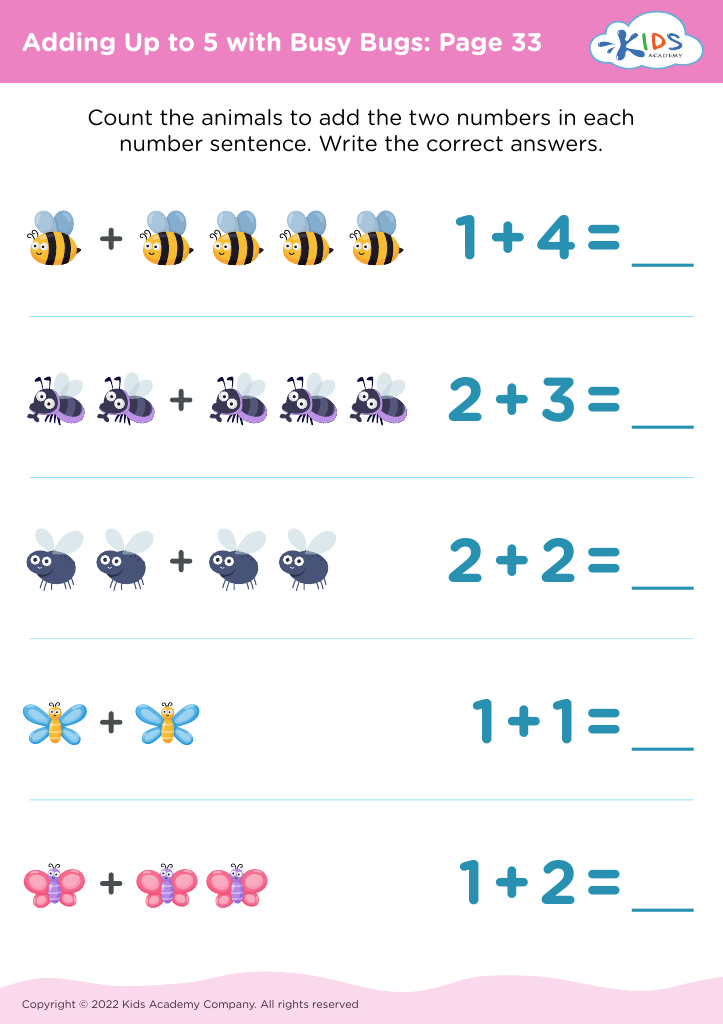
Adding Up to 5 with Busy Bugs: Page 33
Worksheet
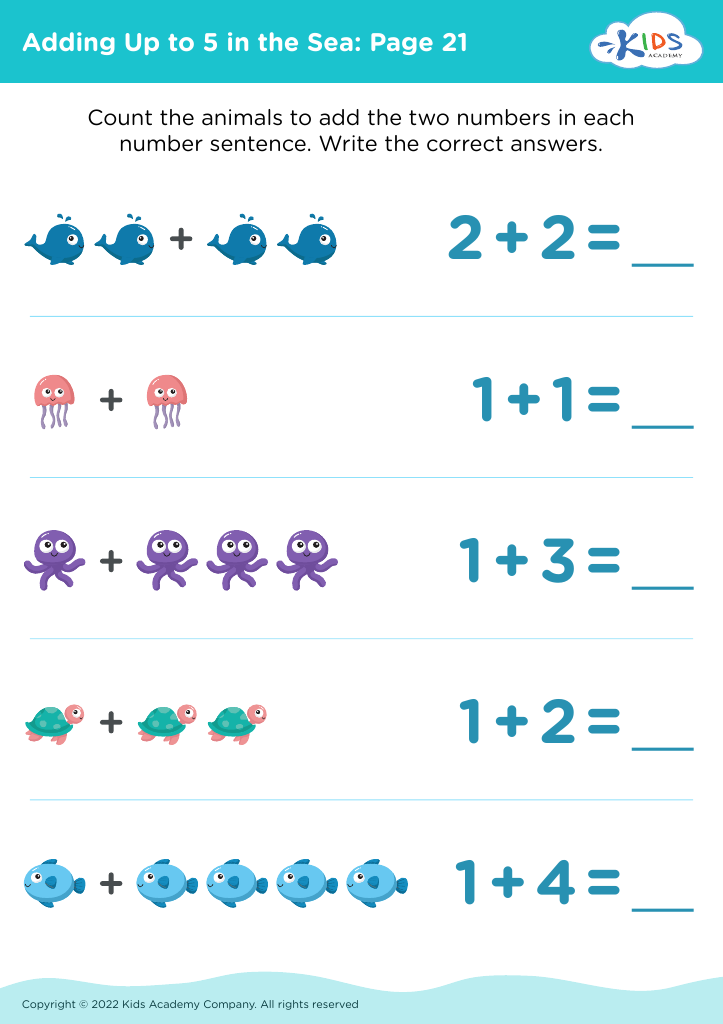
Adding Up to 5 in the Sea: Page 21
Worksheet
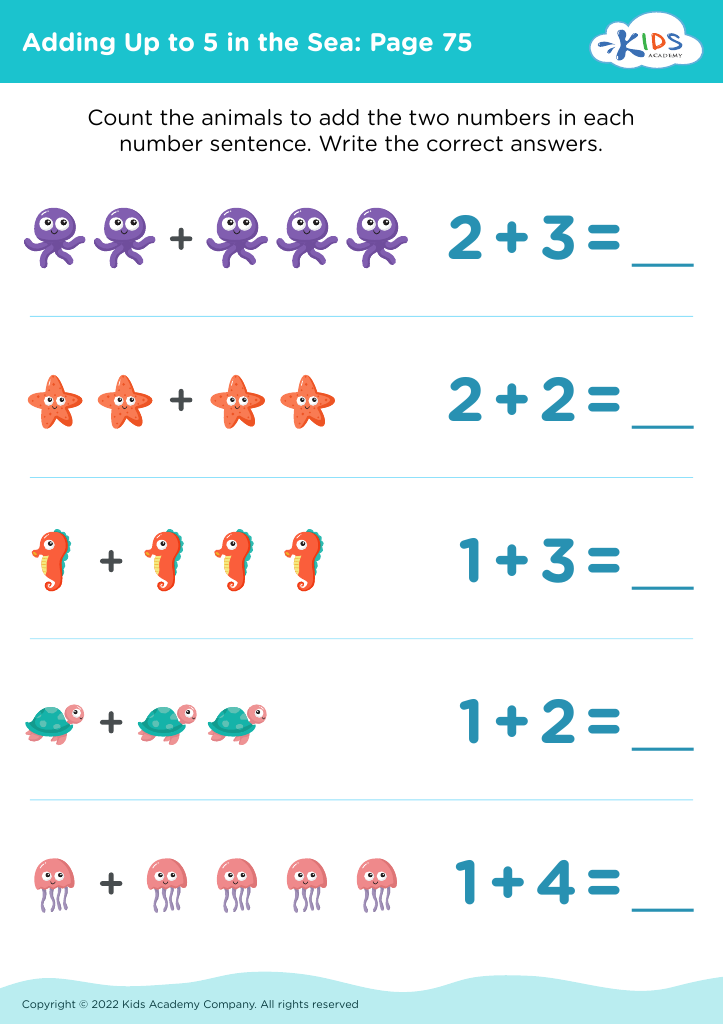
Adding Up to 5 in the Sea: Page 75
Worksheet


Number recognition, alongside addition and subtraction, is fundamental for children aged 4 to 9 as it lays the groundwork for mathematical literacy and critical thinking. During these formative years, children are naturally curious and eager to learn, making it the perfect time to introduce basic math concepts. Mastery of number recognition allows children to identify and understand the significance of numbers within their environment, fostering confidence in their ability to engage with mathematical challenges.

Moreover, addition and subtraction are essential skills that provide a basis for more complex mathematics. These operations promote problem-solving abilities, logical reasoning, and cognitive development. By helping children grasp these fundamental concepts, parents and teachers can cultivate a positive attitude towards math, encouraging growth mindsets that will benefit them throughout their academic careers.

Additionally, knowledge of basic arithmetic helps children develop everyday life skills, such as budgeting, time management, and spatial awareness. Understanding numbers forms the basis for academic success across subjects, not just math. Ultimately, by prioritizing number recognition, addition, and subtraction, parents and teachers contribute to a child's overall cognitive development and prepare them for future educational challenges and real-world applications.