Understanding time Addition & Subtraction Worksheets for Ages 4-9
6 filtered results
-
From - To
Discover a fun and engaging way for children aged 4-9 to master the concepts of time with our "Understanding Time Addition & Subtraction Worksheets." These printables are specially designed to enhance your child's mathematical skills while introducing them to the essential concept of time. Through playful exercises, kids will learn how to add and subtract times, helping them develop critical thinking and problem-solving abilities. Each worksheet is age-appropriate and includes colorful illustrations to keep young learners motivated. Perfect for parents, educators, or homeschooling, our resources ensure that children build a solid foundation in both math and time-telling. Start exploring today!
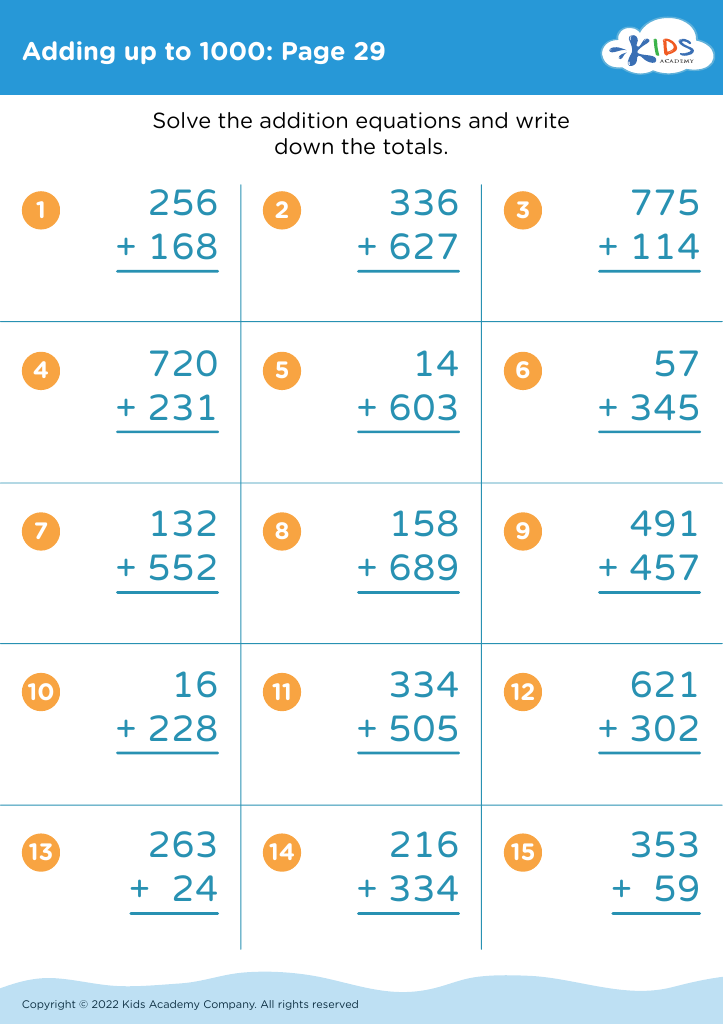
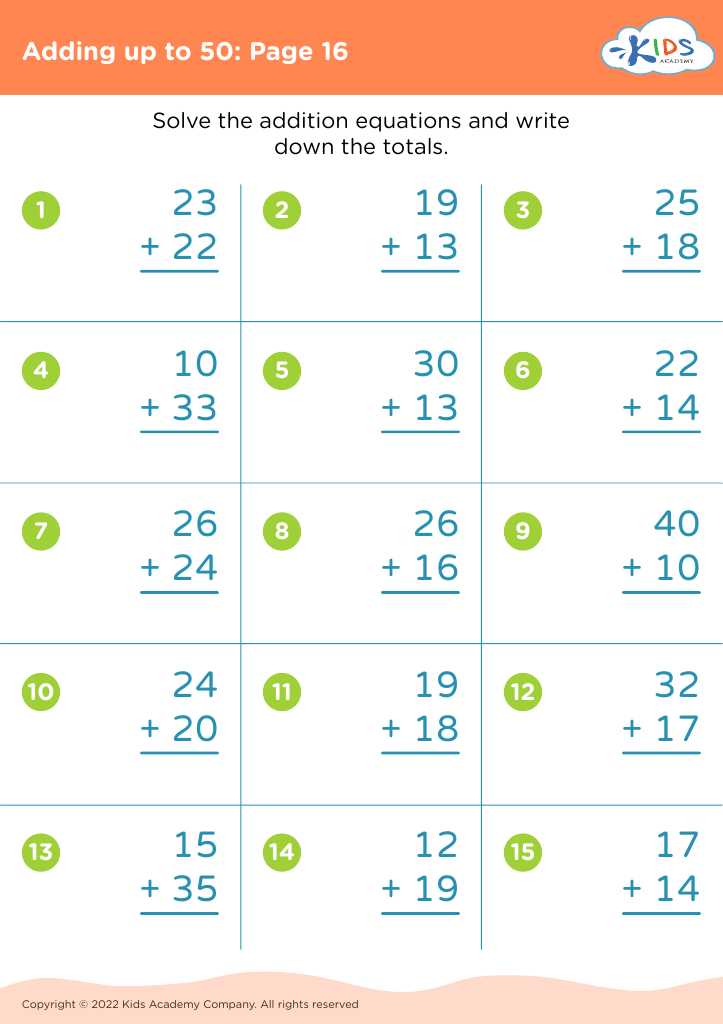
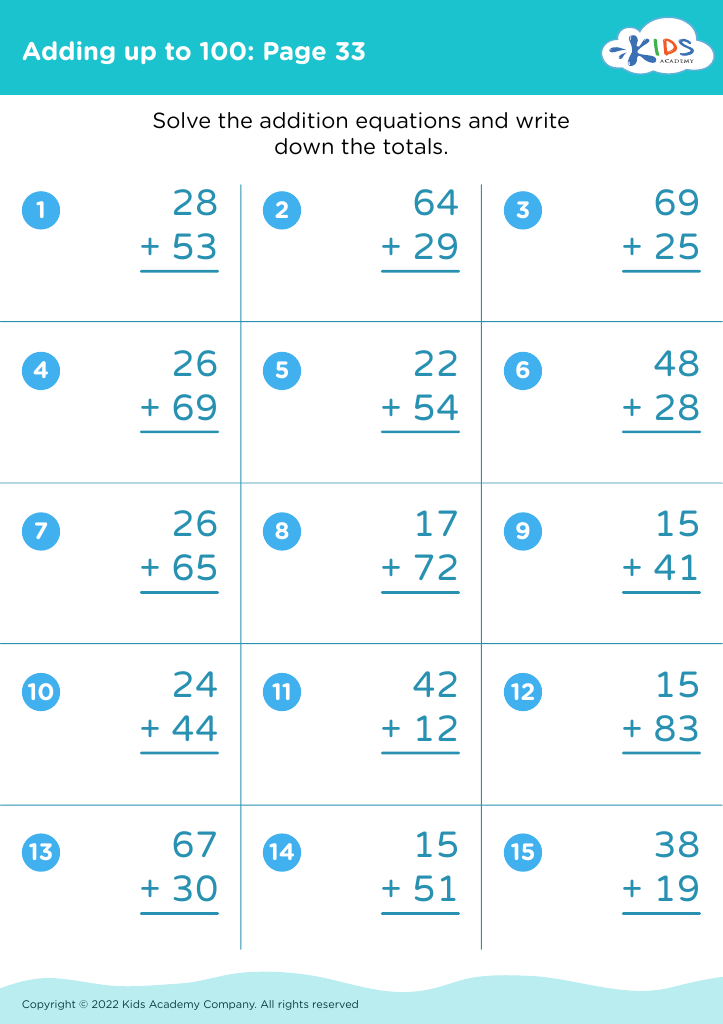
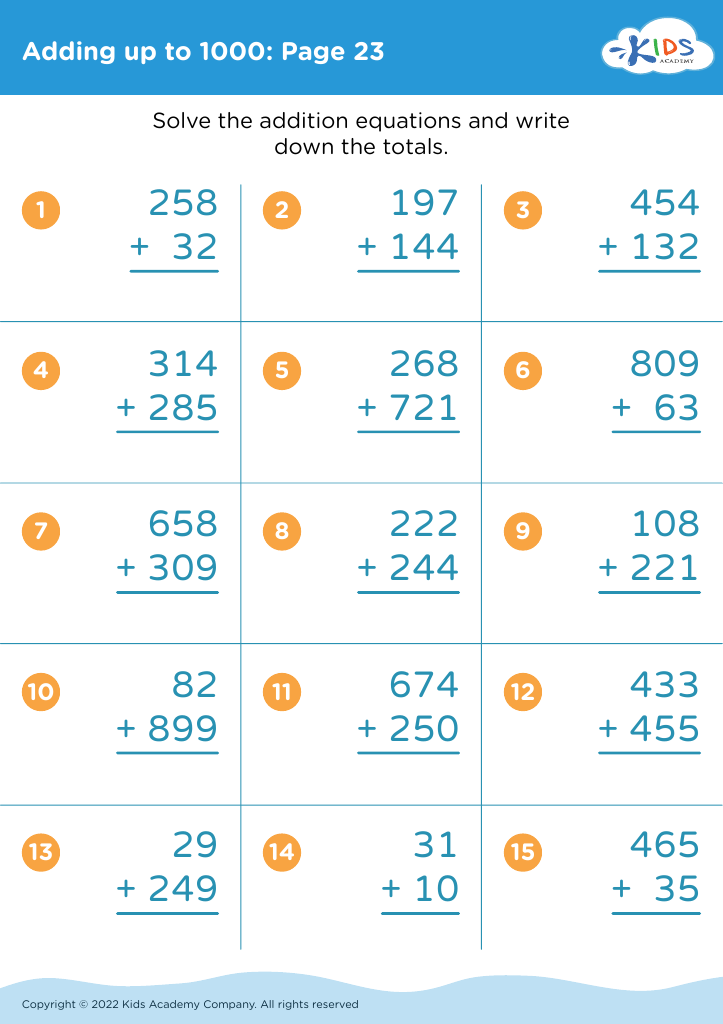
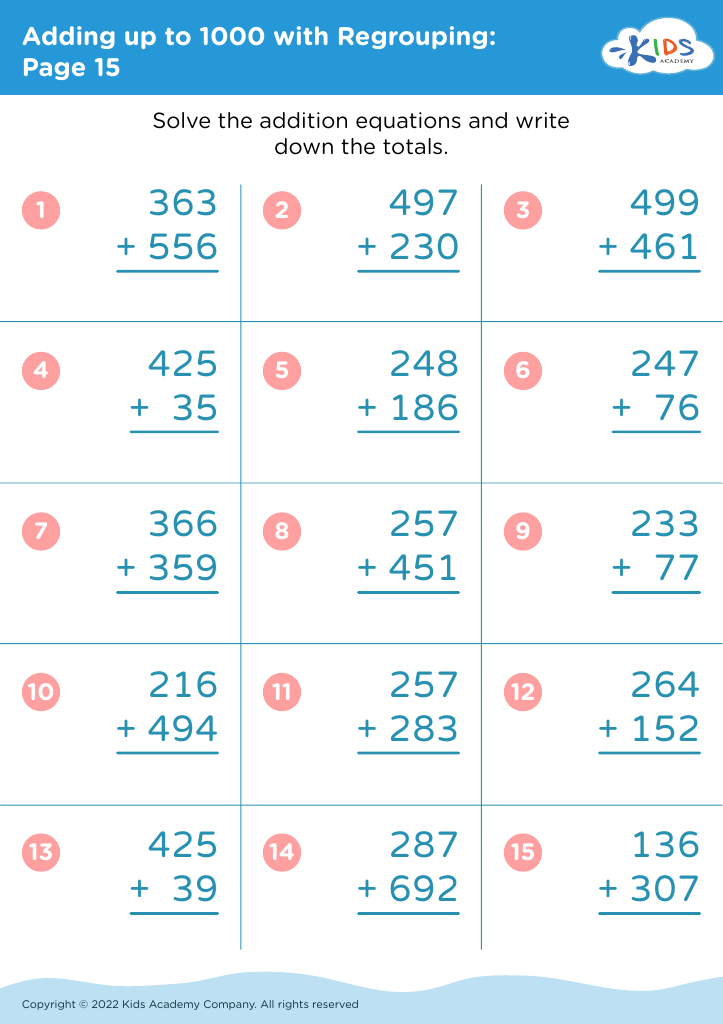
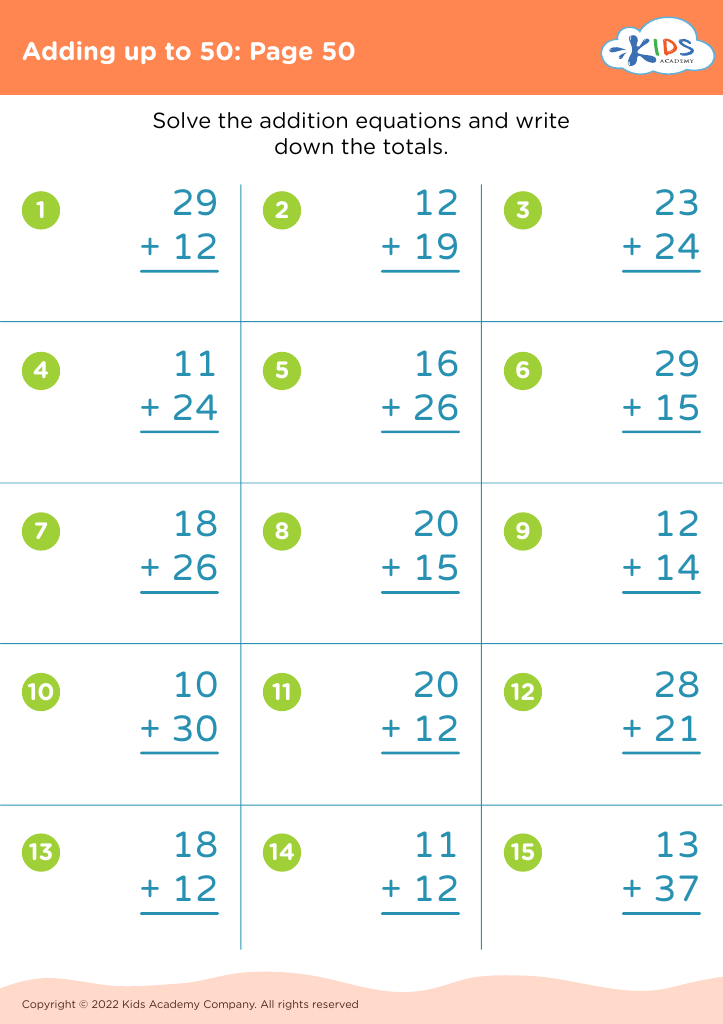








Understanding time, as well as addition and subtraction, is crucial for children aged 4-9 because it lays a foundational cognitive skill set essential for their overall development. These concepts not only contribute to children's mathematical abilities but also enhance their everyday life skills.
Firstly, mastering the concepts of time helps children develop a sense of order and responsibility. It teaches them the structure of their day, allowing them to manage activities, transitions, and routines effectively. This understanding builds independence as they learn to determine the appropriate time to engage in various tasks, from schoolwork to playtime.
Secondly, addition and subtraction are fundamental math skills that pave the way for more advanced mathematical concepts. Mastering these skills boosts children’s confidence and encourages problem-solving abilities. By relating math to real-life situations, such as sharing snacks or counting toys, children can see the relevance of math, making learning more engaging and meaningful.
Moreover, fostering a strong grasp of these concepts at a young age supports academic success in later years. When children understand time, addition, and subtraction, it enhances their ability to learn and apply critical concepts across the curriculum, ensuring they are well-equipped for future educational challenges.








